
lovethailand home >North Travel Attractions >Chiang Mai Travel Attractions >San Kamphaeng >San Klang > Wat Seemaram
TL;DR: Wat Seemaram is located at Moo 2, Ban Mon, San Klang Subdistrict, San Kamphaeng District, Chiang Mai Province, open Daily, hours 08.00 – 17.00.

Wat Seemaram
Open Days: Daily
Opening Hours: 08.00 – 17.00
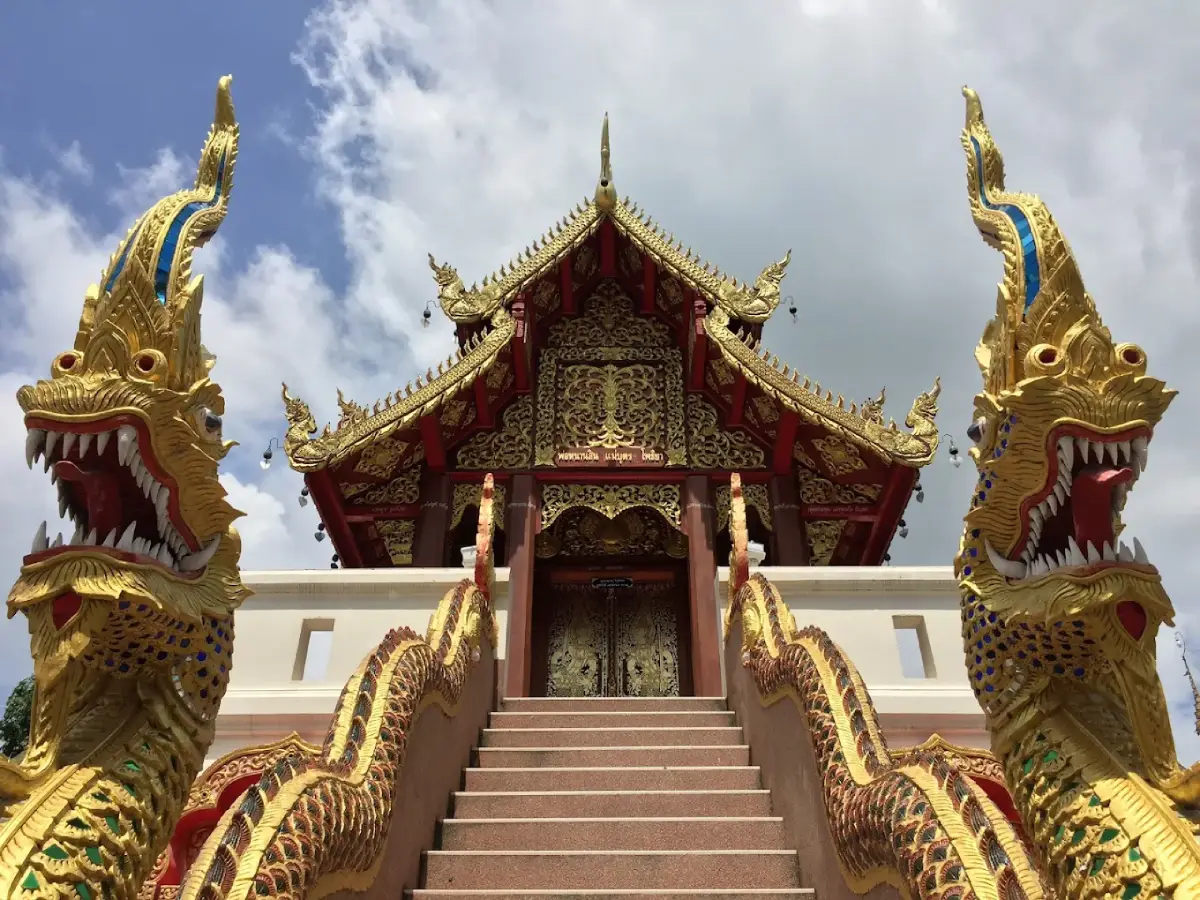
Wat Seemaram is located at 19 Moo 2, Ban Mon, San Klang Subdistrict, San Kamphaeng District, Chiang Mai Province. It is a private Buddhist temple under the Mahanikaya order and covers approximately 5 rai, 3 ngan, and 79 square wah. The temple is an important religious and cultural center of Ban Mon and San Klang Subdistrict. Its value lies not only in Buddhist worship, but also in its role as a learning space for Tai Khun culture, Lanna folk heritage, and community-based cultural tourism in San Kamphaeng.
Wat Seemaram was officially established as a temple in 1989. It was later recognized as an educational park temple in 1995 and as a model developed temple in 2000. These recognitions show that Wat Seemaram has played a broader role than an ordinary village temple. It functions as a religious space, a cultural learning site, and a community development center. The temple’s educational role is especially important because it helps preserve local memory, traditional objects, and the cultural identity of Ban Mon for younger generations and visitors.
The temple is closely connected with Ban Mon, a community associated with Tai Khun and Lanna cultural roots in San Kamphaeng. The history of Ban Mon is linked with the older local name Ban Mon or Ban Homon, and over time the community developed into an important cultural area of San Klang. Public and community spaces around the area include Wat Seemaram, Wat Ban Mon, Long Him Kao Market, the Tai Khun community market, and Long Him Kao public area. This makes Wat Seemaram one of the best starting points for understanding Ban Mon through religion, culture, community memory, and local tourism.
One of the most distinctive features of Wat Seemaram is its folk museum, which uses a traditional Lanna-style old house known as “Huean Ba Kao” as an exhibition space. Huean Ba Kao is a type of northern Thai wooden house that developed after the older Kalae house tradition. Its form reflects a blend of local Lanna building wisdom and outside influences that became more visible from the reign of King Rama V onward. The presence of this old house inside the temple makes Wat Seemaram not only a place of worship but also a place where vernacular architecture and everyday Lanna life are preserved.
The folk museum at Wat Seemaram contains many objects connected with traditional village life, including old rice granaries, Puja drums, household utensils, lacquerware, sewing machines, old radios and televisions, traditional tools, and a recreated kitchen area. These objects help visitors understand that local history is not only recorded in written documents but also preserved through the tools and spaces used in daily life. The Puja drum is especially meaningful because it was traditionally used in northern temples to signal upcoming merit-making days, Buddhist observance days, and community religious activities.
The museum gives Wat Seemaram a strong educational role. Visitors can pay respect at the temple, make merit, and learn about Lanna domestic architecture and local material culture in the same visit. The old house and museum collection help connect modern visitors with the roots of Ban Mon and Tai Khun life in San Kamphaeng. For students, families, and cultural travelers, Wat Seemaram offers a more layered experience than a simple temple visit.
Wat Seemaram is also an important site for the preservation of Tai Khun culture. The temple has hosted the Suep San Watthanatham Prapheni Tai Khun Wat Seemaram event, a cultural project that includes local food demonstrations, traditional dress, music, folk performances, living exhibitions, ethnic food markets, cultural processions, and community-based activities. Through events like this, the temple becomes a shared cultural space where elders, young people, residents, local authorities, and visitors can learn and participate together.
The Tai Khun culture associated with Wat Seemaram is important because it reflects the roots of Ban Mon through language, belief, food, clothing, craft, domestic life, and local ceremonies. The cultural festival is not merely a tourist event; it is a way to keep community memory alive. It allows local children to understand their background and gives visitors a respectful opportunity to experience the beauty of local culture in a living village setting.
Wat Seemaram is also connected with the annual Phra That bathing tradition. In Lanna Buddhist culture, bathing or paying respect to a Phra That is an important act of devotion. It allows the community to honor a sacred religious structure, make merit, and preserve local traditions. The Phra That bathing event at Wat Seemaram includes a procession and community participation, making it one of the important annual religious activities of the temple and San Klang Subdistrict.
During the Buddhist Lent season, Wat Seemaram is also used for candle-making and candle-offering activities organized within San Klang Subdistrict. These activities encourage Buddhists to visit temples, practice Dhamma, make merit, offer alms, join candlelight processions, and support the preservation of Buddhism. Such activities also help younger generations learn how local Buddhist traditions are practiced through real community participation.
Phra Khru Wisitthammakon Chittadhammo is the abbot of Wat Seemaram and plays an important role in maintaining the temple’s religious and community functions. His role includes caring for temple spaces, supporting Buddhist activities, working with the local lay community, and preserving the temple as a religious center of Ban Mon. The temple continues to appear in recent Buddhist activities such as Kathin, Buddhist Lent events, and community merit-making, showing that Wat Seemaram remains active and relevant in local religious life.
The main areas of Wat Seemaram include the viharn, the Phra That, the temple courtyard, the old Lanna house, the folk museum, and spaces used for community activities. The viharn is the main place for worship, chanting, merit-making, and Buddhist ceremonies. The Phra That is a sacred focus for the annual bathing tradition. The old house and museum expand the temple’s role into cultural education, allowing visitors to understand both religion and local life in the same place.
The atmosphere of Wat Seemaram is suitable for travelers who want a deeper cultural experience in San Kamphaeng. It is not only a temple for a quick stop; it is a place where visitors can spend time learning about Lanna houses, village objects, Tai Khun heritage, and the relationship between Buddhism and community life. It is especially suitable for cultural travelers, families, students, researchers, and visitors interested in northern Thai folk architecture and local traditions.
Wat Seemaram plays several roles in the community. Religiously, it is a place for worship, merit-making, Dhamma listening, and Buddhist ceremonies. Culturally, it preserves Tai Khun identity, Ban Mon heritage, old Lanna houses, and folk objects. Socially, it functions as a gathering place for local residents during festivals and ceremonies. In terms of tourism, it connects temple visits with Long Him Kao Market, local food, craft areas, and community-based travel routes in San Kamphaeng.
The temple can be included in a connected cultural route around San Klang and San Kamphaeng. Nearby places include Long Him Kao Market, Wat Ban Mon, Wat San Klang Nuea, Wat San Klang Tai, Bo Sang Umbrella Village, and other community learning spaces in Ban Mon. This route is ideal for visitors who want to experience San Kamphaeng beyond crafts and shopping, because it combines temples, Tai Khun culture, folk architecture, markets, food, and local heritage.
Visitors should observe proper temple etiquette. Dress modestly, speak quietly, respect the viharn, the Phra That, and the museum area, and avoid touching old objects unless permission is clearly given. When visiting during the Phra That bathing tradition, the Tai Khun cultural festival, or Buddhist Lent activities, visitors should follow the guidance of temple committees and event organizers. Community temples are living spaces, so respectful behavior helps preserve both the sacred atmosphere and the local cultural setting.
Getting There is convenient by private car, rental car, or hired local transport from Chiang Mai city. Take the Chiang Mai–San Kamphaeng route toward San Klang Subdistrict and continue to Ban Mon in Moo 2. Travelers using navigation apps should search for “Wat Seemaram” or “Wat Seemaram San Klang” to reach the correct temple. The temple can be combined with Long Him Kao Market, Wat Ban Mon, Wat San Klang Nuea, Wat San Klang Tai, and Bo Sang Umbrella Village in a half-day or full-day cultural route.
Wat Seemaram is one of the most meaningful cultural temple stops in San Kamphaeng. Its importance comes from the combination of Buddhist faith, Tai Khun heritage, a Lanna folk museum, Huean Ba Kao traditional architecture, Phra That traditions, and active community events. For visitors who want to understand Chiang Mai through living local culture rather than only famous landmarks, Wat Seemaram offers a rich and grounded view of Ban Mon and San Klang community life.
| Name | Wat Seemaram |
| Location | Moo 2, Ban Mon, San Klang Subdistrict, San Kamphaeng District, Chiang Mai Province |
| Address | 19 Moo 2, San Klang Subdistrict, San Kamphaeng District, Chiang Mai 50130, Thailand |
| Map Code | Q2PX+9MQ, San Klang, San Kamphaeng District, Chiang Mai |
| Highlights | A Ban Mon community temple with a folk museum, Huean Ba Kao old Lanna house, Tai Khun cultural heritage, and Phra That bathing tradition |
| History | Officially established as a temple in 1989, recognized as an educational park temple in 1995, and recognized as a model developed temple in 2000 |
| Distinctive Features | A temple combining Buddhist worship, Tai Khun identity, Lanna folk heritage, and community learning |
| Travel Information | Travel from Chiang Mai city via the Chiang Mai–San Kamphaeng route, then continue to San Klang Subdistrict and Ban Mon. Search for “Wat Seemaram” or “Wat Seemaram San Klang” in navigation apps. |
| Current Status | Active community Buddhist temple, cultural learning site, and community activity space in San Klang Subdistrict |
| Temple Type | Private Buddhist temple under the Mahanikaya order |
| Temple Area | 5 rai, 3 ngan, and 79 square wah |
| Abbot / Caretaker | Phra Khru Wisitthammakon Chittadhammo |
| Open Days | Daily |
| Opening Hours | 08.00 – 17.00 |
| Main Areas / Structures | Viharn, Phra That, temple courtyard, Huean Ba Kao old Lanna house, Wat Seemaram folk museum, and community activity spaces |
| Related Traditions / Activities | Phra That bathing tradition, Tai Khun cultural festival, Buddhist Lent candle-making, Buddhist Lent candle offering, Kathin, robe offerings, and community merit-making |
| Nearby Tourist Attractions | 1. Long Him Kao Market, about 1 km 2. Wat Ban Mon, about 2 km 3. Wat San Klang Nuea, about 3 km 4. Wat San Klang Tai, about 3 km 5. Bo Sang Umbrella Village, about 5 km |
| Nearby Restaurants | 1. Around, about 1 km 2. Weekends Coffee, about 1 km 3. Pu Chicken Rice, about 1 km 4. Made-to-Order Food by Pad Ka Rao, about 2 km, Tel. 066-046-6843 5. S.P. Suki Ban Mon, about 2 km, Tel. 085-106-3939 |
| Nearby Accommodations | 1. 166 Lanna Localstay, about 2 km, Tel. 087-055-1149 2. Fai Kham Boutique, about 4 km, Tel. 063-776-9769, 053-960-887 3. The Vet Boutique Hotel, about 6 km, Tel. 052-011-179, 091-852-5507 4. LPL Resort, about 10 km, Tel. 089-999-7771 5. Sanaepatan Home Resort, about 12 km, Tel. 092-815-5029 |
Frequently Asked Questions (FAQ)
Q: Where is Wat Seemaram located?
A: Wat Seemaram is located at 19 Moo 2, Ban Mon, San Klang Subdistrict, San Kamphaeng District, Chiang Mai 50130, Thailand.
Q: What are the open days and opening hours of Wat Seemaram?
A: Wat Seemaram is open daily from 08.00 to 17.00.
Q: What is Wat Seemaram known for?
A: Wat Seemaram is known for its folk museum, Huean Ba Kao old Lanna house, Tai Khun cultural heritage, and Phra That bathing tradition.
Q: When was Wat Seemaram officially established?
A: Wat Seemaram was officially established in 1989. It was later recognized as an educational park temple in 1995 and a model developed temple in 2000.
Q: Who is the abbot of Wat Seemaram?
A: The abbot is Phra Khru Wisitthammakon Chittadhammo.
Q: What can visitors see at the Wat Seemaram folk museum?
A: Visitors can see an old Lanna house, traditional rice granaries, Puja drums, lacquerware, household tools, old appliances, and objects connected with local village life.
Q: What important events are connected with Wat Seemaram?
A: Important events include the Phra That bathing tradition, Tai Khun cultural festival, Buddhist Lent candle-making, Buddhist Lent candle offering, Kathin, and robe offerings.
Q: What nearby places can visitors combine with Wat Seemaram?
A: Visitors can combine the trip with Long Him Kao Market, Wat Ban Mon, Wat San Klang Nuea, Wat San Klang Tai, and Bo Sang Umbrella Village.
 Category: ●Places of Worship
 Group: ●Temple
Last Update : 1 WeekAgo
 Last Update : 1 WeekAgo
 Click to Access the Navigation Map GPS
Wat Seemaram Map
Recommend

 Muang Chiang Mai(121)Chom Thong(47)Mae Chaem(25)Chiang Dao(33)Doi Saket(68)Mae Taeng(85)Mae Rim(69)Samoeng(29)Fang(71)Mae Ai(59)Phrao(70)San Pa Tong(103)San Kamphaeng(66)San Sai(73)Hang Dong(73)Hot(32)Doi Tao(22)Omkoi(11)Saraphi(74)Wiang Haeng(15)Chai Prakan(28)Mae Wang(32)Mae On(22)Doi Lo(33)Galyani Vadhana(1)


