
lovethailand home >North Travel Attractions >Chiang Mai Travel Attractions >San Kamphaeng >Rong Wuadaeng > Wat Wang Than (Rong Wua Daeng)
TL;DR: Wat Wang Than (Rong Wua Daeng) is located at Moo 1, Ban Wang Than, Rong Wua Daeng Subdistrict, San Kamphaeng District, Chiang Mai Province, open Contact the temple before visiting, hours Contact the temple before visiting.

Wat Wang Than (Rong Wua Daeng)
Open Days: Contact the temple before visiting
Opening Hours: Contact the temple before visiting
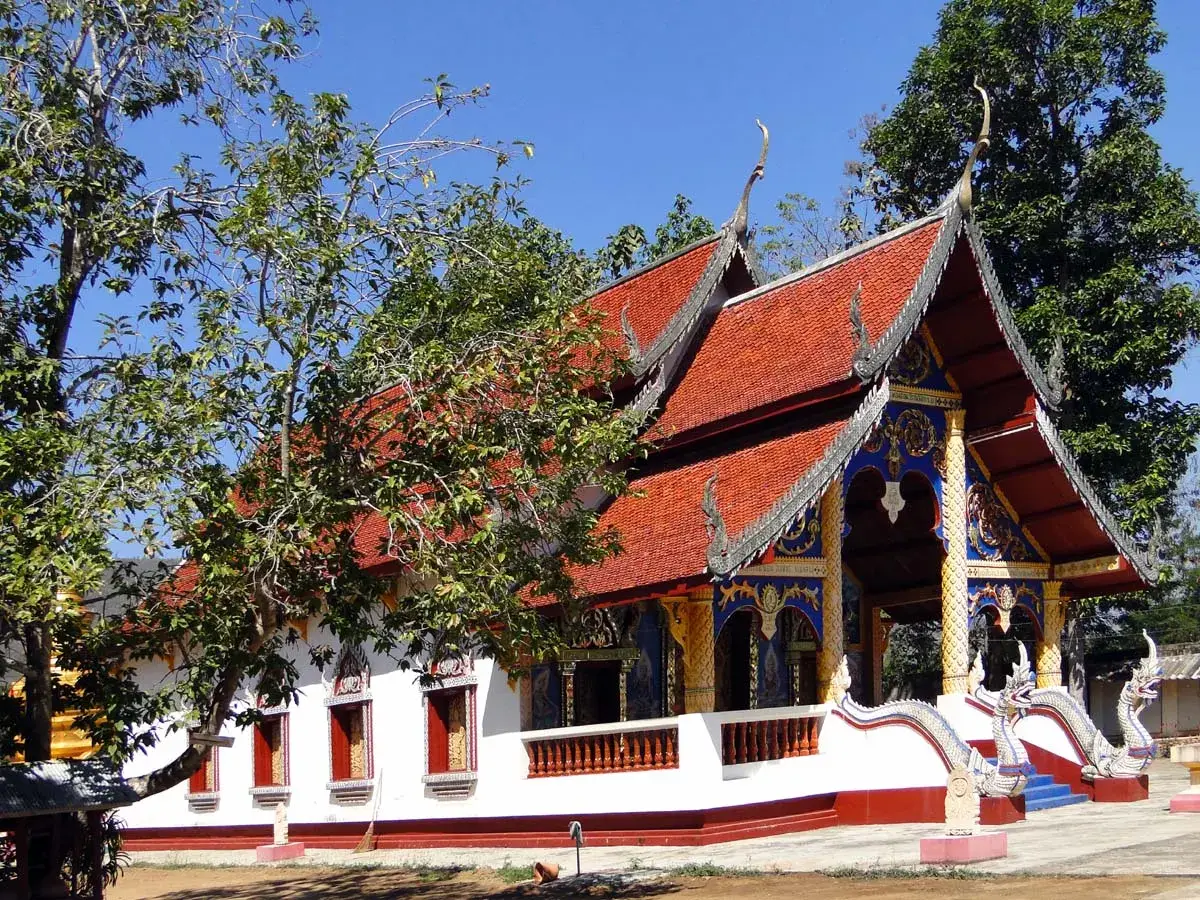
Wat Wang Than (Rong Wua Daeng) is located at 4 Moo 1, Ban Wang Than, Rong Wua Daeng Subdistrict, San Kamphaeng District, Chiang Mai Province. It is a private Buddhist temple under the Mahanikaya order, covering approximately 5 rai and 2 ngan of land. The temple serves as an important religious and cultural center for Ban Wang Than and remains closely connected with local Buddhist life in San Kamphaeng. Rather than being a large tourist landmark, Wat Wang Than is best understood as a living village temple shaped by community faith, local history, and Lanna Buddhist traditions.
The history of Wat Wang Than began with a donation of land by Mae Ui Fai Promjai and her family, who offered the site for religious use. In 1931, the temple area first existed as a small hermitage built from wood and bamboo. At that time, there were no resident monks, but the strong Buddhist faith of Ban Wang Than villagers gradually transformed the modest hermitage into a community religious center. Wat Wang Than was officially permitted to be established as a temple in 1939 and later received its royal grant of consecrated boundary, or Wisungkhamsima, in 2004.
The story of Wat Wang Than reflects the spiritual life of Ban Wang Than village. In the early years, when the Buddhist Lent season arrived, local residents invited monks from nearby temples to stay for the rains retreat each year. This practice shows how deeply the villagers wanted to maintain Buddhist practice within their own community. In 1952, the villagers invited Phra Bunrat Sirichanto to reside at the hermitage and act as its caretaker. His arrival gave the temple area a stronger monastic presence and helped establish a more stable religious life for the village.
Between 1957 and 1961, the local Buddhist community worked together to develop the hermitage into a more complete temple. During this period, a viharn, a salabat pavilion, and other monastic facilities were constructed. These buildings were not merely physical additions; they represented the collective faith and cooperation of Ban Wang Than villagers. They created space for merit-making, Dhamma listening, ceremonies, and community gatherings. After Phra Bunrat Sirichanto left the monkhood in 1962, the villagers invited Phra Chan Kaeo Chittapho from Wat Huai Sai in Ban Thi District, Lamphun Province, to reside at Wat Wang Than. In 1963, Phra Chan Kaeo was appointed abbot of Wat Wang Than.
Phra Chan Kaeo Chittapho played an important role in the development of Wat Wang Than. Under his leadership, religious buildings and monastic facilities were constructed, restored, and maintained. He was later elevated to the title Phra Athikan Chan Kaeo Chittapho and, in 2006, received the ecclesiastical title Phra Khru Chanrattanophas. His period of leadership was significant because it helped strengthen the temple as both a religious institution and a community center. The development of the temple during this period laid the foundation for the temple’s continuing role in village life.
One of the important sacred structures at Wat Wang Than is the Phra That Chedi, built as a place of worship for the local Buddhist community. The chedi gives the temple a clear devotional focus and allows villagers and visitors to pay respect, make merit, and reflect on the Buddha’s teachings. In a community temple, a chedi is not only an architectural element; it also becomes a shared symbol of faith across generations. Elderly villagers, families, and younger members of the community all connect with the temple through such sacred spaces.
Wat Wang Than is also important because it is the temple of Moo 1, Ban Wang Than, within Rong Wua Daeng Subdistrict. The subdistrict contains several village temples, including Wat Wang Than, Wat Ban Mai, Wat Rong Wua Daeng, Wat Muang Khiao, Wat Nam Cham, Wat Muang Ma Nuea, and Wat Muang Ma Tai. This network of temples shows the strong Buddhist foundation of the area. Each temple serves its own village while also forming part of a broader religious and cultural landscape in San Kamphaeng District.
The local setting of Rong Wua Daeng helps explain the identity of Wat Wang Than. The area includes lowland and foothill terrain, irrigation channels, the Kuang River, and the Mae On water system, all of which support local agriculture. The name Wang Than is connected with water and local geography. The word “wang” refers to a deep pool or water basin, while “than” refers to a stream or flowing water. Together, the name suggests a place associated with water sources that once supported settlement, agriculture, and community life. Wat Wang Than therefore developed within a landscape where water, farming, village life, and Buddhism were closely connected.
The atmosphere of Wat Wang Than is calm and local. Visitors who are used to the large temples of Chiang Mai city will find a different experience here. Wat Wang Than is not designed as a major tourist attraction; it is a functioning village temple where simplicity, local faith, and community continuity are more important than grand spectacle. Visitors can pay respect, view the temple grounds, observe the Phra That Chedi, and learn how a small wooden-and-bamboo hermitage became a recognized Buddhist temple through local dedication.
The main religious structures at Wat Wang Than include the viharn, the salabat pavilion, monastic facilities, and the Phra That Chedi. The viharn is the main space for ceremonies, chanting, merit-making, and Dhamma activities. The salabat pavilion and monastic facilities support temple functions and community events. The chedi is an important place of worship. Visitors should dress modestly, speak quietly, avoid disturbing monks or local residents during ceremonies, and help keep the temple grounds clean.
Wat Wang Than continues to be connected with local Buddhist traditions. It has been included in Buddhist Lent activities organized within Rong Wua Daeng Subdistrict, and like other village temples, it is associated with annual merit-making, Kathin, robe offerings, and Buddhist holy days. These events show the living relationship between the temple and the community. The temple is not only a place where religious rituals are performed; it is also where villagers gather, cooperate, and preserve Lanna Buddhist customs.
The temple’s role in the community can be seen on several levels. Religiously, it provides a place for worship, merit-making, chanting, and Buddhist ceremonies. Socially, it serves as a meeting point for villagers during religious and community activities. Culturally, it helps transmit Lanna Buddhist values from one generation to the next. In this sense, Wat Wang Than connects the past and present of Ban Wang Than village through faith, shared memory, and local participation.
For travelers interested in cultural routes around San Kamphaeng, Wat Wang Than can be combined with nearby temples and local attractions such as Wat Langkar, Wat Rong Wua Daeng, Wat Nam Cham, Ku Lua, Pa Dong Pong Wai, Namjum Experience Village, Chiangmai Art Museum, and Ban Mai Friday Market. This type of itinerary is suitable for visitors who want to see Chiang Mai beyond its central old city and better-known tourist landmarks. It offers a quieter view of local temples, art spaces, natural sites, and community markets in eastern Chiang Mai.
Getting There is most convenient by private car, rental car, or hired local transport from Chiang Mai city. Travel east toward San Kamphaeng District, then continue into Rong Wua Daeng Subdistrict and Ban Wang Than in Moo 1. When using a navigation app, search for “Wat Wang Than Rong Wua Daeng” to avoid confusion with another temple named Wat Wang Than in Doi Saket District, Chiang Mai. Once inside the village area, drive carefully, park respectfully, and avoid blocking local roads or residential entrances.
Wat Wang Than is suitable for travelers interested in local temple history, Lanna culture, and quiet community-based travel in San Kamphaeng. Its value comes from its origin as a small hermitage, the land donation by Mae Ui Fai Promjai and her family, the villagers’ effort to invite monks during Buddhist Lent, the construction of the viharn and other monastic buildings, and the creation of the Phra That Chedi as a place of worship. The temple is a meaningful local heritage site for Rong Wua Daeng Subdistrict and a good example of how Buddhism remains part of everyday village life in northern Thailand.
| Name | Wat Wang Than (Rong Wua Daeng) |
| Location | Moo 1, Ban Wang Than, Rong Wua Daeng Subdistrict, San Kamphaeng District, Chiang Mai Province |
| Address | 4 Moo 1, Rong Wua Daeng Subdistrict, San Kamphaeng District, Chiang Mai 50130, Thailand |
| Highlights | A Mahanikaya village temple in Ban Wang Than with a history rooted in local faith, a viharn, monastic facilities, and a Phra That Chedi |
| History | Founded as a hermitage in 1931, officially established as a temple in 1939, and granted Wisungkhamsima in 2004 |
| Land Donor | Mae Ui Fai Promjai and her family |
| Distinctive Features | A quiet Lanna community temple with a viharn, salabat pavilion, monastic facilities, and Phra That Chedi |
| Travel Information | Travel from Chiang Mai city toward San Kamphaeng District, then continue to Rong Wua Daeng Subdistrict and Ban Wang Than. Search for “Wat Wang Than Rong Wua Daeng” to avoid confusion with another temple of the same name in Doi Saket District. |
| Current Status | Active village Buddhist temple in Ban Wang Than, Rong Wua Daeng Subdistrict |
| Temple Type | Private Buddhist temple under the Mahanikaya order |
| Temple Area | Approximately 5 rai and 2 ngan |
| Abbot / Caretaker | Phra Thanarat Thitawatthano |
| Resident Monks | 5 monks |
| Main Contact Number | 053-859-123 |
| Main Areas / Structures | Viharn, salabat pavilion, monastic facilities, and Phra That Chedi |
| Related Traditions / Activities | Buddhist Lent activities, Kathin, robe offerings, and community merit-making |
| Nearby Tourist Attractions | 1. Wat Langkar, about 3 km 2. Wat Rong Wua Daeng, about 4 km 3. Wat Nam Cham, about 5 km 4. Chiangmai Art Museum, about 5 km 5. Ban Mai Friday Market, about 5 km |
| Nearby Restaurants | 1. Mahalap Farm Country Home Coffee & Bakery, about 5 km, Tel. 080-129-7878, 092-951-5156 2. Lung Daeng Braised Tendon Noodle, about 5 km, Tel. 099-268-2762 3. Rong Wua Daeng Mookata, about 6 km, Tel. 092-352-2881 4. Green Moon Cafe & Bistro, about 7 km, Tel. 094-617-4004 5. Sher Ga Shaw Farmstay Cafe & Hostel, about 8 km, Tel. 088-268-7446 |
| Nearby Accommodations | 1. LPL Resort, about 6 km, Tel. 089-999-7771 2. Sanaepatan Home Resort, about 8 km, Tel. 092-815-5029 3. Herritage Piman Since 1940, about 9 km, Tel. 081-595-4897 4. Baanpong Lodge, about 10 km, Tel. 083-969-6555 5. Alpine Golf Resort Chiang Mai, about 14 km, Tel. 053-880-888 |
Frequently Asked Questions (FAQ)
Q: Where is Wat Wang Than (Rong Wua Daeng) located?
A: Wat Wang Than is located at 4 Moo 1, Ban Wang Than, Rong Wua Daeng Subdistrict, San Kamphaeng District, Chiang Mai 50130, Thailand.
Q: What type of temple is Wat Wang Than?
A: Wat Wang Than is a private Buddhist temple under the Mahanikaya order.
Q: What is the history of Wat Wang Than?
A: The temple began as a wooden-and-bamboo hermitage in 1931, was officially established as a temple in 1939, and received Wisungkhamsima in 2004.
Q: Who donated the land for Wat Wang Than?
A: The land was donated by Mae Ui Fai Promjai and her family.
Q: What are the important structures at Wat Wang Than?
A: Important structures include the viharn, salabat pavilion, monastic facilities, and Phra That Chedi.
Q: Who is the abbot of Wat Wang Than?
A: The abbot is Phra Thanarat Thitawatthano.
Q: Is Wat Wang Than suitable for visitors?
A: Yes. It is suitable for visitors interested in quiet village temples, local Buddhist history, and Lanna community culture in San Kamphaeng.
Q: What nearby places can be visited with Wat Wang Than?
A: Nearby places include Wat Langkar, Wat Rong Wua Daeng, Wat Nam Cham, Chiangmai Art Museum, and Ban Mai Friday Market.
 Category: ●Places of Worship
 Group: ●Temple
Last Update : 1 WeekAgo
 Last Update : 1 WeekAgo
 Click to Access the Navigation Map GPS
Wat Wang Than (Rong Wua Daeng) Map
Recommend

 Muang Chiang Mai(121)Chom Thong(47)Mae Chaem(25)Chiang Dao(33)Doi Saket(68)Mae Taeng(85)Mae Rim(69)Samoeng(29)Fang(71)Mae Ai(59)Phrao(70)San Pa Tong(103)San Kamphaeng(66)San Sai(73)Hang Dong(73)Hot(32)Doi Tao(22)Omkoi(11)Saraphi(74)Wiang Haeng(15)Chai Prakan(28)Mae Wang(32)Mae On(22)Doi Lo(33)Galyani Vadhana(1)


