
lovethailand home >North Travel Attractions >Chiang Mai Travel Attractions >San Kamphaeng >Rong Wuadaeng > Wat Muang Ma Nuea
TL;DR: Wat Muang Ma Nuea is located at Ban Muang Ma Nuea, Moo 8, Rong Wua Daeng Subdistrict, San Kamphaeng District, Chiang Mai Province, open Daily, hours 08.00 – 17.00.
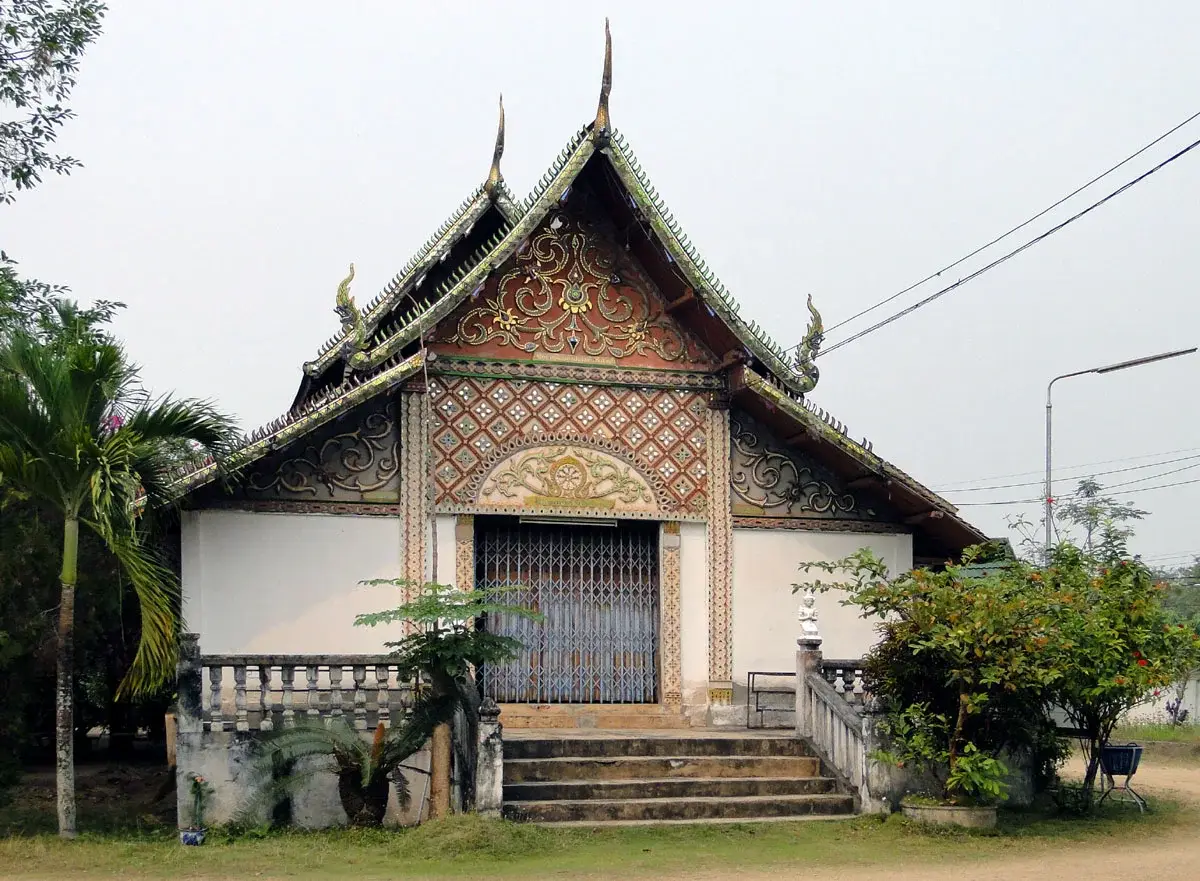
Wat Muang Ma Nuea
Open Days: Daily
Opening Hours: 08.00 – 17.00
Wat Muang Ma Nuea is located at 32 Moo 8, Ban Muang Ma Nuea, Rong Wua Daeng Subdistrict, San Kamphaeng District, Chiang Mai Province. It is a local Buddhist temple under the Mahanikaya order and an important spiritual center for the Ban Muang Ma Nuea community. The temple was officially established in B.E. 2326, or 1783, and received its Wisungkham Sima royal boundary in B.E. 2551, or 2008. The abbot is Phra Athikan Watthanachai Dhammapanyo. Wat Muang Ma Nuea is therefore an old community temple with a meaningful religious history, an important sacred Buddha image, Lanna merit-making traditions, and a continuing role in local village life.
Wat Muang Ma Nuea is best understood through the context of Ban Muang Ma Nuea, Moo 8. Rong Wua Daeng Subdistrict lies in the eastern part of San Kamphaeng District, where local roads connect Ban Muang Ma Nuea, Ban Muang Ma Tai, Ban Nam Cham, Ban Rong Wua Daeng, Ban Pa Tueng, and nearby communities. The temple is not only a place for worship. It is part of everyday community life, supporting merit-making, Buddhist ceremonies, Dhamma activities, local gatherings, and the continuity of Lanna village traditions.
The history of Wat Muang Ma Nuea is clearly marked by its establishment in B.E. 2326. This makes the temple one of the long-standing Buddhist sites in Rong Wua Daeng and San Kamphaeng. Its history reflects the presence of Buddhist faith, village settlement, and community devotion across generations. The later receipt of Wisungkham Sima in B.E. 2551 was an important religious milestone, giving the temple a consecrated boundary for formal monastic acts.
Wat Muang Ma Nuea is also known by another name, Wat Muang Ma Bua Ban. This alternate name adds cultural depth to the temple because it preserves an older layer of local memory and community naming. The word Muang Ma also connects the temple with both Ban Muang Ma Nuea and Ban Muang Ma Tai, two nearby communities in Rong Wua Daeng. These names form a shared local identity linking villages, temples, and community history.
The temple grounds are closely connected with public roads, local irrigation features, and surrounding agricultural land. This landscape shows how Lanna village temples are woven into daily life rather than separated from the community. Homes, temples, waterways, roads, and fields are part of the same living environment. Residents can reach the temple easily for worship, ceremonies, annual events, and personal merit-making.
Important areas and structures within Wat Muang Ma Nuea include the viharn, sermon hall, monks’ residences, temple courtyard, ceremonial spaces, and community activity areas. The viharn is the main worship space for devotees. The sermon hall supports Dhamma listening, merit-making, and community gatherings. The monks’ residences support the daily life of the monastic community. Together, these elements make Wat Muang Ma Nuea a complete village temple for both religious and social use.
An important sacred object at Wat Muang Ma Nuea is a brass Buddha image in the Chiang Saen style, seated in meditation posture. Chiang Saen-style Buddhist art is closely associated with northern Thai Buddhist heritage, and the presence of this image gives the temple both spiritual and artistic value. Visitors should take time to pay respect quietly and appreciate the temple’s sacred atmosphere with care and modesty.
The succession of abbots at Wat Muang Ma Nuea reflects the continuity of temple care from the past to the present. Important monks in the temple’s history include Khru Ba Kham, Khru Ba Kaeo, Khru Ba Tam Kham, Khru Ba Tha, Phra Anu, Phra Bun Ma, Phra Ut, Phra Di, Phra Som, Phra Muen, Phra Bun Mi Khanthitharo, and Phra Athikan Sao Khemiyo. These names show that the temple has been maintained through the combined efforts of monks, local devotees, and the Ban Muang Ma Nuea community across many generations.
Phra Athikan Watthanachai Dhammapanyo is the current abbot of Wat Muang Ma Nuea. In a village temple, the abbot’s role is important not only in religious leadership but also in temple administration, ceremony coordination, monastic care, and the relationship between the temple and local residents. Through monastic leadership and community support, Wat Muang Ma Nuea continues to function as a living Buddhist site in Rong Wua Daeng.
The main highlight of Wat Muang Ma Nuea is its identity as an old community temple with a clear establishment history and a valuable sacred Buddha image. It is not a large tourist complex, but it is meaningful for travelers who want to experience a peaceful village temple in San Kamphaeng. The temple’s value comes from its history, its role in Ban Muang Ma Nuea, its Lanna Buddhist atmosphere, and its connection with the wider temple network of Rong Wua Daeng.
Wat Muang Ma Nuea is suitable for merit-making, quiet reflection, and learning about community temples in northern Thailand. Visitors can pay respect in the worship areas, walk calmly around the temple grounds, and observe how the temple remains part of local life. Modest dress, quiet behavior, and respect for monastic spaces are expected. Visitors should avoid entering monks’ private areas without permission.
Wat Muang Ma Nuea is connected with the northern Thai Buddhist calendar. Important occasions include Songkran, Buddha image bathing traditions, Buddhist Lent, the end of Buddhist Lent, Kathin, Pha Pa offerings, Tan Kuai Salak, and Buddhist holy day activities. These events bring villagers together at the temple for offerings, Dhamma listening, community cooperation, and the passing of Buddhist values to younger generations.
The Buddhist Lent season is one of the periods when the role of Wat Muang Ma Nuea becomes especially visible. Rong Wua Daeng communities hold activities connected with local temples during the Lent period, and Wat Muang Ma Nuea is part of that local religious route. Visiting during this season reveals how temple traditions preserve community customs and strengthen the relationship between the temple and its people.
Kathin and Pha Pa offerings are also important in village temple life. After the end of Buddhist Lent, devotees gather to offer robes and support to the monks. At a village temple, these events involve preparation, food, processions, family gatherings, and collective participation. They clearly express the close relationship between Wat Muang Ma Nuea and the Ban Muang Ma Nuea community.
Wat Muang Ma Nuea plays religious, social, and cultural roles in Ban Muang Ma Nuea. Children and young people learn temple manners, Buddhist customs, and local traditions through participation in temple activities. Elderly residents use the temple as a place for merit-making, Dhamma listening, and community connection. Working-age residents support the temple through offerings, labor, and participation in annual events. This makes the temple a shared space for multiple generations.
Rong Wua Daeng Subdistrict contains several Buddhist temples and religious sites, including Wat Wang Than, Wat Ban Mai, Wat Rong Wua Daeng, Wat Muang Khiao, Wat Nam Cham, Wat Muang Ma Nuea, and Wat Muang Ma Tai. This network reflects the traditional Lanna pattern in which each village has its own religious center. Wat Muang Ma Nuea should therefore be understood as part of a broader religious landscape linked by merit-making, kinship, local roads, and shared faith.
Wat Muang Ma Nuea can be included in a meaningful cultural route around San Kamphaeng. Nearby places include Wat Muang Ma Tai, Wat Nam Cham, Wat Pa Tueng, Wat Rong Wua Daeng, and Vichit Studio. Travelers who want to add handicraft culture can continue to Bo Sang Umbrella Village and the Bo Sang Handicraft Centre. Those who prefer a slower route can combine the temple with local restaurants, cafés, and farm-stay accommodation in Rong Wua Daeng and nearby areas.
A half-day itinerary can begin at Wat Muang Ma Nuea, continue to Wat Muang Ma Tai, Wat Nam Cham, and Wat Rong Wua Daeng, then end with a meal in the Rong Wua Daeng or San Kamphaeng area. With a full day, visitors can extend the route to Vichit Studio, Bo Sang Umbrella Village, or handicraft sites in Ton Pao. This route is suitable for travelers who want to combine temples, village culture, local food, and traditional crafts in one trip.
Getting There is most convenient by private car, rental car, or local hired transport. From Chiang Mai city, travel toward San Kamphaeng District, continue into Rong Wua Daeng Subdistrict, and head to Ban Muang Ma Nuea, Moo 8. The local roads connect villages, temples, farmland, restaurants, and accommodation. Visitors should drive carefully through community zones and small intersections. Travelers using ride-hailing or hired transport should arrange the return trip in advance.
The best time to visit is in the morning or late afternoon when the weather is more comfortable. Visitors who plan to make merit may bring flowers, candles, incense, or offerings according to their faith. During temple events, allow extra time for travel and parking because local residents, relatives, and Buddhist devotees may gather in larger numbers than usual. Respectful behavior will make the visit more meaningful.
Wat Muang Ma Nuea is a valuable destination for travelers who want to understand Chiang Mai at the community level. Its establishment in B.E. 2326, its alternate name Wat Muang Ma Bua Ban, its Chiang Saen-style brass Buddha image, and its continuing role in Ban Muang Ma Nuea give the temple a distinct identity. For travelers interested in Lanna village temples, local culture, and quieter routes in San Kamphaeng, Wat Muang Ma Nuea is a worthwhile stop in Rong Wua Daeng.
| Name | Wat Muang Ma Nuea |
| Location | Ban Muang Ma Nuea, Moo 8, Rong Wua Daeng Subdistrict, San Kamphaeng District, Chiang Mai Province |
| Address | 32 Moo 8, Rong Wua Daeng Subdistrict, San Kamphaeng District, Chiang Mai 50130, Thailand |
| Temple Type | Local Buddhist temple under the Mahanikaya order |
| Alternative Name | Wat Muang Ma Bua Ban |
| Highlights | Old village temple of Ban Muang Ma Nuea with a Chiang Saen-style brass Buddha image in meditation posture |
| History | Officially established as a temple in B.E. 2326 and received Wisungkham Sima in B.E. 2551 |
| Abbot | Phra Athikan Watthanachai Dhammapanyo |
| Important Monks | Khru Ba Kham, Khru Ba Kaeo, Khru Ba Tam Kham, Khru Ba Tha, Phra Anu, Phra Bun Ma, Phra Ut, Phra Di, Phra Som, Phra Muen, Phra Bun Mi Khanthitharo, and Phra Athikan Sao Khemiyo |
| Sacred Object | Chiang Saen-style brass Buddha image in meditation posture |
| Important Areas / Structures | Viharn, sermon hall, monks’ residences, temple courtyard, ceremonial spaces, and community activity areas |
| Local Importance | A spiritual center of Ban Muang Ma Nuea, Moo 8, and part of the temple network of Rong Wua Daeng Subdistrict |
| Traditions / Temple Events | Songkran, Buddha image bathing traditions, Buddhist Lent, the end of Buddhist Lent, Kathin, Pha Pa offerings, Tan Kuai Salak, and local Buddhist merit-making events |
| Travel Information | From Chiang Mai city, travel toward San Kamphaeng District, continue into Rong Wua Daeng Subdistrict, and head to Ban Muang Ma Nuea, Moo 8. Private car, rental car, or local hired transport is recommended. |
| Current Status | An active Buddhist temple in Rong Wua Daeng Subdistrict, San Kamphaeng District, Chiang Mai Province |
| Open Days | Daily |
| Opening Hours | 08.00 – 17.00 |
| Nearby Tourist Attractions | 1. Wat Muang Ma Tai, about 1 km 2. Wat Nam Cham, about 2 km 3. Wat Pa Tueng, about 3 km 4. Wat Rong Wua Daeng, about 4 km 5. Vichit Studio, about 5 km 6. Bo Sang Umbrella Village / Bo Sang Handicraft Centre, about 7 km |
| Nearby Restaurants | 1. Mu Kratha Rong Wua Daeng, about 4 km 2. Sher ga Shaw Farmstay Cafe & Hostel, about 5 km, Tel. 088-268-7446 3. G&M German Sausage, about 6 km, Tel. 053-840-531, 094-708-3737 4. Lung Daeng Nuea Kaew Tun Noodles, about 6 km, Tel. 099-268-2762 5. Kalakhrang Nueng Na Thung Thong Kwaw, about 7 km, Tel. 084-880-2046 6. Khao Soi Pu Kha Nuea, about 8 km, Tel. 065-995-6998 |
| Nearby Accommodations | 1. Sher ga Shaw Farmstay Cafe & Hostel, about 5 km, Tel. 088-268-7446 2. Oon Valley Farm Stay, about 6 km, Tel. 064-001-0014 3. LPL Resort, about 6 km 4. Phu Mi Lum Nao House, about 7 km 5. Viewdoi Art and Resort, about 8 km, Tel. 088-866-2562 6. The Puka Boutique Resort, about 9 km |
Frequently Asked Questions (FAQ)
Q: Where is Wat Muang Ma Nuea located?
A: Wat Muang Ma Nuea is located at 32 Moo 8, Ban Muang Ma Nuea, Rong Wua Daeng Subdistrict, San Kamphaeng District, Chiang Mai 50130, Thailand.
Q: What is the history of Wat Muang Ma Nuea?
A: Wat Muang Ma Nuea was officially established as a temple in B.E. 2326 and later received Wisungkham Sima in B.E. 2551.
Q: Does Wat Muang Ma Nuea have another name?
A: Wat Muang Ma Nuea is also known as Wat Muang Ma Bua Ban.
Q: Who is the abbot of Wat Muang Ma Nuea?
A: The abbot of Wat Muang Ma Nuea is Phra Athikan Watthanachai Dhammapanyo.
Q: What is the main highlight of Wat Muang Ma Nuea?
A: The main highlight is its long village-temple history and its Chiang Saen-style brass Buddha image in meditation posture.
Q: What are the opening days and hours of Wat Muang Ma Nuea?
A: Wat Muang Ma Nuea is open daily from 08.00 to 17.00.
Q: How can travelers get to Wat Muang Ma Nuea?
A: From Chiang Mai city, travel toward San Kamphaeng District, continue into Rong Wua Daeng Subdistrict, and head to Ban Muang Ma Nuea, Moo 8. Private car, rental car, or local hired transport is recommended.
Q: What nearby places can be combined with Wat Muang Ma Nuea?
A: Nearby places include Wat Muang Ma Tai, Wat Nam Cham, Wat Pa Tueng, Wat Rong Wua Daeng, Vichit Studio, and Bo Sang Umbrella Village.
 Category: ●Places of Worship
 Group: ●Temple
Last Update : 1 DayAgo
 Last Update : 1 DayAgo
 Click to Access the Navigation Map GPS
Wat Muang Ma Nuea Map
Recommend

 Muang Chiang Mai(121)Chom Thong(47)Mae Chaem(25)Chiang Dao(33)Doi Saket(68)Mae Taeng(85)Mae Rim(69)Samoeng(29)Fang(71)Mae Ai(59)Phrao(70)San Pa Tong(103)San Kamphaeng(66)San Sai(73)Hang Dong(74)Hot(32)Doi Tao(22)Omkoi(11)Saraphi(74)Wiang Haeng(15)Chai Prakan(28)Mae Wang(32)Mae On(22)Doi Lo(34)Galyani Vadhana(1)


