
lovethailand home >North Travel Attractions >Chiang Mai Travel Attractions >San Kamphaeng >Rong Wuadaeng > Wat Muang Khiao
TL;DR: Wat Muang Khiao is located at Ban Muang Khiao, Moo 4, Rong Wua Daeng Subdistrict, San Kamphaeng District, Chiang Mai Province, open Daily, hours 08.00 – 17.00.

Wat Muang Khiao
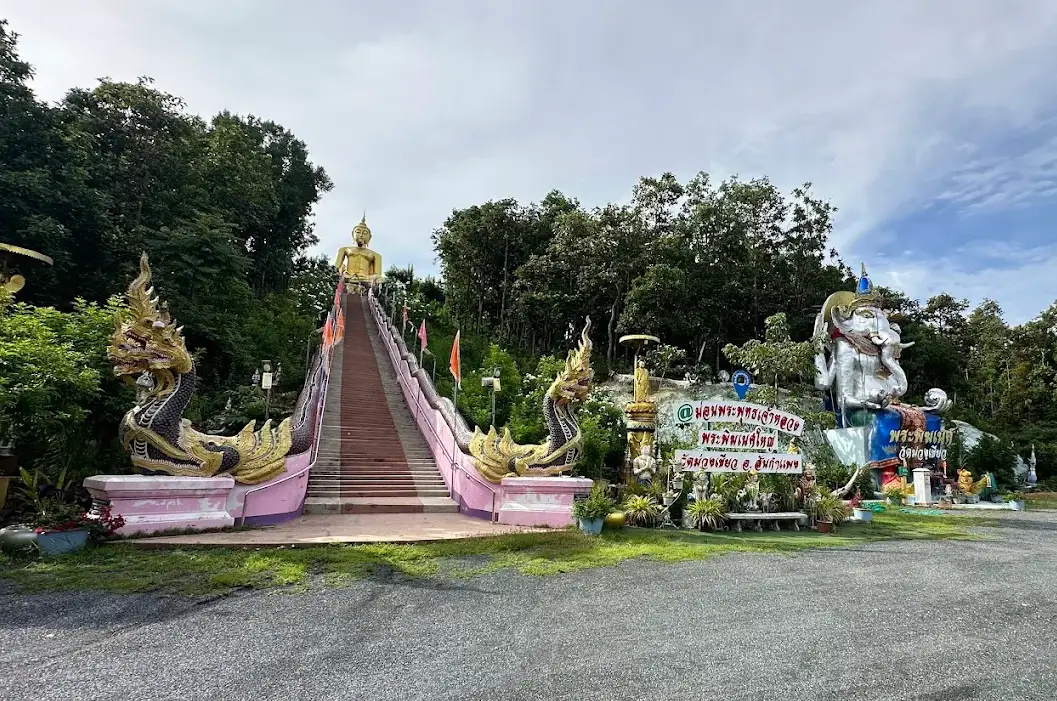
Open Days: Daily
Opening Hours: 08.00 – 17.00
Wat Muang Khiao is located in Moo 4, Ban Muang Khiao, Rong Wua Daeng Subdistrict, San Kamphaeng District, Chiang Mai Province. It is a local Buddhist temple under the Mahanikaya order and an important religious site for the Ban Muang Khiao community. The temple was officially established in B.E. 2380, or 1837, and received its Wisungkham Sima royal boundary in B.E. 2541, or 1998. The abbot is Phra Athikan Sornsak Silasamvaro. Wat Muang Khiao is therefore a meaningful community temple with a clear religious history, local merit-making traditions, and a close relationship with Lanna village life in San Kamphaeng.
Wat Muang Khiao belongs to Ban Muang Khiao, Moo 4, in Rong Wua Daeng Subdistrict, an eastern area of San Kamphaeng District. The community is a semi-rural and suburban landscape connected by local roads, farmland, homes, temples, and nearby villages. In this setting, the temple is not only a place of worship but also a shared community space where Buddhist practice, local gatherings, and village identity continue to meet.
The history of Wat Muang Khiao is clearly marked by its establishment in B.E. 2380. This makes the temple one of the long-standing Buddhist sites in Rong Wua Daeng. Its later receipt of Wisungkham Sima in B.E. 2541 was an important milestone in the temple’s religious status. For a community temple, this history shows the continuity of Buddhist practice and local devotion across generations.
The importance of Wat Muang Khiao does not come from large-scale architecture or major tourist fame. Its value lies in its role as the village temple of Ban Muang Khiao. In Lanna communities, a village temple often serves as the spiritual heart of local life. People come to the temple for merit-making, Dhamma listening, Buddhist ceremonies, seasonal traditions, and community activities. Wat Muang Khiao continues this role for local residents and devotees in the surrounding area.
Rong Wua Daeng Subdistrict contains several Buddhist temples and religious sites, including Wat Wang Than, Wat Ban Mai, Wat Rong Wua Daeng, Wat Muang Khiao, Wat Nam Cham, Wat Muang Ma Nuea, and Wat Muang Ma Tai. This network of temples reflects the traditional Lanna pattern in which each village has its own religious center. Wat Muang Khiao should therefore be understood as part of a wider religious and cultural landscape rather than as a single isolated destination.
Ban Muang Khiao is close to Ban Rong Wua Daeng, Ban Nam Cham, Ban Pa Tueng, and Ban Muang Ma Nuea, making the temple a useful stop on a cultural route through eastern San Kamphaeng. Visitors can combine Wat Muang Khiao with nearby temples, local restaurants, cafés, accommodation, and handicraft areas. This route is especially suitable for travelers who want to see a quieter and more community-based side of Chiang Mai.
The main areas of Wat Muang Khiao include Buddhist worship spaces, the temple courtyard, areas for merit-making, and community activity spaces. The atmosphere is simple, calm, and local. Visitors should dress modestly, speak quietly, and respect monastic and community areas. This kind of village temple is best appreciated slowly and respectfully, with attention to the local rhythm of religious life.
The main highlight of Wat Muang Khiao is its identity as the village temple of Ban Muang Khiao. It has a clear establishment history, local Buddhist status, and a continuing role in community traditions. Travelers interested in Lanna village temples will find value in seeing how Wat Muang Khiao supports both religious life and social connection in the community.
Phra Athikan Sornsak Silasamvaro is the abbot of Wat Muang Khiao. In a village temple, the abbot’s role is important not only in religious leadership but also in the care of the temple grounds, ceremonies, community coordination, and the continuity of Buddhist practice. The temple continues its role through the work of the monastic community and the support of local devotees.
One of the most distinctive traditions connected with Wat Muang Khiao is the ceremony known as Thet Tham Pla Chon and the forest ordination life-extension ritual at Ku Lua, Ban Muang Khiao. The ceremony reflects a Lanna worldview in which Buddhism, sacred local places, forest conservation, and community well-being are closely linked. It shows that the temple’s role extends beyond temple grounds into the relationship between people, nature, and local belief.
Wat Muang Khiao is also connected with the broader northern Thai Buddhist calendar. Important occasions include Songkran, Buddhist Lent, the end of Buddhist Lent, Kathin, Pha Pa offerings, Tan Kuai Salak, and Buddhist holy day activities. These events bring residents together, support the monks, maintain the temple, and help pass Buddhist and cultural values from older generations to younger people.
Buddhist Lent is one example of how Wat Muang Khiao remains part of the subdistrict’s religious life. During the Lent season, communities in Rong Wua Daeng participate in merit-making activities connected with local temples. These activities are not limited to offerings or formal ceremonies. They also preserve local customs, strengthen community cooperation, and maintain the relationship between the temple and its people.
Kathin and Pha Pa offerings are also important in village temple life. After the end of Buddhist Lent, Buddhist devotees gather to offer robes and support to the monastic community. In a village setting, these events involve preparation, food, processions, family gatherings, and collective participation. They clearly express the close relationship between Wat Muang Khiao and the Ban Muang Khiao community.
Wat Muang Khiao plays religious, social, and cultural roles in Ban Muang Khiao. Local residents use the temple for merit-making, Dhamma listening, ceremonies, and community events. Children and young people learn temple manners and local traditions through participation in temple activities. Elderly residents use the temple as a place for merit-making, reflection, and community connection. Working-age residents support the temple through offerings, labor, and participation in annual events.
The surrounding landscape of Wat Muang Khiao reflects the eastern San Kamphaeng community pattern. Local roads connect temples, homes, markets, restaurants, cafés, farmland, and nearby villages. This makes Wat Muang Khiao suitable for a half-day or full-day cultural route. Visitors who want a temple-focused route can combine Wat Muang Khiao with Wat Rong Wua Daeng, Wat Nam Cham, and Wat Pa Tueng. Those who want to add local handicrafts can continue to Bo Sang Umbrella Village and the Bo Sang Handicraft Centre.
Wat Muang Khiao is suitable for travelers who prefer community temples over major tourist temples. It is a place for merit-making, quiet reflection, and learning about the Buddhist life of Rong Wua Daeng. Visitors who approach the temple as part of a connected cultural landscape will gain a better understanding of how temples in San Kamphaeng continue to support local identity and Lanna traditions.
Getting There is most convenient by private car, rental car, or local hired transport. From Chiang Mai city, travel toward San Kamphaeng District, continue into Rong Wua Daeng Subdistrict, and head to Ban Muang Khiao, Moo 4. The local roads connect villages, temples, markets, and agricultural areas, so visitors should drive carefully through community zones and small intersections. Travelers using ride-hailing or hired transport should arrange the return trip in advance.
The best time to visit is in the morning or late afternoon when the weather is more comfortable. Visitors who plan to make merit may bring flowers, candles, incense, or offerings according to their faith. During temple events, allow extra time for travel and parking because local residents and devotees may gather in larger numbers than usual. Visitors should follow local guidance and respect the order of ceremonies when events are taking place.
Wat Muang Khiao is a meaningful stop for travelers who want to see Chiang Mai at the community level. Its establishment in B.E. 2380, its receipt of Wisungkham Sima in B.E. 2541, its role in Ban Muang Khiao, and its connection with local traditions make it a valuable cultural and religious site in San Kamphaeng. For those interested in quiet temples, Lanna village life, and local routes beyond Chiang Mai’s main tourist areas, Wat Muang Khiao is worth including in a Rong Wua Daeng itinerary.
| Name | Wat Muang Khiao |
| Location | Ban Muang Khiao, Moo 4, Rong Wua Daeng Subdistrict, San Kamphaeng District, Chiang Mai Province |
| Address | Moo 4, Rong Wua Daeng Subdistrict, San Kamphaeng District, Chiang Mai 50130, Thailand |
| Coordinates | 18.74842, 99.17172 |
| Temple Type | Local Buddhist temple under the Mahanikaya order |
| Highlights | Village temple of Ban Muang Khiao, established in B.E. 2380, and connected with Thet Tham Pla Chon and the forest ordination life-extension ritual at Ku Lua |
| History | Officially established as a temple in B.E. 2380 and received Wisungkham Sima in B.E. 2541 |
| Abbot | Phra Athikan Sornsak Silasamvaro |
| Local Importance | A Buddhist site for Ban Muang Khiao, Moo 4, and part of the temple network of Rong Wua Daeng Subdistrict |
| Main Areas / Zones | Buddhist worship spaces, temple courtyard, merit-making areas, and community activity areas |
| Traditions / Temple Events | Thet Tham Pla Chon and forest ordination life-extension ritual at Ku Lua, Songkran, Buddhist Lent, the end of Buddhist Lent, Kathin, Pha Pa offerings, Tan Kuai Salak, and local Buddhist merit-making events |
| Travel Information | From Chiang Mai city, travel toward San Kamphaeng District, continue into Rong Wua Daeng Subdistrict, and head to Ban Muang Khiao, Moo 4. Private car, rental car, or local hired transport is recommended. |
| Current Status | An active Buddhist temple in Rong Wua Daeng Subdistrict, San Kamphaeng District, Chiang Mai Province |
| Open Days | Daily |
| Opening Hours | 08.00 – 17.00 |
| Main Contact Number | 053-881-846 |
| Nearby Tourist Attractions | 1. Wat Rong Wua Daeng, about 1 km 2. Wat Nam Cham, about 2 km 3. Wat Muang Ma Nuea, about 3 km 4. Wat Pa Tueng, about 3 km 5. Vichit Studio, about 4 km 6. Bo Sang Umbrella Village / Bo Sang Handicraft Centre, about 8 km |
| Nearby Restaurants | 1. Kluai Thot Rong Wua Daeng, about 3 km, Tel. 094-218-7389 2. Mu Kratha Rong Wua Daeng, about 3 km, Tel. 092-352-2881 3. Sher ga Shaw Farmstay Cafe & Hostel, about 4 km, Tel. 088-268-7446 4. The Hangout SKP, about 5 km, Tel. 085-625-7199 5. G&M German Sausage, about 6 km, Tel. 053-840-531, 094-708-3737 6. Puka Crab Fried Rice, about 7 km, Tel. 062-949-9587 |
| Nearby Accommodations | 1. Sher ga Shaw Farmstay Cafe & Hostel, about 4 km, Tel. 088-268-7446 2. Oon Valley Farm Stay, about 6 km 3. LPL Resort, about 6 km 4. Phu Mi Lum Nao House, about 7 km 5. Viewdoi Art and Resort, about 8 km, Tel. 088-866-2562 6. Baan Rai Plai Na San Kamphaeng, about 8 km |
Frequently Asked Questions (FAQ)
Q: Where is Wat Muang Khiao located?
A: Wat Muang Khiao is located in Moo 4, Ban Muang Khiao, Rong Wua Daeng Subdistrict, San Kamphaeng District, Chiang Mai 50130, Thailand.
Q: What type of temple is Wat Muang Khiao?
A: Wat Muang Khiao is a local Buddhist temple under the Mahanikaya order.
Q: What is the history of Wat Muang Khiao?
A: Wat Muang Khiao was officially established in B.E. 2380 and received Wisungkham Sima in B.E. 2541.
Q: Who is the abbot of Wat Muang Khiao?
A: The abbot of Wat Muang Khiao is Phra Athikan Sornsak Silasamvaro.
Q: What is the main highlight of Wat Muang Khiao?
A: The main highlight is its role as the village temple of Ban Muang Khiao and its connection with Thet Tham Pla Chon and the forest ordination life-extension ritual at Ku Lua.
Q: What are the opening days and hours of Wat Muang Khiao?
A: Wat Muang Khiao is open daily from 08.00 to 17.00.
Q: How can travelers get to Wat Muang Khiao?
A: From Chiang Mai city, travel toward San Kamphaeng District, continue into Rong Wua Daeng Subdistrict, and head to Ban Muang Khiao, Moo 4. Private car, rental car, or local hired transport is recommended.
Q: What nearby places can be combined with Wat Muang Khiao?
A: Nearby places include Wat Rong Wua Daeng, Wat Nam Cham, Wat Muang Ma Nuea, Wat Pa Tueng, Vichit Studio, and Bo Sang Umbrella Village.
 Category: ●Places of Worship
 Group: ●Temple
Last Update : 3 DayAgo
 Last Update : 3 DayAgo
 Click to Access the Navigation Map GPS
Wat Muang Khiao Map
Recommend

 Muang Chiang Mai(121)Chom Thong(47)Mae Chaem(25)Chiang Dao(33)Doi Saket(68)Mae Taeng(85)Mae Rim(69)Samoeng(29)Fang(71)Mae Ai(59)Phrao(70)San Pa Tong(103)San Kamphaeng(66)San Sai(73)Hang Dong(73)Hot(32)Doi Tao(22)Omkoi(11)Saraphi(74)Wiang Haeng(15)Chai Prakan(28)Mae Wang(32)Mae On(22)Doi Lo(34)Galyani Vadhana(1)


