
lovethailand home >North Travel Attractions >Chiang Mai Travel Attractions >San Kamphaeng >Sai Mun > Wat Chai Chana Mongkhon
TL;DR: Wat Chai Chana Mongkhon is located at Ban Pa Pao, Village No. 3, Sai Mun Subdistrict, San Kamphaeng District, Chiang Mai Province.
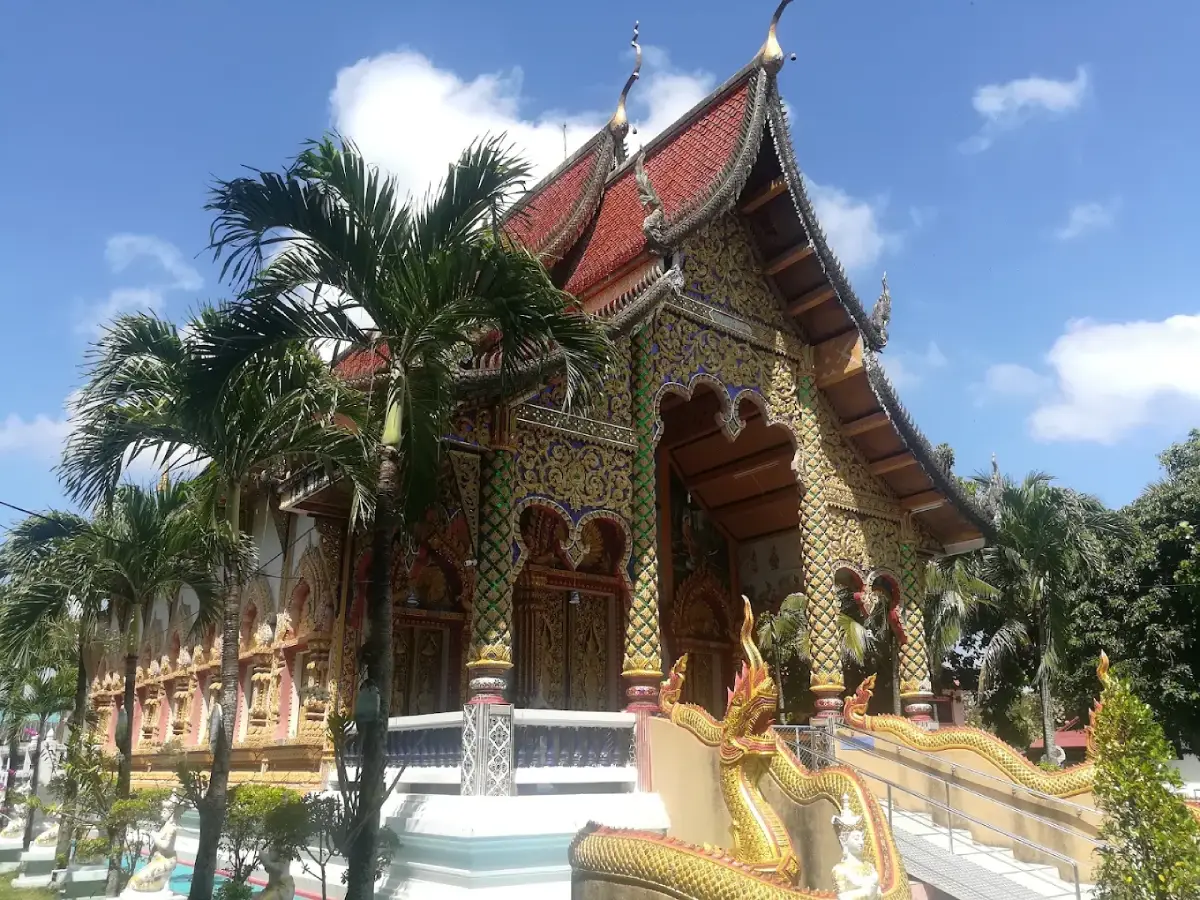
Wat Chai Chana Mongkhon
Operating day: Daily
Operating time: 08.00 - 17.00
Wat Chai Chana Mongkhon, also known locally as Wat Pa Pao, is a local Buddhist temple under the Mahanikaya sect, located in Village No. 3, Sai Mun Subdistrict, San Kamphaeng District, Chiang Mai Province 50130. The temple was officially established in 1672 and received Wisungkhamasima in 1982. Its abbot is Phra Natthawut Thitamedhi. Wat Chai Chana Mongkhon is an old community temple with an important relic chedi enshrining relics of the Buddha, making it one of the meaningful sacred places in San Kamphaeng.
Sai Mun Subdistrict is an important local area of San Kamphaeng District, where village temples, houses, agricultural land, local roads, and Lanna community life are closely connected. Wat Chai Chana Mongkhon stands within this living cultural landscape. It is not only a place for worship, but also a spiritual center that connects Buddhist faith with the everyday life of the Ban Pa Pao community.
The name “Wat Chai Chana Mongkhon” carries an auspicious meaning related to victory, success, and blessing. The local name “Wat Pa Pao” connects the temple with Ban Pa Pao and local identity. Together, the two names preserve both the temple’s spiritual meaning and its village-based memory.
The temple’s establishment in 1672 makes Wat Chai Chana Mongkhon one of the older temples in San Kamphaeng. Counting from that year, the temple is now more than 350 years old. Over this long period, it has remained part of the community through changes in settlement, agriculture, religion, and local culture. Its history gives the temple significance beyond ordinary village worship.
Receiving Wisungkhamasima in 1982 was an important religious milestone. In Thai Buddhist tradition, Wisungkhamasima is the consecrated boundary granted for formal monastic acts. This confirms the temple’s role as a fully established Buddhist temple within the monastic system and strengthens its function as a religious center for the local community.
The most important sacred feature of Wat Chai Chana Mongkhon is its relic chedi, which enshrines relics of the Buddha. For Buddhist devotees, a relic chedi is a deeply revered object of worship because it represents direct remembrance of the Buddha. Visitors come to pay respect, make merit, and experience the calm atmosphere of an old Lanna community temple.
The relic chedi of Wat Pa Pao has long served as a spiritual anchor for the local community. The faith of villagers is expressed through temple maintenance, annual ceremonies, merit-making, and the continued care of the sacred site. The temple is therefore not only a physical place, but also a center of shared faith and community unity.
The most important annual tradition of the temple is the relic chedi bathing ceremony. It is held on the full moon day of the eighth lunar month, or the ninth northern lunar month, each year. The ceremony brings together monks and villagers to pay respect to the relic chedi. This tradition has continued for more than 100 years and remains an important expression of Lanna Buddhist devotion in Ban Pa Pao.
In Lanna culture, bathing a relic chedi is a meaningful act of reverence, purification, and collective devotion. The ceremony allows the community to gather, support the temple, and renew its relationship with Buddhism. This annual tradition helps keep Wat Chai Chana Mongkhon active as a living temple rather than only an old historical site.
Phra Natthawut Thitamedhi is the abbot of Wat Chai Chana Mongkhon. In a community temple, the abbot plays an important role in caring for monastic life, leading ceremonies, maintaining temple grounds, guiding devotees, and supporting village merit-making. The temple continues through cooperation between monks and the local community.
Key things to see and respect at Wat Chai Chana Mongkhon include the relic chedi, worship area, temple courtyard, and the quiet village-temple atmosphere of Ban Pa Pao. The temple is not defined by large-scale tourism, but by its age, sacred relic chedi, annual tradition, and continuing role in community life.
Wat Chai Chana Mongkhon is suitable for travelers interested in old Lanna temples, relic chedis, village Buddhist traditions, and quiet cultural routes in San Kamphaeng. It is especially meaningful for those who want to see a community temple that still functions as a living spiritual center rather than a commercial tourist attraction.
The temple’s role in community life is expressed through Buddhist holy days, Kathin, forest robe offerings, Buddhist Lent, the end of Buddhist Lent, major Buddhist observances, and the annual relic chedi bathing tradition. Through these events, villagers gather to make merit, listen to Dhamma, support the temple, and preserve Lanna religious customs.
Wat Chai Chana Mongkhon can be linked with nearby temples in Sai Mun Subdistrict and San Kamphaeng, including Wat Sai Mun, Wat San Kang Pla, Wat San Khong, Wat Don Mun, and other village temples. These temples together show the religious network of San Kamphaeng communities, where each village temple continues to support local faith and social life.
Beyond Sai Mun, the temple can also be combined with cultural attractions in San Kamphaeng such as Bo Sang Umbrella Village, Ban Ton Pao, mulberry paper craft areas, MAIIAM Contemporary Art Museum, Baan Jang Nak, and temples in Ton Pao. This route gives visitors a fuller view of San Kamphaeng through temples, crafts, contemporary art, and Lanna village life.
Getting There from Chiang Mai city is convenient by private car, rental car, or local hired transport. Take the Chiang Mai–San Kamphaeng route toward San Kamphaeng District, then continue to Sai Mun Subdistrict and Village No. 3, Ban Pa Pao. The temple can be included in a local temple route with Wat Sai Mun, Wat San Kang Pla, and other nearby community temples.
A half-day itinerary can begin at Wat Chai Chana Mongkhon to pay respect to the relic chedi, then continue to Wat Sai Mun, Wat San Kang Pla, or Wat San Khong before stopping for food in the San Kamphaeng area. A longer route can continue to Bo Sang Umbrella Village, Ban Ton Pao, or MAIIAM Contemporary Art Museum for a broader cultural experience.
Visitors should dress modestly, keep noise low, avoid disturbing monks or local devotees, and behave respectfully in the temple grounds. During the relic chedi bathing ceremony, visitors should allow extra time and follow temple or community guidance. Photography should be discreet and should not disturb rituals or worshippers.
Wat Chai Chana Mongkhon deserves a place in San Kamphaeng’s cultural travel routes because it combines a long history since 1672, Wisungkhamasima since 1982, a relic chedi enshrining relics of the Buddha, and an annual relic bathing tradition continued by the community for more than a century. For travelers who want to understand San Kamphaeng’s Buddhist heritage beyond craft villages alone, this temple offers a calm and meaningful view of Lanna faith and community life.
| Name | Wat Chai Chana Mongkhon / Wat Pa Pao |
| Location | Ban Pa Pao, Village No. 3, Sai Mun Subdistrict, San Kamphaeng District, Chiang Mai Province |
| Address | Village No. 3, Sai Mun Subdistrict, San Kamphaeng District, Chiang Mai 50130, Thailand |
| Type | Local Buddhist temple under the Mahanikaya sect |
| Highlights | Old temple of Sai Mun, relic chedi enshrining relics of the Buddha, annual relic chedi bathing tradition, and quiet Lanna community-temple atmosphere |
| History | Officially established as a temple in 1672 and received Wisungkhamasima in 1982 |
| Local Name | Wat Pa Pao |
| Name Origin | The formal name conveys victory and auspiciousness, while the local name Wat Pa Pao connects the temple with Ban Pa Pao in Sai Mun Subdistrict |
| Abbot / Caretaker | Phra Natthawut Thitamedhi |
| What To See / Worship | Relic chedi enshrining relics of the Buddha, worship area, temple courtyard, and the village-temple atmosphere of Ban Pa Pao |
| Main Areas / Structures | Relic chedi, worship area, temple courtyard, and community merit-making area |
| Important Sacred Site | Relic chedi enshrining relics of the Buddha |
| Religious Activities | Annual relic chedi bathing ceremony on the full moon day of the eighth lunar month or ninth northern lunar month, Kathin, forest robe offerings, Buddhist holy days, Buddhist Lent, the end of Buddhist Lent, and major Buddhist observances |
| Community Importance | Spiritual center of Ban Pa Pao and Sai Mun Subdistrict, used for Buddhist ceremonies, merit-making, and the long-standing relic chedi bathing tradition |
| Travel Information | From Chiang Mai city, take the Chiang Mai–San Kamphaeng route toward San Kamphaeng District, then continue to Sai Mun Subdistrict and Ban Pa Pao, Village No. 3; best accessed by private car, rental car, or local hired transport |
| Current Status | Active community Buddhist temple used for local religious ceremonies |
| Main Areas / Zones | 1. Relic chedi 2. Worship area 3. Temple courtyard 4. Community merit-making area 5. Connected route to Ban Pa Pao and Sai Mun Subdistrict |
| Nearby Tourist Attractions | 1. Wat Sai Mun, about 2 km 2. Wat San Kang Pla, about 3 km 3. Wat San Khong, about 3 km 4. Bo Sang Umbrella Village, about 6 km 5. MAIIAM Contemporary Art Museum, about 7 km |
| Nearby Restaurants | 1. Tam Zaap San Kamphaeng, about 2 km, Tel. 089-559-0298 2. Five Star San Khong San Kamphaeng, about 3 km, Tel. 081-438-9913 3. Khao Soi View Na San Kamphaeng, about 4 km, Tel. 096-686-9779 4. Huen Chan Peng, about 4 km, Tel. 081-783-7981 5. Lumpini San Kamphaeng, about 5 km, Tel. 053-331-530 |
| Nearby Accommodations | 1. Wanda Vista Resort Khum Wang Nuea Chiang Mai, about 8 km 2. Huanmaisakngam Resort, about 10 km, Tel. 065-495-5365 3. The Vet Boutique Hotel, about 10 km, Tel. 052-011-179 4. Chiangmai Lanna Modern Loft Hotel, about 11 km, Tel. 062-181-9696, 063-465-7785, 082-347-2527 5. Viewdoi Art and Resort, about 12 km, Tel. 088-866-2562 |
Frequently Asked Questions (FAQ)
Q: Where is Wat Chai Chana Mongkhon located?
A: Wat Chai Chana Mongkhon, also known as Wat Pa Pao, is located in Village No. 3, Sai Mun Subdistrict, San Kamphaeng District, Chiang Mai Province 50130.
Q: What type of temple is Wat Chai Chana Mongkhon?
A: Wat Chai Chana Mongkhon is a local Buddhist temple under the Mahanikaya sect and serves as an important community temple of Ban Pa Pao.
Q: When was Wat Chai Chana Mongkhon established?
A: Wat Chai Chana Mongkhon was officially established as a temple in 1672 and received Wisungkhamasima in 1982.
Q: Who is the abbot of Wat Chai Chana Mongkhon?
A: The abbot of Wat Chai Chana Mongkhon is Phra Natthawut Thitamedhi.
Q: What are the highlights of Wat Chai Chana Mongkhon?
A: Highlights include the relic chedi enshrining relics of the Buddha, the temple’s long history, its calm village-temple atmosphere, and the annual relic chedi bathing tradition.
Q: What important tradition is held at Wat Chai Chana Mongkhon?
A: The important annual tradition is the relic chedi bathing ceremony, held on the full moon day of the eighth lunar month or the ninth northern lunar month.
Q: What nearby places can be visited with Wat Chai Chana Mongkhon?
A: Nearby places include Wat Sai Mun, Wat San Kang Pla, Wat San Khong, Bo Sang Umbrella Village, and MAIIAM Contemporary Art Museum.
 Category: ●Places of Worship
 Group: ●Temple
Last Update : 2 WeekAgo
 Last Update : 2 WeekAgo
 Click to Access the Navigation Map GPS
Wat Chai Chana Mongkhon Map
Recommend

 Muang Chiang Mai(121)Chom Thong(47)Mae Chaem(25)Chiang Dao(33)Doi Saket(68)Mae Taeng(85)Mae Rim(69)Samoeng(29)Fang(71)Mae Ai(59)Phrao(70)San Pa Tong(103)San Kamphaeng(66)San Sai(73)Hang Dong(73)Hot(32)Doi Tao(22)Omkoi(11)Saraphi(74)Wiang Haeng(15)Chai Prakan(28)Mae Wang(32)Mae On(22)Doi Lo(33)Galyani Vadhana(1)


