
lovethailand home >North Travel Attractions >Chiang Mai Travel Attractions >San Kamphaeng >Chae Chang > Wat Don Pin
TL;DR: Wat Don Pin is located at Village No. 5, Ban Don Pin, Chae Chang Subdistrict, San Kamphaeng District, Chiang Mai Province.

Wat Don Pin
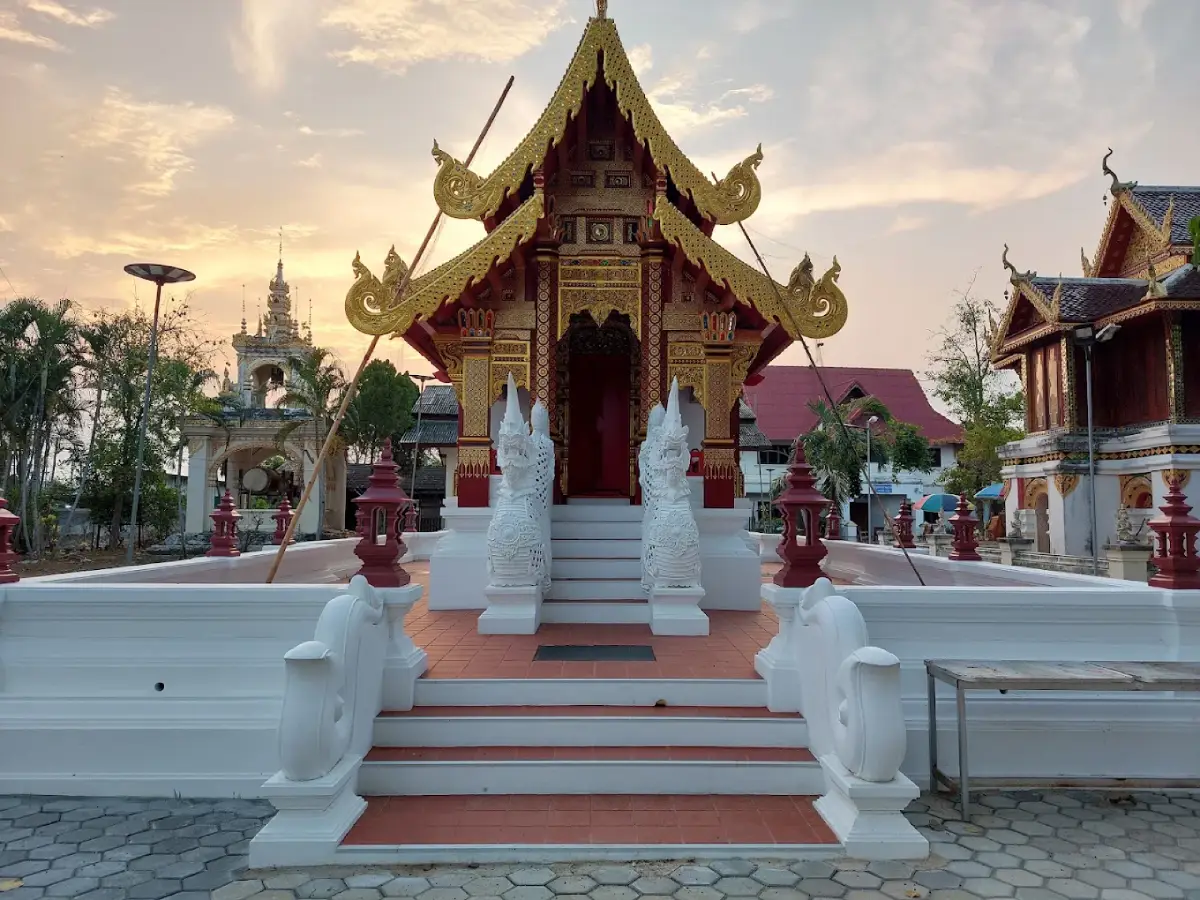
Operating day: Daily
Operating time: 08.00 - 17.00
Wat Don Pin, also spelled in some sources as Wat Donpin, is a local Buddhist temple under the Mahanikaya sect, located in Village No. 5, Ban Don Pin, Chae Chang Subdistrict, San Kamphaeng District, Chiang Mai Province. The temple was officially established in 1862 and has long served as a spiritual center for the Ban Don Pin community. It is used for merit-making, Buddhist ceremonies, Dhamma listening, annual religious traditions, and community gatherings. Wat Don Pin is therefore not only a village temple, but also an important place for understanding the living relationship between Buddhism, Lanna culture, and community life in Chae Chang.
Ban Don Pin is Village No. 5 of Chae Chang Subdistrict, an area in San Kamphaeng District that is closely connected with the Mae On River basin, agriculture, irrigation canals, and long-established village life. The wider Chae Chang area is associated with a local story about elephants used in teak logging. According to community memory, elephants once rested, bathed, and ate bamboo along the Mae On River, giving rise to the name “Chae Chang.” Wat Don Pin stands within this broader cultural landscape of river, farmland, forest memory, elephants, and Lanna Buddhist tradition.
The name “Don Pin” reflects the local way of naming places after landscape and settlement. The word “don” often refers to a raised area or a place less affected by flooding, while “pin” or “pin” appears in local spellings of both the village and temple names. The temple’s name is therefore directly linked with Ban Don Pin and preserves the identity of the community in the name of the sacred place itself.
The temple’s establishment in 1862 gives Wat Don Pin more than 160 years of history. During this long period, the San Kamphaeng area changed from a largely agricultural landscape into a district now known for crafts, cultural tourism, local temples, and heritage routes near Chiang Mai city. Wat Don Pin has remained a community temple rather than a large commercial tourist attraction, preserving the essential role of a Lanna village temple as a place for worship, ceremonies, sermons, monastic life, and community unity.
As a local temple under the Mahanikaya sect, Wat Don Pin belongs to the mainstream Thai Buddhist monastic tradition. A village temple like this is important because it remains close to everyday life. It supports Buddhist holy days, family merit ceremonies, ordinations, funerals, Kathin, forest robe offerings, Buddhist Lent activities, and other religious events that keep the temple and community connected throughout the year.
The abbot of Wat Don Pin is Phra Khru Wirot Yana Khun, formerly Phra Athikan Narongsak Wachirayanano. His role reflects the importance of monastic leadership in a community temple. In a village temple, the abbot is responsible not only for ceremonies, but also for guiding devotees, maintaining the temple, supporting local traditions, and preserving the temple as a peaceful spiritual center for the community.
Wat Don Pin is also interesting from an art and cultural heritage perspective. Photographic records identify mural paintings at Wat Donpin in San Kamphaeng District. Temple murals are valuable because they reflect local craftsmanship, Buddhist storytelling, devotional culture, and the artistic memory of the community. Even though detailed public descriptions of each mural scene are limited, the recorded existence of mural paintings adds an important cultural dimension to the temple.
Another important feature of Wat Don Pin is the annual relic-bathing tradition. Activities associated with the 2026 relic-bathing ceremony included Lanna music performed by the Chae Chang Cultural Council, a procession carrying ceremonial cloth for the relic stupa, and the bathing of the relic stupa. This tradition shows how the temple continues to support living Lanna culture, bringing villagers together through merit-making, music, procession, and shared devotion.
The temple’s relic stupa is one of the key sacred points for visitors to respect. A visit should begin with paying homage in the worship area, followed by a quiet walk through the temple grounds and the areas used for community ceremonies. Wat Don Pin is best understood as a working village temple rather than a staged tourist site. Its value lies in its peaceful atmosphere, local use, and continuing role in village life.
Wat Don Pin is part of a wider network of temples in Chae Chang Subdistrict. Nearby temples include Wat Chae Chang, Wat Dong Khilek, Wat Kritsana, and Wat Pa Pao. Visiting these places together helps travelers understand how each village temple serves as a spiritual and social center for its own community, while also forming part of the wider religious landscape of San Kamphaeng.
Wat Don Pin is also located on a cultural route leading toward Baan Jang Nak, the well-known Lanna woodcarving center in Buak Khang Subdistrict. Travel routes to Baan Jang Nak can pass Wat Chae Chang, Wat Don Pin, and Wat Buak Khang. This makes Wat Don Pin a useful stop for travelers interested in combining village temples, Lanna art, elephant woodcarving, and local cultural attractions in one itinerary.
Important things to see at Wat Don Pin include the worship area, the relic stupa, the temple courtyard, the area used for religious ceremonies, and the mural paintings recorded in cultural heritage materials. Visitors interested in Lanna art, community temples, and local Buddhist practice should take time to observe the temple quietly. The temple’s charm is found in small details, calm surroundings, and its connection with Ban Don Pin.
The atmosphere of Wat Don Pin is suitable for merit-making, quiet reflection, and a short cultural stop while traveling through San Kamphaeng. On ordinary days, visitors will find a calm village temple environment. During the relic-bathing tradition, the temple becomes more lively with Lanna music, ceremonial procession, local participation, and shared Buddhist devotion. This contrast shows how the temple functions both as a peaceful sacred place and as a cultural gathering point.
For cultural travelers, Wat Don Pin is suitable for those interested in community temples, Lanna traditions, local festivals, and quieter routes in San Kamphaeng. It can be combined with Wat Chae Chang, Wat Buak Khang, Baan Jang Nak, Bo Sang Umbrella Village, the San Kamphaeng Ceramics Museum, MAIIAM Contemporary Art Museum, and San Kamphaeng Hot Springs for a broader itinerary that includes religion, art, crafts, and local history.
Getting There from Chiang Mai city is easiest by private car, rental car, or local hired transport. Take the Chiang Mai–San Kamphaeng route toward San Kamphaeng District, then continue to Chae Chang Subdistrict and Ban Don Pin, Village No. 5. The temple is located at 108 Moo 5, Chae Chang Subdistrict, San Kamphaeng District, Chiang Mai 50130. Travelers heading toward Baan Jang Nak can use the route that passes Wat Chae Chang, Wat Don Pin, and Wat Buak Khang, making Wat Don Pin a natural cultural stop along the way.
Visitors should dress modestly, keep noise low, avoid disturbing monks or local devotees, and avoid touching religious objects or mural paintings. If taking photos inside buildings or near mural areas, visitors should be careful and avoid using flash where it may affect paintings or sacred objects. Wat Don Pin remains an active community temple, so respectful behavior is essential.
Wat Don Pin deserves attention as part of San Kamphaeng’s cultural travel routes because it combines a long history since 1862, the identity of a local Mahanikaya temple, mural heritage, an annual relic-bathing tradition, and the continuing spiritual life of Ban Don Pin. For travelers who want to understand San Kamphaeng beyond Bo Sang umbrellas and craft villages, this temple offers a quieter and more grounded view of Lanna Buddhist community culture.
| Name | Wat Don Pin / Wat Donpin |
| Location | Village No. 5, Ban Don Pin, Chae Chang Subdistrict, San Kamphaeng District, Chiang Mai Province |
| Address | 108 Moo 5, Chae Chang Subdistrict, San Kamphaeng District, Chiang Mai 50130, Thailand |
| Type | Local Buddhist temple under the Mahanikaya sect |
| Highlights | Old community temple of Ban Don Pin, annual relic-bathing tradition, mural paintings, peaceful Lanna village-temple atmosphere, and cultural route linking Wat Chae Chang, Wat Don Pin, Wat Buak Khang, and Baan Jang Nak |
| History | Officially established as a temple in 1862, making it an old community temple of Ban Don Pin and Chae Chang Subdistrict |
| Alternative Spellings | Wat Don Pin and Wat Donpin |
| Name Origin | Linked with Ban Don Pin, Village No. 5, Chae Chang Subdistrict; the word “don” reflects a raised settlement landscape |
| Abbot / Caretaker | Phra Khru Wirot Yana Khun, formerly Phra Athikan Narongsak Wachirayanano |
| What To See / Worship | Relic stupa, worship area, temple courtyard, mural paintings, and the atmosphere of Ban Don Pin community temple |
| Main Areas / Structures | Worship area, relic stupa, temple courtyard, merit-making area, and community religious space |
| Religious Activities | Annual relic-bathing tradition, Kathin, forest robe offerings, Buddhist holy days, Buddhist Lent, and major Buddhist observances |
| Community Importance | Spiritual center of Ban Don Pin, used for Buddhist ceremonies, merit-making, and Lanna cultural traditions in Chae Chang Subdistrict |
| Travel Information | From Chiang Mai city, take the Chiang Mai–San Kamphaeng route toward Chae Chang Subdistrict and Ban Don Pin; best accessed by private car, rental car, or local hired transport |
| Current Status | Active community Buddhist temple used for local religious ceremonies |
| Open Days | Daily |
| Main Contact Number | 053-332-963 |
| Main Areas / Zones | 1. Worship area 2. Relic stupa area 3. Temple courtyard 4. Mural painting area 5. Merit-making and community activity area |
| Nearby Tourist Attractions | 1. Wat Chae Chang, about 1 km 2. Wat Buak Khang, about 2 km 3. Baan Jang Nak, about 3 km 4. Bo Sang Umbrella Village, about 6 km 5. MAIIAM Contemporary Art Museum, about 8 km |
| Nearby Restaurants | 1. Cho Coffee Don Pin, about 1 km, Tel. 099-045-2788 2. San Kamphaeng Phochana, about 3 km 3. Krua Katjang San Kamphaeng, about 4 km, Tel. 090-891-3758 4. Nasi Jumpru, about 6 km 5. Som Tam Sud Soy Suan Bua, about 7 km, Tel. 096-184-5769 |
| Nearby Accommodations | 1. ORA HOUSE, about 4 km, Tel. 098-967-0527 2. Lamoon Cottage SanKampang, about 5 km, Tel. 094-723-5395 3. The Garden Echo, about 5 km, Tel. +886-955-282-028 4. Huanmaisakngam Resort, about 6 km, Tel. 065-495-5365 5. Viewdoi Art and Resort, about 12 km, Tel. 088-866-2562 |
Frequently Asked Questions (FAQ)
Q: Where is Wat Don Pin located?
A: Wat Don Pin is located in Village No. 5, Ban Don Pin, Chae Chang Subdistrict, San Kamphaeng District, Chiang Mai Province.
Q: What type of temple is Wat Don Pin?
A: Wat Don Pin is a local Buddhist temple under the Mahanikaya sect and serves as the community temple of Ban Don Pin.
Q: When was Wat Don Pin established?
A: Wat Don Pin was officially established as a temple in 1862, making it one of the old community temples of Chae Chang Subdistrict.
Q: Who is the abbot of Wat Don Pin?
A: The abbot of Wat Don Pin is Phra Khru Wirot Yana Khun, formerly Phra Athikan Narongsak Wachirayanano.
Q: What are the highlights of Wat Don Pin?
A: The highlights include the relic stupa, annual relic-bathing tradition, mural paintings, peaceful village-temple atmosphere, and its role as a spiritual center of Ban Don Pin.
Q: What important tradition is held at Wat Don Pin?
A: Wat Don Pin holds an annual relic-bathing tradition with Lanna music, a ceremonial cloth procession, and the bathing of the relic stupa.
Q: What nearby places can be visited with Wat Don Pin?
A: Nearby places include Wat Chae Chang, Wat Buak Khang, Baan Jang Nak, Bo Sang Umbrella Village, and MAIIAM Contemporary Art Museum.
 Category: ●Places of Worship
 Group: ●Temple
Last Update : 3 DayAgo
 Last Update : 3 DayAgo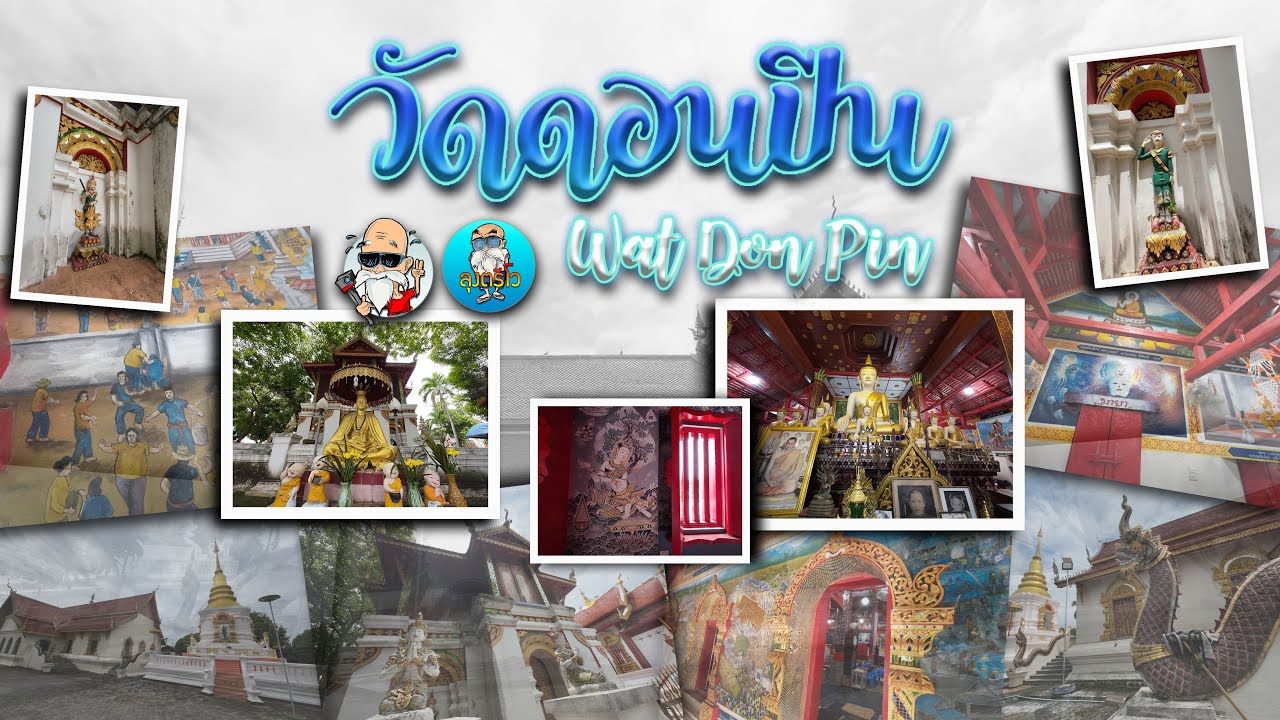
 Click to Access the Navigation Map GPS
Wat Don Pin Map
Recommend

 Muang Chiang Mai(121)Chom Thong(47)Mae Chaem(25)Chiang Dao(33)Doi Saket(68)Mae Taeng(85)Mae Rim(69)Samoeng(29)Fang(71)Mae Ai(59)Phrao(70)San Pa Tong(103)San Kamphaeng(66)San Sai(73)Hang Dong(73)Hot(32)Doi Tao(22)Omkoi(11)Saraphi(74)Wiang Haeng(15)Chai Prakan(28)Mae Wang(32)Mae On(22)Doi Lo(34)Galyani Vadhana(1)


