
lovethailand home >North Travel Attractions >Chiang Mai Travel Attractions >San Kamphaeng >Chae Chang > Wat Chae Chang
TL;DR: Wat Chae Chang is located at Ban Pa Phai, Village No. 7, Chae Chang Subdistrict, San Kamphaeng District, Chiang Mai Province, open Daily, hours 08.00 – 17.00.
Wat Chae Chang
Open Days: Daily
Opening Hours: 08.00 – 17.00
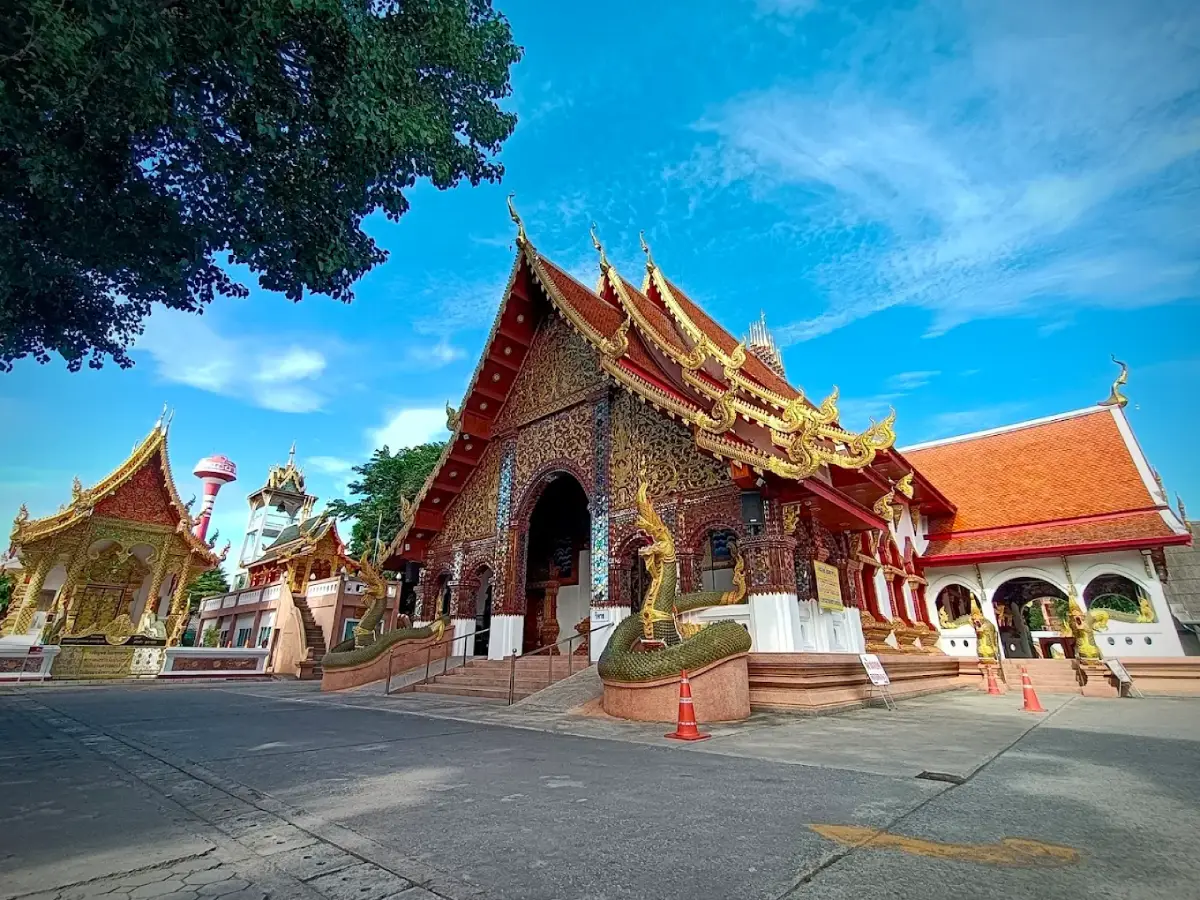
Wat Chae Chang, also known as Wat Chae Chang (Wat Pa Phai), is a local Buddhist temple under the Mahanikaya sect, located at 160 Moo 7, Ban Pa Phai, Chae Chang Subdistrict, San Kamphaeng District, Chiang Mai Province 50130. The temple was officially established in 1822 and received its royal boundary marker, or Wisungkhamasima, in 1944. It is one of the important community temples of Ban Pa Phai and Chae Chang Subdistrict, serving as a place for Buddhist ceremonies, merit-making, annual traditions, and community gatherings.
Wat Chae Chang is strongly connected with the landscape of the Mae On River and the local memory of the Chae Chang community. The temple stands in Ban Pa Phai, a village associated with bamboo groves and old stories about elephants used in teak logging. Local tradition says that in the past, teak logs were floated along the Mae On River and elephants were used to drag them onward. When the elephants were free from work, they rested, ate bamboo, bathed, and soaked in the river around this area. People began calling the place “Chang Chae Nam,” meaning elephants soaking in water, and the name gradually became “Chae Chang.”
This story makes Wat Chae Chang more than a religious site. It is also a place that preserves the memory of river life, teak logging, elephants, bamboo groves, and the early settlement of Ban Pa Phai. The temple’s identity is therefore closely tied to local geography and community history. For visitors, Wat Chae Chang offers a deeper understanding of San Kamphaeng beyond craft villages and well-known tourist routes.
The temple land covers about 3 rai, 3 ngan, and 48 square wah, with two plots of monastic land covering 1 ngan and 5 square wah. The temple is surrounded by roads, waterways, and the local community, showing its central position within village life. Wat Chae Chang functions both as a sacred Buddhist space and as a community space where local people gather for religious and cultural activities.
Important temple structures include the ordination hall, sermon hall, alms pavilion, Thai-style monks’ quarters, and viharn. These buildings reflect the full role of a working community temple. The ordination hall is used for formal monastic acts. The viharn is a space for worship and ceremonies. The sermon hall supports Dhamma teaching, gatherings, and community merit-making. The alms pavilion and monks’ quarters support the daily life of monks and the religious activities of local residents.
The ordination hall is especially important because Wat Chae Chang received Wisungkhamasima on 8 September 1944. The consecrated boundary measures 40 meters wide and 75 meters long. In Thai Buddhist tradition, this royal boundary allows the ordination hall to function properly as a formal space for monastic ceremonies. This marks an important stage in the temple’s religious status and community importance.
The temple’s chedi is one of its most important sacred landmarks. It is respected by local Buddhists as a relic stupa and serves as a major spiritual anchor for the community. The chedi is also the center of the annual relic-bathing tradition, when local people gather to pay respect, make merit, listen to sermons, and strengthen community ties through shared religious practice.
The large entrance arch, viharn, ordination hall, and temple courtyard are also worth seeing. The entrance arch marks the transition from the village into the sacred temple space. The viharn and courtyard create a calm environment for prayer and reflection. Wat Chae Chang is not a crowded commercial attraction; it is a living village temple where visitors can observe how Buddhism remains part of everyday community life.
The temple has been cared for by a succession of abbots over many generations. Recorded names include Phra Athikan Thammapidok, Phra Athikan Duang Ta Dhammanyo, Phra Athikan Kantha Chittapanyo, Phra Athikan Phimsan Suchitto, Phra Athikan Kham Pan Naratho, Phra Athikan Duang Chan Chanthawanso, Phra Khru Wisut Intasan, and Phra Athikan Sutthirak Akkadhammo, who is identified as the current abbot in the user-provided information. This continuity shows the temple’s long role in the religious and social life of Ban Pa Phai.
Phra Athikan Sutthirak Akkadhammo plays an important role as abbot of Wat Chae Chang. In a community temple, the abbot is responsible not only for religious ceremonies but also for maintaining monastic life, guiding devotees, supporting community traditions, and preserving the temple as a peaceful spiritual center for villagers.
The most important annual tradition of Wat Chae Chang is the bathing of the temple’s relic stupa. This ceremony is held on the full moon day of the 8th lunar month, or the 9th northern lunar month. The tradition has been practiced for more than 100 years and remains an important expression of local faith. Villagers gather to bathe the relic stupa, make offerings, listen to Dhamma, and renew the bond between temple and community.
Wat Chae Chang also supports regular Buddhist activities such as merit-making on Buddhist holy days, Kathin, forest robe offerings, family merit ceremonies, Buddhist Lent activities, and major religious observances. The temple therefore remains a living spiritual center, not merely a historical monument.
For travelers, Wat Chae Chang is a meaningful stop on a cultural route through San Kamphaeng. It can be combined with Wat Kritsana, Wat Pa Tueng, the San Kamphaeng Ceramics Museum, Bo Sang Umbrella Village, Baan Jang Nak, and San Kamphaeng Hot Springs. This route gives visitors a fuller view of San Kamphaeng through temples, local history, crafts, ceramics, and northern Thai community culture.
Key things to see inside Wat Chae Chang include the relic chedi, ordination hall, viharn, entrance arch, sermon hall, and the peaceful temple grounds. Visitors interested in photography should be respectful, avoid disturbing ceremonies, and ask before taking photos inside religious buildings or near sacred objects.
Getting There from Chiang Mai city is convenient by private car, rental car, or local hired transport. Take the Chiang Mai–San Kamphaeng route toward San Kamphaeng District, then continue into Chae Chang Subdistrict and Ban Pa Phai. The temple is located at 160 Moo 7. The route works well for a half-day or full-day cultural trip because several temples and community attractions are located nearby.
A good itinerary is to begin at Wat Chae Chang to pay respect at the chedi and learn the local story of Chae Chang, then continue to Wat Kritsana, Wat Pa Tueng, the San Kamphaeng Ceramics Museum, Bo Sang Umbrella Village, or Baan Jang Nak. Travelers who have more time can continue to San Kamphaeng Hot Springs for a relaxing end to the day.
Visitors should dress modestly, keep noise low, avoid climbing on the chedi or religious structures, and keep the temple area clean. Wat Chae Chang is still an active Buddhist temple used by monks and local villagers, so respectful behavior is essential. A visit here is best experienced slowly, with attention to the temple’s history, community role, and calm atmosphere.
Wat Chae Chang deserves a place in Chiang Mai’s cultural travel routes because it brings together long temple history, a local origin story, Buddhist architecture, an annual relic-bathing tradition, and the living faith of the Ban Pa Phai community. For travelers who want to understand San Kamphaeng beyond its famous handicrafts, this temple offers a deeper and quieter perspective.
| Name | Wat Chae Chang / Wat Chae Chang (Wat Pa Phai) |
| Location | Ban Pa Phai, Village No. 7, Chae Chang Subdistrict, San Kamphaeng District, Chiang Mai Province |
| Address | 160 Moo 7, Chae Chang Subdistrict, San Kamphaeng District, Chiang Mai 50130, Thailand |
| Coordinates | P4JH+C45, Pa Phai, Chae Chang Subdistrict, San Kamphaeng District, Chiang Mai 50130 |
| Type | Local Buddhist temple under the Mahanikaya sect |
| Highlights | Relic chedi, old temple of Ban Pa Phai, origin story of Chae Chang, large viharn, ordination hall, entrance arch, and annual relic-bathing tradition |
| History | Officially established as a temple in 1822 and received Wisungkhamasima on 8 September 1944 |
| Name Origin | Linked to the local story of elephants resting and soaking in the Mae On River near bamboo groves, leading to the name Chae Chang |
| Important Sacred Site | The relic chedi, which is the spiritual center of the community and the focus of the annual relic-bathing tradition |
| Main Structures | Ordination hall, sermon hall, alms pavilion, Thai-style monks’ quarters, viharn, entrance arch, and relic chedi |
| Temple Land | About 3 rai, 3 ngan, and 48 square wah, with two plots of monastic land covering 1 ngan and 5 square wah |
| Abbot / Caretaker | Phra Athikan Sutthirak Akkadhammo |
| Important Tradition | Annual relic-bathing tradition on the full moon day of the 8th lunar month, or the 9th northern lunar month, along with Kathin, forest robe offerings, Buddhist holy days, and major religious observances |
| Travel Information | From Chiang Mai city, take the Chiang Mai–San Kamphaeng route toward San Kamphaeng District, then continue to Chae Chang Subdistrict and Ban Pa Phai; best accessed by private car, rental car, or local hired transport |
| Current Status | Active community Buddhist temple used for local religious ceremonies |
| Open Days | Daily |
| Opening Hours | 08.00 – 17.00 |
| Main Contact Number | 053-332-825 |
| Main Areas / Zones | 1. Relic chedi area 2. Ordination hall 3. Viharn 4. Sermon hall and alms pavilion 5. Temple courtyard and entrance arch |
| Nearby Tourist Attractions | 1. Wat Kritsana (Doi Yao), about 4 km 2. Wat Pa Tueng, about 5 km 3. San Kamphaeng Ceramics Museum at Wat Pa Tueng, about 5 km 4. Bo Sang Umbrella Village, about 8 km 5. Baan Jang Nak, about 10 km |
| Nearby Restaurants | 1. Ancient Dragonfly Noodle Shop next to Wat Chae Chang, about 0.2 km, Tel. 099-143-4605 2. Khao Kaeng Boran Pa Phai Wat Chae Chang, about 0.3 km 3. San Kamphaeng Phochana, about 2 km 4. Nasi Jumpru, about 5 km 5. Krua Gatchang San Kamphaeng, about 7 km, Tel. 090-891-3758 |
| Nearby Accommodations | 1. 102 Residence / Ora House, about 5 km, Tel. 098-967-0527 2. The Puka Boutique Resort, about 8 km, Tel. 053-965-499 3. Alpine Golf Resort Chiang Mai, about 13 km, Tel. 053-880-888 4. Baan Pingkan Wellness Resort, about 14 km 5. Viewdoi Art and Resort, about 14 km |
Frequently Asked Questions (FAQ)
Q: Where is Wat Chae Chang located?
A: Wat Chae Chang is located at 160 Moo 7, Ban Pa Phai, Chae Chang Subdistrict, San Kamphaeng District, Chiang Mai Province 50130.
Q: Does Wat Chae Chang have another name?
A: Yes. It is also known as Wat Chae Chang (Wat Pa Phai) because it is located in the Ban Pa Phai community.
Q: When was Wat Chae Chang established?
A: Wat Chae Chang was officially established as a temple in 1822 and received Wisungkhamasima on 8 September 1944.
Q: What are the important things to see at Wat Chae Chang?
A: Important things to see include the relic chedi, ordination hall, viharn, sermon hall, alms pavilion, Thai-style monks’ quarters, and entrance arch.
Q: What important tradition is held at Wat Chae Chang?
A: The temple holds an annual relic-bathing tradition on the full moon day of the 8th lunar month, or the 9th northern lunar month.
Q: Who should visit Wat Chae Chang?
A: It is suitable for travelers interested in old local temples, Lanna community life, Buddhist traditions, and quiet cultural routes in San Kamphaeng.
Q: What nearby places can be visited with Wat Chae Chang?
A: Nearby places include Wat Kritsana, Wat Pa Tueng, the San Kamphaeng Ceramics Museum, Bo Sang Umbrella Village, and Baan Jang Nak.
 Category: ●Places of Worship
 Group: ●Temple
Last Update : 7 DayAgo
 Last Update : 7 DayAgo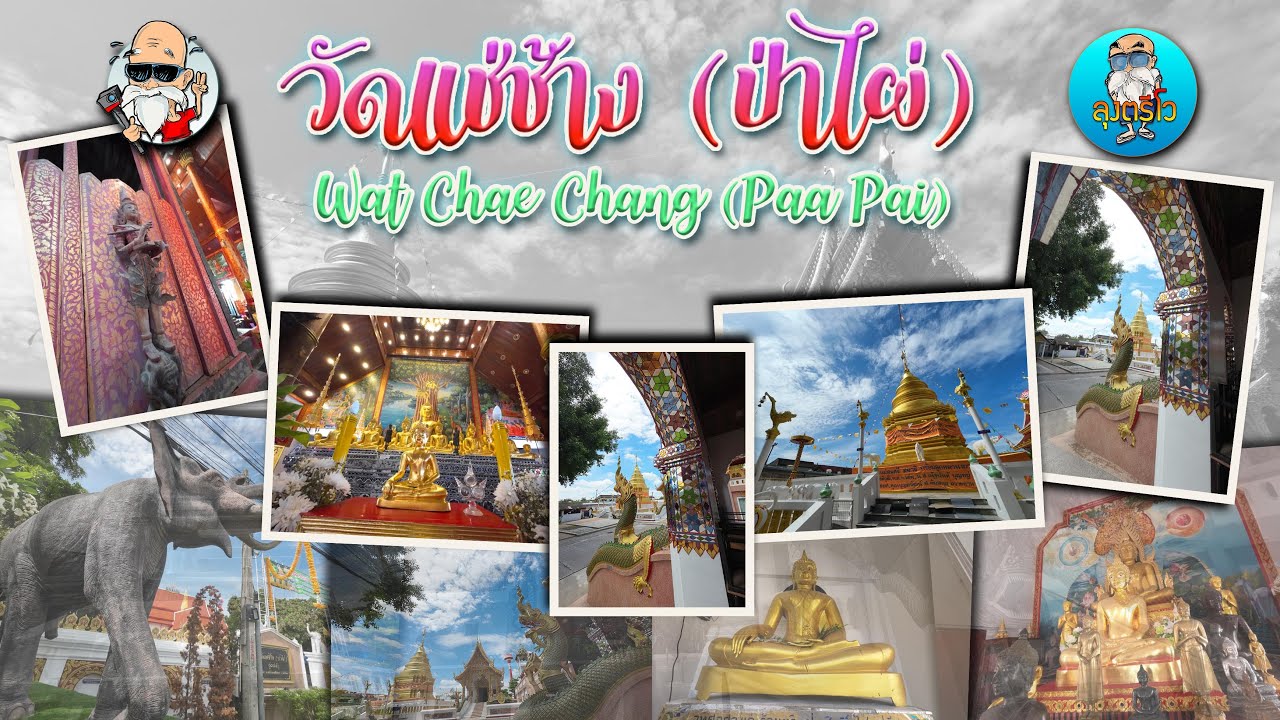
 Click to Access the Navigation Map GPS
Wat Chae Chang Map
Recommend

 Muang Chiang Mai(121)Chom Thong(47)Mae Chaem(25)Chiang Dao(33)Doi Saket(68)Mae Taeng(85)Mae Rim(69)Samoeng(29)Fang(71)Mae Ai(59)Phrao(70)San Pa Tong(103)San Kamphaeng(66)San Sai(73)Hang Dong(73)Hot(32)Doi Tao(22)Omkoi(11)Saraphi(74)Wiang Haeng(15)Chai Prakan(28)Mae Wang(32)Mae On(22)Doi Lo(34)Galyani Vadhana(1)


