
lovethailand home >North Travel Attractions >Chiang Mai Travel Attractions >Samoeng >Samoeng Nuea > Wat Mae Phae
TL;DR: Wat Mae Phae is located at Moo 2, Ban Mae Phae, Samoeng Nuea Subdistrict, Samoeng District, Chiang Mai Province 50250.

Wat Mae Phae
Operating day: Daily
Operating time: 08.00 - 17.00
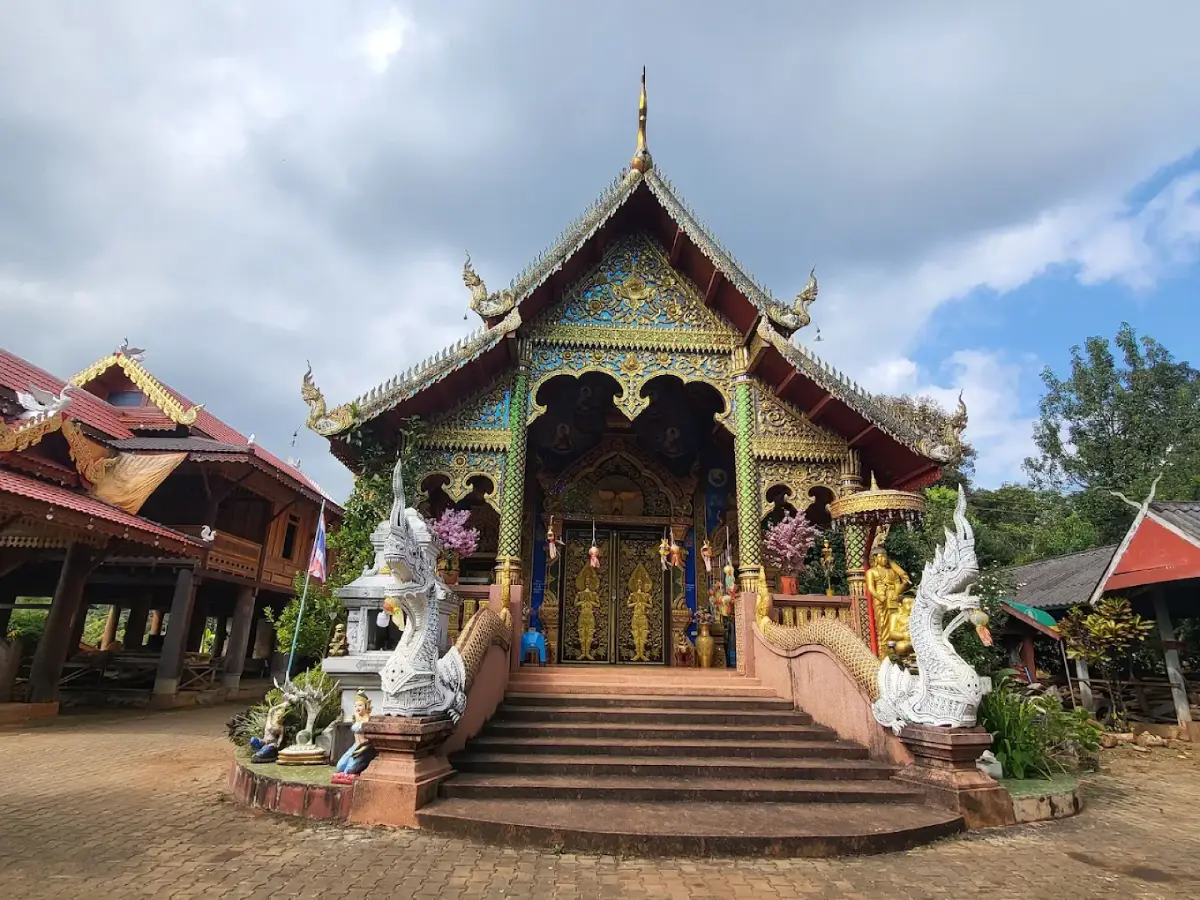
Wat Mae Phae is a local Buddhist temple under the Maha Nikaya order, located in Moo 2, Ban Mae Phae, Samoeng Nuea Subdistrict, Samoeng District, Chiang Mai Province. The temple was officially permitted to be established in B.E. 2459 and is led by Phra Thakun, monastic name Thanakuro. Wat Mae Phae is a spiritual center for the Ban Mae Phae community, serving as a place for worship, merit-making, Dhamma listening, and Buddhist activities throughout the year. Its character reflects a Lanna community temple in the mountain landscape of Samoeng Nuea, closely connected with local agriculture, Mae Phae stream, the Mae Phae Royal Project route, and the natural environment of western Chiang Mai.
Wat Mae Phae is best understood as a living village temple rather than a large tourist attraction. Its value lies in its long role as a shared religious space for local residents. Villagers come to the temple for Buddhist holy days, Kathin ceremonies, forest robe offerings, Buddhist Lent activities, end-of-Lent merit-making, and annual community events. Visitors can experience a quiet local temple that remains connected with everyday life in Ban Mae Phae.
The documented history of Wat Mae Phae begins with its official establishment in B.E. 2459. This gives the temple more than a century of history as a community temple in Samoeng Nuea. In a mountain village context, a temple was essential for merit-making, sermons, ceremonies, moral learning, and community gatherings. Wat Mae Phae therefore developed as a spiritual and social center for Ban Mae Phae.
Ban Mae Phae is Moo 2 of Samoeng Nuea Subdistrict in Samoeng District, Chiang Mai. The surrounding area is a rural mountain community connected with agriculture, local waterways, and village routes. Mae Phae stream is one of the important local waterways in the area. This setting means that Wat Mae Phae is not an isolated religious place, but part of a cultural landscape where village life, temple life, forests, streams, and agricultural fields remain closely connected.
The Mae Phae area is also home to the Mae Phae Royal Project Development Center, which supports highland farmers through safe food production, fruit cultivation, tea and coffee, field crops, livestock, reduced chemical use, and natural resource conservation. This context helps present Ban Mae Phae as a highland agricultural community with economic, social, environmental, and cultural dimensions. Wat Mae Phae serves as the community’s spiritual anchor within this wider landscape of development and conservation.
The relationship between Wat Mae Phae and the Ban Mae Phae community is culturally significant. In a mountain farming village, a temple is more than a place for rituals. It is a shared meeting point, a space for annual merit-making, a place for communication and cooperation, and a center of community memory. Because the temple carries the same name as the village, Wat Mae Phae is closely tied to local identity and the shared life of the community.
Phra Thakun, Thanakuro, is the abbot of Wat Mae Phae. His role includes caring for the temple, leading Buddhist activities, guiding lay devotees, and maintaining the continuity of Buddhist practice in Ban Mae Phae. In a village temple, the abbot is both a religious leader and a community figure who helps connect monks, villagers, and local traditions.
Publicly confirmed information about specific temple buildings and sacred objects at Wat Mae Phae is limited. For that reason, the temple should be presented through details that can be supported directly: its name, location, Maha Nikaya status, establishment year, abbot, and community role. Visitors should respect the worship areas, temple grounds, ceremony areas, and monastic spaces as sacred areas used by local residents.
The main appeal of Wat Mae Phae lies in its identity as an old community temple of Samoeng Nuea with more than a century of history. It is suitable for travelers interested in local temples, Lanna community life, highland agricultural villages, and the Mae Phae–Pong Kwao route. The temple has a modest and calm atmosphere, offering a deeper view of Samoeng beyond cafés, strawberry farms, and scenic viewpoints.
In the Lanna cultural context, Wat Mae Phae links religion with community life. Merit-making activities bring villagers together to make offerings, listen to Dhamma teachings, prepare temple grounds, and pass on local practices from older generations to younger ones. The temple therefore keeps local Buddhist culture alive through repeated participation in real community life.
Religious activities at Wat Mae Phae follow the rhythm of northern Thai village temples. These include Buddhist holy day observances, Kathin ceremonies, forest robe offerings, Buddhist Lent activities, end-of-Lent merit-making, major Buddhist holy days, and Northern Thai New Year traditions. These events are both religious occasions and social mechanisms that strengthen community relationships.
The role of Wat Mae Phae can be understood in several dimensions. Religiously, it is a place for worship, merit-making, and Dhamma listening. Socially, it is a gathering place for villagers during annual ceremonies and community activities. Culturally, it preserves the Lanna relationship between village, temple, and community. Spiritually, it gives local residents a place for reflection, calmness, and moral support.
Ban Mae Phae and its surrounding area are strongly connected with the Mae Phae Royal Project, which supports safe food production, highland crops, and natural resource conservation. A visit to Wat Mae Phae can therefore be understood together with the area’s agricultural development context. The temple provides the spiritual dimension, while the Royal Project reflects the community’s livelihood and environmental development.
The atmosphere of Wat Mae Phae is peaceful and rural. It is suitable for travelers who want to make merit while exploring Samoeng Nuea, learn about Lanna village temples, or connect temple visits with highland agriculture and natural attractions such as Pong Kwao Hot Spring. Visitors should approach the temple as an active community religious space rather than a purely touristic site.
Visitors should dress modestly, speak quietly, and respect worship areas, monastic spaces, and ceremony areas. During Buddhist holy days or merit-making events, travelers should avoid disturbing monks and villagers. A respectful visit allows travelers to experience the temple’s calm atmosphere while supporting the community’s continued use of the space.
Getting There is most convenient by private car or rental car. From Chiang Mai city, travelers can drive toward Samoeng District via the Mae Rim–Samoeng route or the Hang Dong–Samoeng route, then continue to Samoeng Nuea Subdistrict and Ban Mae Phae, Moo 2. The route includes mountain roads and rural village roads, so careful driving is recommended, especially during the rainy season or late afternoon.
A visit to Wat Mae Phae can be combined with nearby places in Samoeng Nuea, including the Mae Phae Royal Project Development Center, Wat Pong Pa, Wat Mae Loei, Wat Ban Pok, Wat Ton Lan, Wat Thung Lom, Wat Sala Pong Kwao, and Pong Kwao Hot Spring. This route is suitable for travelers who want to experience community temples, highland agriculture, nature, hot springs, cafés, restaurants, and mountain accommodation in western Chiang Mai.
| Name | Wat Mae Phae |
| Type | Local Buddhist Temple Under The Maha Nikaya Order |
| Location | Moo 2, Ban Mae Phae, Samoeng Nuea Subdistrict, Samoeng District, Chiang Mai Province 50250 |
| Highlights | A community temple of Ban Mae Phae, established in B.E. 2459, located on a highland agricultural route near the Mae Phae Royal Project Development Center and Pong Kwao Hot Spring route |
| History / Religious Status | Officially permitted to be established as a temple in B.E. 2459 and maintained as a Maha Nikaya community temple of Ban Mae Phae in Samoeng Nuea |
| Name Origin | Named after Ban Mae Phae, the Moo 2 community where the temple is located, and connected with the Mae Phae area and local stream context in Samoeng Nuea |
| Distinctive Features | A Lanna community temple in the mountain landscape of Samoeng, connected with Ban Mae Phae, highland agriculture, the Royal Project area, and local community life |
| Main Areas / Zones | Worship area, temple grounds, ceremony area, monastic area, and community Buddhist activity space |
| Abbot / Caretaker | Phra Thakun, Thanakuro |
| Traditions / Religious Activities | Buddhist holy day observances, Kathin ceremonies, forest robe offerings, Buddhist Lent activities, end-of-Lent merit-making, major Buddhist holy days, and Northern Thai New Year traditions |
| Community Role | A spiritual center for Ban Mae Phae, supporting worship, merit-making, Dhamma listening, Buddhist activities, and Lanna community continuity in Samoeng Nuea |
| Nearby Context | Near the Mae Phae Royal Project Development Center, which supports safe food production, fruit cultivation, tea and coffee, field crops, livestock, and natural resource conservation |
| Travel Information | Best reached by private car or rental car from Chiang Mai city to Samoeng District, then onward to Samoeng Nuea Subdistrict and Ban Mae Phae, Moo 2. The route includes mountain and rural roads. |
| Current Status | A Maha Nikaya community temple of Ban Mae Phae, used for worship, merit-making, sermons, and Buddhist community activities |
| Facilities | Temple grounds, worship area, ceremony area, and community Buddhist activity space |
| Nearby Tourist Attractions | 1. Mae Phae Royal Project Development Center, about 1 km 2. Wat Pong Pa, about 8 km 3. Wat Mae Loei, about 9 km 4. Pong Kwao Hot Spring, about 10 km 5. Wat Sala Pong Kwao, about 10 km 6. Wat Ban Pok, about 12 km 7. Wat Ton Lan, about 14 km |
| Nearby Restaurants | 1. Food Service Area At Pong Kwao Hot Spring, about 10 km 2. Ice Cream Café At Samoeng, about 22 km, Tel. 081-751-2191 3. Baan Coffee Samoeng, about 23 km, Tel. 082-763-3400 4. Cafe De Mountain, about 24 km, Tel. 098-506-5306 5. Coffee By Aitsara, about 26 km |
| Nearby Accommodations | 1. Baan Amphor Hotel, Pong Kwao Hot Spring, about 10 km, Tel. 086-012-3771, 097-429-1453 2. Pong Kwao Community Homestay, about 11 km 3. Forest Guesthouse, about 24 km, Tel. 084-371-5055 4. Lhongkhao Samoeng, about 26 km, Tel. 089-504-8108 5. Rai Nap-Phupha, about 28 km, Tel. 088-404-2553, 081-603-9800, 053-378-414 |
Frequently Asked Questions (FAQ)
Q: Where Is Wat Mae Phae Located?
A: Wat Mae Phae is located in Moo 2, Ban Mae Phae, Samoeng Nuea Subdistrict, Samoeng District, Chiang Mai Province 50250.
Q: What Is The History Of Wat Mae Phae?
A: Wat Mae Phae was officially permitted to be established in B.E. 2459. It is a Maha Nikaya community temple of Ban Mae Phae in Samoeng Nuea and has served the community for more than a century.
Q: Who Is The Abbot Of Wat Mae Phae?
A: The abbot of Wat Mae Phae is Phra Thakun, Thanakuro.
Q: What Is The Main Highlight Of Wat Mae Phae?
A: The main highlight is its role as a Lanna community temple of Ban Mae Phae, located on a highland agricultural route near the Mae Phae Royal Project Development Center and natural attractions of Samoeng Nuea.
Q: Why Is Wat Mae Phae Important To The Local Community?
A: Wat Mae Phae is a spiritual center for Ban Mae Phae, supporting worship, merit-making, Dhamma listening, Buddhist activities, and the continuity of Lanna community life.
Q: What Kind Of Travelers Is Wat Mae Phae Suitable For?
A: It is suitable for travelers interested in local temples, Lanna village culture, highland agriculture, Royal Project routes, and quiet cultural travel in Samoeng Nuea.
Q: How Can Travelers Get To Wat Mae Phae?
A: The most convenient way is by private car or rental car from Chiang Mai city to Samoeng District, then onward to Samoeng Nuea Subdistrict and Ban Mae Phae, Moo 2. The route includes mountain and rural roads.
Q: What Nearby Places Can Travelers Visit With Wat Mae Phae?
A: Travelers can combine the visit with the Mae Phae Royal Project Development Center, Wat Pong Pa, Wat Mae Loei, Pong Kwao Hot Spring, Wat Sala Pong Kwao, Wat Ban Pok, and Wat Ton Lan.
 Category: ●Places of Worship
 Group: ●Temple
Last Update : 1 WeekAgo
 Last Update : 1 WeekAgo
 Click to Access the Navigation Map GPS
Wat Mae Phae Map
Recommend

 Muang Chiang Mai(121)Chom Thong(47)Mae Chaem(25)Chiang Dao(33)Doi Saket(68)Mae Taeng(85)Mae Rim(69)Samoeng(29)Fang(71)Mae Ai(59)Phrao(70)San Pa Tong(103)San Kamphaeng(66)San Sai(73)Hang Dong(73)Hot(32)Doi Tao(22)Omkoi(11)Saraphi(74)Wiang Haeng(15)Chai Prakan(28)Mae Wang(32)Mae On(22)Doi Lo(34)Galyani Vadhana(1)


