
lovethailand home >North Travel Attractions >Chiang Mai Travel Attractions >Samoeng >Samoeng Tai > Wat Kong Khak Luang
TL;DR: Wat Kong Khak Luang is located at 17 Moo 7, Ban Kong Khak Luang, Samoeng Tai Subdistrict, Samoeng District, Chiang Mai Province, open Daily, hours 08.00 - 17.00.
Wat Kong Khak Luang
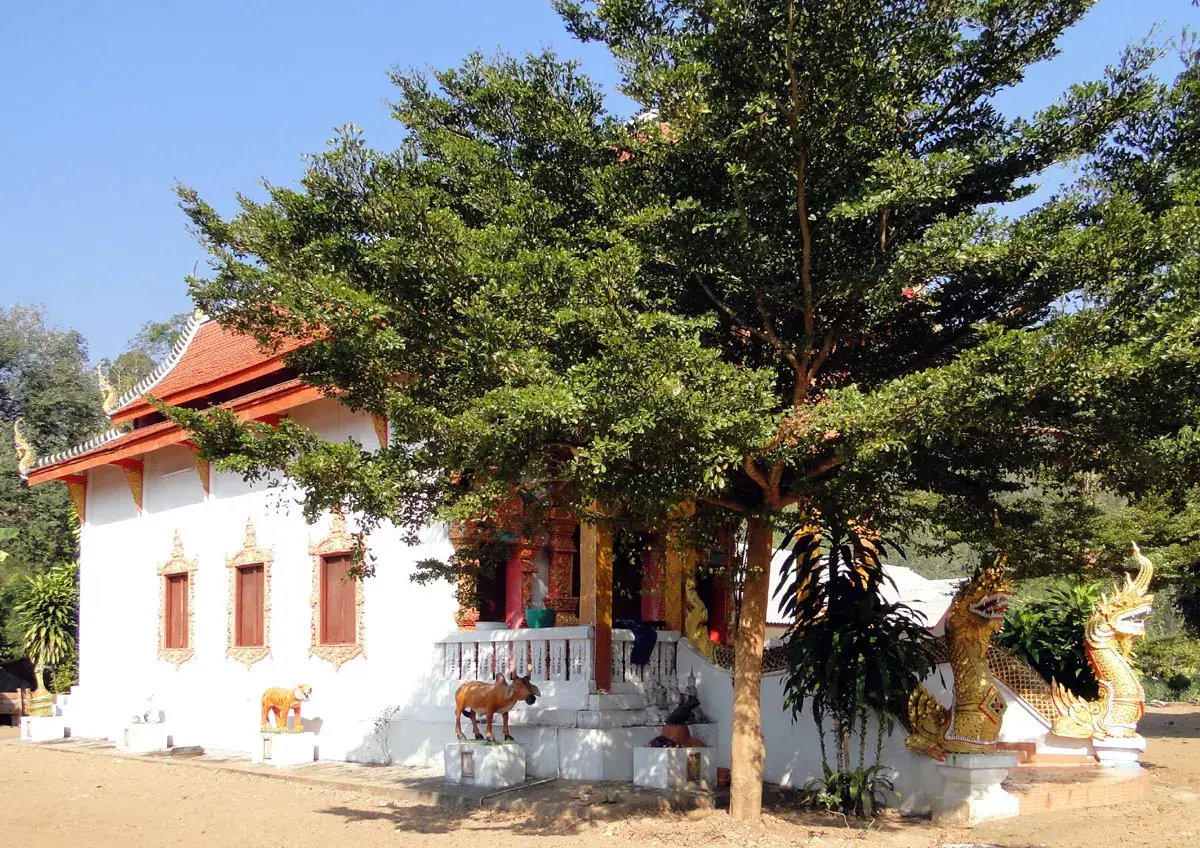
Open Days: Daily
Opening Hours: 08.00 - 17.00
Wat Kong Khak Luang is a local Buddhist temple under the Maha Nikaya order, located at 17 Moo 7, Ban Kong Khak Luang, Samoeng Tai Subdistrict, Samoeng District, Chiang Mai Province. The temple was established in B.E. 2413 on a land area of 2 ngan and 91 square wah. The current abbot is Phra Mongkhon Chanthapanyo. Wat Kong Khak Luang is an important community temple of Ban Kong Khak Luang, serving as a place for worship, merit-making, Buddhist ceremonies, and local community gatherings.
Wat Kong Khak Luang is best understood as a living village temple rather than a large mainstream tourist attraction. Its value lies in its long connection with local memory, Buddhist practice, and the identity of Ban Kong Khak Luang. The temple is located in Samoeng Tai, a mountainous area of western Chiang Mai where community life is closely connected with agriculture, local traditions, and the surrounding natural landscape. Visitors can experience a quiet rural temple that reflects the religious and cultural life of the community.
The temple was founded in B.E. 2413 by Nai Luang Mueang, who led local villagers in establishing the temple. This early establishment shows that Ban Kong Khak Luang had already developed as a settled community with a need for a central Buddhist place of worship. In rural northern Thailand, a village temple is not only a religious site. It is also a social institution where people gather, make merit, listen to Dhamma teachings, and maintain shared traditions.
The name “Kong Khak Luang” is linked to a distinctive local story. In the past, this area was considered a suitable resting place for travelers and military movement because of its strategic location, the presence of the Samoeng River, abundant moisture, and large trees. Local tradition says that armies once passed through this area, and some villagers associate the route with the army of King Naresuan. Although this account belongs to local oral tradition, it remains an important part of the community’s memory and gives the temple a deeper historical dimension.
Another explanation of the name is related to drum-making. The large trees around the temple area were suitable for making wooden drums. Villagers shaped the wood by carving or hewing it into drum bodies. In Thai, the act of hewing wood is called “thak,” and in local pronunciation the word gradually shifted into “khak.” Because the area was associated with a concentration of drum-making wood, people came to call it “Kong Khak Luang.” This story connects the name of the village and temple with natural resources, woodworking knowledge, and local language.
Wat Kong Khak Luang therefore preserves more than religious history. It also preserves layers of community memory: the old travel route, the Samoeng River, large trees, drum-making, and the linguistic transformation from “thak” to “khak.” These details make the temple a meaningful place for understanding how local names in northern Thailand can emerge from geography, livelihood, craft knowledge, and oral history.
The temple’s land area is 2 ngan and 91 square wah. Although compact in size, the temple serves the needs of the village as a place for worship, merit-making, sermons, and community Buddhist activities. Its modest scale is part of its character. Wat Kong Khak Luang is a functioning local temple rather than a monumental tourist site, and its value is rooted in continuity, faith, and everyday use by the community.
One important documented event in the temple’s history occurred on May 14, B.E. 2552, at 22.05, when a teak monk’s residence was destroyed by fire. After the incident, Phra Mongkhon Chanthapanyo, the abbot, oversaw the construction of a new monk’s residence. The rebuilding was supported by the Ruamkatanyu Foundation, with Phra Khru Thammakhut of Wat Phra Borommathat Doi Pha Som helping coordinate the effort. This event is significant because it shows how the temple, local Buddhist network, community, and charitable organization worked together to restore the temple after a major loss.
The fire in B.E. 2552 did not only damage a building. It affected a space of religious life and community memory. The later construction of a new monk’s residence became a sign of recovery and continuity. For a village temple, rebuilding a damaged monastic residence means restoring the temple’s ability to support monks, ceremonies, and daily religious activities. This episode adds an important modern chapter to the history of Wat Kong Khak Luang.
The list of abbots of Wat Kong Khak Luang includes five monastic leaders: Phra Athikan Malatho, Phra Inta Intasaro, Phra Inta Bunthammamupo, Phra Praphin Intapanyo, and Phra Mongkhon Chanthapanyo. This succession shows the continuity of Buddhist leadership at the temple. Each abbot helped maintain religious practice, temple care, and the connection between monks and laypeople in Ban Kong Khak Luang.
Phra Mongkhon Chanthapanyo, the current abbot, has played an important role in the period following the fire at the teak monk’s residence and in the construction of the new residence. Caring for a village temple requires religious leadership, practical management, and close cooperation with local residents. Wat Kong Khak Luang continues to function because of the relationship between the abbot, the Sangha, the village community, and supporting organizations.
The role of Wat Kong Khak Luang can be seen in several dimensions. Religiously, it is a place for worship, merit-making, sermons, Buddhist holy day observances, and ceremonies. Socially, it is a gathering place for villagers and a central space for community cooperation. Culturally, the temple preserves local stories about the name Kong Khak Luang, drum-making, the Samoeng River, and the relationship between the village and its natural surroundings.
Wat Kong Khak Luang is part of the broader cultural rhythm of Samoeng Tai, where Buddhist traditions such as Kathin ceremonies, forest robe offerings, Poi Luang, Buddhist Lent activities, end-of-Lent merit-making, and Northern Thai New Year celebrations remain important. These events bring villagers together to make offerings, listen to Dhamma teachings, prepare the temple grounds, and sustain northern Thai Buddhist culture.
Samoeng Tai is a mountain subdistrict with agricultural communities, local temples, and scenic rural routes. Although it is within reach of Chiang Mai city, the area still retains the character of a highland community shaped by temples, farms, forests, and village networks. Wat Kong Khak Luang fits naturally into this landscape as a temple that represents the spiritual and cultural side of local life.
For travelers, the main appeal of Wat Kong Khak Luang is its quiet atmosphere and distinctive local story. Visitors can make merit, pay respect, and learn about the origin of the village name from the story of hewing wood for drum-making. This local detail gives the temple a unique identity and makes the visit more meaningful than a simple stop on a travel route.
Wat Kong Khak Luang is suitable for travelers interested in old temples, rural Lanna culture, and community-based routes in Samoeng. Visitors should dress modestly, speak quietly, and behave respectfully. During merit-making occasions, the temple becomes a gathering place where the role of Buddhism in community life can be seen more clearly.
Getting There is most convenient by private car or rental car. From Chiang Mai city, travelers can drive toward Samoeng District via the Mae Rim–Samoeng route or the Hang Dong–Samoeng route, then continue to Samoeng Tai Subdistrict and Ban Kong Khak Luang. The route includes mountain roads and rural village roads, so careful driving is recommended, especially during the rainy season or late afternoon.
A visit to Wat Kong Khak Luang can be combined with nearby places in Samoeng Tai, including Wat Kong Khak Noi, Wat Pa Kluai, Sop Samoeng, strawberry farms, Samoeng forest viewpoints in Khun Khan National Park, and Phra That Doi Nok. This route is suitable for travelers who want to connect temples, village history, farming landscapes, cafés, and mountain scenery in western Chiang Mai.
| Name | Wat Kong Khak Luang |
| Type | Local Buddhist temple under the Maha Nikaya order |
| Location | 17 Moo 7, Ban Kong Khak Luang, Samoeng Tai Subdistrict, Samoeng District, Chiang Mai Province |
| Highlights | An old village temple with local stories about drum-making, large trees, the Samoeng River, and an old resting route |
| History | Established in B.E. 2413 by Nai Luang Mueang and local villagers |
| Temple Area | 2 ngan and 91 square wah |
| Name Origin | Linked with drum-making from large trees in the area; the word “thak,” meaning to hew wood, shifted in local pronunciation to “khak,” leading to the name Kong Khak Luang |
| Distinctive Features | A rural Lanna community temple connected with the Samoeng River, large trees, drum-making, old travel routes, and local oral history |
| Main Areas / Zones | Worship area, ceremony area, temple grounds, monk’s residence, and community Buddhist activity space |
| Important Structure | The current monk’s residence was built after a teak residence was destroyed by fire on May 14, B.E. 2552 |
| Important Event | On May 14, B.E. 2552 at 22.05, a teak monk’s residence was destroyed by fire. A new residence was later built with support from the Ruamkatanyu Foundation and coordination by Phra Khru Thammakhut of Wat Phra Borommathat Doi Pha Som. |
| Abbot / Caretaker | Phra Mongkhon Chanthapanyo |
| Former Abbots | 1. Phra Athikan Malatho 2. Phra Inta Intasaro 3. Phra Inta Bunthammamupo 4. Phra Praphin Intapanyo 5. Phra Mongkhon Chanthapanyo |
| Traditions / Religious Activities | Kathin ceremonies, forest robe offerings, Buddhist holy day observances, Poi Luang celebrations, Buddhist Lent activities, end-of-Lent merit-making, and Northern Thai New Year traditions |
| Community Role | A spiritual center for Ban Kong Khak Luang, supporting merit-making, sermons, religious events, and the preservation of local stories about drum-making and the village name |
| Travel Information | Best reached by private car or rental car from Chiang Mai city to Samoeng District, then onward to Samoeng Tai Subdistrict and Ban Kong Khak Luang. The route includes mountain and rural roads. |
| Current Status | Open as a local community temple for worship, merit-making, and Buddhist activities |
| Open Days | Daily |
| Opening Hours | 08.00 - 17.00 |
| Facilities | Worship area, temple grounds, monk’s residence, and community Buddhist activity space |
| Nearby Tourist Attractions | 1. Wat Kong Khak Noi, about 2 km 2. Wat Pa Kluai, about 5 km 3. Sop Samoeng, about 7 km 4. Doi Nok Strawberry Farm Area, about 9 km 5. Samoeng Forest Viewpoint, Khun Khan National Park, about 18 km 6. Phra That Doi Nok, about 20 km |
| Nearby Restaurants | 1. Un I Rak Restaurant, about 5 km, Tel. 080-501-1461 2. Cafe De Mountain, about 6 km, Tel. 098-506-5306 3. Ice Cream Café At Samoeng, about 7 km, Tel. 081-751-2191 4. Baan Coffee Samoeng, about 8 km, Tel. 082-763-3400 5. Khwamsukh Cafe, about 10 km, Tel. 064-339-2582 6. Coffee By Aitsara, about 12 km, Tel. 084-378-0821 |
| Nearby Accommodations | 1. Forest Guesthouse, about 5 km, Tel. 084-371-5055 2. Lhongkhao Samoeng, about 7 km, Tel. 089-504-8108 3. Khum Samoeng - Samoeng Center, about 8 km 4. Wongwan Strawberry Farm, about 9 km 5. Rai Nap-Phupha, about 11 km |
Frequently Asked Questions (FAQ)
Q: Where is Wat Kong Khak Luang located?
A: Wat Kong Khak Luang is located at 17 Moo 7, Ban Kong Khak Luang, Samoeng Tai Subdistrict, Samoeng District, Chiang Mai Province.
Q: What are the open days and opening hours of Wat Kong Khak Luang?
A: Wat Kong Khak Luang is open daily from 08.00 to 17.00.
Q: What is the history of Wat Kong Khak Luang?
A: Wat Kong Khak Luang was established in B.E. 2413 by Nai Luang Mueang and local villagers as a Maha Nikaya village temple of Ban Kong Khak Luang.
Q: What is the origin of the name Kong Khak Luang?
A: The name is linked with local drum-making. Large trees in the area were hewn into wooden drums, and the word “thak,” meaning to hew wood, shifted in local pronunciation to “khak.”
Q: Who is the abbot of Wat Kong Khak Luang?
A: The current abbot is Phra Mongkhon Chanthapanyo.
Q: What important event happened at Wat Kong Khak Luang?
A: On May 14, B.E. 2552 at 22.05, a teak monk’s residence was destroyed by fire. A new monk’s residence was later built with support from the Ruamkatanyu Foundation.
Q: Why is Wat Kong Khak Luang important to the local community?
A: It is a spiritual center for Ban Kong Khak Luang and preserves local memories connected with drum-making, the Samoeng River, village history, and Buddhist community life.
Q: What nearby places can travelers visit with Wat Kong Khak Luang?
A: Travelers can combine the visit with Wat Kong Khak Noi, Wat Pa Kluai, Sop Samoeng, Doi Nok strawberry farms, Samoeng forest viewpoints, and Phra That Doi Nok.
 Category: ●Places of Worship
 Group: ●Temple
Last Update : 1 WeekAgo
 Last Update : 1 WeekAgo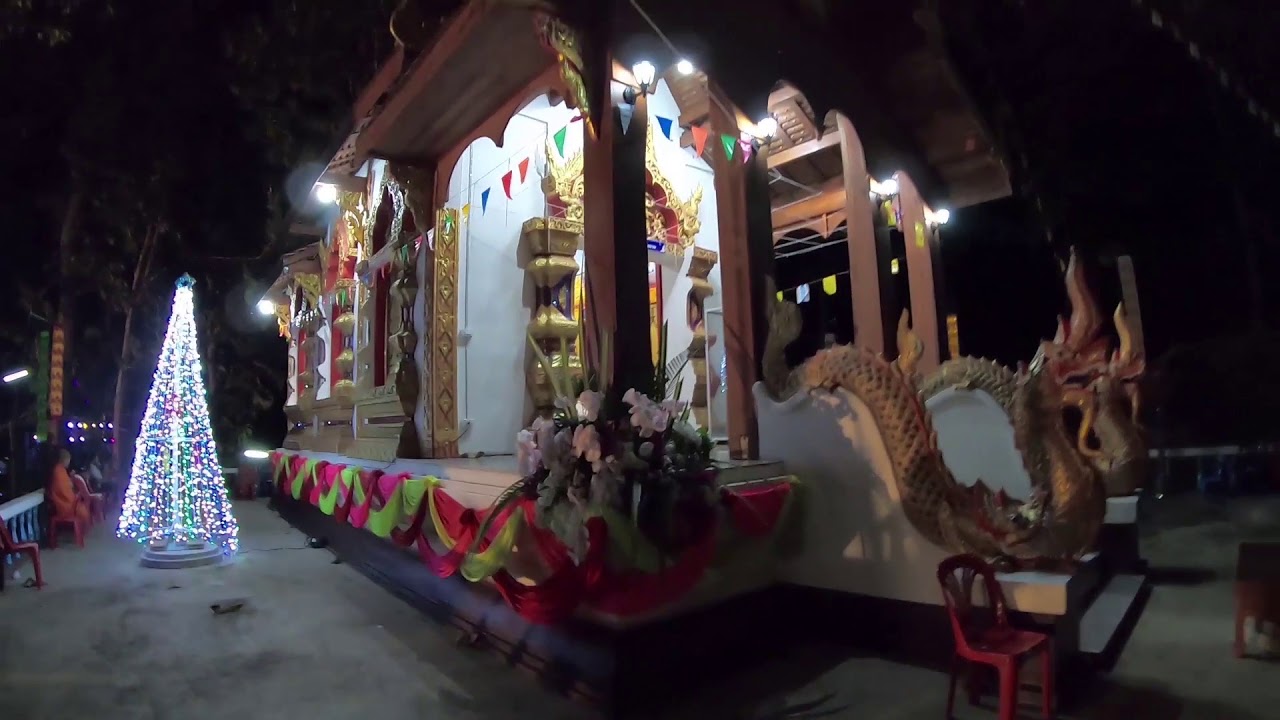
 Click to Access the Navigation Map GPS
Wat Kong Khak Luang Map
Recommend

 Muang Chiang Mai(121)Chom Thong(47)Mae Chaem(25)Chiang Dao(33)Doi Saket(68)Mae Taeng(85)Mae Rim(69)Samoeng(29)Fang(71)Mae Ai(59)Phrao(70)San Pa Tong(103)San Kamphaeng(66)San Sai(73)Hang Dong(73)Hot(32)Doi Tao(22)Omkoi(11)Saraphi(74)Wiang Haeng(15)Chai Prakan(28)Mae Wang(32)Mae On(22)Doi Lo(34)Galyani Vadhana(1)


