
lovethailand home >North Travel Attractions >Chiang Mai Travel Attractions >Samoeng >Mae Sap > Wat Omlong
TL;DR: Wat Omlong is located at Moo 2, Mae Sap Subdistrict, Samoeng District, Chiang Mai Province, open Daily, hours 08.00 - 17.00.
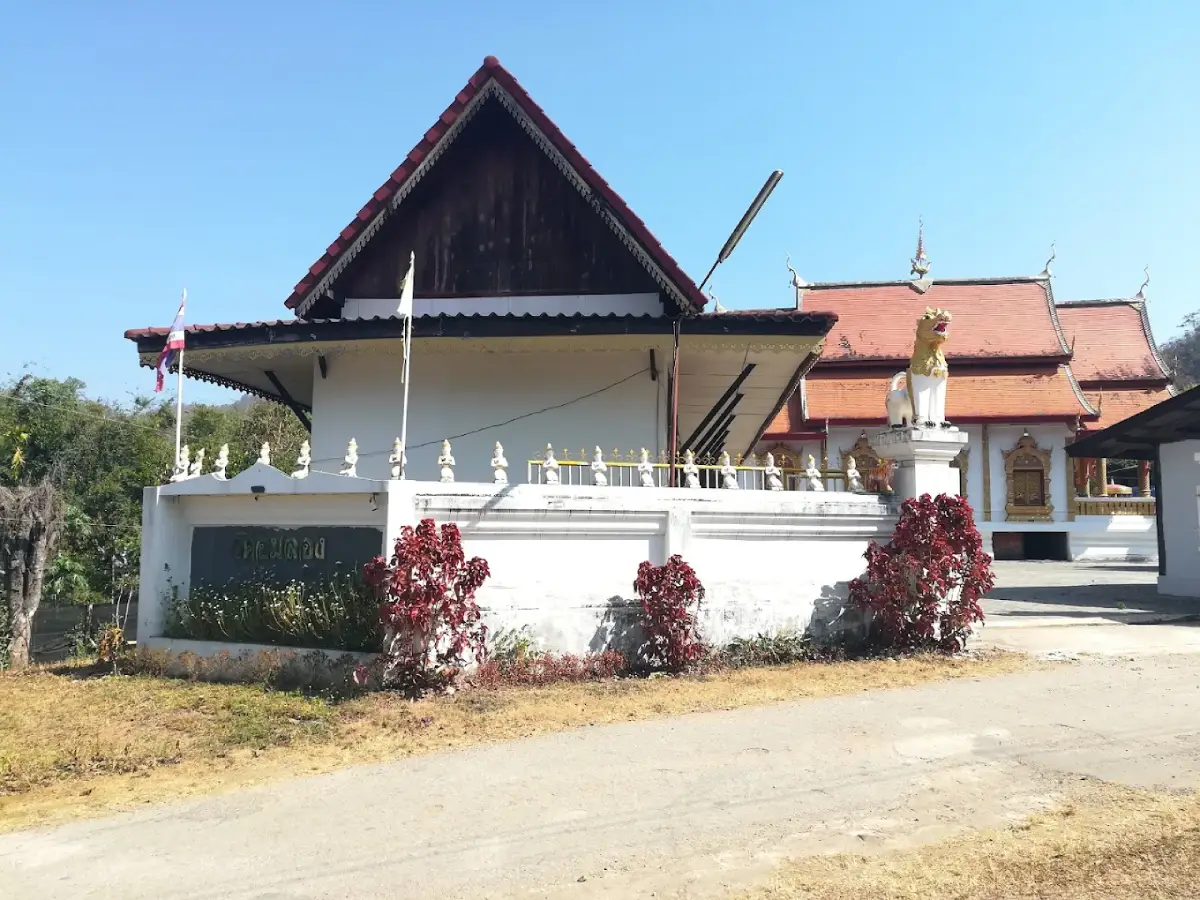
Wat Omlong
Open Days: Daily
Opening Hours: 08.00 - 17.00
Wat Omlong is a local Buddhist temple under the Maha Nikaya order, located in Moo 2, Mae Sap Subdistrict, Samoeng District, Chiang Mai Province. The temple was officially permitted to be established in B.E. 2410 and received its royal consecrated boundary in B.E. 2545. With Phra Athikan Thongsuk Thipathammo as the abbot, Wat Omlong remains an important spiritual center for the Omlong community and nearby villages in Mae Sap.
Wat Omlong is valuable as a living village temple rather than a large mainstream tourist attraction. Its importance lies in its long history, its role in local Buddhist practice, and its close connection with rural life in the mountains of Samoeng. Visitors can experience a calm community temple where villagers continue to make merit, listen to sermons, join Buddhist ceremonies, and gather during religious occasions.
The history of Wat Omlong begins with its official establishment as a temple in B.E. 2410. This makes it one of the older temples in Mae Sap Subdistrict. The temple predates modern tourism development in Samoeng by many generations, reflecting the long-standing faith and settlement history of the Omlong community. It served as a religious and social anchor for villagers who needed a place for worship, merit-making, and community gatherings.
In B.E. 2545, Wat Omlong received its royal consecrated boundary. This status is significant because it marks an officially recognized area for important monastic ceremonies according to Buddhist discipline. A temple with a consecrated boundary can perform formal Sangha ceremonies properly, giving Wat Omlong a more complete role as a Buddhist institution within the Thai monastic system.
The Omlong area is located in Mae Sap Subdistrict, a mountainous and valley landscape in Samoeng District. Roads between villages include paved sections and rural road sections, with some stretches becoming difficult during the rainy season. This setting gives Wat Omlong the character of a mountain community temple. The temple functions as a central place where local residents gather for Buddhist holy days, merit-making, and annual religious activities.
The wider Omlong and Khun Omlong area is closely connected with natural resources and agriculture. Local livelihoods include seasonal farming, with crops such as rice, garlic, strawberries, chrysanthemum, stevia, beans, peanuts, shallots, bananas, and corn. Livestock raising and small-scale household processing are also part of community life. In this context, Wat Omlong is not only a religious site but also part of a cultural landscape shaped by faith, nature, and rural livelihoods.
The name “Omlong” is tied to the local village area in Moo 2 of Mae Sap Subdistrict. A temple named after its village becomes inseparable from community identity. Wat Omlong therefore serves as a symbol of the settlement, a place where generations of villagers have gathered for Buddhist ceremonies, local traditions, and shared community memories.
Publicly available details about individual temple buildings at Wat Omlong are limited, but its status as a Maha Nikaya village temple with a royal consecrated boundary confirms its role as an active Buddhist place of worship. The temple compound supports worship, merit-making, sermons, ceremonies, and community gatherings. Visitors should understand Wat Omlong primarily as a functioning local temple serving the daily religious life of its community.
Phra Athikan Thongsuk Thipathammo is the abbot of Wat Omlong. His role includes caring for the temple, leading religious activities, guiding laypeople, and maintaining the relationship between the temple and the local community. In a village temple, the abbot is not only a ritual leader but also a spiritual figure who helps preserve Buddhist practice and community cohesion.
The role of Wat Omlong can be seen in several dimensions. Religiously, it is a place for worship, merit-making, Dhamma listening, and Buddhist holy day observances. Socially, it is a gathering place for villagers across generations. Culturally, it helps maintain the northern Thai relationship between temple, village, agriculture, and surrounding nature.
Religious and community activities at Wat Omlong follow the pattern of northern Thai village temples. These include Buddhist holy day observances, Kathin ceremonies, forest robe offerings, Buddhist Lent activities, end-of-Lent merit-making, and Northern Thai New Year traditions. These occasions bring local residents together to make offerings, listen to Dhamma teachings, prepare temple activities, and strengthen community relationships.
Near Wat Omlong is Phra Borommathat Doi Pha Som, located in Moo 2 of Mae Sap near the boundary with Ang Khai village in Yang Moen Subdistrict. This old sacred stupa was restored by Khruba Chao Siwichai about 70 years ago. For travelers interested in Buddhist sites in Mae Sap, combining Wat Omlong with Phra Borommathat Doi Pha Som creates a meaningful cultural and spiritual route.
The main appeal of Wat Omlong for travelers is its quiet village atmosphere. Visitors can pay respect, make merit, and experience a rural temple in a mountain community. The temple is suitable for travelers who prefer slow travel, local culture, and community-based routes rather than crowded tourist sites. Visitors should dress respectfully, keep their voice low, and avoid disturbing monks or local residents during religious activities.
Getting There is most convenient by private car or rental car. From Chiang Mai city, travelers can drive toward Samoeng District, continue into Mae Sap Subdistrict, and proceed to Moo 2, Ban Omlong. The route from Ban Mae Khan Mai to Huai Sai Khao and onward through Ban Hat Som Poi to Ban Omlong is about 10 km, with both paved and unpaved sections. Another local route connects the Ban Ngio Tao junction to Ban Omlong over about 16 km. Some road sections can be difficult during the rainy season, so careful driving is recommended.
A visit to Wat Omlong can be combined with nearby religious and natural sites in Mae Sap and Samoeng, including Phra Borommathat Doi Pha Som, Wat Hat Som Poi, Ban Ngio Tao, Tham Luang Mae Sap Cave, Khun Khan National Park, and Pang Da Royal Agricultural Station. This route is suitable for travelers who want to explore Samoeng through temples, sacred sites, mountain roads, farming communities, and western Chiang Mai’s natural landscape.
| Name | Wat Omlong |
| Type | Local Buddhist temple under the Maha Nikaya order |
| Location | Moo 2, Mae Sap Subdistrict, Samoeng District, Chiang Mai Province |
| Highlights | A long-established village temple of Ban Omlong, founded in B.E. 2410 and serving as a spiritual center for the Mae Sap community |
| History | Permitted to be established as a temple in B.E. 2410 and granted a royal consecrated boundary in B.E. 2545 |
| Name Origin | Named after Ban Omlong, the Moo 2 community in Mae Sap Subdistrict where the temple is located |
| Distinctive Features | A rural Lanna village temple connected with mountain agriculture, local nature, and Buddhist community faith in Samoeng |
| Abbot / Caretaker | Phra Athikan Thongsuk Thipathammo |
| Traditions / Religious Activities | Kathin ceremonies, forest robe offerings, Buddhist holy day observances, Buddhist Lent activities, end-of-Lent merit-making, and Northern Thai New Year traditions |
| Community Role | A spiritual center for the Omlong community, supporting merit-making, sermons, religious activities, and the continuity of local culture |
| Travel Information | Best reached by private car or rental car from Chiang Mai city to Samoeng District, then onward to Mae Sap Subdistrict and Ban Omlong. Some sections are rural and unpaved roads, especially near the village route. |
| Current Status | Open as a local community temple for worship, merit-making, and Buddhist activities |
| Open Days | Daily |
| Opening Hours | 08.00 - 17.00 |
| Facilities | Worship area, temple grounds, and community Buddhist activity space |
| Nearby Tourist Attractions | 1. Phra Borommathat Doi Pha Som, about 4 km 2. Wat Hat Som Poi, about 7 km 3. Ban Ngio Tao, about 16 km 4. Tham Luang Mae Sap Cave, about 18 km 5. Khun Khan National Park, about 22 km 6. Pang Da Royal Agricultural Station, about 32 km |
| Nearby Restaurants | 1. Cafe De Mountain, about 17 km, Tel. 098-506-5306 2. Ice Cream Café At Samoeng, about 18 km, Tel. 081-751-2191 3. Baan Coffee Samoeng, about 19 km, Tel. 082-763-3400 4. Coffee By Aitsara, about 20 km, Tel. 084-378-0821 5. Khwamsukh Cafe, about 21 km, Tel. 064-339-2582 |
| Nearby Accommodations | 1. Aomlong Homenon, about 1 km, Tel. 082-569-2292 2. Phupha View Doi, about 7 km, Tel. 092-464-1498 3. Forest Guesthouse, about 18 km, Tel. 084-371-5055 4. Lhongkhao Samoeng, about 20 km, Tel. 062-789-9444 5. Baansuanviwethung, about 21 km, Tel. 062-605-6556 |
Frequently Asked Questions (FAQ)
Q: Where is Wat Omlong located?
A: Wat Omlong is located in Moo 2, Mae Sap Subdistrict, Samoeng District, Chiang Mai Province.
Q: What are the open days and opening hours of Wat Omlong?
A: Wat Omlong is open daily from 08.00 to 17.00.
Q: What is the history of Wat Omlong?
A: Wat Omlong was permitted to be established as a temple in B.E. 2410 and received its royal consecrated boundary in B.E. 2545.
Q: Who is the abbot of Wat Omlong?
A: The abbot of Wat Omlong is Phra Athikan Thongsuk Thipathammo.
Q: Why is Wat Omlong important to the community?
A: Wat Omlong is a spiritual center for the Omlong community, supporting merit-making, sermons, Buddhist ceremonies, and local cultural continuity.
Q: What is the Omlong area like?
A: The Omlong and Khun Omlong area is a mountain community in Mae Sap where local livelihoods are closely connected with agriculture, natural resources, and village routes.
Q: What nearby places can travelers visit with Wat Omlong?
A: Travelers can combine the visit with Phra Borommathat Doi Pha Som, Wat Hat Som Poi, Ban Ngio Tao, Tham Luang Mae Sap Cave, Khun Khan National Park, and Pang Da Royal Agricultural Station.
Q: How can travelers get to Wat Omlong?
A: The most convenient way is by private car or rental car from Chiang Mai city toward Samoeng District, then onward to Mae Sap Subdistrict and Ban Omlong. Some road sections are rural or unpaved, so careful driving is recommended, especially during the rainy season.
 Category: ●Places of Worship
 Group: ●Temple
Last Update : 2 DayAgo
 Last Update : 2 DayAgo
 Click to Access the Navigation Map GPS
 Muang Chiang Mai(121)Chom Thong(47)Mae Chaem(25)Chiang Dao(33)Doi Saket(68)Mae Taeng(85)Mae Rim(69)Samoeng(29)Fang(71)Mae Ai(61)Phrao(70)San Pa Tong(105)San Kamphaeng(66)San Sai(73)Hang Dong(74)Hot(32)Doi Tao(22)Omkoi(11)Saraphi(74)Wiang Haeng(15)Chai Prakan(28)Mae Wang(32)Mae On(22)Doi Lo(34)Galyani Vadhana(1)


