
lovethailand home >North Travel Attractions >Chiang Mai Travel Attractions >Samoeng >Mae Sap > Wat Mae Khan
TL;DR: Wat Mae Khan is located at Ban Mae Khan, Moo 1, Mae Sap Subdistrict, Samoeng District, Chiang Mai Province, open Daily, hours 08.00 - 17.00.
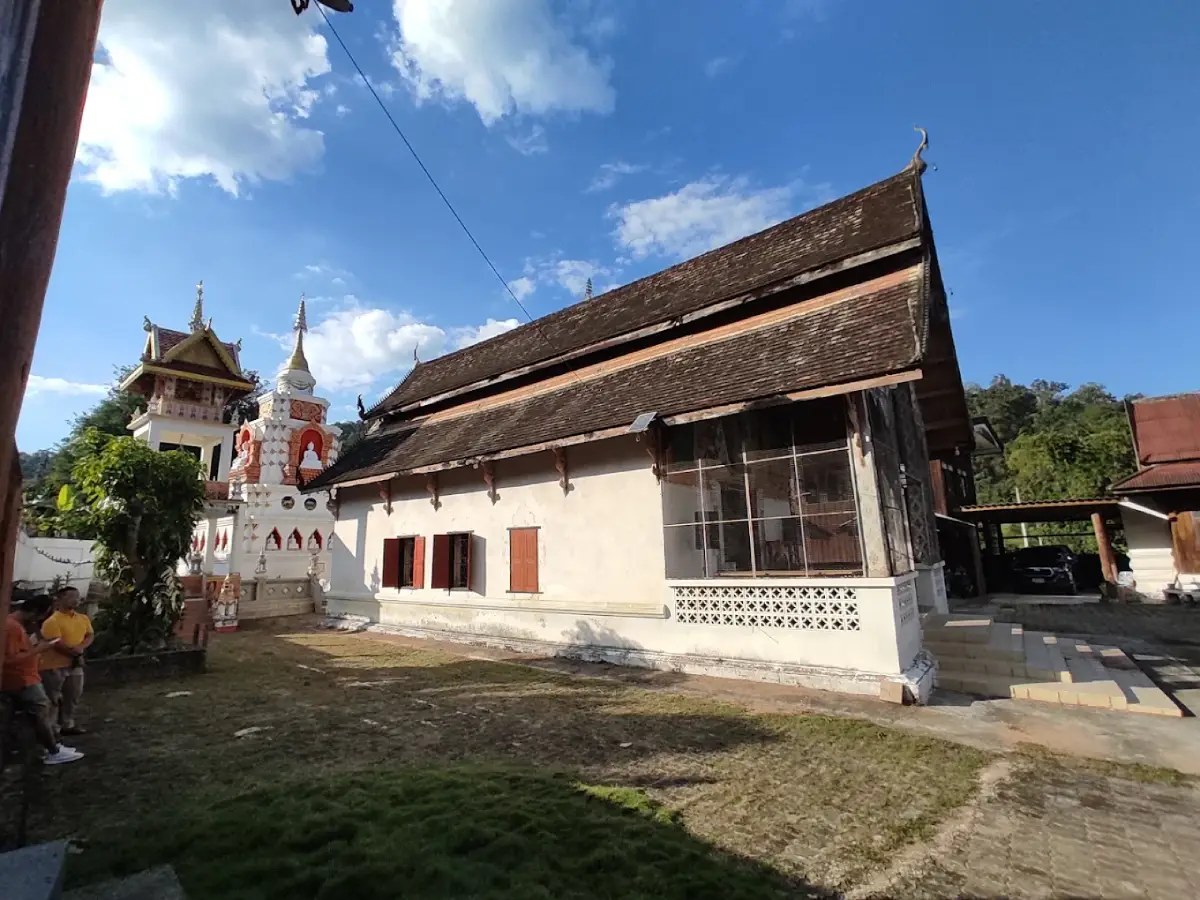
Wat Mae Khan
Open Days: Daily
Opening Hours: 08.00 - 17.00
Wat Mae Khan is a local Buddhist temple under the Maha Nikaya order, located at 45/1 Moo 1, Ban Mae Khan, Mae Sap Subdistrict, Samoeng District, Chiang Mai Province. Established in 1897, or B.E. 2440, the temple received its royal consecrated boundary on September 3, 1992. Wat Mae Khan remains an important spiritual center for Ban Mae Khan and nearby communities in Mae Sap, making it a meaningful stop for travelers who want to experience a quiet village temple in the mountainous Samoeng area rather than a large tourist temple in Chiang Mai city.
Wat Mae Khan is not a major sightseeing temple with large-scale architecture, but its value lies in its role as a living community temple. Mae Sap Subdistrict is located to the northwest of Samoeng District, surrounded by mountains, valleys, and rural agricultural landscapes. Important local waterways such as Mae Sap River and Mae Khan River shape the environment of the area. This setting gives Wat Mae Khan a peaceful atmosphere closely connected to village life, farming communities, and the slower rhythm of rural northern Thailand.
The history of Wat Mae Khan dates back to B.E. 2440, a period when communities in Samoeng were primarily small mountain and valley settlements. The temple became the religious and social center of Ban Mae Khan, serving as a place for merit-making, Buddhist ceremonies, chanting, sermons, and communal gatherings. For local residents, the temple has long been more than a place of worship; it has also been a space for moral education, community bonding, and the continuation of Buddhist culture.
Wat Mae Khan received its royal consecrated boundary on September 3, B.E. 2535. The consecrated boundary measures 20 meters wide and 40 meters long, giving the temple an officially recognized area for important monastic ceremonies. This status reflects the temple’s formal role within the Thai Sangha system and its importance as a functioning religious institution for the Mae Khan community.
The temple occupies 1 rai, 2 ngan, and 20 square wah of land, a compact size typical of village temples in rural northern Thailand. The main structures include a viharn, monk’s residence, bell tower, and dining hall with kitchen facilities. These spaces support the daily and seasonal religious life of the temple, including merit-making, Buddhist holy day observances, community ceremonies, and local religious gatherings.
The viharn of Wat Mae Khan measures 6 meters wide and 12 meters long. Built in B.E. 2520, it is a masonry building used for chanting, sermons, worship, and Buddhist ceremonies. Although modest in scale, the viharn is the main spiritual space of the temple and serves as the gathering point for villagers during important religious occasions. Its significance comes not from size or ornamentation, but from its steady role in local Buddhist practice.
The monk’s residence is a wooden building used by resident monks, while the bell tower is an important feature of the temple compound, traditionally associated with the rhythm of temple life and religious activities. The dining hall and kitchen support communal merit-making and food offerings. Together, these structures show how Wat Mae Khan continues to function as a complete village temple despite its compact grounds.
The abbot associated with Wat Mae Khan is Phra Khru Koson Sangkhakhun, with the monastic name Thitiko and family name Potha. His role connects the temple with the wider Sangha administration in the Samoeng area. Under monastic care, the temple continues to support Buddhist practice, moral development, and community-based religious activities.
The main importance of Wat Mae Khan is its role as a center for moral and ethical development in the local community. The temple supports Buddhist activities during Makha Bucha Day, Visakha Bucha Day, Asalha Bucha Day, and the Buddhist Lent period. These occasions allow villagers, elders, families, and young people to make merit, listen to Dhamma teachings, observe moral precepts, and maintain the continuity of local Buddhist traditions.
For travelers interested in local temples in Samoeng, Wat Mae Khan is best appreciated as a quiet cultural and spiritual stop. Visitors can pay respect, make merit, observe the calm atmosphere of a village temple, and see how Buddhism remains part of daily life in rural Chiang Mai. The temple is suitable for respectful travelers who prefer calm, community-based destinations over crowded tourist sites. Visitors should dress modestly, speak quietly, and avoid disturbing monks or local residents during ceremonies.
Getting There is most convenient by private car or rental car. From Chiang Mai city, travelers can drive toward Samoeng through the Hang Dong or Mae Rim route, then continue toward Mae Sap Subdistrict and Ban Mae Khan. Some sections are mountain and rural roads, so drivers should check road conditions, prepare enough fuel, and allow extra travel time, especially during the rainy season or late afternoon.
Wat Mae Khan can be combined with a wider Samoeng travel route. Nearby destinations include other local temples, Khun Khan National Park, Tham Luang Mae Sap Cave, royal project agricultural areas, cafés, and nature-based accommodations. A visit can be planned as a slow cultural route that connects Buddhism, village life, mountain scenery, and agricultural landscapes in Samoeng District.
| Name | Wat Mae Khan |
| Type | Local Buddhist temple under the Maha Nikaya order |
| Location | Ban Mae Khan, Moo 1, Mae Sap Subdistrict, Samoeng District, Chiang Mai Province |
| Address | 45/1 Moo 1, Ban Mae Khan, Mae Sap Subdistrict, Samoeng District, Chiang Mai Province |
| Coordinates | 18.86552, 98.63636 |
| Highlights | A long-established village temple suitable for merit-making, quiet worship, and understanding local Buddhist life in Samoeng |
| History | Established in B.E. 2440 and granted a royal consecrated boundary on September 3, B.E. 2535 |
| Temple Area | 1 rai, 2 ngan, 20 square wah |
| Consecrated Boundary | 20 meters wide and 40 meters long |
| Distinctive Features | A compact village temple reflecting the religious and social role of Buddhism in a mountain farming community |
| Main Areas / Zones | Viharn, monk’s residence, bell tower, dining hall and kitchen, and community religious activity area |
| Important Structures | The viharn measures 6 meters by 12 meters and was built in B.E. 2520 as a masonry building; the temple also has one wooden monk’s residence, one bell tower, and a dining hall with kitchen |
| Abbot / Caretaker | Phra Khru Koson Sangkhakhun, Thitiko, family name Potha |
| Traditions / Religious Activities | Buddhist promotion activities during Makha Bucha Day, Visakha Bucha Day, Asalha Bucha Day, and the Buddhist Lent period |
| Community Role | A spiritual center for Ban Mae Khan, supporting moral education, merit-making, and Buddhist activities for local residents |
| Travel Information | Best reached by private car or rental car from Chiang Mai city through Samoeng, then onward to Mae Sap Subdistrict and Ban Mae Khan. Some sections are mountain and rural roads. |
| Current Status | Open as a local community temple for worship, merit-making, and Buddhist activities |
| Open Days | Daily |
| Opening Hours | 08.00 - 17.00 |
| Facilities | Viharn for worship, temple grounds for merit-making, dining hall and kitchen, and community religious activity space |
| Nearby Tourist Attractions | 1. Wat Ton Phueng, about 4 km 2. Wat Pang Toem, about 5 km 3. Wat Aomlong, about 7 km 4. Khun Khan National Park, about 9 km 5. Tham Luang Mae Sap Cave, about 14 km 6. Pang Da Royal Agricultural Station, about 25 km |
| Nearby Restaurants | 1. Coffee By Aitsara, about 17 km, Tel. 084-378-0821 2. Cafe De Mountain, about 18 km, Tel. 098-506-5306 3. Na Samoeng Bo Kaeo Coffee, about 19 km, Tel. 097-165-7479 4. Rai Nap-Phupha, about 24 km, Tel. 088-404-2553, 081-603-9800, 053-378-414 5. Mon Muan Restaurant, about 42 km, Tel. 083-318-6444 |
| Nearby Accommodations | 1. Phupha View Doi, about 8 km, Tel. 081-113-0276 2. Aomlong Homenon, about 7 km, Tel. 082-569-2292 3. Homestay Na Khan Bandai Ban Pang Ma-O, about 12 km, Tel. 093-164-1152 4. Khum Samoeng - Samoeng Center, about 22 km, Tel. 081-122-2324 5. Hlong Khao Samoeng, about 24 km, Tel. 062-789-9444 |
Frequently Asked Questions (FAQ)
Q: Where is Wat Mae Khan located?
A: Wat Mae Khan is located at 45/1 Moo 1, Ban Mae Khan, Mae Sap Subdistrict, Samoeng District, Chiang Mai Province.
Q: What are the open days and opening hours of Wat Mae Khan?
A: Wat Mae Khan is open daily from 08.00 to 17.00.
Q: When was Wat Mae Khan established?
A: Wat Mae Khan was established in B.E. 2440 and received its royal consecrated boundary on September 3, B.E. 2535.
Q: What important structures can visitors see at Wat Mae Khan?
A: The temple includes a viharn, monk’s residence, bell tower, and dining hall with kitchen. The viharn was built in B.E. 2520.
Q: What kind of travelers is Wat Mae Khan suitable for?
A: It is suitable for travelers who want to visit a quiet local temple, make merit, and learn about village Buddhist life in Samoeng.
Q: What Buddhist activities are associated with Wat Mae Khan?
A: The temple supports Buddhist promotion activities during Makha Bucha Day, Visakha Bucha Day, Asalha Bucha Day, and the Buddhist Lent period.
Q: How can travelers get to Wat Mae Khan?
A: The most convenient way is by private car or rental car from Chiang Mai city toward Samoeng, then onward to Mae Sap Subdistrict and Ban Mae Khan. Some sections are mountain and rural roads, so careful driving is recommended.
 Category: ●Places of Worship
 Group: ●Temple
Last Update : 1 WeekAgo
 Last Update : 1 WeekAgo
 Click to Access the Navigation Map GPS
 Muang Chiang Mai(121)Chom Thong(47)Mae Chaem(25)Chiang Dao(33)Doi Saket(68)Mae Taeng(85)Mae Rim(69)Samoeng(29)Fang(71)Mae Ai(59)Phrao(70)San Pa Tong(103)San Kamphaeng(66)San Sai(73)Hang Dong(73)Hot(32)Doi Tao(22)Omkoi(11)Saraphi(74)Wiang Haeng(15)Chai Prakan(28)Mae Wang(32)Mae On(22)Doi Lo(34)Galyani Vadhana(1)


