
lovethailand home >North Travel Attractions >Chiang Mai Travel Attractions >Samoeng >Mae Sap > Wat Pang Toem
TL;DR: Wat Pang Toem is located at No. 98, Moo 4, Ban Pang Toem, Mae Sap Subdistrict, Samoeng District, Chiang Mai Province 50250, open Daily, hours 08.00 - 17.00.

Wat Pang Toem
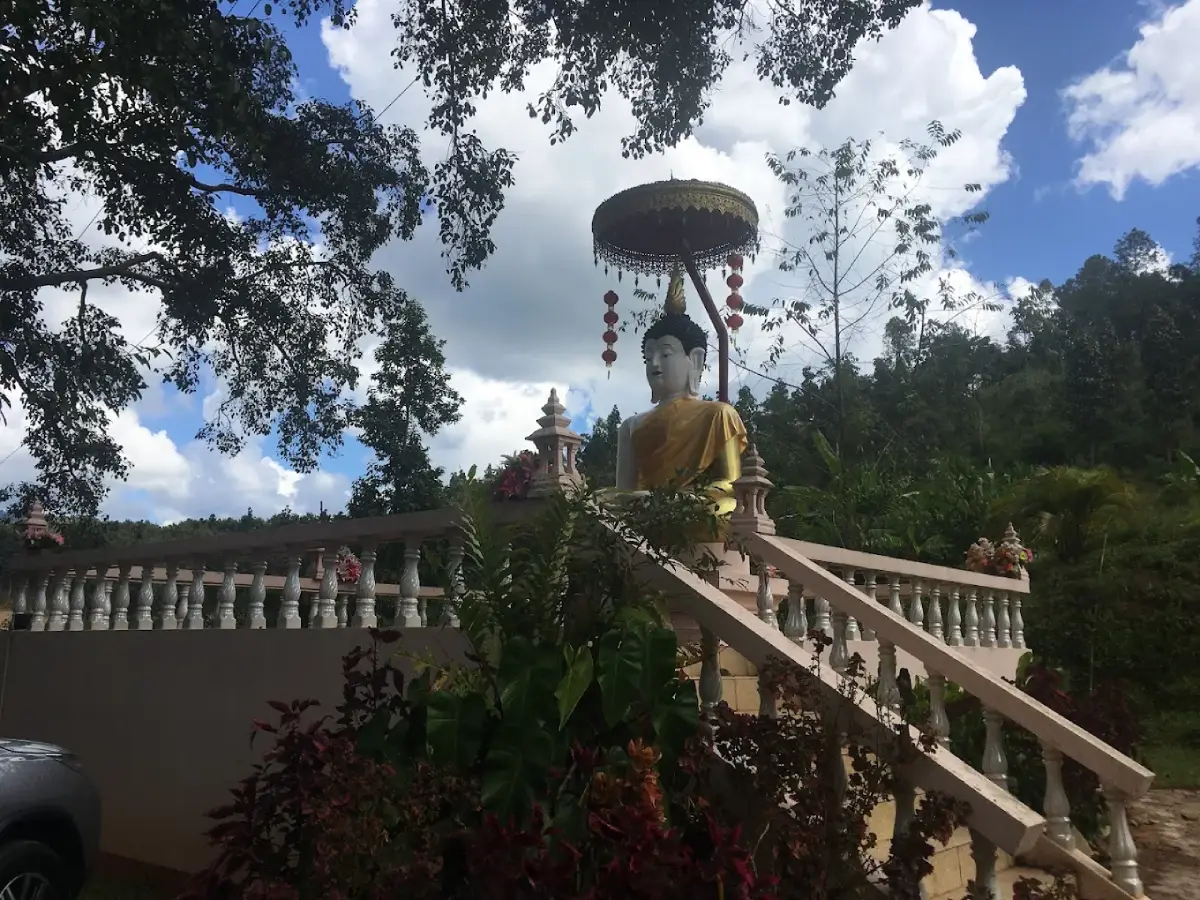
Open Days: Daily
Opening Hours: 08.00 - 17.00
Wat Pang Toem is located at No. 98, Moo 4, Ban Pang Toem, Mae Sap Subdistrict, Samoeng District, Chiang Mai Province. It is a non-royal Buddhist temple under the Mahanikaya order and an important community temple for Ban Pang Toem. The temple was established in 1906 and received its royal boundary for monastic rites on November 9, 2009. The boundary measures 20 meters wide and 40 meters long. The temple land covers 3 rai, 2 ngan, and 42 square wah, with additional monastic land totaling 3 rai, 1 ngan, and 178 square wah. Wat Pang Toem reflects the relationship between Buddhism, old mountain routes, village settlement, water sources, and Lanna community life in Samoeng.
Wat Pang Toem should be understood together with the history of Ban Pang Toem. The area was once a passage route for cattle caravans traveling from Chiang Mai’s former regional centers. Travelers used this place as a resting and overnight stop before continuing along mountain routes. This local memory, passed down through village elders, shows Ban Pang Toem as a natural stopping point before it developed into a settled village with a Buddhist monastery at its center.
Around 1906, Tu Luang Uan led local villagers to establish a monastic residence near the village and close to a water source at the small settlement of Thung Pong. The choice of a site near water was important for a mountain community because water supported travel, agriculture, daily life, and settlement. Later, the temple was moved to an area with tall trees and a large termite mound, which became the present location of Wat Pang Toem. This move gave the temple a more permanent setting and helped it become the spiritual center of Ban Pang Toem.
The name “Pang Toem” is closely connected with the village, temple, and school in the same area. Some older or external sources also render the village name as “Pang Doem,” but the temple is listed as Wat Pang Toem in temple and school databases. For clarity, this article uses Wat Pang Toem as the main name. The temple is therefore a key cultural marker for Moo 4 of Mae Sap Subdistrict in both religious and educational contexts.
The importance of Wat Pang Toem lies in its role as a village temple that grew with the community. It is not a large tourist temple designed for crowds. Instead, it functions as a living religious space for worship, merit-making, Dharma listening, Buddhist ceremonies, and village gatherings. In this sense, Wat Pang Toem reflects the heart of Lanna village life, where the temple serves as a sacred space, public space, and social anchor for the community.
The royal boundary granted on November 9, 2009 is an important milestone in the temple’s history. A royal boundary, or wisungkhamsima, marks the official area for important monastic rites. With a boundary measuring 20 meters wide and 40 meters long, Wat Pang Toem has an officially recognized sacred space for Sangha functions. This gives the temple a complete religious status beyond general worship and community activity.
The temple land covers 3 rai, 2 ngan, and 42 square wah, with monastic land totaling 3 rai, 1 ngan, and 178 square wah. This space supports key temple buildings such as the viharn, sermon hall, monks’ residences, and religious activity areas. The existence of monastic land also reflects the long-term arrangement of temple property to support Buddhism in the community. Wat Pang Toem therefore has a stable spatial foundation for its continuing role in Ban Pang Toem.
Important structures at Wat Pang Toem include the viharn, sermon hall, and two monks’ residences. The viharn measures 6 meters wide and 14 meters long and was built in 1906 as a Lanna-style masonry building. It is the core worship space of the temple. The sermon hall measures 14 meters wide and 20 meters long and was built in 2007. It supports merit-making, Dharma listening, meetings, and community events. The monks’ residences provide living space for monks who maintain daily religious life at the temple.
The viharn is the most important building for visitors to observe. Built in the same year as the temple’s establishment, it represents more than a century of local devotion. Lanna village viharns often emphasize proportion, calmness, and practical community use rather than grand scale. At Wat Pang Toem, the viharn should be appreciated as evidence of long-standing village faith, where local people have gathered to pay respect, make merit, and take part in Buddhist activities for generations.
The sermon hall, built in 2007, reflects the temple’s modern community role. In Lanna village temples, a sermon hall is not only a place for listening to Dharma teachings. It is also used for village meetings, merit-making events, religious activities, and community ceremonies. Its size allows Wat Pang Toem to support larger gatherings and reinforces the temple’s function as a moral and social center for Mae Sap Subdistrict.
The two monks’ residences are essential to the temple’s living religious role. They allow monks to stay at the temple, perform daily routines, and support community ceremonies. A village temple with monastic residences and continuing religious care can maintain stronger ties with local residents. Wat Pang Toem is therefore not only a historic site, but also an active Buddhist space within the village.
Wat Pang Toem serves as a place for moral and ethical development in Mae Sap Subdistrict. This role matches the traditional function of northern Thai village temples. Temples are not only places for ceremonies. They help teach discipline, gratitude, community responsibility, and Buddhist values. Children, youth, elders, and families can come together through merit-making, Dharma activities, and temple events.
Phra Chaiyan Sutthasilo is listed as the abbot of Wat Pang Toem in the source information used for this article. His role is connected with the temple’s function as the Buddhist center of Ban Pang Toem. In mountain communities such as Mae Sap, monks often work closely with villagers through ceremonies, moral guidance, and community activities shaped by the agricultural season and local needs.
Ban Pang Toem also has an important educational dimension. Wat Pang Toem School is located in Moo 4, Mae Sap Subdistrict, Samoeng District. It offers early childhood and primary education and is a small school within the Samoeng 2 network. The presence of both the temple and the school under the same village name reflects the traditional relationship between home, temple, and school in Thai communities. Wat Pang Toem is therefore connected not only with religious practice, but also with local learning and childhood development.
Mae Sap Subdistrict gives Wat Pang Toem a broader cultural context. The subdistrict has 10 villages, and Moo 4 is Ban Pang Toem. The area includes mountains, valleys, creeks, farmland, rural roads, and settlements spread across the landscape. Some highland village routes in Mae Sap are affected by seasonal conditions, especially during the rainy season. Travelers should therefore plan carefully and drive with caution when visiting temples and attractions in the area.
Mae Sap has a strong identity shaped by Lanna culture, farming, water sources, and Buddhist places. Wat Pang Toem fits well within a cultural travel route through Mae Sap, not just a quick temple stop. The temple helps visitors understand the connection between old caravan routes, water sources, village settlement, tall trees, the large termite mound associated with the present site, and the development of a Buddhist community temple.
Religious activities at Wat Pang Toem follow the rhythm of many Lanna village temples. The temple supports Buddhist holy days, Buddhist Lent, the end of Buddhist Lent, Kathin, robe offering ceremonies, Dharma listening, and memorial merit-making. Although no fixed annual festival schedule with confirmed public details was found for the temple, the viharn, sermon hall, and monks’ residences clearly support regular Buddhist activities for villagers.
Mae Sap Subdistrict as a whole has several important religious and cultural traditions, including the bathing ceremonies of Phra That Mon Pia and Phra Borommathat Doi Pha Som, as well as community merit-making and seasonal events in different villages. Not all of these activities take place at Wat Pang Toem itself, but they show that the temple belongs to a wider network of Buddhist faith and local culture across Mae Sap and Samoeng.
The main highlights for visitors are the Lanna-style masonry viharn built in 1906, the sermon hall built in 2007, the monks’ residences, and the quiet atmosphere of Ban Pang Toem. Wat Pang Toem is suitable for travelers interested in village temples, local history, old mountain routes, Lanna culture, and slow cultural travel. Visitors should spend time respectfully observing the temple grounds, paying respect in the viharn, and noticing the relationship between the temple, school, road, and village houses.
Wat Pang Toem should not be overlooked because of its modest scale. Its value lies in being a place of local memory. The story of cattle caravans, Thung Pong settlement, the early monastic residence near a water source, and the later move to the present site near tall trees and a large termite mound gives the temple a distinctive narrative. These details allow the temple to tell the development of Ban Pang Toem more clearly than buildings alone could do.
Getting There is most convenient by private car or rental car. From Chiang Mai city, travel toward Samoeng District and continue to Mae Sap Subdistrict, Ban Pang Toem, Moo 4. Roads in Samoeng and Mae Sap include mountain curves, uphill sections, and rural roads. Travelers should drive carefully, especially during rain, mist, early morning, or evening travel. A meaningful route can combine Wat Pang Toem with Wat Ton Phueng, Phra That Mon Pia, Phra Borommathat Doi Pha Som, Mae Na Poe Waterfall, and Mae Khae Reservoir.
Phra That Mon Pia is one of the important Buddhist sites in Mae Sap and is associated with an annual bathing ceremony. Phra Borommathat Doi Pha Som adds another layer of Buddhist history and local devotion to the route. Mae Na Poe Waterfall and Mae Khae Reservoir add natural and water-resource dimensions, while Pha Yong reflects a locally respected natural formation. Combining these places with Wat Pang Toem creates a route that includes village temples, Buddhist monuments, nature, and local belief.
Visitors should dress modestly, speak quietly, and respect monastic spaces, especially around the viharn, sermon hall, and monks’ residences. If a ceremony or community event is taking place, visitors should avoid disturbing the ritual area and should ask permission before photographing monks or local residents. Wat Pang Toem is a living community temple, so respect and awareness of local context are essential.
Wat Pang Toem is suitable for travelers who want to understand the deeper cultural side of Samoeng. It has a temple history dating to 1906, a story connected with old cattle caravan routes, a monastic foundation led by Tu Luang Uan, a later relocation to its present site, a Lanna-style viharn, a sermon hall, monks’ residences, and a role in moral and ethical development in Mae Sap. Together, these elements make Wat Pang Toem a meaningful place for understanding the relationship between Buddhism, village life, education, mountain routes, and Lanna culture in Samoeng District.
| Name | Wat Pang Toem |
| Place Type | Non-Royal Buddhist Temple Under The Mahanikaya Order |
| Location | No. 98, Moo 4, Ban Pang Toem, Mae Sap Subdistrict, Samoeng District, Chiang Mai Province 50250 |
| Related Community Name | Ban Pang Toem, Moo 4, Mae Sap Subdistrict |
| Temple Code | 350080305 |
| Temple Land Area | 3 Rai, 2 Ngan, 42 Square Wah, With Monastic Land Totaling 3 Rai, 1 Ngan, 178 Square Wah |
| History | Established In 1906 |
| Royal Boundary | Granted On November 9, 2009; Boundary Size 20 Meters Wide And 40 Meters Long |
| Temple Origin | The Area Was Formerly A Resting Route For Cattle Caravans From Chiang Mai; Tu Luang Uan Later Led Villagers To Build A Monastic Residence Near The Village And A Water Source Before Moving To The Present Site |
| Abbot / Caretaker | Phra Chaiyan Sutthasilo |
| Important Structures | Viharn, Sermon Hall, Two Monks’ Residences |
| Viharn | 6 Meters Wide And 14 Meters Long, Built In 1906 As A Lanna-Style Masonry Building |
| Sermon Hall | 14 Meters Wide And 20 Meters Long, Built In 2007 |
| Monks’ Residences | Two Half-Masonry, Half-Wooden Buildings |
| Key Role | A Moral And Ethical Development Center For Mae Sap Subdistrict And A Spiritual Center For Ban Pang Toem |
| Current Status | A Non-Royal Buddhist Temple In Mae Sap Subdistrict, Samoeng District, Chiang Mai Province, Still Listed In The Sangha Temple Database |
| Open Days | Daily |
| Opening Hours | 08.00 - 17.00 |
| Facilities | Sermon Hall, Worship Area, Religious Activity Area, Community Activity Space |
| Main Areas / Zones | Viharn, Sermon Hall, Monks’ Residences, Temple Activity Area |
| Travel Information | Best Reached By Private Car Or Rental Car From Chiang Mai City Toward Samoeng District, Then To Mae Sap Subdistrict, Ban Pang Toem, Moo 4 |
| Nearby Tourist Attractions | 1. Wat Ton Phueng, About 1 Km 2. Phra That Mon Pia, About 8 Km 3. Phra Borommathat Doi Pha Som, About 9 Km 4. Mae Na Poe Waterfall, About 13 Km 5. Mae Khae Reservoir, Ban Ngio Thao, About 14 Km |
| Nearby Restaurants | 1. Ice Cream Café At Samoeng Chiang Mai, About 10 Km, Tel. 081-751-2191 2. Coffee By Aitsara, About 11 Km, Tel. 084-378-0821 3. Cafe De Mountain, About 13 Km, Tel. 098-506-5306 4. Samoeng Coffee, About 18 Km, Tel. 089-954-0293 5. Khwamsukh Cafe, About 34 Km, Tel. 064-339-2582 |
| Nearby Accommodations | 1. Forest Guesthouse, About 18 Km, Tel. 084-371-5055 2. Khum Samoeng-Samoeng Center, About 19 Km, Tel. 081-122-2324 3. The Terrace @Samuang, About 19 Km, Tel. 081-597-9514 4. Lhongkhao Samoeng, About 20 Km, Tel. 089-504-8108 5. Nai Khun Khao Resort, About 21 Km, Tel. 098-296-1628 |
Frequently Asked Questions (FAQ)
Q: Where Is Wat Pang Toem Located?
A: Wat Pang Toem is located at No. 98, Moo 4, Ban Pang Toem, Mae Sap Subdistrict, Samoeng District, Chiang Mai Province 50250.
Q: When Was Wat Pang Toem Established?
A: Wat Pang Toem was established in 1906 and received its royal boundary for monastic rites on November 9, 2009.
Q: What Is The Origin Story Of Wat Pang Toem?
A: The area was once a resting route for cattle caravans from Chiang Mai. Around 1906, Tu Luang Uan led villagers to build a monastic residence near the village and a water source before the temple was moved to its present site.
Q: What Important Structures Are Found At Wat Pang Toem?
A: Important structures include the viharn, sermon hall, and two monks’ residences.
Q: What Is Notable About The Viharn At Wat Pang Toem?
A: The viharn measures 6 meters wide and 14 meters long, was built in 1906, and is a Lanna-style masonry building used for worship and community religious activity.
Q: Who Is The Abbot Of Wat Pang Toem?
A: Phra Chaiyan Sutthasilo is listed as the abbot of Wat Pang Toem.
Q: What Type Of Traveler Is Wat Pang Toem Suitable For?
A: It is suitable for travelers interested in Lanna village temples, Ban Pang Toem history, quiet worship, and cultural travel in Mae Sap.
Q: What Nearby Places Can Be Combined With Wat Pang Toem?
A: Travelers can combine the visit with Wat Ton Phueng, Phra That Mon Pia, Phra Borommathat Doi Pha Som, Mae Na Poe Waterfall, and Mae Khae Reservoir.
 Category: ●Places of Worship
 Group: ●Temple
Last Update : 1 WeekAgo
 Last Update : 1 WeekAgo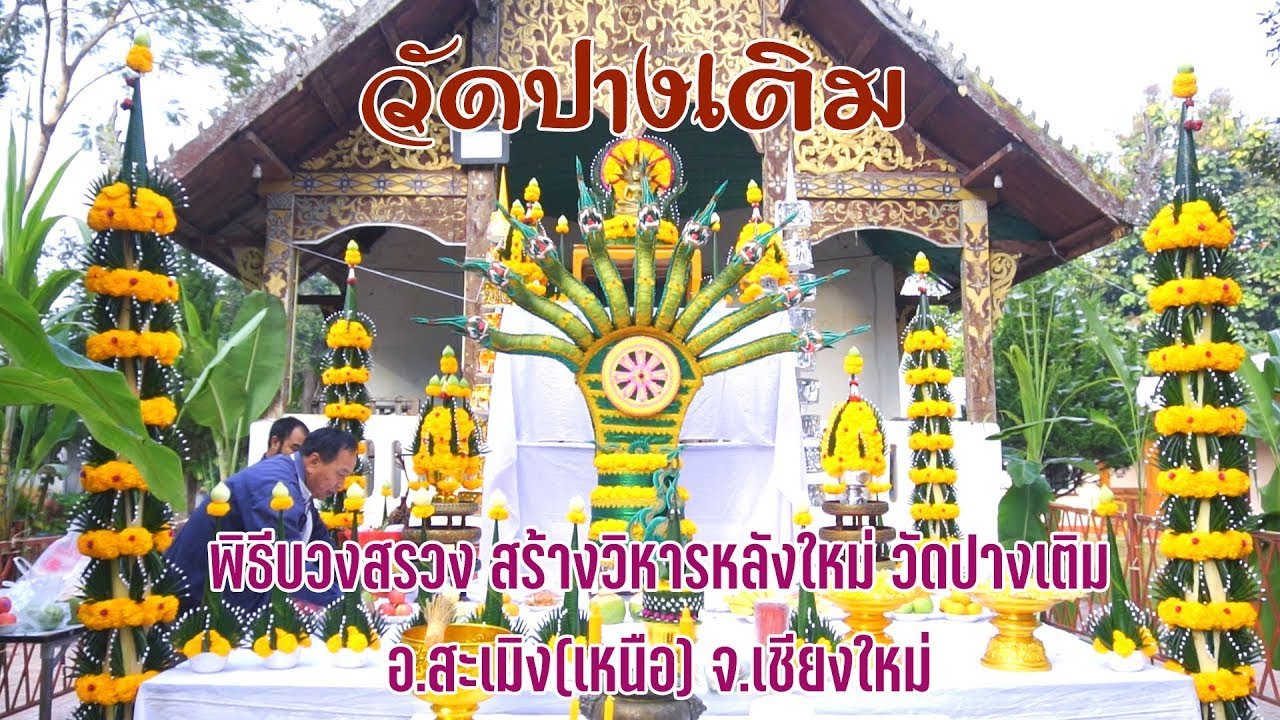
 Click to Access the Navigation Map GPS
Wat Pang Toem Map
Recommend

 Muang Chiang Mai(121)Chom Thong(47)Mae Chaem(25)Chiang Dao(33)Doi Saket(68)Mae Taeng(85)Mae Rim(69)Samoeng(29)Fang(71)Mae Ai(59)Phrao(70)San Pa Tong(103)San Kamphaeng(66)San Sai(73)Hang Dong(73)Hot(32)Doi Tao(22)Omkoi(11)Saraphi(74)Wiang Haeng(15)Chai Prakan(28)Mae Wang(32)Mae On(22)Doi Lo(34)Galyani Vadhana(1)


