
lovethailand home >North Travel Attractions >Chiang Mai Travel Attractions >Samoeng >Mae Sap > Wat Ton Phueng
TL;DR: Wat Ton Phueng is located at No. 99, Moo 4, Ban Pang Toem, Mae Sap Subdistrict, Samoeng District, Chiang Mai Province 50250.
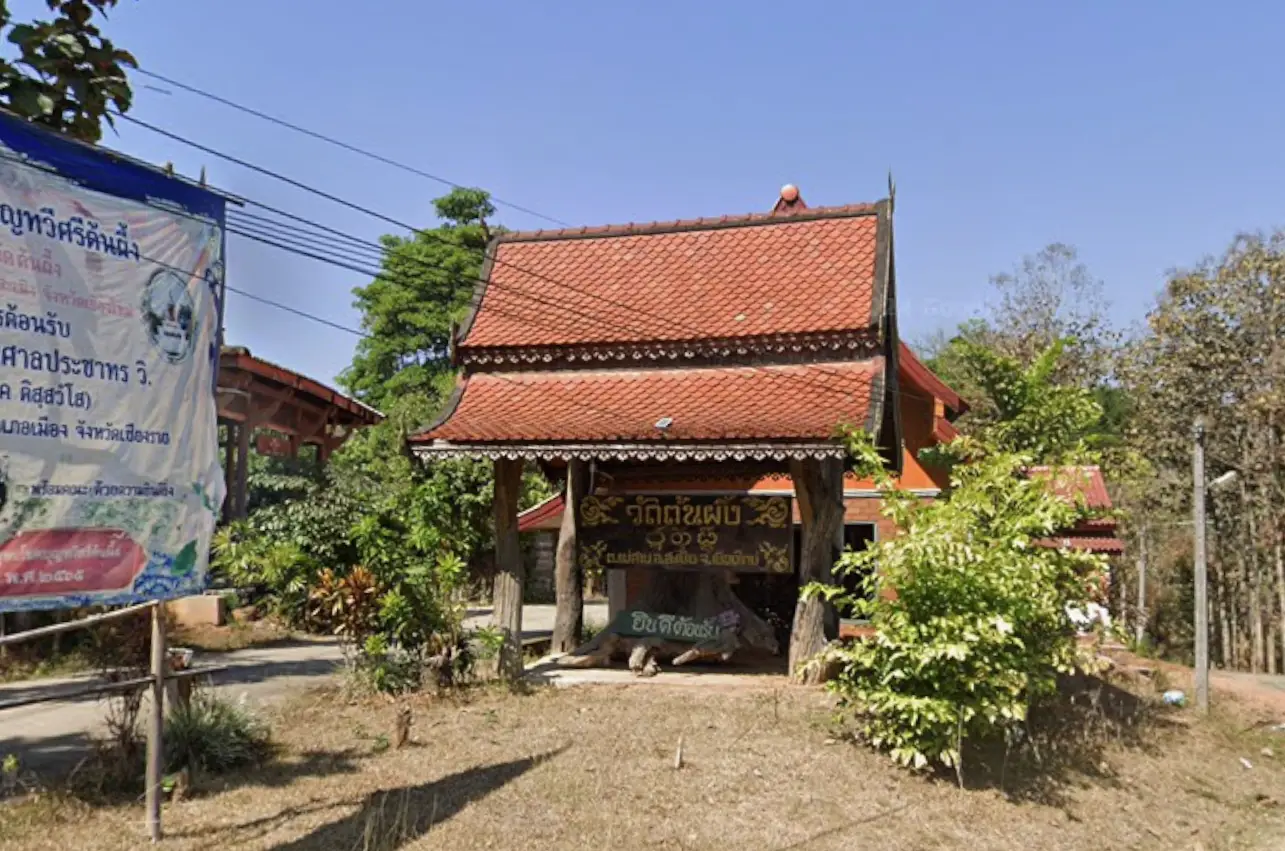
Wat Ton Phueng
Operating day: Daily
Operating time: 08.00 - 17.00
Wat Ton Phueng is located at No. 99, Moo 4, Ban Pang Toem, Mae Sap Subdistrict, Samoeng District, Chiang Mai Province. It is a non-royal Buddhist temple under the Mahanikaya order and serves the Moo 4 community of Mae Sap. The temple was established in 1940 and received its royal boundary for monastic rites on February 14, 1994. The boundary measures 20 meters wide and 40 meters long, while the temple land covers 6 rai, 3 ngan, and 14 square wah. Wat Ton Phueng is important as a mountain community temple with religious, educational, ethical, and meditation-related roles.
Wat Ton Phueng should be understood through the local context of Mae Sap Subdistrict and Ban Pang Toem. This part of Samoeng is not only a mountain village area, but also a landscape of agriculture, local roads, water sources, schools, temples, and village life. The temple’s name is connected with the Moo 4 community, which also appears in some records as Ban Ton Phueng. Local information also mentions a route between Ban Pang Toem and Ban Mai Ton Phueng within the same subdistrict, showing that the temple belongs to a broader local network of settlements and village identity.
As a village temple, Wat Ton Phueng differs from large tourist temples in Chiang Mai city. Its value lies in its everyday community role. It is a place for merit-making, Dharma listening, Buddhist learning, Sunday practice, and village gatherings. The temple functions as a shared religious space where local people can maintain Buddhist practice through ordinary life and important community occasions.
The temple’s establishment in 1940 places it within a period when rural temples in northern Thailand remained central to education, religion, communication, and village relationships. Wat Ton Phueng has therefore served more than a ritual function. It has helped create social unity, provide a place for community activity, and support Buddhist identity in the mountain landscape of Samoeng.
The royal boundary granted on February 14, 1994 is an important milestone in the temple’s history. A royal boundary, or wisungkhamsima, marks the formal area for important monastic rites. With a boundary measuring 20 meters wide and 40 meters long, Wat Ton Phueng has an officially recognized sacred area for Sangha functions. This gives the temple a complete religious role beyond general worship and community use.
The temple land covers 6 rai, 3 ngan, and 14 square wah, allowing enough space for the ordination hall, sermon hall, monks’ residence, kitchen, and community activity areas. In a mountain village, temple land is especially meaningful because it often serves as one of the main shared public spaces. Wat Ton Phueng can support ceremonies, moral development activities, Buddhist education, and village merit-making throughout the year.
Important structures at Wat Ton Phueng include the ordination hall, sermon hall, monks’ residence, and kitchen. The ordination hall measures 7.25 meters wide and 19 meters long and was built in 2011. The sermon hall measures 20 meters wide and 35 meters long and was built in 1985. The monks’ residence is one half-masonry, half-wooden building. The kitchen supports food preparation and community service during temple events and merit-making ceremonies.
The ordination hall, built in 2011, is one of the temple’s most important sacred spaces. Although relatively recent, it completes the temple’s ritual function and supports formal Sangha activities. Its size is well suited to a village temple. Visitors should treat this area with particular respect because it is associated with monastic discipline and important Buddhist rites.
The sermon hall, built in 1985, is the temple’s main community religious building. In Lanna village temples, a sermon hall is not only a place where monks give teachings. It is also used for merit-making, meetings, Buddhist education, community gatherings, and village ceremonies. Its large size reflects Wat Ton Phueng’s role as a moral and religious center for Mae Sap Subdistrict.
The monks’ residence is a half-masonry, half-wooden building, a form often found in northern Thai community temples. It reflects a period of architectural transition from traditional timber structures to stronger mixed-material buildings. Such structures are usually developed through local support and practical community needs. The monks’ residence allows the temple’s religious care and daily monastic routines to continue.
The kitchen is another important part of the temple’s community function. Lanna village merit-making often involves preparing food, offering meals to monks, welcoming visitors, and supporting ceremonies. A temple kitchen therefore represents more than utility. It reflects cooperation, generosity, and shared merit among local residents.
Wat Ton Phueng opened a Sunday Buddhist Study Center in 2008. This gives the temple a clear educational role for children, youth, and local residents. The center supports learning about Buddhist teachings, ethics, basic discipline, and practical conduct in daily life. Through this role, the temple becomes a place of learning, not only a place for ceremonies.
The temple also participates in the Sunday temple practice program. This activity encourages people to spend part of their weekly routine making merit, listening to Dharma, practicing mindfulness, and engaging with Buddhist teachings. It helps keep religion close to everyday life rather than limiting it to major festivals or formal ceremonies.
As a center for moral and ethical development in Mae Sap Subdistrict, Wat Ton Phueng helps cultivate discipline, gratitude, responsibility, and community harmony. Elderly residents, children, youth, and families can meet through merit-making, Dharma activities, and temple service. This is one of the core roles of a rural village temple: it develops people, not only buildings.
Phra Daenchai Thitamedhi is listed as the abbot of Wat Ton Phueng. His role is connected with the temple’s continuing Buddhist activities for Ban Pang Toem and Moo 4 of Mae Sap Subdistrict. In mountain communities, temples rely on both monastic leadership and local participation. Religious events, education, and village activities often follow seasonal rhythms, local agriculture, and the availability of the community.
Ban Pang Toem and the Ton Phueng area in Moo 4 are important to the temple’s local identity. Mae Sap local information mentions the rural route from Ban Pang Toem to Ban Mai Ton Phueng, about 6 kilometers long, and notes that travel is easier in the dry season but difficult during the rainy season. This detail shows that Wat Ton Phueng is located in a mountain community where roads, weather, and village connections remain important to everyday life.
Mae Sap Subdistrict has a varied mountain landscape with valleys, creeks, agricultural land, and settlements distributed along local routes. Temples, communities, schools, water sources, and natural attractions are closely connected. Wat Ton Phueng should therefore be included in a deeper cultural route through Samoeng, not only in a scenic café or viewpoint itinerary. It represents the religious and social roots of Mae Sap.
The temple’s community role follows the rhythm of many Lanna village temples. It supports Buddhist holy days, Buddhist Lent, the end of Buddhist Lent, Kathin, robe offering ceremonies, Dharma listening, memorial merit-making, and community events. These activities allow villagers to cooperate, make merit, and maintain relationships between families and the temple. The value of Wat Ton Phueng lies in this continuing social and religious function.
Mae Sap Subdistrict also has broader cultural traditions, including the bathing ceremonies of Phra That Mon Pia and Phra Borommathat Doi Pha Som, Dam Hua community ceremonies, and ethnic New Year traditions in some communities. Not all of these events take place at Wat Ton Phueng, but they show that Mae Sap has an active cultural and religious life throughout the year. Wat Ton Phueng forms part of this wider network of Buddhist practice and local identity.
Visitors to Wat Ton Phueng should pay attention to the ordination hall, sermon hall, monks’ residence, kitchen, and the quiet atmosphere of a working village temple. The temple should not be judged by the standards of large tourist temples. The ordination hall reflects formal Sangha functions, the sermon hall reflects Dharma learning and community gathering, and the Sunday Buddhist Study Center reflects the temple’s educational and moral role.
Wat Ton Phueng has a calm atmosphere suitable for worship, merit-making, and quiet observation. Visitors should dress modestly, speak softly, and respect monastic areas, especially around the ordination hall, sermon hall, and monks’ residence. If a Buddhist class, meditation activity, or village ceremony is taking place, visitors should avoid disturbing the activity and should ask permission before photographing monks or participants.
Wat Ton Phueng can be combined with several nearby places in Mae Sap and Samoeng. These include Phra That Mon Pia, Phra Borommathat Doi Pha Som, Mae Na Poe Waterfall, Mae Khae Reservoir in Ban Ngio Thao, Pha Yong, and the Ban Mae Tung Ting Royal Initiative Demonstration Farm. This route offers a combination of village temple culture, Buddhist monuments, water sources, mountains, waterfalls, and local community life.
Phra That Mon Pia is an ancient Buddhist site respected by the people of Samoeng and associated with an annual bathing ceremony on the full moon of the sixth northern lunar month. Phra Borommathat Doi Pha Som is another significant Buddhist monument in Mae Sap. Visiting Wat Ton Phueng together with these sacred sites helps travelers understand the continuity of Buddhist faith from village temples to revered hilltop monuments.
Mae Na Poe Waterfall is a natural attraction in Mae Sap with multiple tiers and water throughout the year. Pha Yong is a natural rock formation resembling the Golden Rock pagoda and is respected by local residents. Combining Wat Ton Phueng with these places creates a route that includes religion, local belief, mountain scenery, and nature.
Getting There is most convenient by private car or rental car. From Chiang Mai city, travel toward Samoeng District and continue to Mae Sap Subdistrict, Ban Pang Toem, Moo 4. Roads in Samoeng and Mae Sap include mountain curves, uphill sections, and some rural routes that may be difficult in the rainy season. Careful driving is recommended, especially during rain, mist, early morning, or evening travel. Travelers can continue from Wat Ton Phueng to Phra That Mon Pia, Phra Borommathat Doi Pha Som, Mae Na Poe Waterfall, Mae Khae Reservoir, or the Ban Mae Tung Ting Royal Initiative Demonstration Farm.
Wat Ton Phueng is suitable for travelers who want to understand Samoeng through community Buddhism, Buddhist education, and highland village life. The temple has a clear historical foundation, a royal boundary, an ordination hall, a large sermon hall, a monks’ residence, a kitchen, a Sunday Buddhist Study Center, and a Sunday practice role. Together, these elements make Wat Ton Phueng more than a place for worship. It is a living community temple that connects religion, education, ethics, and Lanna village life in Mae Sap.
| Name | Wat Ton Phueng |
| Place Type | Non-Royal Buddhist Temple Under The Mahanikaya Order |
| Location | No. 99, Moo 4, Ban Pang Toem, Mae Sap Subdistrict, Samoeng District, Chiang Mai Province 50250 |
| Related Community Names | Ban Pang Toem / Ban Ton Phueng, Moo 4, Mae Sap Subdistrict |
| Temple Code | 350080303 |
| Temple Land Area | 6 Rai, 3 Ngan, 14 Square Wah |
| History | Established In 1940 |
| Royal Boundary | Granted On February 14, 1994; Boundary Size 20 Meters Wide And 40 Meters Long |
| Abbot / Caretaker | Phra Daenchai Thitamedhi |
| Important Structures | Ordination Hall, Sermon Hall, Monks’ Residence, Kitchen |
| Ordination Hall | 7.25 Meters Wide And 19 Meters Long, Built In 2011 |
| Sermon Hall | 20 Meters Wide And 35 Meters Long, Built In 1985 |
| Monks’ Residence | One Half-Masonry, Half-Wooden Building |
| Educational And Moral Role | Opened A Sunday Buddhist Study Center In 2008, Participates In The Sunday Temple Practice Program, And Serves As A Moral And Ethical Development Center In Mae Sap Subdistrict |
| Current Status | A Non-Royal Buddhist Temple In Mae Sap Subdistrict, Samoeng District, Chiang Mai Province, Still Listed In The Sangha Temple Database |
| Facilities | Sermon Hall, Kitchen, Worship Area, Religious Activity Area, Community Activity Space |
| Main Areas / Zones | Ordination Hall, Sermon Hall, Monks’ Residence, Kitchen |
| Travel Information | Best Reached By Private Car Or Rental Car From Chiang Mai City Toward Samoeng District, Then To Mae Sap Subdistrict, Ban Pang Toem, Moo 4 |
| Nearby Tourist Attractions | 1. Phra That Mon Pia, About 8 Km 2. Phra Borommathat Doi Pha Som, About 9 Km 3. Mae Na Poe Waterfall, About 13 Km 4. Mae Khae Reservoir, Ban Ngio Thao, About 14 Km 5. Pha Yong, About 17 Km |
| Nearby Restaurants | 1. Ice Cream Café At Samoeng Chiang Mai, About 10 Km, Tel. 081-751-2191 2. Coffee By Aitsara, About 11 Km 3. Cafe De Mountain, About 13 Km, Tel. 098-506-5306 4. Samoeng Coffee, About 18 Km, Tel. 089-954-0293 5. Khwamsukh Cafe, About 34 Km, Tel. 064-339-2582 |
| Nearby Accommodations | 1. Forest Guesthouse, About 18 Km, Tel. 084-371-5055 2. Khum Samoeng-Samoeng Center, About 19 Km, Tel. 081-122-2324 3. The Terrace @Samuang, About 19 Km, Tel. 081-597-9514 4. Lhongkhao Samoeng, About 20 Km, Tel. 089-504-8108 5. Nai Khun Khao Resort, About 21 Km, Tel. 098-296-1628 |
Frequently Asked Questions (FAQ)
Q: Where Is Wat Ton Phueng Located?
A: Wat Ton Phueng is located at No. 99, Moo 4, Ban Pang Toem, Mae Sap Subdistrict, Samoeng District, Chiang Mai Province 50250.
Q: When Was Wat Ton Phueng Established?
A: Wat Ton Phueng was established in 1940 and received its royal boundary for monastic rites on February 14, 1994.
Q: What Important Structures Are Found At Wat Ton Phueng?
A: Important structures include the ordination hall, sermon hall, monks’ residence, and kitchen.
Q: When Was The Ordination Hall Built?
A: The ordination hall was built in 2011 and measures 7.25 meters wide and 19 meters long.
Q: What Is Wat Ton Phueng’s Educational Role?
A: Wat Ton Phueng opened a Sunday Buddhist Study Center in 2008 and participates in the Sunday temple practice program.
Q: Who Is The Abbot Of Wat Ton Phueng?
A: Phra Daenchai Thitamedhi is listed as the abbot of Wat Ton Phueng.
Q: What Type Of Traveler Is Wat Ton Phueng Suitable For?
A: It is suitable for travelers interested in Lanna village temples, quiet merit-making, community Buddhism, and cultural travel in Mae Sap.
Q: What Nearby Places Can Be Combined With Wat Ton Phueng?
A: Travelers can combine the visit with Phra That Mon Pia, Phra Borommathat Doi Pha Som, Mae Na Poe Waterfall, Mae Khae Reservoir, and Pha Yong.
 Category: ●Places of Worship
 Group: ●Temple
Last Update : 6 DayAgo
 Last Update : 6 DayAgo
 Click to Access the Navigation Map GPS
 Muang Chiang Mai(121)Chom Thong(47)Mae Chaem(25)Chiang Dao(33)Doi Saket(68)Mae Taeng(85)Mae Rim(69)Samoeng(29)Fang(71)Mae Ai(59)Phrao(70)San Pa Tong(103)San Kamphaeng(66)San Sai(73)Hang Dong(73)Hot(32)Doi Tao(22)Omkoi(11)Saraphi(74)Wiang Haeng(15)Chai Prakan(28)Mae Wang(32)Mae On(22)Doi Lo(34)Galyani Vadhana(1)


