
lovethailand home >North Travel Attractions >Chiang Mai Travel Attractions >Samoeng >Bo Kaeo > Wat Si Rattana Wat Khiri
TL;DR: Wat Si Rattana Wat Khiri is located at Moo 5, Bo Kaeo Subdistrict, Samoeng District, Chiang Mai Province 50250, open Daily, hours Daytime visits are recommended.

Wat Si Rattana Wat Khiri
Open Days: Daily
Opening Hours: Daytime visits are recommended
Wat Si Rattana Wat Khiri is a local Buddhist temple in Moo 5, Bo Kaeo Subdistrict, Samoeng District, Chiang Mai Province. It is a non-royal temple under the Mahanikaya order and has long served as a spiritual center for Ban Bo Kaeo. The temple was officially established in 1924 and later received its royal boundary for monastic rites on January 15, 1981. Its importance is not based on grand tourist architecture, but on its deep connection with the local community, the mountain landscape of Samoeng, and the Lanna Buddhist tradition associated with Khruba Siwichai.
Wat Si Rattana Wat Khiri is best suited for travelers who want to understand Samoeng beyond strawberry farms, cafés, and scenic viewpoints. The temple reflects the close relationship between Buddhism, village life, and highland communities in northern Thailand. Ban Bo Kaeo is a mountain community surrounded by farmland, cool-climate agriculture, local roads, and small villages. In this setting, the temple has functioned as a place for merit-making, Buddhist ceremonies, community gatherings, and spiritual support for local residents.
The temple appears in historical records as “Wat Si Rattanawat Khiri,” while its current common name is Wat Si Rattana Wat Khiri. Local villagers formerly called it “Wat Mueang Bon,” and its original name was “Wat Huai Phra Chao.” The temple was renamed Wat Si Rattana Wat Khiri in 1966. The name carries both Buddhist and geographic meaning: “Si Rattana” refers to auspiciousness and the Triple Gem, while “Khiri” means mountain. The name therefore fits the temple’s location in the highland landscape of Bo Kaeo, Samoeng.
The temple’s history is especially notable because historical records state that it was founded by Khruba Siwichai, one of the most revered Lanna monks associated with temple building, restoration, and religious development across northern Thailand. This connection gives Wat Si Rattana Wat Khiri a deeper cultural value. It is not merely a village temple, but part of the wider network of Lanna Buddhist faith, community cooperation, and merit-making traditions that shaped many mountain communities in Chiang Mai.
The temple is recorded as being located at No. 4, Ban San Ba Tu, Moo 5, Bo Kaeo Subdistrict, Samoeng District, Chiang Mai Province. The temple land covers 3 rai and 2 ngan. Historical boundary descriptions show that the temple area was once closely connected with private mining areas around it, which helps explain its older local name, Wat Mueang Bon. Bo Kaeo has long been associated with natural resources, agriculture, and highland settlement, and the temple served as a stabilizing religious center within this changing local landscape.
Important structures within Wat Si Rattana Wat Khiri include the ordination hall, viharn, monks’ residences, multipurpose hall, and meditation hall. The ordination hall became especially significant after the temple received its royal boundary for monastic rites. The viharn serves as a place for worship and community devotion. The monks’ residences support monastic life, while the multipurpose hall is used for religious and community activities. The meditation hall reflects the temple’s role in spiritual practice and mental cultivation.
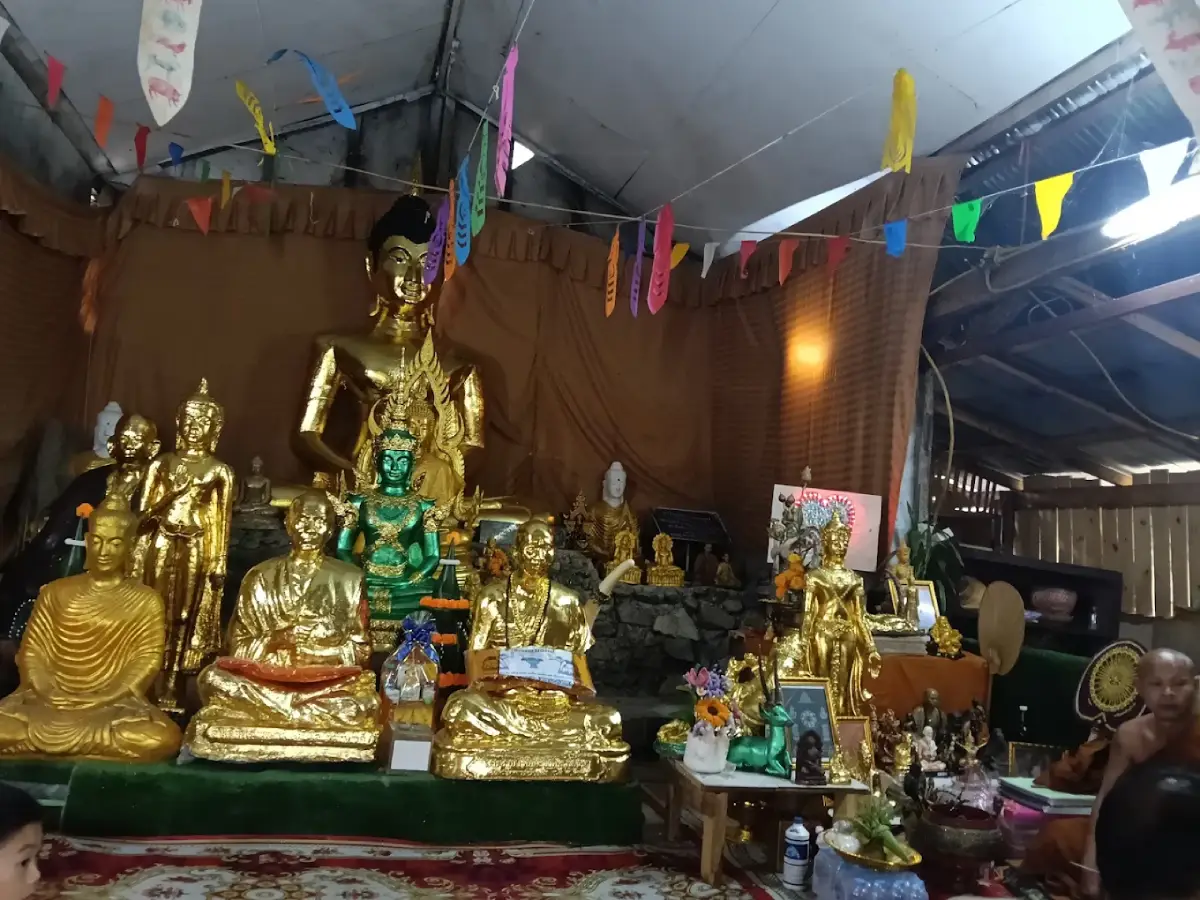
The temple’s important sacred objects include Buddha images in the subduing Mara posture and the meditation posture. The subduing Mara posture represents victory over defilement and unwavering commitment to the Dharma, while the meditation posture represents inner calm, concentration, and mental clarity. For local residents, these Buddha images are central objects of worship for merit-making, prayer, and reflection during Buddhist observances and community ceremonies.
Wat Si Rattana Wat Khiri received its royal boundary for monastic rites on January 15, 1981. The boundary measures 35 meters wide and 65 meters long. This detail is important because the royal boundary allows the temple to conduct formal monastic acts such as ordination and other important Sangha ceremonies. It confirms the temple’s standing as a fully recognized Buddhist institution serving the local community.
The historical list of abbots includes Phra Khru Nakhom Thammaprasat, who served from 1965 to 1983; Phra Inta Inla, who served from 1983 to 1987; Phra Prachoet in 1989; and Phra Suchin Chinnathuto, recorded from 1990 onward as acting abbot. Later search results also mention Phra Athikan Komin Thammasaro of Wat Si Rattanawat Khiri in a list of monks participating in a Buddhist consecration ceremony at Wat Dab Pai in Chiang Mai. However, the latest current abbot should be confirmed directly with the temple or local Sangha authority before being used as a present-day reference.
The main appeal of Wat Si Rattana Wat Khiri for cultural travelers lies in its authenticity as a living community temple. Visitors should not expect a highly commercialized attraction. Instead, the value of this temple is found in its calm setting, its role in Ban Bo Kaeo, its connection with Khruba Siwichai, and its place within the wider cultural landscape of Samoeng. It is suitable for travelers who appreciate village temples, local Buddhist history, and quieter routes in Chiang Mai’s mountain districts.
Bo Kaeo itself is a culturally diverse highland area known for cool-climate agriculture and strawberry production. The district of Samoeng is widely associated with strawberries, and Bo Kaeo is one of the areas where local agriculture, community tourism, and ethnic diversity come together. The Bo Kaeo Lua Chue Ni community tourism group promotes local culture, highland livelihoods, nature walks, and local products. A visit to Wat Si Rattana Wat Khiri can therefore be combined naturally with community-based travel in Bo Kaeo.
In terms of religious tradition, Wat Si Rattana Wat Khiri plays the same essential role as many Lanna village temples. It serves as a place for Buddhist holy days, merit-making, Kathin ceremonies, robe offering ceremonies, Dharma listening, and community gatherings. Although no officially confirmed annual festival specific to this temple was found, its role as a local Buddhist center makes it an important part of the yearly rhythm of religious and community life in Ban Bo Kaeo.
Visitors should dress modestly, speak softly, and respect monastic areas. This is a working community temple rather than a commercial tourist site. Photography should be done with discretion, especially around the ordination hall, viharn, monks, and local residents attending religious activities. Travelers who wish to make offerings or ask for more local information should do so respectfully through temple representatives, community leaders, or local residents in Bo Kaeo.
Getting There is most convenient by private car or rental car. From Chiang Mai city, travel toward Samoeng District and continue to Bo Kaeo Subdistrict, Moo 5. The road into Samoeng includes mountain curves and uphill sections, so careful driving is recommended, especially during rain, mist, or early morning travel. The temple can be included in a one-day cultural route with Bo Kaeo community tourism, strawberry farms, cafés, Mae Yang Ha village, Mae To hot spring, or nearby natural attractions.
After visiting Wat Si Rattana Wat Khiri, travelers can continue to nearby community and nature-based destinations in Bo Kaeo. Ban Mae Yang Ha, Ban Mae Khapu, strawberry farms, Doi Mon Ku, Mae To Hot Spring, and Tham Luang Mae Sap are suitable additions depending on available time and road conditions. Travelers who prefer a slower trip can stay overnight in Bo Kaeo or Samoeng Tai, then continue exploring Samoeng’s nature and highland communities the following day.
Wat Si Rattana Wat Khiri is therefore a meaningful destination for travelers interested in Lanna village temples, Khruba Siwichai’s religious legacy, Samoeng’s local culture, and quiet highland travel. Its strength lies in its rootedness. It was not created primarily as a tourist attraction; it grew with the village and continues to serve the religious life of the community. For visitors who value cultural depth and authentic local context, this temple offers a calm and thoughtful stop in Bo Kaeo.
| Name | Wat Si Rattana Wat Khiri |
| Place Type | Non-Royal Buddhist Temple Under the Mahanikaya Order |
| Location | Moo 5, Bo Kaeo Subdistrict, Samoeng District, Chiang Mai Province 50250 |
| Historical Address | No. 4, Ban San Ba Tu, Moo 5, Bo Kaeo Subdistrict, Samoeng District, Chiang Mai Province |
| Highlights | A long-established community temple in Ban Bo Kaeo, founded in 1924 and historically associated with Khruba Siwichai |
| History | Officially established in 1924, renamed Wat Si Rattana Wat Khiri in 1966, and granted its royal boundary for monastic rites on January 15, 1981 |
| Former Names | Formerly Wat Huai Phra Chao and locally known as Wat Mueang Bon |
| Distinctive Features | A mountain-community temple in Samoeng that remains closely connected to local Buddhist life and Lanna cultural identity |
| Important Structures | Ordination Hall, Viharn, Monks’ Residences, Multipurpose Hall, Meditation Hall |
| Sacred Objects | Buddha Images In The Subduing Mara Posture And Meditation Posture |
| Royal Boundary | 35 meters wide and 65 meters long |
| Travel Information | Best reached by private car or rental car from Chiang Mai city toward Samoeng District, then onward to Bo Kaeo Subdistrict, Moo 5 |
| Current Status | Still listed as a non-royal Buddhist temple in Bo Kaeo Subdistrict, Samoeng District, Chiang Mai Province |
| Facilities | Community temple area, multipurpose hall, and worship spaces for Buddhist activities |
| Main Areas / Zones | Ordination Hall, Viharn, Monks’ Residences, Multipurpose Hall, Meditation Hall |
| Abbot / Caretaker In Historical Records | Phra Khru Nakhom Thammaprasat, Phra Inta Inla, Phra Prachoet, and Phra Suchin Chinnathuto are listed in historical records |
| Nearby Tourist Attractions | 1. Bo Kaeo Lua Chue Ni Community Tourism Group, about 5 km 2. Ban Bo Kaeo Strawberry Farms, about 5 km 3. Ban Mae Yang Ha, about 7 km 4. Mae To Hot Spring, about 9 km 5. Tham Luang Mae Sap, about 25 km |
| Nearby Restaurants | 1. Khwamsukh Cafe, about 5 km, Tel. 064-339-2582 2. Bokaew Estate Coffee Farm, about 5 km, Tel. 097-165-7479 3. Na Samoeng Bo Kaeo Coffee, about 5 km, Tel. 097-165-7479 4. Teibto Cafe, about 8 km, Tel. 083-708-3043 5. Coffee By Aitsara, about 28 km, Tel. 084-378-0821 |
| Nearby Accommodations | 1. Suan Doi Kaew, about 5 km, Tel. 084-803-9905, 098-748-1349 2. Su-Le-Bo Thung Na Haeng Roi Yim Homestay, about 12 km, Tel. 089-553-3836 3. Samoeng Resort, about 25 km, Tel. 053-487-074-5 4. Forest Guest House, about 27 km 5. Phu Mork Dao Resort, about 32 km, Tel. 086-310-6120, 086-344-2743 |
Frequently Asked Questions (FAQ)
Q: Where is Wat Si Rattana Wat Khiri located?
A: Wat Si Rattana Wat Khiri is located in Moo 5, Bo Kaeo Subdistrict, Samoeng District, Chiang Mai Province 50250.
Q: When was Wat Si Rattana Wat Khiri established?
A: The temple was officially established in 1924 and received its royal boundary for monastic rites on January 15, 1981.
Q: What were the former names of Wat Si Rattana Wat Khiri?
A: The temple was formerly called Wat Huai Phra Chao and was locally known as Wat Mueang Bon before being renamed Wat Si Rattana Wat Khiri in 1966.
Q: How is Wat Si Rattana Wat Khiri connected to Khruba Siwichai?
A: Historical records state that the temple was founded by Khruba Siwichai, linking it to the wider Lanna Buddhist tradition.
Q: What important structures can visitors find inside the temple?
A: Important structures include the ordination hall, viharn, monks’ residences, multipurpose hall, and meditation hall.
Q: How should travelers get to Wat Si Rattana Wat Khiri?
A: The most convenient way is by private car or rental car from Chiang Mai city toward Samoeng District, then onward to Bo Kaeo Subdistrict, Moo 5.
Q: What type of traveler is this temple suitable for?
A: It is suitable for travelers interested in Lanna village temples, local Buddhist history, Khruba Siwichai, and quiet cultural routes in Samoeng.
Q: What nearby places can be combined with a visit to the temple?
A: Travelers can combine the temple with Bo Kaeo community tourism, strawberry farms, Ban Mae Yang Ha, Mae To Hot Spring, and cafés in Bo Kaeo.
 Category: ●Places of Worship
 Group: ●Temple
Last Update : 16 HourAgo
 Last Update : 16 HourAgo
 Click to Access the Navigation Map GPS
Wat Si Rattana Wat Khiri Map
Recommend

 Muang Chiang Mai(121)Chom Thong(47)Mae Chaem(25)Chiang Dao(33)Doi Saket(68)Mae Taeng(85)Mae Rim(69)Samoeng(29)Fang(71)Mae Ai(62)Phrao(70)San Pa Tong(105)San Kamphaeng(66)San Sai(73)Hang Dong(74)Hot(32)Doi Tao(22)Omkoi(11)Saraphi(74)Wiang Haeng(15)Chai Prakan(28)Mae Wang(32)Mae On(22)Doi Lo(34)Galyani Vadhana(1)


