
lovethailand home >North Travel Attractions >Chiang Mai Travel Attractions >Mae Ai >Ban Luang > Wat Muang Sam Hoi
TL;DR: Wat Muang Sam Hoi is located at Moo 4, Ban Luang Subdistrict, Mae Ai District, Chiang Mai Province. Highlights include Community temple in Ban Luang Subdistrict, established in 1937, suitable for worship, merit-making, and learning about Lanna village temple.
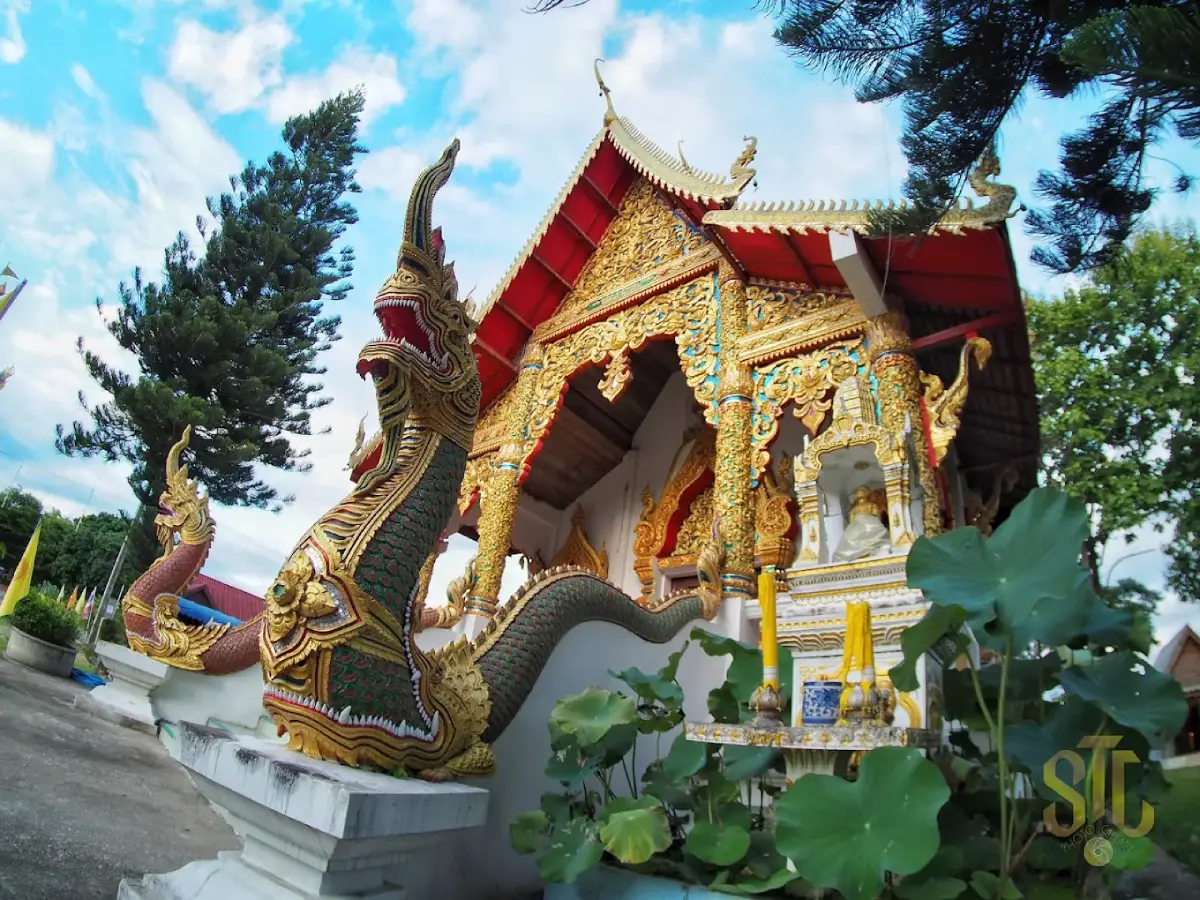
Wat Muang Sam Hoi
Operating day: Daily
Operating time: 08.00 - 17.00
Wat Muang Sam Hoi is a private-sector Buddhist temple under the Mahanikaya order in Moo 4, Ban Luang Subdistrict, Mae Ai District, Chiang Mai Province 50280. The temple was officially permitted to be established in 1937. Its abbot is Phra Khru Baidika Athit Abhinando. Wat Muang Sam Hoi is an important community temple of Ban Luang Subdistrict, serving as a spiritual center for worship, merit-making, sermons, Buddhist ceremonies, and the preservation of Lanna village temple culture in northern Chiang Mai.
Wat Muang Sam Hoi is located in Moo 4, Ban Pa Ko, Ban Luang Subdistrict. Ban Pa Ko is a relatively small village within the subdistrict, with 232 residents and 86 households according to local administrative information. In a village of this size, the relationship between the temple, homes, and local residents is close. The temple serves not only as a place for Buddhist rituals but also as a shared community space used during holy days, annual merit-making, and village gatherings.
Ban Luang Subdistrict lies within Mae Ai District in northern Chiang Mai. The area has a broad rural landscape of mountains, lowland farming areas, forest reserves, and village communities. A large portion of the subdistrict is connected with the Mae Fang watershed forest. Most residents are engaged in agriculture, including rice farming, field crops, orchards, and seasonal cultivation. Wat Muang Sam Hoi is therefore set within a rural agricultural community where temple life, nature, and village cooperation remain closely connected.
The official history of Wat Muang Sam Hoi began in 1937, when it was permitted to be established as a temple. During that period, temples in rural Mae Ai played a central role in religious and social life. Establishing a temple required community faith, land, local support, and continuing care from monks and laypeople. Wat Muang Sam Hoi reflects the religious readiness of the local community and the desire of villagers to maintain their own place for merit-making, worship, and Buddhist learning.
The name Wat Muang Sam Hoi is distinctive and memorable. The word “muang” may be connected with local naming traditions, while “sam hoi” carries a northern Thai sound and gives the temple a strong local identity. A temple name of this kind preserves community memory and marks the temple as part of a specific place. When people refer to Wat Muang Sam Hoi, they also refer to the village landscape and the local identity of Ban Luang Subdistrict.
Wat Muang Sam Hoi is a private-sector temple, meaning that the local community has an important role in sustaining it. Village temples of this type grow through the faith and support of laypeople. Residents help maintain the temple, support merit-making, care for sacred spaces, and participate in Buddhist activities. This makes the temple closely connected with daily and annual community life.
The current abbot of Wat Muang Sam Hoi is Phra Khru Baidika Athit Abhinando. As abbot, he is responsible for the temple’s religious leadership and its relationship with the community. A village temple depends on cooperation between the abbot, monks, lay supporters, community leaders, and local residents. This cooperation allows the temple to continue supporting Buddhist ceremonies, local traditions, and community gatherings.
The important areas of Wat Muang Sam Hoi include spaces for worshipping Buddha images, the temple courtyard, merit-making areas, sermon areas, and community activity spaces. Verified public information about the exact architectural details of its ordination hall, viharn, chedi, bell tower, sermon hall, or principal Buddha image is limited. The temple is therefore best presented as a community temple with clear Buddhist status and an important role in the village, without adding unsupported architectural details.
The main highlight of Wat Muang Sam Hoi is its identity as a village temple in a small community. It is not a large commercial tourist attraction, and that is part of its value. Visitors can pay respect, make merit, sit quietly, and observe how a rural Lanna temple supports local life. The temple is meaningful for travelers who want to understand Mae Ai beyond major tourist landmarks.
Since the temple was officially established in 1937, Wat Muang Sam Hoi has been part of the life of the Ban Pa Ko community for many decades. It has supported worship, sermons, merit-making, Buddhist holy day observances, and annual village activities across generations. The temple therefore represents both religious continuity and community history in Ban Luang Subdistrict.
The role of Wat Muang Sam Hoi can be understood in religious, social, and cultural dimensions. Religiously, it is a place for worship, merit-making, sermons, and Buddhist ceremonies. Socially, it is a gathering place where local residents can meet, cooperate, and organize events. Culturally, it helps preserve Lanna Buddhist customs such as holy day merit-making, Pha Pa, Kathin, Dhamma listening, and annual community ceremonies.
Temple ceremonies at Wat Muang Sam Hoi follow the rhythm of the Buddhist calendar and local village life. Important activities include Buddhist holy day merit-making, Pha Pa, Kathin, Dhamma sermons, and seasonal merit-making. Ban Luang Subdistrict also has several annual traditions such as Songkran and elderly day activities, Loy Krathong, Salak Phat, and other local ceremonies. These traditions show how temples in the subdistrict remain connected with community life throughout the year.
Ban Pa Ko, where Wat Muang Sam Hoi is located, also has a local school. The presence of both a temple and a school in the village reflects an important pattern in rural community structure. The school supports formal education, while the temple supports moral, religious, and cultural learning. Together, they provide spaces for different forms of learning across generations.
The surrounding environment of Ban Luang Subdistrict includes forests, rivers, streams, and agricultural land. Important waterways include the Mae Na Wang River and the Wang Noi River, along with several local streams. These natural resources support farming and local life. Wat Muang Sam Hoi is therefore part of a cultural landscape where nature, agriculture, and Buddhism are closely linked.
Visitors to Wat Muang Sam Hoi should approach the temple respectfully. Modest dress, quiet speech, and proper behavior are expected. Visitors should avoid disturbing monks or local worshippers and should take photographs respectfully, especially around Buddha images, sacred areas, or ongoing ceremonies. A community temple is an active sacred space, not merely a photo stop.
For cultural travelers, Wat Muang Sam Hoi can be included in a temple route through Ban Luang Subdistrict and Mae Ai District. Nearby temples include Wat Si Song Mueang or Wat Pa Ko, Wat Sawang Phaibun or Wat Pa Daet, Wat Watthanaram or Wat Ban Luang, Wat Pa Daeng or Wat Udom Phrison, Wat Phra That Sop Fang, Wat Phra Chedi Chiang Phaya or Wat Pa Tueng, and Wat Thaton. Visiting several temples in one route helps travelers understand the network of village temples in Mae Ai.
Getting There is most convenient by private car, rental car, or local hired transport. From Chiang Mai city, travel north toward Fang and Mae Ai, then continue into Ban Luang Subdistrict and Moo 4, Ban Pa Ko. Travelers can search for “Wat Muang Sam Hoi Ban Luang Mae Ai Chiang Mai” in a map application before departure to plan the most suitable route.
From Mae Ai District, Ban Luang Subdistrict is about 17 kilometers away. Wat Muang Sam Hoi can be visited as part of a half-day or full-day route through nearby community temples. Travelers coming from Chiang Mai city should allow enough travel time, as Mae Ai is far from the city center. Staying overnight in Mae Ai, Thaton, or Fang makes it easier to connect the route with Wat Thaton, the Kok River area, and other northern Chiang Mai attractions.
A recommended temple route begins at Wat Muang Sam Hoi in Moo 4, Ban Pa Ko, then continues to Wat Si Song Mueang or Wat Pa Ko in the same village area. From there, visitors can continue to Wat Sawang Phaibun, Wat Watthanaram, Wat Pa Daeng, and Wat Phra That Sop Fang. With more time, the route can extend to Wat Phra Chedi Chiang Phaya and Wat Thaton. This route gives a wider picture of Mae Ai’s village temple culture.
Wat Muang Sam Hoi is suitable for travelers interested in local temple history, Mahanikaya community temples, Lanna village life, and cultural routes in northern Chiang Mai. Although it does not have widely published architectural details like major tourist temples, its value lies in its role as a community temple established in 1937 and maintained as a spiritual center for local residents.
In summary, Wat Muang Sam Hoi is a Mahanikaya private-sector temple in Moo 4, Ban Luang Subdistrict, Mae Ai District, Chiang Mai Province. Established in 1937 and led by Phra Khru Baidika Athit Abhinando, the temple serves as a spiritual center for the local community. It is suitable for worship, merit-making, learning about Lanna village temples, and joining a wider temple route through Mae Ai.
| Name | Wat Muang Sam Hoi |
| Location | Moo 4, Ban Luang Subdistrict, Mae Ai District, Chiang Mai Province |
| Address | Moo 4, Ban Luang Subdistrict, Mae Ai District, Chiang Mai 50280, Thailand |
| Temple Type | Private-Sector Buddhist Temple, Mahanikaya Order |
| Highlights | Community temple in Ban Luang Subdistrict, established in 1937, suitable for worship, merit-making, and learning about Lanna village temple culture in Mae Ai |
| History | Officially permitted to be established as a temple in 1937 |
| Name Origin | Wat Muang Sam Hoi is a distinctive local temple name that preserves community memory and the identity of the area |
| Community Context | Moo 4, Ban Pa Ko, has 232 residents and 86 households, making the temple an important shared religious and social space |
| Travel Information | Best reached by private car, rental car, or local hired transport from Chiang Mai toward Mae Ai, then into Ban Luang Subdistrict and Moo 4, Ban Pa Ko |
| Current Status | Listed in temple directories and monastic directory information; no public record found indicating permanent closure |
| Main Areas / Zones | Buddha worship area, temple courtyard, merit-making area, sermon area, and community activity spaces |
| Abbot / Caretaker | Phra Khru Baidika Athit Abhinando |
| Important Traditions / Ceremonies | Buddhist holy day merit-making, Pha Pa, Kathin, Dhamma sermons, Songkran, Loy Krathong, and annual Lanna community merit-making activities |
| Nearby Tourist Attractions | 1. Wat Si Song Mueang / Wat Pa Ko, about 1 km 2. Wat Sawang Phaibun / Wat Pa Daet, about 4 km 3. Wat Watthanaram / Wat Ban Luang, about 5 km 4. Wat Pa Daeng / Wat Udom Phrison, about 6 km 5. Wat Phra That Sop Fang, about 9 km 6. Wat Thaton, about 28 km |
| Nearby Restaurants | 1. Ban Suan Khun Yai, about 17 km 2. Thaton Hill, about 27 km, Tel. 053-053-669 3. Thaton Chomchan Cafe & Restaurant, about 28 km, Tel. 088-435-4467 4. Thaton Riverview Restaurant, about 28 km, Tel. 053-459-289, 053-373-173-5, 093-256-7969 5. Chanka Sem Restaurant, about 28 km 6. Hompandin Cafe, about 29 km |
| Nearby Accommodations | 1. Ban Suan Khun Yai, about 17 km 2. Yoga Art Home, about 26 km, Tel. 093-261-5558 3. Thaton Hill Resort, about 27 km, Tel. 053-053-669 4. Thaton Chalet, about 28 km 5. Thaton Riverview Resort, about 28 km 6. LoveShack @ Thailand, about 29 km |
Frequently Asked Questions (FAQ)
Q: Where is Wat Muang Sam Hoi located?
A: Wat Muang Sam Hoi is located in Moo 4, Ban Luang Subdistrict, Mae Ai District, Chiang Mai Province 50280.
Q: What is the history of Wat Muang Sam Hoi?
A: Wat Muang Sam Hoi is a private-sector Mahanikaya temple officially permitted to be established in 1937.
Q: Who is the abbot of Wat Muang Sam Hoi?
A: The abbot of Wat Muang Sam Hoi is Phra Khru Baidika Athit Abhinando.
Q: What kind of visit is Wat Muang Sam Hoi suitable for?
A: It is suitable for worship, merit-making, learning about Lanna community temples, exploring Ban Luang Subdistrict, and joining a temple route through Mae Ai.
Q: What is the main highlight of Wat Muang Sam Hoi?
A: Its main highlight is its role as a Mahanikaya community temple established in 1937 and serving as a spiritual center for local residents.
Q: What ceremonies are associated with Wat Muang Sam Hoi?
A: Suitable community temple ceremonies include Buddhist holy day merit-making, Pha Pa, Kathin, Dhamma sermons, and annual Lanna community merit-making events.
Q: How can travelers get to Wat Muang Sam Hoi?
A: The most convenient way is by private car, rental car, or local hired transport from Chiang Mai toward Mae Ai, then into Ban Luang Subdistrict and Moo 4, Ban Pa Ko.
Q: What places can be visited together with Wat Muang Sam Hoi?
A: Nearby places include Wat Si Song Mueang, Wat Sawang Phaibun, Wat Watthanaram, Wat Pa Daeng, Wat Phra That Sop Fang, and Wat Thaton.
 Category: ●Places of Worship
 Group: ●Temple
Last Update : 1 WeekAgo
 Last Update : 1 WeekAgo
 Click to Access the Navigation Map GPS
 Muang Chiang Mai(121)Chom Thong(47)Mae Chaem(25)Chiang Dao(33)Doi Saket(68)Mae Taeng(85)Mae Rim(69)Samoeng(29)Fang(71)Mae Ai(59)Phrao(70)San Pa Tong(103)San Kamphaeng(66)San Sai(73)Hang Dong(73)Hot(32)Doi Tao(22)Omkoi(11)Saraphi(74)Wiang Haeng(15)Chai Prakan(28)Mae Wang(32)Mae On(22)Doi Lo(34)Galyani Vadhana(1)


