
lovethailand home >North Travel Attractions >Chiang Mai Travel Attractions >Mae Ai >Ban Luang > Wat Sawang Phaibun
TL;DR: Wat Sawang Phaibun is located at Moo 2, Ban Pa Daet, Ban Luang Subdistrict, Mae Ai District, Chiang Mai Province.
Wat Sawang Phaibun
Operating day: Daily
Operating time: 08.00 - 17.00
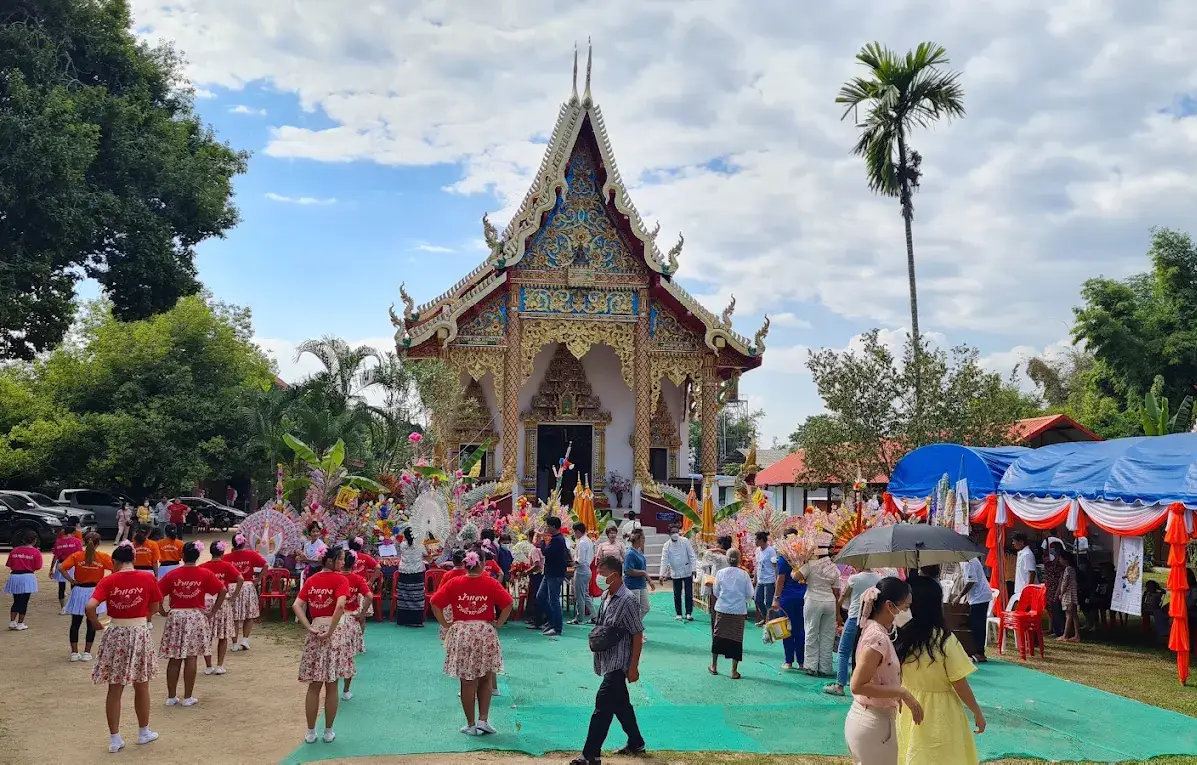
Wat Sawang Phaibun, also known locally as Wat Pa Daet, is a private-sector Buddhist temple under the Mahanikaya order in Moo 2, Ban Pa Daet, Ban Luang Subdistrict, Mae Ai District, Chiang Mai Province. Founded in 1936, the temple is an important religious and community center for Ban Pa Daet. It is known for its local Thai architectural character, graceful viharn and monastic structures, a large orange jasmine tree that provides shade, a calm atmosphere suitable for Buddhist practice, and its role as a learning space through a Thai cultural community learning center and a Sunday Buddhist education center.
Wat Sawang Phaibun is located in Ban Luang Subdistrict, a rural area in the northern part of Chiang Mai Province within Mae Ai District. Ban Luang Subdistrict includes mountain areas, lowland farming communities, local waterways, and villages connected with agriculture and Buddhist community life. Ban Pa Daet is Moo 2 of the subdistrict, and Wat Sawang Phaibun serves as the main temple associated with this local community.
The name Wat Sawang Phaibun has an auspicious meaning. “Sawang” suggests brightness, wisdom, and spiritual light, while “Phaibun” suggests abundance, prosperity, and growth. Together, the name gives the sense of a temple of light and flourishing Buddhist merit. The local name Wat Pa Daet comes from Ban Pa Daet, the village where the temple is located, showing the close relationship between the temple and the community.
The temple was founded in 1936, during a period when the Ban Pa Daet community needed its own Buddhist center for merit-making, sermons, worship, and religious observances. A village temple of this kind reflects the faith and cooperation of monks, elders, local leaders, and residents. Wat Sawang Phaibun therefore represents both the religious history and the community identity of Ban Pa Daet.
Wat Sawang Phaibun has continued to function as a community temple. Local residents use the temple for Buddhist holy days, annual merit-making, Dhamma listening, and cultural activities. The temple is a gathering place where people can return during important religious occasions, cooperate in community events, and preserve traditions connected with Lanna Buddhist life.
One of the temple’s important features is its viharn and monastic structures that reflect the architectural character of local Thai communities. The viharn is the heart of worship, sermons, merit-making, and Buddhist gatherings. Its value lies not only in appearance but also in the way it functions as the spiritual center of the temple. For local worshippers, it is a place to pay respect to the Buddha, listen to teachings, and cultivate calmness.
The temple’s monastic structures help support the religious life of Wat Sawang Phaibun. Such structures include areas used by monks and spaces connected with temple activities. The beauty of these local Thai structures reflects the care and devotion of the community. They show that the temple is not only a sacred space but also a living village institution supported by local faith.
The large orange jasmine tree inside the temple is one of Wat Sawang Phaibun’s most distinctive natural features. Orange jasmine is often associated with fragrance, cleanliness, shade, and a peaceful temple environment. The tree gives the temple a cool and refreshing atmosphere, making it suitable for visitors who come to worship, meditate, or spend quiet time in the temple grounds.
The shaded environment of the temple has also made it a habitat for large bees around the temple’s ordination-hall area. Visitors should observe this natural feature carefully and respectfully, without disturbing the bees or approaching the hive. This relationship between temple space and nature gives Wat Sawang Phaibun a distinct atmosphere of calmness and living ecology.
The overall atmosphere of Wat Sawang Phaibun is fresh, peaceful, and appropriate for Buddhist practice. Visitors can experience a community temple that still serves the religious life of local people. The temple is not only a sightseeing stop; it is a place where people come to make merit, listen to Dhamma, practice Buddhist observances, and spend time in quiet reflection.
Wat Sawang Phaibun also plays an educational role in the community. The temple includes a Thai cultural community learning center and a Sunday Buddhist education center. These centers allow the temple to function beyond ritual practice. They support learning about Buddhist ethics, Thai culture, local values, and moral education for children, youth, and residents of Ban Luang Subdistrict.
The Sunday Buddhist education center is especially important for younger generations. It helps children and youth learn Buddhist principles, proper conduct in a temple, moral values, and the meaning of important religious days. In this way, Wat Sawang Phaibun connects religious practice with community education and helps transmit Buddhist values from one generation to the next.
As a Thai cultural community learning center, the temple helps local people preserve and understand their own culture. Ban Luang communities are closely connected with agriculture, local traditions, and village cooperation. The temple becomes a natural place for passing on cultural memory through merit-making, teaching, community gatherings, and religious activities.
The role of Wat Sawang Phaibun can be understood in several dimensions. Religiously, it is a place for worship, merit-making, sermons, and Buddhist ceremonies. Socially, it is a meeting place for the community. Culturally, it helps preserve local traditions and Buddhist manners. Educationally, it supports moral learning through its learning centers. The temple’s importance therefore extends beyond buildings and architecture into the everyday life of the community.
Temple ceremonies at Wat Sawang Phaibun are connected with the Buddhist calendar and the rhythm of village life. Important activities include Buddhist holy day merit-making, Pha Pa, Kathin, Dhamma sermons, religious observances, and Sunday Buddhist education. During merit-making events, villagers can gather, prepare offerings, receive blessings, and strengthen community relationships.
Visitors to Wat Sawang Phaibun should pay attention to the viharn, the local architectural details, the large orange jasmine tree, the natural atmosphere, and the learning spaces inside the temple. A respectful visit may include paying homage, making merit, resting quietly under the shade, and observing how a village temple functions as a religious and cultural center. The temple is suitable for travelers interested in local Buddhist life, community culture, and quiet temple visits in Mae Ai.
The beauty of Wat Sawang Phaibun does not come from large-scale tourism or monumental size. It comes from the relationship between its history, the village of Ban Pa Daet, the local architecture, the viharn, monastic structures, the orange jasmine tree, the bees near the temple building, the learning centers, and its continuing role in community life. These elements give the temple religious, natural, cultural, and educational value in one place.
Getting There is most convenient by private car, rental car, or local hired transport. From Chiang Mai city, travel north toward Fang and Mae Ai, then continue into Ban Luang Subdistrict and Ban Pa Daet, Moo 2. Travelers can search for “Wat Sawang Phaibun,” “Wat Pa Daet,” or “Wat Pa Daet Ban Luang Mae Ai Chiang Mai” in a map application before departure.
From Mae Ai District, Ban Luang Subdistrict is about 17 kilometers to the southeast. Wat Sawang Phaibun can be combined with nearby temples such as Wat Watthana, Wat Ban Luang, Wat Pa Daeng Ban Luang, Wat Phra That Sop Fang, Wat Phra Chedi Chiang Phaya or Wat Pa Tueng, and Wat Thaton. This makes it suitable for a cultural and Buddhist route through Mae Ai.
A recommended route can begin in Ban Pa Daet and Ban Luang Subdistrict, then continue toward Thaton and San Ton Mue. This route allows travelers to see a variety of temple types in Mae Ai, including community temples, learning-centered temples, local architectural temples, and larger religious landmarks along northern Chiang Mai’s temple route.
Visitors should dress modestly, speak quietly, respect monks and local worshippers, and avoid disturbing bees or natural areas inside the temple. When visiting learning spaces or joining temple activities, visitors should follow the guidance of monks or caretakers. Respectful conduct helps preserve the peaceful atmosphere of this active community temple.
In summary, Wat Sawang Phaibun, or Wat Pa Daet, is an important community temple in Ban Pa Daet, Ban Luang Subdistrict, Mae Ai District, Chiang Mai Province. Founded in 1936, it is known for its local Thai architectural character, viharn, monastic structures, large orange jasmine tree, peaceful atmosphere, and educational role through its Thai cultural community learning center and Sunday Buddhist education center. It is suitable for merit-making, worship, Buddhist practice, cultural learning, and slow travel through northern Chiang Mai.
| Name | Wat Sawang Phaibun / Wat Pa Daet |
| Location | Moo 2, Ban Pa Daet, Ban Luang Subdistrict, Mae Ai District, Chiang Mai Province |
| Address | Moo 2, Ban Luang Subdistrict, Mae Ai District, Chiang Mai 50280, Thailand |
| Temple Type | Private-Sector Buddhist Temple, Mahanikaya Order |
| Highlights | Local Thai architectural viharn and monastic structures, large orange jasmine tree, peaceful temple atmosphere, Thai cultural community learning center, and Sunday Buddhist education center |
| History | Founded in 1936 as a community temple of Ban Pa Daet in Ban Luang Subdistrict, Mae Ai District |
| Name Origin | Wat Sawang Phaibun suggests Buddhist light and flourishing merit, while Wat Pa Daet is the local village-based name used by residents of Ban Pa Daet |
| Distinctive Features | A community temple with religious, cultural, educational, and meditation-related roles for Ban Pa Daet and Ban Luang Subdistrict |
| Travel Information | Best reached by private car, rental car, or local hired transport from Chiang Mai toward Mae Ai, then into Ban Luang Subdistrict and Ban Pa Daet, Moo 2 |
| Current Status | Listed in Ban Luang Subdistrict temple information, temple directories, and activity references; no public record found indicating permanent closure |
| Main Areas / Zones | Viharn, monastic structures, ordination-hall area, meditation area, large orange jasmine tree, Thai cultural community learning center, and Sunday Buddhist education center |
| Important Traditions / Ceremonies | Buddhist holy day merit-making, Pha Pa, Kathin, Dhamma sermons, Buddhist festival activities, and Sunday Buddhist education activities |
| Nearby Tourist Attractions | 1. Wat Watthana, about 2 km 2. Wat Ban Luang, about 3 km 3. Wat Pa Daeng Ban Luang, about 4 km 4. Wat Phra That Sop Fang, about 8 km 5. Wat Phra Chedi Chiang Phaya / Wat Pa Tueng, about 13 km 6. Wat Thaton, about 28 km |
| Nearby Restaurants | 1. Ban Suan Khun Yai, about 17 km 2. Thaton Hill, about 27 km, Tel. 053-053-669 3. Thaton Chomchan Cafe & Restaurant, about 28 km, Tel. 088-435-4467 4. Thaton Riverview Restaurant, about 28 km, Tel. 053-459-289, 053-373-173-5, 093-256-7969 5. Chanka Sem Restaurant, about 28 km 6. Hompandin Cafe, about 29 km |
| Nearby Accommodations | 1. Ban Suan Khun Yai, about 17 km 2. Yoga Art Home, about 26 km, Tel. 093-261-5558 3. Thaton Hill Resort, about 27 km 4. Thaton Chalet, about 28 km, Tel. 053-373155 5. Thaton Riverview Resort, about 28 km 6. LoveShack @ Thailand, about 29 km |
Frequently Asked Questions (FAQ)
Q: Where is Wat Sawang Phaibun located?
A: Wat Sawang Phaibun, also known as Wat Pa Daet, is located in Moo 2, Ban Pa Daet, Ban Luang Subdistrict, Mae Ai District, Chiang Mai Province.
Q: When was Wat Sawang Phaibun founded?
A: Wat Sawang Phaibun was founded in 1936 as a community temple of Ban Pa Daet.
Q: Why is Wat Sawang Phaibun also called Wat Pa Daet?
A: It is locally called Wat Pa Daet because it is located in Ban Pa Daet, Moo 2, Ban Luang Subdistrict.
Q: What are the main highlights of Wat Sawang Phaibun?
A: Highlights include the local Thai architectural viharn and monastic structures, the large orange jasmine tree, the bees around the temple building, the Thai cultural community learning center, and the Sunday Buddhist education center.
Q: What kind of visit is Wat Sawang Phaibun suitable for?
A: It is suitable for worship, merit-making, meditation, learning about community temple life, and exploring temple routes in Mae Ai District.
Q: What role does Wat Sawang Phaibun play in the community?
A: It serves as a spiritual center, a place for merit-making and Dhamma listening, and a learning space for Thai culture and Buddhist education in Ban Luang Subdistrict.
Q: How can travelers get to Wat Sawang Phaibun?
A: The most convenient way is by private car, rental car, or local hired transport from Chiang Mai toward Mae Ai, then into Ban Luang Subdistrict and Ban Pa Daet, Moo 2.
Q: What places can be visited together with Wat Sawang Phaibun?
A: Nearby places include Wat Watthana, Wat Ban Luang, Wat Pa Daeng Ban Luang, Wat Phra That Sop Fang, Wat Phra Chedi Chiang Phaya / Wat Pa Tueng, and Wat Thaton.
 Category: ●Places of Worship
 Group: ●Temple
Last Update : 1 WeekAgo
 Last Update : 1 WeekAgo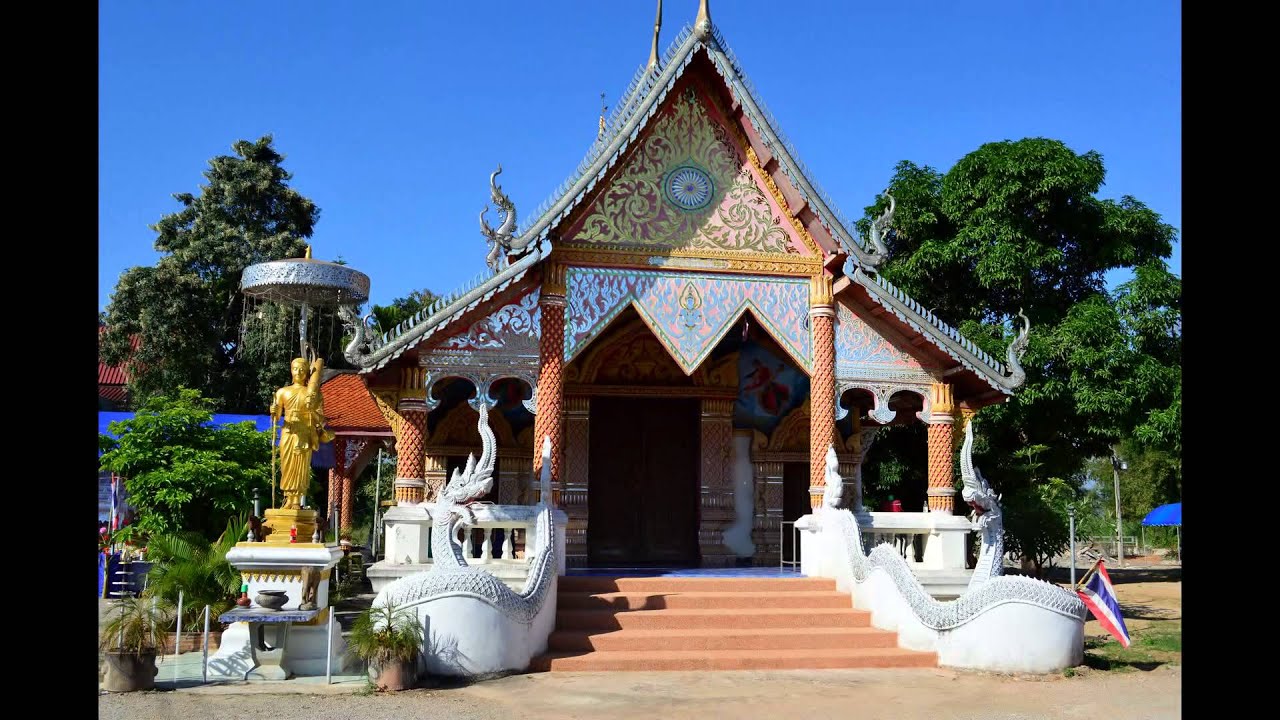
 Click to Access the Navigation Map GPS
Wat Sawang Phaibun Map
Recommend

 Muang Chiang Mai(121)Chom Thong(47)Mae Chaem(25)Chiang Dao(33)Doi Saket(68)Mae Taeng(85)Mae Rim(69)Samoeng(29)Fang(71)Mae Ai(59)Phrao(70)San Pa Tong(103)San Kamphaeng(66)San Sai(73)Hang Dong(73)Hot(32)Doi Tao(22)Omkoi(11)Saraphi(74)Wiang Haeng(15)Chai Prakan(28)Mae Wang(32)Mae On(22)Doi Lo(34)Galyani Vadhana(1)


