
lovethailand home >North Travel Attractions >Chiang Mai Travel Attractions >Mae Ai >San Tonmue > Wat Hong Ha Noi
TL;DR: Wat Hong Ha Noi is located at Moo 5, Ban Hong Ha Noi, San Ton Mue Subdistrict, Mae Ai District, Chiang Mai Province.

Wat Hong Ha Noi
Operating day: Daily
Operating time: 08.00 - 17.00
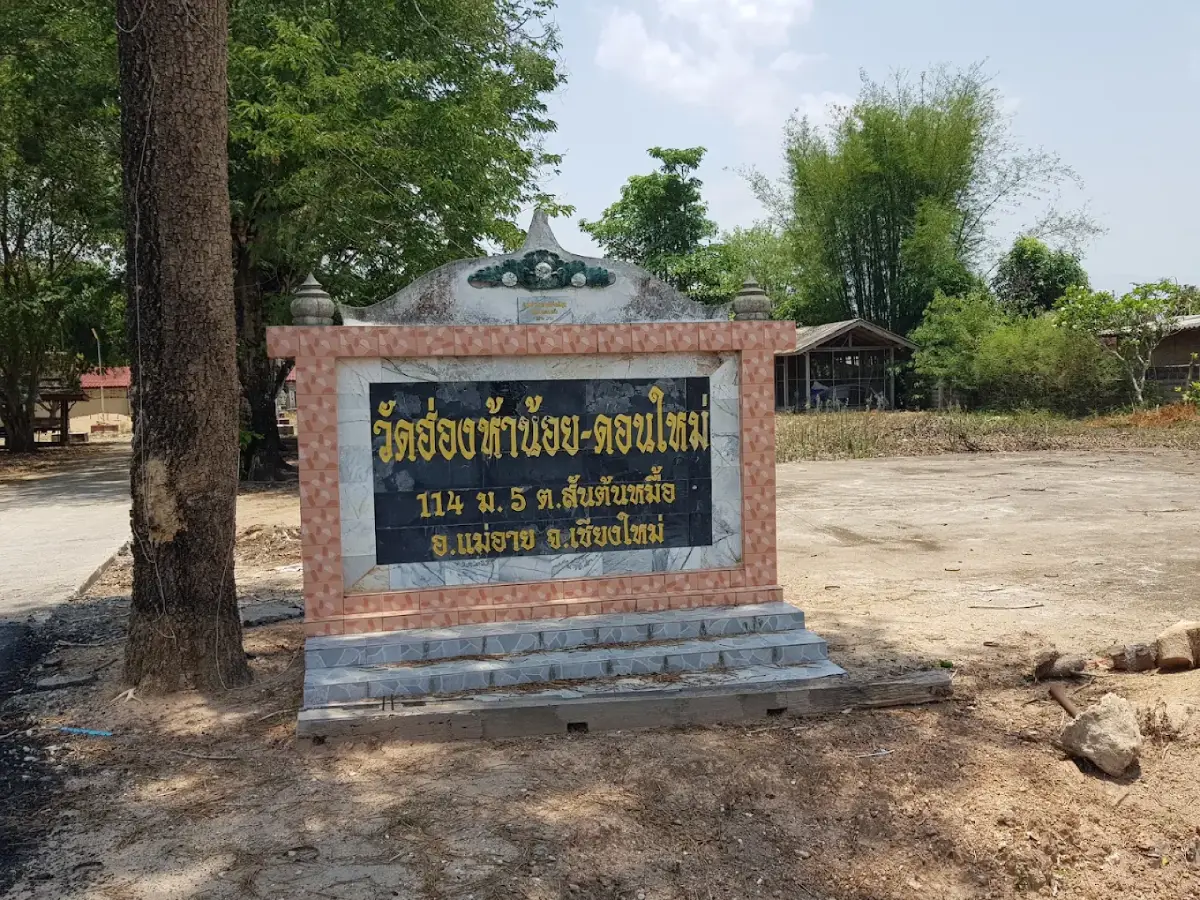
Wat Hong Ha Noi is a private-sector Buddhist temple under the Mahanikaya order in Moo 5, Ban Hong Ha Noi, San Ton Mue Subdistrict, Mae Ai District, Chiang Mai Province. The temple was officially permitted to be established in 2001. Its abbot is Phra Khru Winit Siriwat Siritharo. Wat Hong Ha Noi is an important spiritual center for Ban Hong Ha Noi, serving as a place for Buddhist worship, merit-making, sermons, and community religious activities within the Lanna cultural setting of northern Chiang Mai.
Ban Hong Ha Noi is Moo 5 of San Ton Mue Subdistrict. The surrounding area is a rural community in northern Chiang Mai, with local villages, agricultural land, community roads, and a way of life still closely connected with Buddhist temples. Wat Hong Ha Noi is therefore not merely a temple located in the village; it is the temple of the village. Its name is directly connected with Ban Hong Ha Noi, making it a clear marker of local identity and community faith.
San Ton Mue Subdistrict consists of several villages, including Ban Lo, Ban San Po Thong, Ban Sai Daeng, Ban San Ton Mue, Ban Hong Ha Noi, Ban Mai Kong Sai, Ban San Pa Hiao, Ban San Po, Ban Pa Hiak, Ban San Lom Choi, Ban Mai Phatthana, and Ban Don Mai. Many of these villages are connected with their own temples. Wat Hong Ha Noi is part of this wider network of village temples, together with Wat Santiwan, Wat Chai Chanaram, Wat Sai Daeng, Wat San Ton Mue, Wat Tham Charoen, and other nearby Buddhist sites.
From a historical perspective, Wat Hong Ha Noi is a relatively recent temple compared with some older temples in the same subdistrict. Its official establishment in 2001 reflects the growth and religious needs of the Ban Hong Ha Noi community in the modern period. A village temple established in this period often represents the readiness of a local community to maintain its own place of worship, merit-making, Buddhist learning, and collective spiritual life.
In Lanna society, a village temple plays a role far beyond formal religious ceremonies. It serves as a center for merit-making, Buddhist observances, community gatherings, annual traditions, and social relationships. Wat Hong Ha Noi performs this role for Ban Hong Ha Noi. It provides a shared sacred space where villagers can make merit, listen to Dhamma, take part in Buddhist holy day activities, and maintain the cultural bond between temple and community.
The name Wat Hong Ha Noi is tied directly to the name of Ban Hong Ha Noi. In northern Thai usage, the word “hong” can relate to a low channel, a watercourse, or a landscape feature, while “noi” means small. A temple name that preserves the village name also preserves local memory. It records not only a religious identity but also the landscape and community identity of the area.
Phra Khru Winit Siriwat Siritharo is the abbot of Wat Hong Ha Noi. As the abbot, he is associated with the temple’s religious administration and its ongoing role in the community. A village temple relies on cooperation between the abbot, monks, lay supporters, local leaders, and residents. This relationship allows the temple to maintain its grounds, organize merit-making activities, preserve Buddhist practice, and continue serving the spiritual needs of Ban Hong Ha Noi.
Wat Hong Ha Noi is suitable for travelers who are interested in quiet community temples and the local Buddhist life of northern Chiang Mai. It is not a large tourist temple, and that is part of its value. Visitors can experience a temple that serves a real village community rather than a place designed mainly for mass tourism. The temple is appropriate for paying respect, making merit, observing local religious life, and understanding how Buddhism remains part of daily life in Mae Ai.
The important areas of Wat Hong Ha Noi include spaces for worshipping Buddha images, the temple courtyard, areas for religious ceremonies, merit-making spaces, and community activity areas. Full public architectural details for structures such as an ordination hall, viharn, chedi, bell tower, or sermon hall are not available in verified sources, but the temple’s role as an officially listed Buddhist temple confirms its function as a religious center for Ban Hong Ha Noi.
The main point of interest at Wat Hong Ha Noi is its role as a village temple. Visitors can pay respect, make merit, spend a quiet moment in the temple grounds, and observe how a local temple supports the life of its community. A visit here is best understood as a cultural and spiritual experience rather than a conventional sightseeing stop. The temple helps travelers see a deeper side of Mae Ai beyond natural landscapes and well-known tourist routes.
The role of Wat Hong Ha Noi can be understood in three main dimensions. First, it serves a religious role as a place for worship, sermons, and Buddhist ceremonies. Second, it serves a social role as a gathering space for local residents during merit-making events and community activities. Third, it serves a cultural role by helping preserve Lanna Buddhist traditions and the relationship between temple, village, and local identity.
On Buddhist holy days and important religious occasions, Wat Hong Ha Noi provides a space for villagers to make merit, offer food to monks, listen to sermons, and join temple activities. Annual merit-making events such as Pha Pa, Kathin, Dhamma sermons, and community ceremonies help connect different generations. These traditions allow the temple to continue functioning as a living center of village life.
The importance of Wat Hong Ha Noi is also connected with the actual population and households of Ban Hong Ha Noi. A temple in a living village is not an isolated monument; it is part of the social fabric. It supports individual faith, family merit-making, communal gatherings, and local memory. When the village holds religious events, the temple becomes a place where people meet, cooperate, and reaffirm their shared identity.
For cultural travelers, Wat Hong Ha Noi is best included in a temple route through San Ton Mue Subdistrict. Nearby temples and places include Wat San Ton Mue, Wat Chai Chanaram, Wat Sai Daeng, Wat Santiwan, Wat Phra Chedi Chiang Phaya or Wat Pa Tueng, and Wat Thaton. Visiting several temples in the same area helps travelers understand the diversity of local Buddhist sites in Mae Ai, from long-established village temples to newer community temples and larger religious landmarks.
Wat Hong Ha Noi also works well as part of a wider Mae Ai and Thaton route. Travelers with more time can continue to Wat Thaton, the Kok River area, Wat Phra Chedi Chiang Phaya or Wat Pa Tueng, and local restaurants or accommodations around Thaton. This route is suitable for slow travel focused on faith, local communities, and northern Thai culture rather than hurried sightseeing.
Getting There is most convenient by private car, rental car, or local hired transport. From Chiang Mai city, travel north toward Fang and Mae Ai, then continue into San Ton Mue Subdistrict and Ban Hong Ha Noi. Travelers can search for “Wat Hong Ha Noi San Ton Mue Mae Ai Chiang Mai” in a map application before departure to choose the most suitable route and check current road conditions.
From Mae Ai or Thaton, access to San Ton Mue Subdistrict is shorter than traveling from Chiang Mai city. Visitors who want to explore several temples in one day can plan a route that includes Wat Hong Ha Noi, Wat San Ton Mue, Wat Chai Chanaram, and Wat Sai Daeng, then continue toward Wat Phra Chedi Chiang Phaya or Wat Thaton. This avoids unnecessary backtracking and gives a more complete view of the local temple network.
Visitors should dress modestly, speak quietly, and respect monks and local people who come to make merit. Photographs should be taken respectfully, especially around Buddha images or religious activities. Because Wat Hong Ha Noi is an active community temple, visitors should treat it as a sacred space used by local residents, not as a commercial tourist attraction.
The charm of Wat Hong Ha Noi lies in its simplicity and authenticity as a village temple. Officially established in 2001, it reflects the continuing importance of Buddhist faith in a modern rural community. The temple shows how a village creates and maintains a shared sacred space for worship, merit-making, and community identity.
Although Wat Hong Ha Noi is not a large-scale tourist attraction, its value lies in its role within Ban Hong Ha Noi. Travelers who enjoy quiet temples, local culture, and community-based exploration will find the temple meaningful. It offers a calm and grounded view of Chiang Mai that is different from crowded landmarks and heavily promoted destinations.
In summary, Wat Hong Ha Noi is a Mahanikaya community temple in Moo 5, Ban Hong Ha Noi, San Ton Mue Subdistrict, Mae Ai District, Chiang Mai Province. Established as a temple in 2001 and led by Phra Khru Winit Siriwat Siritharo, it serves as a spiritual center for the village. The temple is suitable for merit-making, quiet worship, learning about Lanna village temple culture, and connecting with a wider temple route through San Ton Mue and Mae Ai.
| Name | Wat Hong Ha Noi |
| Location | Moo 5, Ban Hong Ha Noi, San Ton Mue Subdistrict, Mae Ai District, Chiang Mai Province |
| Address | Moo 5, Ban Hong Ha Noi, San Ton Mue Subdistrict, Mae Ai District, Chiang Mai 50280, Thailand |
| Coordinates | 19.95814, 99.28469 |
| Temple Type | Private-Sector Buddhist Temple, Mahanikaya Order |
| Highlights | Community temple of Ban Hong Ha Noi, suitable for merit-making, quiet worship, and learning about Lanna village temple culture in Mae Ai |
| History | Officially permitted to be established as a temple in 2001 |
| Name Origin | The temple name comes from Ban Hong Ha Noi, the village where it is located, and reflects the local identity of the area |
| Distinctive Features | A village temple with religious, social, and cultural importance for Ban Hong Ha Noi and San Ton Mue Subdistrict |
| Travel Information | Best reached by private car, rental car, or local hired transport from Chiang Mai toward Mae Ai, then into San Ton Mue Subdistrict and Ban Hong Ha Noi |
| Current Status | Listed in temple directories, local subdistrict information, and map references; no public record found indicating permanent closure |
| Main Areas / Zones | Buddha worship area, temple courtyard, religious ceremony area, merit-making area, and community activity spaces |
| Abbot / Caretaker | Phra Khru Winit Siriwat Siritharo |
| Important Traditions / Ceremonies | Buddhist holy day merit-making, Pha Pa, Kathin, Dhamma sermons, and annual Lanna community ceremonies |
| Nearby Tourist Attractions | 1. Wat San Ton Mue, about 2 km 2. Wat Chai Chanaram, about 4 km 3. Wat Sai Daeng, about 4 km 4. Wat Santiwan, about 7 km 5. Wat Phra Chedi Chiang Phaya / Wat Pa Tueng, about 8 km 6. Wat Thaton, about 23 km |
| Nearby Restaurants | 1. Ban Suan Khun Yai, about 7 km 2. Thaton Riverview Restaurant, about 23 km 3. Thaton Hill, about 23 km, Tel. 053-053-669 4. Thaton Chomchan Cafe & Restaurant, about 23 km, Tel. 088-435-4467 5. Chanka Sem Restaurant, about 23 km 6. Hompandin Cafe, about 24 km |
| Nearby Accommodations | 1. Ban Suan Khun Yai, about 7 km 2. Yoga Art Home, about 18 km, Tel. 093-261-5558 3. LoveShack @ Thailand, about 20 km 4. Thaton Hill Resort, about 23 km 5. Thaton Chalet, about 23 km, Tel. 053-373155 6. Areeya Phuree Resort, about 24 km |
Frequently Asked Questions (FAQ)
Q: Where is Wat Hong Ha Noi located?
A: Wat Hong Ha Noi is located in Moo 5, Ban Hong Ha Noi, San Ton Mue Subdistrict, Mae Ai District, Chiang Mai Province.
Q: What is the history of Wat Hong Ha Noi?
A: Wat Hong Ha Noi is a private-sector Mahanikaya temple officially permitted to be established in 2001 and serves as the community temple of Ban Hong Ha Noi.
Q: Who is the abbot of Wat Hong Ha Noi?
A: The abbot of Wat Hong Ha Noi is Phra Khru Winit Siriwat Siritharo.
Q: What kind of visit is Wat Hong Ha Noi suitable for?
A: It is suitable for quiet worship, merit-making, learning about Lanna community temples, and exploring temple routes in San Ton Mue Subdistrict.
Q: What is the main highlight of Wat Hong Ha Noi?
A: Its main highlight is its role as the community temple of Ban Hong Ha Noi, supporting merit-making, Dhamma listening, and Buddhist activities for local residents.
Q: What are the coordinates of Wat Hong Ha Noi?
A: The coordinates of Wat Hong Ha Noi are 19.95814, 99.28469 in San Ton Mue Subdistrict, Mae Ai District, Chiang Mai Province.
Q: How can travelers get to Wat Hong Ha Noi?
A: The most convenient way is by private car, rental car, or local hired transport from Chiang Mai toward Mae Ai, then into San Ton Mue Subdistrict and Ban Hong Ha Noi.
Q: What places can be visited together with Wat Hong Ha Noi?
A: Nearby places include Wat San Ton Mue, Wat Chai Chanaram, Wat Sai Daeng, Wat Santiwan, Wat Phra Chedi Chiang Phaya / Wat Pa Tueng, and Wat Thaton.
 Category: ●Places of Worship
 Group: ●Temple
Last Update : 22 HourAgo
 Last Update : 22 HourAgo
 Click to Access the Navigation Map GPS
 Muang Chiang Mai(121)Chom Thong(47)Mae Chaem(25)Chiang Dao(33)Doi Saket(68)Mae Taeng(85)Mae Rim(69)Samoeng(29)Fang(71)Mae Ai(59)Phrao(70)San Pa Tong(105)San Kamphaeng(66)San Sai(73)Hang Dong(74)Hot(32)Doi Tao(22)Omkoi(11)Saraphi(74)Wiang Haeng(15)Chai Prakan(28)Mae Wang(32)Mae On(22)Doi Lo(34)Galyani Vadhana(1)


