
lovethailand home >North Travel Attractions >Chiang Mai Travel Attractions >Mae Ai >San Tonmue > Wat Santiwan
TL;DR: Wat Santiwan is located at Moo 1, Ban Lo, San Ton Mue Subdistrict, Mae Ai District, Chiang Mai Province. Highlights include Graceful viharn, Vessantara Jataka murals, monks’ residences, clean dining hall, chedi, and shaded trees around the viharn.
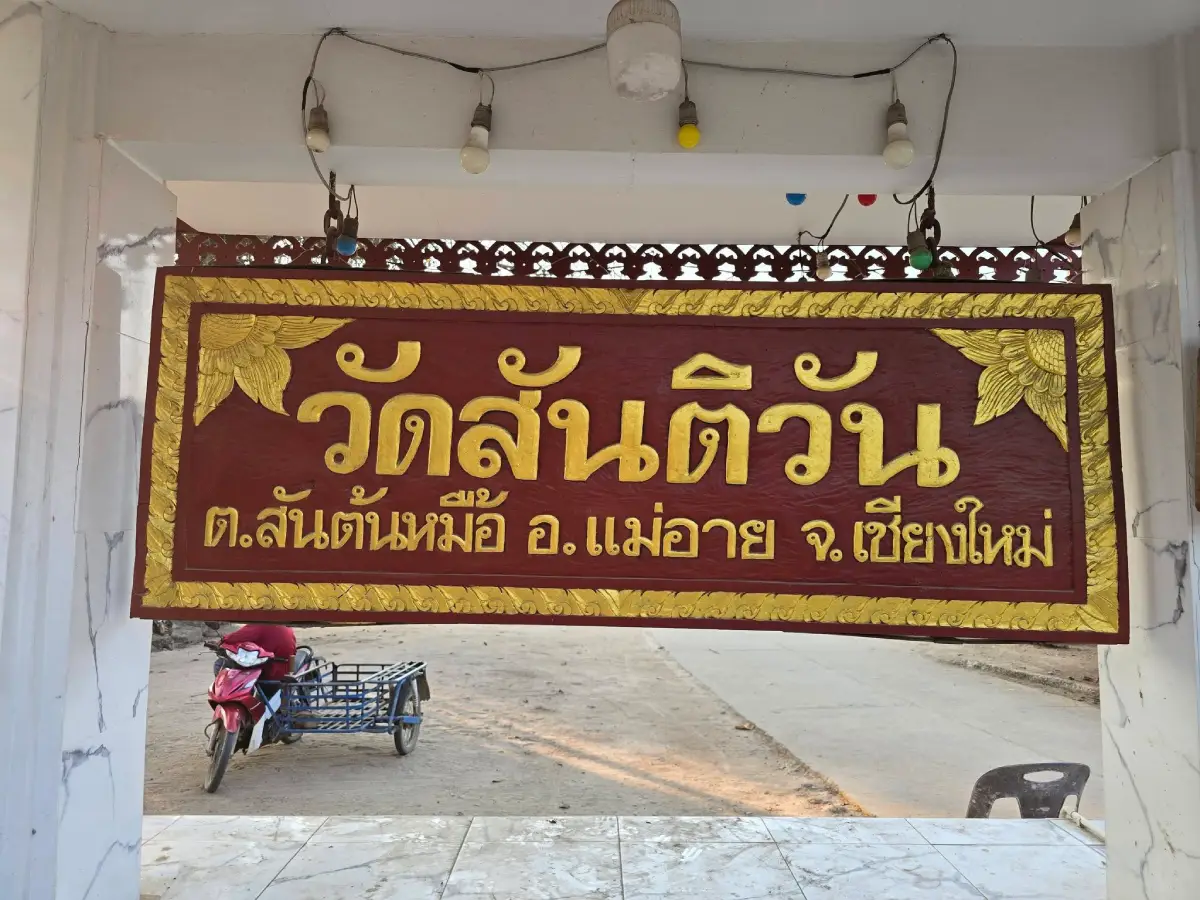
Wat Santiwan
Operating day: Daily
Operating time: 08.00 - 17.00
Wat Santiwan, formerly known locally as Wat Ban Lo, is a private-sector Buddhist temple under the Mahanikaya order in Moo 1, Ban Lo, San Ton Mue Subdistrict, Mae Ai District, Chiang Mai Province. The temple was founded in 1938 by Phra Panya, together with the lay initiator Nai Phromma No Kham and the villagers of Ban Lo. Wat Santiwan covers an area of 3 rai, 2 ngan and 89 square wah. The current abbot is Phra Athikan Chaloem Aphakaro (Nanthakat). The temple is known for its graceful viharn, mural paintings depicting the Vessantara Jataka, well-kept monks’ residences, a clean and orderly dining hall, a beautiful chedi, and a peaceful tree-shaded atmosphere suitable for worship, merit-making, and meditation.
Wat Santiwan is located in San Ton Mue Subdistrict, a rural area in the northern part of Chiang Mai Province. The surrounding landscape consists of villages, agricultural land, local roads, and communities that still preserve a strong Lanna way of life. Ban Lo, Moo 1, is one of the important villages of the subdistrict, and Wat Santiwan has long served as its spiritual center. The older local name, Wat Ban Lo, shows how closely the temple is connected with the identity of the village. For local residents, the temple is not only a place for Buddhist ceremonies, but also a shared space for faith, community life, and cultural continuity.
San Ton Mue Subdistrict includes several villages, including Ban Lo, Ban San Po Thong, Ban Sai Daeng, Ban San Ton Mue, Ban Hong Ha Noi, Ban Mai Kong Sai, Ban San Pa Hiao, Ban San Po, Ban Pa Hiak, Ban San Lom Choi, Ban Mai Phatthana, and Ban Don Mai. Many of these villages have their own temples, each serving as a local center of worship and community identity. Wat Santiwan is therefore part of a wider Lanna pattern in which temples, villages, and local people are closely connected through Buddhist practice and shared traditions.
The history of Wat Santiwan began in 1938, when the temple was established through the cooperation of monks and villagers. Phra Panya was the founding monk, while Nai Phromma No Kham and the people of Ban Lo helped initiate and build the temple. This origin story shows that Wat Santiwan was not created by a single person alone, but by collective faith. The temple was built because the community needed a Buddhist center for merit-making, sermons, ceremonies, and spiritual support.
The former name Wat Ban Lo is culturally meaningful because it reflects the local custom of naming a temple after its village. The current name, Wat Santiwan, carries an auspicious meaning. The word “santi” suggests peace, calmness, and harmony, while the full name gives the impression of a peaceful temple suitable for religious practice. This meaning matches the temple’s clean, orderly, and shaded atmosphere.
The temple area covers 3 rai, 2 ngan and 89 square wah. This gives Wat Santiwan enough space for its important temple components, including the viharn, monks’ residences, dining hall, chedi, courtyard, tree-shaded areas, and spaces for religious activities. The temple is not large in a monumental sense, but its size is well suited to a village temple. Visitors can clearly experience the intimacy, simplicity, and calmness of a local Buddhist temple in Mae Ai.
The current abbot, Phra Athikan Chaloem Aphakaro (Nanthakat), plays an important role in maintaining the temple’s cleanliness and orderliness. The temple’s information describes him as a monk who values cleanliness and discipline. This can be seen in the well-kept grounds, the orderly temple buildings, the clean dining hall, and the planting of trees around the viharn. Cleanliness in a temple is not only about appearance; it helps create an environment suitable for worship, meditation, and peaceful reflection.
The viharn of Wat Santiwan is one of the temple’s most important features. Inside the viharn are mural paintings depicting the Vessantara Jataka, one of the most significant Buddhist stories in Thai and Lanna culture. The Vessantara Jataka teaches generosity, sacrifice, compassion, and the perfection of giving. The murals therefore function as both sacred art and visual Dhamma instruction, allowing visitors to learn Buddhist values through images and storytelling.
The Vessantara murals are especially meaningful in a community temple. In traditional Lanna temples, murals were not only decorative; they served as moral lessons for local people. Elders, children, villagers, and visitors could learn Buddhist teachings by looking at the stories on the walls. At Wat Santiwan, the murals give the temple strong cultural and educational value, making it a meaningful place for those interested in Buddhist art and local religious learning.
The monks’ residences at Wat Santiwan also reflect the temple’s care and order. A kuti is the living space of monks and is closely connected with monastic life. Keeping these spaces clean and beautiful shows respect for the Sangha and reflects the community’s care for the temple. The dining hall is also described as beautiful, clean, and orderly, making it suitable for monastic meals and merit-making activities involving lay supporters.
The chedi of Wat Santiwan is another important structure. Phra Athikan Chaloem Aphakaro, together with faithful supporters, built a beautiful chedi for local residents to worship. In a village temple, a chedi represents faith, merit, and devotion to Buddhism. The construction of the chedi through the cooperation of monks and laypeople reflects the strength of community faith and gives the temple a sacred point of worship for Buddhist holy days and important ceremonies.
The planting of trees around the viharn is one of the temple’s distinctive qualities. Trees create shade, reduce heat, and make the temple grounds more peaceful. A shaded temple environment is especially valuable for meditation and quiet worship. When a temple is clean, calm, and surrounded by greenery, visitors can pray, sit quietly, or walk around the grounds with greater concentration.
The overall atmosphere of Wat Santiwan is suitable for travelers who prefer a quiet and respectful temple visit. Visitors can pay respect inside the viharn, observe the Vessantara murals, appreciate the monks’ residences and dining hall from appropriate areas, worship at the chedi, and spend time under the trees around the viharn. The temple is appropriate for those interested in community temples, Buddhist art, meditation, and the relationship between temple and village life.
Wat Santiwan plays several roles in the Ban Lo community. It is a place for merit-making, Buddhist ceremonies, religious gatherings, annual traditions, and shared community life. Since the temple was founded through cooperation between monks and villagers in 1938, it has carried the spirit of collective faith. On Buddhist holy days and during annual ceremonies, the temple becomes a gathering place where local residents return to make merit and maintain their religious traditions.
In the Lanna cultural context, Wat Santiwan is part of the village-temple system found throughout northern Thailand. A temple is not separate from the community; it works together with families, elders, local leaders, and schools to preserve Buddhist values and cultural memory. Merit-making, food offerings, sermons, Kathin, Pha Pa, and other annual ceremonies all help strengthen the bond between generations. Wat Santiwan is one of the places where that bond remains visible.
For cultural travelers, Wat Santiwan can be included in a temple route through San Ton Mue Subdistrict. Nearby temples and attractions include Wat Sai Daeng, Wat Chai Chanaram, Wat San Ton Mue, Wat Hong Ha Noi, Wat Phra Chedi Chiang Phaya or Wat Pa Tueng, and Wat Thaton. A well-planned route allows visitors to see different aspects of Mae Ai’s temple culture, from small village temples to well-known religious sites near Thaton.
Getting There is most convenient by private car, rental car, or local hired transport. From Chiang Mai city, travel north toward Fang and Mae Ai, then continue into San Ton Mue Subdistrict and Ban Lo. Travelers can search for “Wat Santiwan San Ton Mue Mae Ai Chiang Mai” in a map application before departure. Because Mae Ai is far from Chiang Mai city, visitors should allow enough travel time and plan nearby stops in the same area.
From Mae Ai or Thaton, the journey to San Ton Mue Subdistrict is shorter and easier than traveling from Chiang Mai city. Visitors can combine Wat Santiwan with other temples in the subdistrict in one day. With more time, the route can continue to Wat Thaton, the Kok River area, and natural attractions around Mae Ai and Fang. This route is suitable for travelers who want to experience a quieter, more local side of northern Chiang Mai.
Visitors should dress modestly, speak quietly, and respect monks and people who come to practice or make merit. Inside the viharn, especially near the murals, visitors should avoid touching the walls or sacred objects. The monks’ residences and dining hall should be viewed from appropriate areas unless permission is given. Respectful conduct helps preserve the temple’s sacred atmosphere and supports the local community’s continued use of the space.
The outstanding quality of Wat Santiwan is its combination of cleanliness, order, shade, and spiritual calm. The trees around the viharn, the orderly dining hall and monks’ residences, and the chedi built through shared faith all reflect careful stewardship. Travelers who value quiet temples and meaningful local culture will find Wat Santiwan a simple but rewarding destination.
From a local history perspective, Wat Santiwan is evidence of cooperation between monks and villagers in Ban Lo since 1938. The temple was founded by Phra Panya with support from Nai Phromma No Kham and the people of Ban Lo, showing how Lanna communities built temples as collective spiritual centers. Visiting Wat Santiwan therefore offers insight into how village temples were created and how they continue to support community life.
In summary, Wat Santiwan is a meaningful community temple in San Ton Mue Subdistrict, Mae Ai District, Chiang Mai Province. It was founded in 1938, has a graceful viharn with Vessantara Jataka murals, well-kept monks’ residences, a clean dining hall, a beautiful chedi, and a shaded environment suitable for meditation. It is a valuable destination for travelers who want to learn about local Lanna temples, Buddhist art, and the living relationship between temple and community.
| Name | Wat Santiwan / Wat Ban Lo |
| Location | Moo 1, Ban Lo, San Ton Mue Subdistrict, Mae Ai District, Chiang Mai Province |
| Address | No. 362, Moo 1, San Ton Mue Subdistrict, Mae Ai District, Chiang Mai 50280, Thailand |
| Temple Type | Private-Sector Buddhist Temple, Mahanikaya Order |
| Temple Area | 3 Rai, 2 Ngan, 89 Square Wah |
| Highlights | Graceful viharn, Vessantara Jataka murals, monks’ residences, clean dining hall, chedi, and shaded trees around the viharn |
| History | Founded in 1938. Formerly known as Wat Ban Lo, the temple was established by Phra Panya together with Nai Phromma No Kham and the villagers of Ban Lo |
| Name Origin | Formerly called Wat Ban Lo after the village. The name Wat Santiwan suggests peace, calmness, and a temple environment suitable for meditation |
| Distinctive Features | A clean, orderly, shaded community temple reflecting cooperation between monks and the people of Ban Lo |
| Travel Information | Best reached by private car, rental car, or local hired transport from Chiang Mai toward Mae Ai, then into San Ton Mue Subdistrict and Ban Lo |
| Current Status | Listed in temple directories, local subdistrict information, and travel references; no public record found indicating permanent closure |
| Open Days | Daily |
| Main Areas / Zones | Viharn, Vessantara Jataka murals, monks’ residences, dining hall, chedi, temple courtyard, trees around the viharn, and meditation-friendly areas |
| Abbot / Caretaker | Phra Athikan Chaloem Aphakaro (Nanthakat) |
| Important Traditions / Ceremonies | Buddhist holy day merit-making, Pha Pa, Kathin, Dhamma sermons, and annual Lanna community ceremonies |
| Nearby Tourist Attractions | 1. Wat Sai Daeng, about 4 km 2. Wat Chai Chanaram, about 5 km 3. Wat San Ton Mue, about 6 km 4. Wat Hong Ha Noi, about 7 km 5. Wat Phra Chedi Chiang Phaya / Wat Pa Tueng, about 10 km 6. Wat Thaton, about 25 km |
| Nearby Restaurants | 1. Ban Suan Khun Yai, about 9 km 2. Thaton Riverview Restaurant, about 25 km, Tel. 053-459-289, 053-373-173-5, 093-256-7969 3. Thaton Hill, about 24 km, Tel. 053-053-669 4. Thaton Chomchan Cafe & Restaurant, about 25 km, Tel. 088-435-4467 5. Chanka Sem Restaurant, about 25 km 6. Hompandin Cafe, about 26 km |
| Nearby Accommodations | 1. Ban Suan Khun Yai, about 9 km 2. Yoga Art Home, about 18 km 3. LoveShack @ Thailand, about 21 km 4. Thaton Hill Resort, about 24 km 5. Thaton Chalet, about 25 km, Tel. 053-373155 6. Areeya Phuree Resort, about 25 km |
Frequently Asked Questions (FAQ)
Q: Where is Wat Santiwan located?
A: Wat Santiwan is located at No. 362, Moo 1, Ban Lo, San Ton Mue Subdistrict, Mae Ai District, Chiang Mai Province.
Q: What is the history of Wat Santiwan?
A: Wat Santiwan was founded in 1938. It was formerly known as Wat Ban Lo and was established by Phra Panya together with Nai Phromma No Kham and the villagers of Ban Lo.
Q: Who is the abbot of Wat Santiwan?
A: The abbot of Wat Santiwan is Phra Athikan Chaloem Aphakaro (Nanthakat).
Q: What are the main highlights of Wat Santiwan?
A: Highlights include the graceful viharn, Vessantara Jataka murals, monks’ residences, clean dining hall, chedi, and shaded trees around the viharn.
Q: What kind of visit is Wat Santiwan suitable for?
A: It is suitable for worship, merit-making, meditation, learning about community temple art, and visiting temples in San Ton Mue Subdistrict.
Q: How large is Wat Santiwan?
A: Wat Santiwan covers an area of 3 rai, 2 ngan and 89 square wah.
Q: How can travelers get to Wat Santiwan?
A: The most convenient way is by private car, rental car, or local hired transport from Chiang Mai toward Mae Ai, then into San Ton Mue Subdistrict and Ban Lo.
Q: What places can be visited together with Wat Santiwan?
A: Nearby places include Wat Sai Daeng, Wat Chai Chanaram, Wat San Ton Mue, Wat Hong Ha Noi, Wat Phra Chedi Chiang Phaya / Wat Pa Tueng, and Wat Thaton.
 Category: ●Places of Worship
 Group: ●Temple
Last Update : 1 DayAgo
 Last Update : 1 DayAgo
 Click to Access the Navigation Map GPS
 Muang Chiang Mai(121)Chom Thong(47)Mae Chaem(25)Chiang Dao(33)Doi Saket(68)Mae Taeng(85)Mae Rim(69)Samoeng(29)Fang(71)Mae Ai(59)Phrao(70)San Pa Tong(105)San Kamphaeng(66)San Sai(73)Hang Dong(74)Hot(32)Doi Tao(22)Omkoi(11)Saraphi(74)Wiang Haeng(15)Chai Prakan(28)Mae Wang(32)Mae On(22)Doi Lo(34)Galyani Vadhana(1)


