
lovethailand home >North Travel Attractions >Chiang Mai Travel Attractions >Mae Ai >Mali Ka > Wat San Ton Muang
TL;DR: Wat San Ton Muang is located at Ban San Ton Muang, Malika Subdistrict, Mae Ai District, Chiang Mai Province, open Daily, hours 08.00 – 17.00.
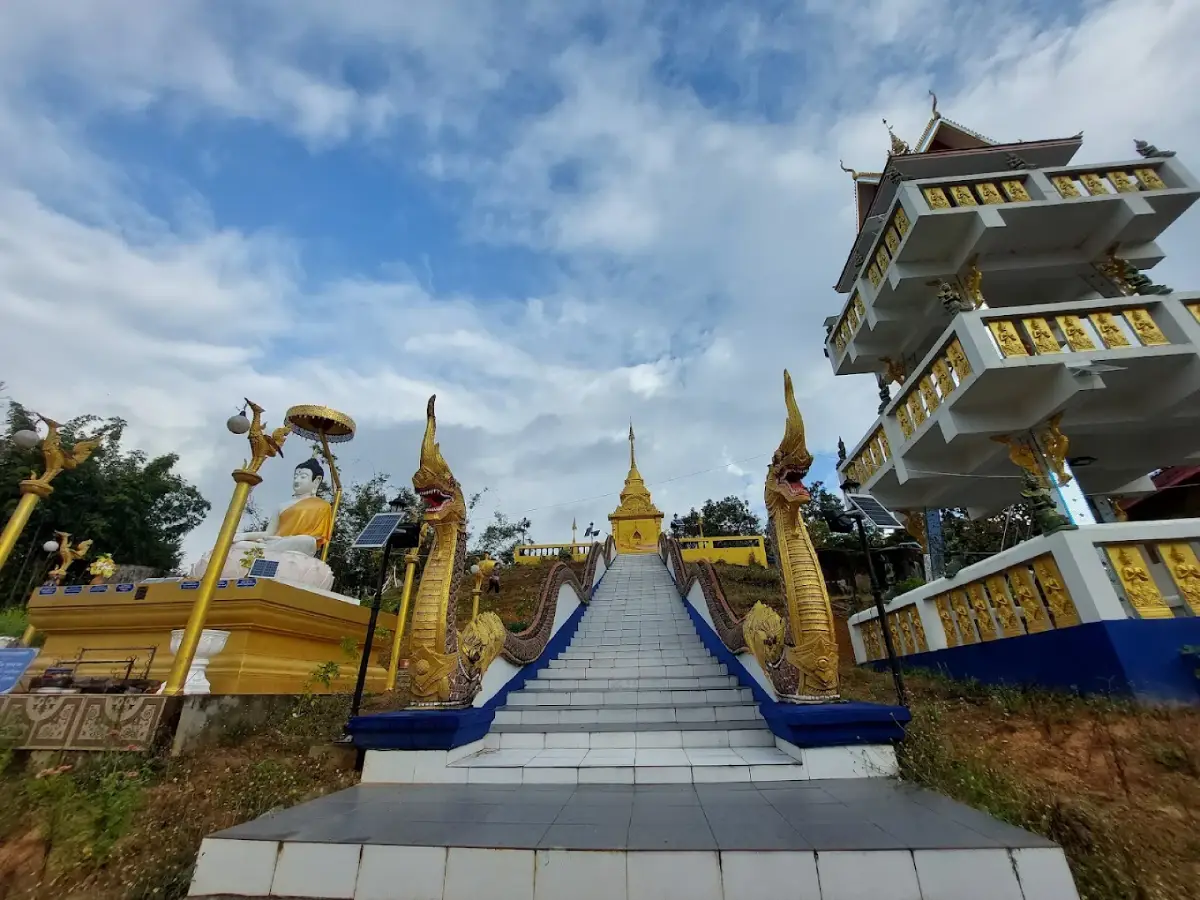
Wat San Ton Muang
Open Days: Daily
Opening Hours: 08.00 – 17.00
Wat San Ton Muang is a Maha Nikaya Buddhist community temple located in Ban San Ton Muang, Malika Subdistrict, Mae Ai District, Chiang Mai Province. The temple registration code is 350100703. It was officially established as a temple in 1989, with Phra Khru Weerasat Kowit Tikkhaviro serving as abbot. The temple is closely connected with the local community of San Ton Muang and the wider historical landscape of Malika in northern Chiang Mai.
Wat San Ton Muang is best understood as a living local temple rather than a large commercial tourist attraction. Its value lies in its function as a community Buddhist site, a place for merit-making, Dhamma listening, religious ceremonies, and village gatherings. Travelers following the Fang–Mae Ai–Tha Ton route can stop here to experience a quieter and more local side of Mae Ai.
Malika Subdistrict is historically significant because of its connection with Wiang Malika, an ancient settlement associated with the legend of Chao Mae Malika. This gives Wat San Ton Muang a deeper setting than an ordinary village temple. The temple stands within a landscape where local history, oral tradition, village life, and Buddhist faith remain closely connected.
The name San Ton Muang reflects the local landscape and village identity. In northern Thai usage, “san” often suggests a ridge or raised ground, while “ton muang” refers to a tree name associated with the place. The temple name therefore preserves a relationship between geography, vegetation, and local memory.
The temple’s history is especially interesting because the site is connected with an ancient abandoned temple believed to be related to the time of Chao Mae Malika. On 29 November 1989, the Ministry of Education officially raised the abandoned temple site to the status of a temple with resident monks. This restored the sacred space to active Buddhist use and returned it to the community as a functioning religious center.
The revival of an abandoned temple is significant. It means that a place once associated with Buddhist practice was brought back into the religious life of the community. For local people, this provided a nearby place for merit-making, ceremonies, Dhamma activities, and community gatherings. Wat San Ton Muang therefore represents both historical continuity and living village faith.
The temple land covers 8 rai, 3 ngan, and 8 square wah, with one additional monastic land plot of 5 rai and 46 square wah. The temple boundary reflects the surrounding landscape: the north side is associated with the area of Chao Mae Malika’s ancient city, the south side borders the Fang–Tha Ton road, and the east and west sides border local streams. This location places the temple between community routes, watercourses, and historical memory.
The temple structures include a vihara, monks’ residences, a multipurpose hall, a merit-making hall, a kitchen, and an administrative pavilion. These buildings show the temple’s practical role in community life. The vihara supports worship and ceremonies, the monks’ residences sustain monastic life, the multipurpose and merit-making halls support village activities, and the kitchen helps serve larger religious events.
The main sacred object associated with Wat San Ton Muang is the chedi. In a community temple, a chedi is not only a religious monument but also a symbolic center for devotion. Visitors should approach it respectfully, as it represents Buddhist faith and the shared merit of the local community.
Phra Khru Weerasat Kowit Tikkhaviro is the abbot of Wat San Ton Muang. In a local community temple, the abbot plays an important role in maintaining the temple, guiding Buddhist activities, supporting monks and novices, and sustaining the relationship between the temple and local residents.
Wat San Ton Muang has also been associated with Buddhist education. The temple opened a Dhamma studies section in 1985. This shows that the temple has served not only as a ceremonial space but also as a learning space for Buddhist teachings and monastic education in the local community.
The temple should also be viewed in connection with Wiang Malika. Malika Subdistrict contains historical traces connected with the ancient city, including earthworks, moats, and local legends. Because Wat San Ton Muang stands within this cultural landscape, a visit to the temple can help travelers understand the relationship between temple, village, and local history in Mae Ai.
Wat San Ton Muang is suitable for travelers interested in local temples, Lanna community life, Mae Ai history, and cultural routes that go beyond the main tourist stops. The temple is not designed primarily for tourism, which is part of its appeal. It allows visitors to see how Buddhism remains part of everyday village life.
Key areas to observe include the vihara, the chedi, the temple courtyard, the multipurpose hall, and the religious activity spaces. On ordinary days, the temple offers a quiet atmosphere for worship and reflection. During community merit-making events, it becomes a gathering point for monks, villagers, and devotees.
Annual and seasonal Buddhist activities at Wat San Ton Muang include Buddhist holy days, the rainy-season retreat, the end of Buddhist Lent, Kathin, robe-offering events, funeral merit-making, and other community ceremonies. The presence of a merit-making hall and kitchen reflects the temple’s role in supporting these community events.
The temple’s importance to Malika Subdistrict operates on several levels. It is a place of worship, a community center, a restored sacred site, a part of the Wiang Malika historical landscape, and a place connected with Buddhist learning. These layers make Wat San Ton Muang more meaningful than a brief roadside stop.
Wat San Ton Muang can be combined with several nearby temples and attractions. A cultural route can include Wiang Malika, Wat Mae Ai Luang, Wat Matukaram, Wat Niwas Sathan, Wat Phra That Pu Chae, Wat Ban Mai Pu Chae, and Wat Tha Ton Royal Temple. This route gives travelers a fuller view of Mae Ai’s Buddhist heritage.
Other nearby attractions include Mae Ai Local Wisdom Learning Center, Tha Ton Boat Pier, Thanathon Orchard, Roi Jai Rak Project, and natural routes around Mae Ai and Tha Ton. A half-day route can focus on Wat San Ton Muang and Wiang Malika, while a full-day route can continue toward Tha Ton and the Kok River area.
Getting There is easiest by private car. From Chiang Mai city, travel north via Mae Rim, Chiang Dao, Fang, and Mae Ai, then continue along the Fang–Tha Ton route toward Malika Subdistrict and Ban San Ton Muang. From Chiang Rai, travelers can approach Mae Ai through Mae Chan and Tha Ton. Public transport users can take a bus or van toward Fang or Tha Ton and then use local transport for the final section.
When using online maps, search for “Wat San Ton Muang Mae Ai” or “Wat San Ton Muang Malika” to avoid confusion with temples of similar names in other provinces. The temple is close to the Fang–Tha Ton route, making it convenient to include in a Mae Ai temple itinerary.
Visitors should dress modestly, speak quietly, and respect monks, residents, and sacred spaces. Photography should be done with care and should not disturb religious activities. Since Wat San Ton Muang remains an active community temple, respectful behavior is more important than sightseeing convenience.
Overall, Wat San Ton Muang is a meaningful community temple in Mae Ai District. Its official temple status since 1989, connection with an ancient abandoned temple and the Malika historical landscape, chedi, vihara, community halls, Buddhist education role, and local village atmosphere make it a worthwhile stop for travelers seeking the cultural and spiritual depth of northern Chiang Mai.
| Name | Wat San Ton Muang |
| Related Name | Wat San Ton Muang (Wat Muang Kham) |
| Location | Ban San Ton Muang, Malika Subdistrict, Mae Ai District, Chiang Mai Province |
| Address | Ban San Ton Muang, Moo 16, Malika Subdistrict, Mae Ai District, Chiang Mai 50280, Thailand |
| Coordinates | Google Plus Code: 28Q4+HC9, Mae Ai District, Chiang Mai |
| Temple Type / Sect | Private Community Temple, Maha Nikaya Sect |
| Temple Registration Code | 350100703 |
| Highlights | Community temple in Malika Subdistrict, connected with the Wiang Malika historical landscape, with a chedi, vihara, and halls supporting local Buddhist activities |
| History | Originally associated with an ancient abandoned temple from the Chao Mae Malika tradition; officially raised to a temple with resident monks on 29 November 1989 |
| Name Origin | Named after Ban San Ton Muang, reflecting the local landscape, raised ground, and tree-based village identity |
| Temple Land Area | 8 rai, 3 ngan, and 8 square wah, with one monastic land plot of 5 rai and 46 square wah |
| Boundary Summary | North: Chao Mae Malika ancient city area; South: Fang–Tha Ton road; East and West: local streams |
| Important Sacred Object | Chedi |
| Buildings / Monastic Structures | Vihara, monks’ residences, multipurpose hall, merit-making hall, kitchen, and administrative pavilion |
| Main Traditions / Activities | Kathin, robe-offering activities, Buddhist holy days, rainy-season retreat, end of Buddhist Lent, funeral merit-making, and community ceremonies |
| Travel Information | Accessible by private car via Chiang Mai – Mae Rim – Chiang Dao – Fang – Mae Ai, then continue toward Malika Subdistrict and Ban San Ton Muang along the Fang–Tha Ton route |
| Current Status | Active community temple and Buddhist site in Malika Subdistrict, Mae Ai District |
| Open Days | Daily |
| Opening Hours | 08.00 – 17.00 |
| Facilities | Temple courtyard, multipurpose hall, merit-making hall, kitchen, and parking space within or near the temple grounds |
| Abbot / Caretaker | Phra Khru Weerasat Kowit Tikkhaviro |
| Buddhist Education | Dhamma studies section opened in 1985 |
| Nearby Tourist Attractions | 1. Wiang Malika, about 2 km 2. Wat Mae Ai Luang, about 3 km 3. Wat Matukaram / Wat Ban Den, about 3 km 4. Wat Niwas Sathan (Ban Hong), about 4 km 5. Wat Phra That Pu Chae, about 7 km 6. Wat Ban Mai Pu Chae, about 7 km 7. Wat Tha Ton Royal Temple, about 15 km 8. Tha Ton Boat Pier, about 16 km 9. Thanathon Orchard, about 16 km |
| Nearby Restaurants | 1. Chonglak Khao Man Kai Ton, about 2 km, Tel. 095-687-8225 2. Mae Amara Cooked-to-Order Restaurant, about 5 km, Tel. 093-264-6864 3. Ae Noi Pork Dip Buffet & Spicy Salad Ban Mai Pu Chae, about 7 km, Tel. 082-892-2563 4. De’ Love Tree Cafe & Restaurant Thaton Mae Ai, about 14 km, Tel. 061-419-5835 5. Sunshine Cafe Thaton, about 15 km, Tel. 094-619-3599 6. Sane Chai Nam Thaton, about 16 km, Tel. 087-177-1727 |
| Nearby Accommodations | 1. Maihom Resort Mae Ai, about 4 km, Tel. 088-260-5811 2. Thaton Hill Resort, about 14 km 3. Saranya River House, about 16 km, Tel. 053-053-672, 089-851-7072 4. Areeya Phuree Resort, about 16 km 5. Thaton River View Resort, about 16 km, Tel. 053-459-289, 053-373-173-5, 093-256-7969 6. Maekok River Village Resort, about 18 km, Tel. 053-053-628 |
Frequently Asked Questions (FAQ)
Q: Where is Wat San Ton Muang located?
A: Wat San Ton Muang is located in Ban San Ton Muang, Malika Subdistrict, Mae Ai District, Chiang Mai Province.
Q: Why is Wat San Ton Muang important?
A: It is a Maha Nikaya community temple officially established in 1989 and connected with an ancient abandoned temple in the Malika area.
Q: How is Wat San Ton Muang connected with Wiang Malika?
A: The temple is located in Malika Subdistrict, and its northern boundary is associated with the Chao Mae Malika ancient city area, making it part of the wider Wiang Malika historical landscape.
Q: What are the main highlights of Wat San Ton Muang?
A: The main highlights are the chedi, vihara, multipurpose hall, merit-making hall, and its role as the spiritual center of Ban San Ton Muang.
Q: Is Wat San Ton Muang open every day?
A: Yes. The temple is open daily from 08.00 to 17.00.
Q: Who is the abbot of Wat San Ton Muang?
A: Phra Khru Weerasat Kowit Tikkhaviro is the abbot of Wat San Ton Muang.
Q: How can travelers get to Wat San Ton Muang?
A: The most convenient way is by private car via Chiang Mai, Mae Rim, Chiang Dao, Fang, and Mae Ai, then continue toward Malika Subdistrict and Ban San Ton Muang.
Q: What nearby attractions can be visited with Wat San Ton Muang?
A: Nearby attractions include Wiang Malika, Wat Mae Ai Luang, Wat Matukaram, Wat Niwas Sathan, Wat Phra That Pu Chae, Wat Ban Mai Pu Chae, Wat Tha Ton Royal Temple, Tha Ton Boat Pier, and Thanathon Orchard.
 Category: ●Places of Worship
 Group: ●Temple
Last Update : 2 DayAgo
 Last Update : 2 DayAgo
 Click to Access the Navigation Map GPS
 Muang Chiang Mai(121)Chom Thong(47)Mae Chaem(25)Chiang Dao(33)Doi Saket(68)Mae Taeng(85)Mae Rim(69)Samoeng(29)Fang(71)Mae Ai(59)Phrao(70)San Pa Tong(103)San Kamphaeng(66)San Sai(73)Hang Dong(74)Hot(32)Doi Tao(22)Omkoi(11)Saraphi(74)Wiang Haeng(15)Chai Prakan(28)Mae Wang(32)Mae On(22)Doi Lo(34)Galyani Vadhana(1)


