
lovethailand home >North Travel Attractions >Chiang Mai Travel Attractions >Mae Ai >Mae Ai > Wat Pang Ton Duea
TL;DR: Wat Pang Ton Duea is located at Moo 9, Ban Pang Ton Duea, Mae Ai Subdistrict, Mae Ai District, Chiang Mai Province, open Daily, hours 08.00 – 17.00.

Wat Pang Ton Duea
Open Days: Daily
Opening Hours: 08.00 – 17.00
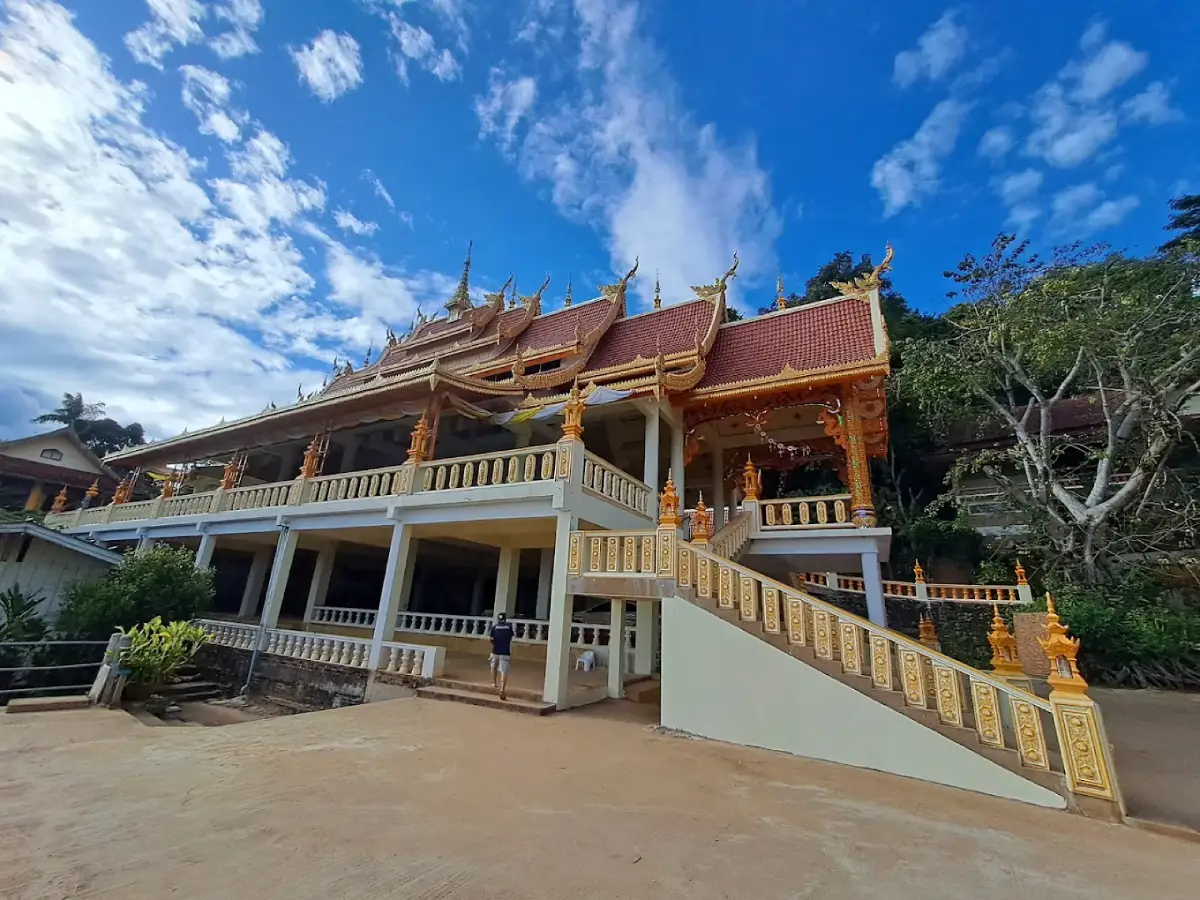
Wat Pang Ton Duea is a Maha Nikaya Buddhist community temple located in Moo 9, Ban Pang Ton Duea, Mae Ai Subdistrict, Mae Ai District, Chiang Mai Province. The temple registration code is 350100105, and it was officially established as a temple in 1930. Set within the Doi Lang highland area, the temple is closely connected with local village life, mountain communities, Buddhist faith, and the legacy of Phra Khru Mongkhon Rat, better known as Khru Ba Sitthi Aphiwanno, a highly respected former abbot.
Wat Pang Ton Duea is best understood as a living mountain community temple rather than a commercial tourist attraction. Its value lies in its quiet atmosphere, its role as the spiritual center of Ban Pang Ton Duea, and its connection with a revered monk who helped strengthen Buddhist faith in the Doi Lang area. Travelers who want to experience Mae Ai beyond major viewpoints and famous temples will find this temple meaningful and culturally grounded.
Ban Pang Ton Duea is a village in Moo 9 of Mae Ai Subdistrict. The area is connected with Doi Lang, a mountainous landscape in northern Chiang Mai known for highland views, misty scenery, and village life. Wat Pang Ton Duea stands within this setting as a local Buddhist anchor for a community shaped by mountain geography, agriculture, and strong village identity.
The temple was officially established in 1930. Local accounts describe its early name as Wat Samakkhi Tham, meaning a temple of unity in Dhamma. The name reflects the origin of the temple clearly: it was built through the cooperation and faith of villagers who wanted a Buddhist temple close to their community. In highland villages, having a temple nearby was important because it allowed local people to make merit, listen to Dhamma, and join ceremonies without traveling long distances.
The early establishment of Wat Pang Ton Duea is associated with Nai Chom and Nang Phat, local community leaders who helped guide villagers in creating the temple. Their role shows how temples in northern Thai villages often grew from local initiative. A temple was not simply a religious structure; it was the heart of the village, where people gathered for ceremonies, moral learning, and social connection.
The name Pang Ton Duea is closely tied to the village and its landscape. In northern Thai usage, the word “pang” can suggest a settlement or resting place, while “ton duea” refers to a fig tree. The temple name therefore reflects both the local environment and the identity of Ban Pang Ton Duea. This relationship between place name, landscape, and temple is common in northern Thailand.
Wat Pang Ton Duea became especially significant during the period of Phra Khru Mongkhon Rat, or Khru Ba Sitthi Aphiwanno, who served as abbot and became deeply respected by local residents. He was known as a charitable monk of the Doi Lang highlands and played an important role in encouraging villagers to come to the temple, practice Buddhism, support temple development, and maintain faith in the community.
Khru Ba Sitthi Aphiwanno studied Buddhist teachings and Lanna script, and he became one of the monks closely associated with Buddhist development in the Mae Ai and Doi Lang area. His leadership helped the temple grow from a small highland community temple into a site recognized by devotees beyond the village. Even after his passing, his memory remains closely tied to Wat Pang Ton Duea.
The current abbot of Wat Pang Ton Duea is Phra Khru Rattana Suttaphimon, also known as Phra Maha Niran Ratanapanyo. The temple continues to have resident monks and community Buddhist activities, including Kathin robe-offering ceremonies and regular merit-making events. This shows that the temple remains an active Buddhist institution, not merely a historical site.
Wat Pang Ton Duea also plays a practical role in community support. During periods of heavy rain and landslide risk in Ban Pang Ton Duea, the temple has served as a safe shelter area for affected villagers. This shows the broader role of a community temple in northern Thailand: it is a place of worship, a social gathering space, and a refuge in times of need.
The wider Doi Lang context adds to the temple’s appeal. Doi Lang is a mountainous area near the Myanmar border, known for viewpoints, mist, forested landscapes, and highland communities. Visiting Wat Pang Ton Duea can therefore be combined with a nature-focused route through Doi Lang, giving travelers both spiritual and scenic dimensions in one trip.
The main appeal of Wat Pang Ton Duea is its authenticity. It is not designed primarily as a tourist attraction. Visitors can experience a quiet community temple, pay respect, make merit, and observe how Buddhism remains part of everyday life in a mountain village. The temple’s beauty lies in the relationship among monks, villagers, faith, and the surrounding landscape.
Important areas of the temple include the sermon hall, monks’ residences, temple courtyard, religious activity spaces, and merit-making areas. These areas support the ordinary religious life of the community. The sermon hall is used for Dhamma listening and merit-making, while the monks’ residences support the monastic presence that keeps the temple active.
The development of the ordination hall has been associated with strong lay devotion, especially during the period of Khru Ba Sitthi Aphiwanno. Merit-making for temple construction shows how villagers and devotees helped strengthen the temple’s physical and religious foundation. In a highland community, this kind of collective effort is an important part of Buddhist life.
Wat Pang Ton Duea is associated with Kathin robe-offering ceremonies and other Buddhist calendar activities such as Buddhist holy days, the rainy-season retreat, the end of Buddhist Lent, and robe-offering events. These ceremonies bring monks, villagers, and devotees together and help preserve the living relationship between the temple and the community.
The temple is also meaningful for visitors interested in local Buddhist practice. Khru Ba Sitthi Aphiwanno encouraged villagers to come to the temple and practice Dhamma, making Wat Pang Ton Duea a space for spiritual cultivation as well as merit-making. This role reflects the way Buddhism remains woven into the daily life of northern Thai communities.
For travelers interested in local history, Wat Pang Ton Duea helps explain the development of Ban Pang Ton Duea and the Doi Lang area. The village is part of a highland community network with schools, agriculture, and local services. The temple is one of the key social anchors that supports this community structure.
Wat Pang Ton Duea is suitable for cultural travelers, Buddhist visitors, and those who want to explore Mae Ai beyond its best-known attractions. It gives visitors a chance to experience a mountain village temple, learn about the legacy of Khru Ba Sitthi Aphiwanno, and understand how local temples function as both religious and social centers.
Visitors should approach the temple with respect. Modest clothing, quiet behavior, and awareness of local religious life are expected. During the rainy season, travelers should check road and weather conditions before traveling to the Doi Lang area because Ban Pang Ton Duea is a highland community where heavy rain can affect travel.
Wat Pang Ton Duea can be combined with Doi Lang and other Mae Ai temples. A shorter route can include Wat Pang Ton Duea, Doi Lang, Wat Mae Ai Luang, and Wat Matukaram. A full-day route can continue to Wat Phra That Pu Chae, Wat Ban Mai Pu Chae, Wat Tha Ton Royal Temple, Tha Ton Boat Pier, Thanathon Orchard, and Roi Jai Rak Project.
The Doi Lang route makes Wat Pang Ton Duea especially interesting. Doi Lang offers highland scenery, cool mountain air, and viewpoints, while the temple adds a spiritual and community dimension to the journey. Travelers should plan time, daylight, fuel, and road conditions carefully, especially if they are not familiar with mountain roads.
Getting There is easiest by private car. From Chiang Mai city, travel north via Mae Rim, Chiang Dao, Fang, and Mae Ai, then continue to Ban Pang Ton Duea, Moo 9, in Mae Ai Subdistrict. From Chiang Rai, travelers can approach Mae Ai through Mae Chan and Tha Ton before continuing toward Ban Pang Ton Duea. The road into the highland area should be driven carefully.
Public transport users can travel by bus or van toward Fang, Mae Ai, or Tha Ton, then arrange local transport to Ban Pang Ton Duea. However, a private car or rented vehicle is more convenient because the temple is located in a highland village away from the main tourist corridor. Travelers planning to continue to Doi Lang should use a vehicle suitable for mountain roads.
A visit to Wat Pang Ton Duea should begin with paying respect, making merit, and walking through the temple grounds quietly. Learning about Khru Ba Sitthi Aphiwanno helps visitors understand why this temple is meaningful to local people. His legacy shows how a monk and a village community can work together to sustain Buddhism in a mountain setting.
Overall, Wat Pang Ton Duea is one of the meaningful community temples of Mae Ai District. Its origin in village unity, its connection with Khru Ba Sitthi Aphiwanno, its current monastic life, its Kathin activities, and its mountain setting make it a worthwhile stop for travelers seeking the cultural and spiritual depth of northern Chiang Mai.
| Name | Wat Pang Ton Duea |
| Former / Related Name | Wat Samakkhi Tham / Wat Pang Ton Duea Samakkhi Tham |
| Location | Moo 9, Ban Pang Ton Duea, Mae Ai Subdistrict, Mae Ai District, Chiang Mai Province |
| Address | Moo 9, Mae Ai Subdistrict, Mae Ai District, Chiang Mai 50280, Thailand |
| Coordinates | Google Plus Code: 37VJ+Q3R, Mae Ai Subdistrict, Mae Ai District, Chiang Mai |
| Temple Type / Sect | Private Community Temple, Maha Nikaya Sect |
| Temple Registration Code | 350100105 |
| Highlights | Mountain community temple in the Doi Lang area, officially established in 1930 and closely associated with Khru Ba Sitthi Aphiwanno, a revered former abbot |
| History | Officially established as a temple in 1930; originally known as Wat Samakkhi Tham and built through the cooperation of Ban Pang Ton Duea villagers |
| Temple Founders | Nai Chom and Nang Phat, local community leaders during the early establishment of the temple |
| Name Origin | Named after Ban Pang Ton Duea, reflecting the local village identity and highland landscape |
| Distinctive Features | A peaceful highland community temple serving as a spiritual center and social refuge for Ban Pang Ton Duea |
| Buildings / Monastic Structures | Sermon hall, monks’ residences, temple courtyard, religious activity spaces, and community merit-making areas |
| Main Traditions / Activities | Kathin robe-offering, robe-offering merit-making, Buddhist holy days, the rainy-season retreat, and community merit-making activities |
| Travel Information | Accessible by private car via Chiang Mai – Mae Rim – Chiang Dao – Fang – Mae Ai, then continue to Ban Pang Ton Duea, Moo 9; the highland road should be driven carefully |
| Current Status | Active community temple and Buddhist site in Ban Pang Ton Duea |
| Open Days | Daily |
| Opening Hours | 08.00 – 17.00 |
| Facilities | Temple courtyard, merit-making area, sermon hall, and parking space within or near the temple grounds |
| Current Abbot | Phra Khru Rattana Suttaphimon, also known as Phra Maha Niran Ratanapanyo |
| Important Former Abbot | Phra Khru Mongkhon Rat, also known as Khru Ba Sitthi Aphiwanno, a revered monk of the Doi Lang highlands |
| Resident Monks | 5 monks |
| Nearby Tourist Attractions | 1. Doi Lang / Mon Doi Lang, about 8 km 2. Wat Mae Ai Luang, about 14 km 3. Wat Matukaram, or Wat Ban Den, about 14 km 4. Wat Niwas Sathan (Ban Hong), about 15 km 5. Wat Phra That Pu Chae, about 16 km 6. Wat Tha Ton Royal Temple, about 25 km 7. Tha Ton Boat Pier, about 26 km 8. Thanathon Orchard, about 26 km 9. Roi Jai Rak Project, about 32 km |
| Nearby Restaurants | 1. Long Doi, about 1 km 2. Chonglak Khao Man Kai Ton, about 14 km, Tel. 095-687-8225 3. Mae Amara Cooked-to-Order Restaurant, about 15 km, Tel. 093-264-6864 4. Ae Noi Pork Dip Buffet & Spicy Salad Ban Mai Pu Chae, about 16 km, Tel. 082-892-2563 5. De’ Love Tree Cafe & Restaurant Thaton Mae Ai, about 24 km, Tel. 061-419-5835 6. Sunshine Cafe Thaton, about 25 km, Tel. 094-619-3599 |
| Nearby Accommodations | 1. Maihom Resort Mae Ai, about 15 km, Tel. 088-260-5811 2. Thaton Hill Resort, about 24 km 3. Saranya River House, about 26 km, Tel. 053-053-672, 089-851-7072 4. Areeya Phuree Resort, about 26 km 5. Thaton River View Resort, about 26 km, Tel. 053-459-289, 053-373-173-5, 093-256-7969 6. Maekok River Village Resort, about 28 km, Tel. 053-053-628 |
Frequently Asked Questions (FAQ)
Q: Where is Wat Pang Ton Duea located?
A: Wat Pang Ton Duea is located in Moo 9, Ban Pang Ton Duea, Mae Ai Subdistrict, Mae Ai District, Chiang Mai Province.
Q: Why is Wat Pang Ton Duea important?
A: It is a Maha Nikaya community temple officially established in 1930 and serves as the spiritual center of Ban Pang Ton Duea and the Doi Lang highland community.
Q: What was the former name of Wat Pang Ton Duea?
A: The temple was formerly known as Wat Samakkhi Tham, reflecting the unity of local villagers who helped establish it.
Q: Who is the current abbot of Wat Pang Ton Duea?
A: The current abbot is Phra Khru Rattana Suttaphimon, also known as Phra Maha Niran Ratanapanyo.
Q: How is Khru Ba Sitthi Aphiwanno connected with Wat Pang Ton Duea?
A: Khru Ba Sitthi Aphiwanno, also known as Phra Khru Mongkhon Rat, was an important former abbot of Wat Pang Ton Duea and remains deeply respected by the local community.
Q: Is Wat Pang Ton Duea open every day?
A: Yes. The temple is open daily from 08.00 to 17.00.
Q: How can travelers get to Wat Pang Ton Duea?
A: The most convenient way is by private car via Chiang Mai, Mae Rim, Chiang Dao, Fang, and Mae Ai, then continue to Ban Pang Ton Duea. The highland section should be driven carefully.
Q: What nearby attractions can be visited with Wat Pang Ton Duea?
A: Nearby attractions include Doi Lang, Wat Mae Ai Luang, Wat Matukaram, Wat Niwas Sathan, Wat Phra That Pu Chae, Wat Tha Ton Royal Temple, Tha Ton Boat Pier, Thanathon Orchard, and Roi Jai Rak Project.
 Category: ●Places of Worship
 Group: ●Temple
Last Update : 1 WeekAgo
 Last Update : 1 WeekAgo
 Click to Access the Navigation Map GPS
 Muang Chiang Mai(121)Chom Thong(47)Mae Chaem(25)Chiang Dao(33)Doi Saket(68)Mae Taeng(85)Mae Rim(69)Samoeng(29)Fang(71)Mae Ai(59)Phrao(70)San Pa Tong(103)San Kamphaeng(66)San Sai(73)Hang Dong(73)Hot(32)Doi Tao(22)Omkoi(11)Saraphi(74)Wiang Haeng(15)Chai Prakan(28)Mae Wang(32)Mae On(22)Doi Lo(34)Galyani Vadhana(1)


