
lovethailand home >North Travel Attractions >Chiang Mai Travel Attractions >Mae Ai >Mali Ka > Wat Matukaram
TL;DR: Wat Matukaram is located at Ban Den, Moo 6, Mae Ai Subdistrict, Mae Ai District, Chiang Mai Province. Highlights include Ban Den community temple in Mae Ai, officially established in 1927, granted its royal consecrated boundary in 1955, and associated with.

Wat Matukaram
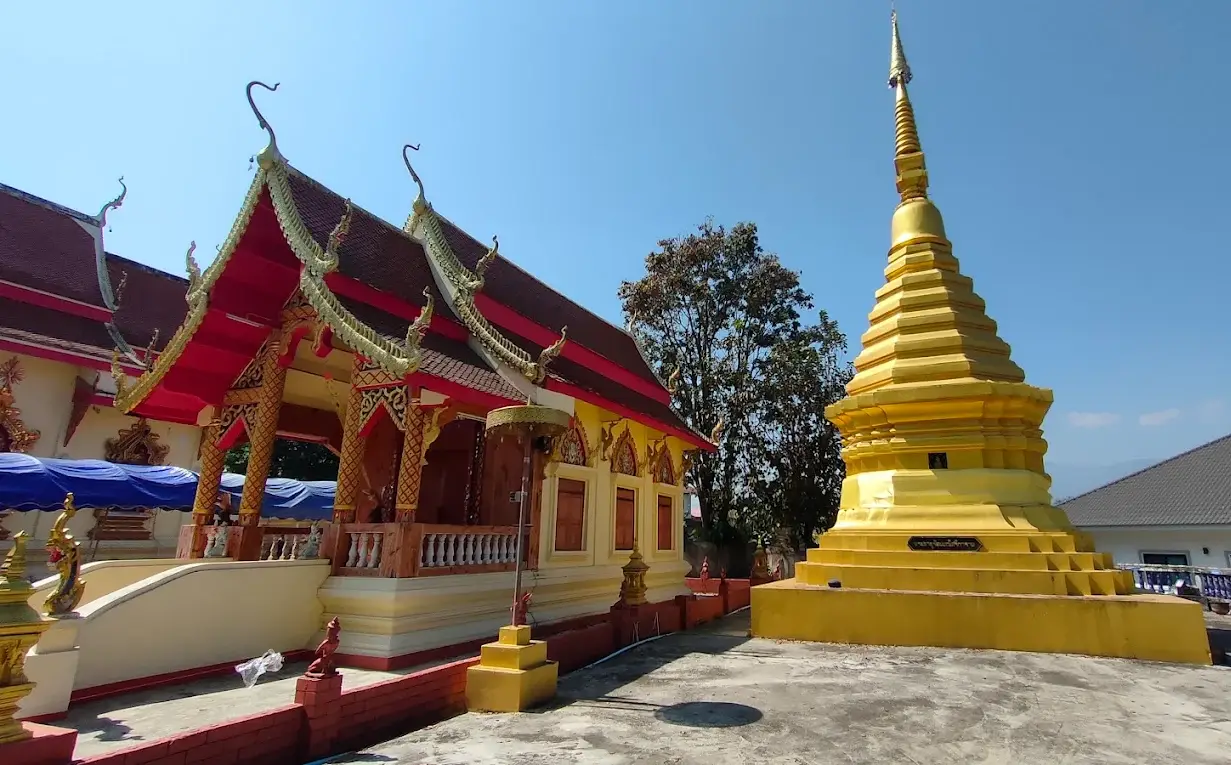
Operating day: Daily
Operating time: 08.00 - 17.00
Wat Matukaram, also known locally as Wat Ban Den, is a Maha Nikaya Buddhist temple located in Ban Den, Moo 6, Mae Ai Subdistrict, Mae Ai District, Chiang Mai Province. The temple registration code is 350100108. It was officially established as a temple in 1927 and received its royal consecrated boundary in 1955. The current abbot is Phra Athikan Olan Wachirapanyo. Wat Matukaram remains an important community temple for Ban Den and the wider Mae Ai area.
Wat Matukaram is best understood as a living local temple rather than a commercial tourist attraction. Its value lies in its role as a Buddhist center for the village, a place for merit-making, Dhamma activities, religious ceremonies, and community faith. For travelers who want to understand Mae Ai beyond major viewpoints and famous temples, Wat Matukaram offers a grounded view of how Buddhist life continues in a northern Thai community.
The temple is located in Mae Ai District, the northern part of Chiang Mai Province, along a wider travel corridor connecting Fang, Mae Ai, Tha Ton, the Kok River area, and Chiang Rai. The surrounding area includes old communities, local temples, Shan and Lanna cultural influences, and stories connected with Malika. This makes Wat Matukaram a meaningful stop within a broader Mae Ai temple route.
The history of Wat Matukaram began officially in 1927. In northern Thai communities, the establishment of a temple was not simply the construction of religious buildings. It meant creating a spiritual center for the village. A temple served as a place for worship, Dhamma listening, merit-making, community ceremonies, and moral learning. Wat Matukaram therefore reflects the growth of Ban Den and Mae Ai through Buddhist faith.
The temple received its royal consecrated boundary in 1955. In Thai Buddhism, a consecrated boundary is essential for formal monastic ceremonies and confirms a temple’s religious status. This makes Wat Matukaram more than a local merit-making site; it is an established Buddhist institution within the Thai Sangha system.
The name “Matukaram” carries the tone of a peaceful Buddhist monastery. The word “aram” refers to a temple or a serene place for religious practice. Locally, the temple is also called Wat Ban Den, a name that connects it directly with Ban Den village. These two names together show both the religious identity of the temple and its close relationship with the local community.
Phra Athikan Olan Wachirapanyo is the abbot of Wat Matukaram. He is widely associated with Dhamma preaching and Buddhist teaching activities. Public references to Wat Matukaram, or Wat Ban Den, often connect the temple with his role as a well-known Dhamma preacher from Chiang Mai. This gives the temple significance beyond the village level and connects it with wider Buddhist communication in northern Thailand.
Wat Matukaram continues to support religious and community activities. Merit-making, restoration of temple facilities, Dhamma preaching, and community gatherings all show that the temple remains active. A local temple of this kind is sustained by the relationship between monks, villagers, and donors, and that relationship keeps the temple meaningful from one generation to the next.
For Ban Den community, Wat Matukaram serves as a spiritual center. Villagers can come to make merit, offer alms, listen to Dhamma, join annual Buddhist ceremonies, and support temple restoration. These activities help preserve the relationship between households, the temple, and Buddhist practice in Mae Ai.
Mae Ai District has many important local temples, and Wat Matukaram should be viewed as part of this wider religious landscape. Nearby temples include Wat Mae Ai Luang, Wat Niwas Sathan, Wat Mongkhon Sathan, Wat Phra That Pu Chae, Wat Ban Mai Pu Chae, and Wat Tha Ton Royal Temple. Visiting these temples together gives travelers a fuller understanding of Mae Ai’s Buddhist culture.
The main appeal of Wat Matukaram is its authenticity as a community temple. Visitors can see a temple that is not staged primarily for tourism but still functions as part of everyday religious life. This kind of temple is important because it shows how Buddhism remains woven into the daily rhythm of local communities in northern Thailand.
Important areas of the temple include the ordination boundary, religious activity spaces, temple courtyard, merit-making spaces, and monastic residences. Detailed public information about every building is limited, but the temple’s status as a temple with a royal consecrated boundary and its ongoing restoration activities show its continuing role as a Buddhist site for the community.
Wat Matukaram is also relevant to the study of Buddhist art in the Fang and Mae Ai region. A bronze Buddha image from Wat Matukaram has been mentioned in academic material related to bronze Buddha images of the Fang school. This adds another layer of value to the temple, connecting it with the broader history of Buddhist art in northern Chiang Mai.
The temple is suitable for cultural travelers, Buddhist visitors, and anyone interested in local temples of Mae Ai. It is not a place that should be visited only as a quick photo stop. The best way to experience Wat Matukaram is to slow down, pay respect, observe the community setting, and understand how a local temple supports spiritual life.
Visitors should dress modestly, behave quietly, and respect monks, residents, and sacred spaces. Photography should be done with care, especially around religious buildings or during ceremonies. Since Wat Matukaram is an active community temple, respectful behavior is more important than sightseeing convenience.
Wat Matukaram can be combined with nearby temples in a Mae Ai cultural route. A short route can include Wat Matukaram, Wat Mae Ai Luang, and Wat Niwas Sathan. A longer route can continue to Wat Phra That Pu Chae, Wat Ban Mai Pu Chae, Wat Tha Ton Royal Temple, Tha Ton Boat Pier, Thanathon Orchard, and Roi Jai Rak Project.
The route connecting Wat Matukaram with Wat Mae Ai Luang is especially practical because the two temples are close to each other and offer different cultural layers. Wat Matukaram represents Ban Den community faith and Dhamma preaching, while Wat Mae Ai Luang is known for Shan-style architecture and meditation activities. Together, they help travelers understand Mae Ai through both community life and Buddhist art.
Getting There is easiest by private car. From Chiang Mai city, travel north via Mae Rim, Chiang Dao, Fang, and Mae Ai, then continue to Ban Den, Moo 6, in Mae Ai Subdistrict. From Chiang Rai, travelers can approach Mae Ai through Mae Chan and Tha Ton. Public transport users can take a bus or van toward Fang or Tha Ton and then use local transport for the final section to the temple.
When using online maps, search for “Wat Matukaram” or “Wat Matukaram Ban Den” to avoid confusion with temples of similar names elsewhere. The temple is close to Wat Mae Ai Luang and the Mae Ai town area, making it convenient for a short temple visit during a Mae Ai itinerary.
Overall, Wat Matukaram is a significant community temple in Mae Ai District. Its long history since 1927, its royal consecrated boundary, its role as Wat Ban Den, its connection with Dhamma preaching, and its position within the Mae Ai temple network make it a worthwhile stop for travelers seeking the cultural and spiritual depth of northern Chiang Mai.
| Name | Wat Matukaram, Also Known As Wat Ban Den |
| Location | Ban Den, Moo 6, Mae Ai Subdistrict, Mae Ai District, Chiang Mai Province |
| Address | Moo 6, Mae Ai Subdistrict, Mae Ai District, Chiang Mai 50280, Thailand |
| Coordinates | 20.03064, 99.30120 / Plus Code: 7MGX28J2+7F |
| Temple Type / Sect | Private Community Temple, Maha Nikaya Sect |
| Temple Registration Code | 350100108 |
| Highlights | Ban Den community temple in Mae Ai, officially established in 1927, granted its royal consecrated boundary in 1955, and associated with Dhamma preaching by its abbot |
| History | Officially established as a temple in 1927 and granted its royal consecrated boundary in 1955 |
| Name Origin | Matukaram is the formal temple name, while Wat Ban Den is the local name connected with Ban Den village |
| Distinctive Features | Active community temple supporting merit-making, Dhamma preaching, temple restoration, and local Buddhist life in Mae Ai |
| Important Sacred Object | Bronze Buddha image associated with the Fang and Mae Ai bronze Buddha image tradition |
| Buildings / Monastic Structures | Ordination boundary, religious activity spaces, temple courtyard, merit-making areas, and monastic residences |
| Main Traditions / Activities | Buddhist calendar merit-making, Kathin, robe-offering activities, and restoration-related merit-making |
| Travel Information | Accessible by private car via Chiang Mai – Mae Rim – Chiang Dao – Fang – Mae Ai, or from Chiang Rai via Mae Chan and Tha Ton, then continue to Ban Den, Moo 6 |
| Current Status | Active community temple and Buddhist site in Mae Ai District |
| Open Days | Daily |
| Facilities | Temple courtyard, merit-making area, and parking space within or near the temple grounds |
| Abbot / Caretaker | Phra Athikan Olan Wachirapanyo |
| Main Contact Number | 095-141-6661 |
| Nearby Tourist Attractions | 1. Wat Mae Ai Luang, about 1 km 2. Wat Niwas Sathan (Ban Hong), about 3 km 3. Wat Mongkhon Sathan, about 3 km 4. Wat Phra That Pu Chae, about 6 km 5. Wat Ban Mai Pu Chae, about 6 km 6. Wat Tha Ton Royal Temple, about 15 km 7. Tha Ton Boat Pier, about 16 km 8. Thanathon Orchard, about 16 km 9. Roi Jai Rak Project, about 23 km |
| Nearby Restaurants | 1. Chonglak Khao Man Kai Ton, about 2 km, Tel. 095-687-8225 2. Mae Amara Cooked-to-Order Restaurant, about 5 km, Tel. 093-264-6864 3. De’ Love Tree Cafe & Restaurant Thaton Mae Ai, about 14 km, Tel. 061-419-5835 4. Sunshine Cafe Thaton, about 15 km, Tel. 094-619-3599 5. Sane Chai Nam Thaton, about 16 km, Tel. 087-177-1727 6. Tha Ton River View, about 16 km, Tel. 053-459-289, 053-373-173-5, 093-256-7969 |
| Nearby Accommodations | 1. Maihom Resort Mae Ai, about 4 km, Tel. 088-260-5811 2. Thaton Hill Resort, about 14 km 3. Saranya River House, about 16 km, Tel. 053-053-672, 089-851-7072 4. Areeya Phuree Resort, about 16 km 5. Thaton River View Resort, about 16 km, Tel. 053-459-289, 053-373-173-5, 093-256-7969 6. Maekok River Village Resort, about 18 km, Tel. 053-053-628 |
Frequently Asked Questions (FAQ)
Q: Where is Wat Matukaram located?
A: Wat Matukaram, also known as Wat Ban Den, is located in Ban Den, Moo 6, Mae Ai Subdistrict, Mae Ai District, Chiang Mai Province.
Q: Why is Wat Matukaram important?
A: It is a long-standing Maha Nikaya community temple in Mae Ai, officially established in 1927 and granted its royal consecrated boundary in 1955.
Q: Are Wat Matukaram and Wat Ban Den the same temple?
A: Yes. Wat Matukaram is the formal temple name, while Wat Ban Den is the local name connected with Ban Den village.
Q: Who is the abbot of Wat Matukaram?
A: Phra Athikan Olan Wachirapanyo is the abbot of Wat Matukaram.
Q: What is the contact number for Wat Matukaram?
A: The main contact number for Wat Matukaram is 095-141-6661.
Q: What is the main highlight of Wat Matukaram?
A: Its main highlight is its role as Ban Den’s community temple, with a long history, active Buddhist activities, Dhamma preaching, and strong local faith.
Q: How can travelers get to Wat Matukaram?
A: The most convenient way is by private car via Chiang Mai, Mae Rim, Chiang Dao, Fang, and Mae Ai, or from Chiang Rai through Mae Chan and Tha Ton.
Q: What nearby attractions can be visited with Wat Matukaram?
A: Nearby attractions include Wat Mae Ai Luang, Wat Niwas Sathan, Wat Mongkhon Sathan, Wat Phra That Pu Chae, Wat Ban Mai Pu Chae, Wat Tha Ton Royal Temple, Tha Ton Boat Pier, Thanathon Orchard, and Roi Jai Rak Project.
 Category: ●Places of Worship
 Group: ●Temple
Last Update : 2 WeekAgo
 Last Update : 2 WeekAgo
 Click to Access the Navigation Map GPS
 Muang Chiang Mai(121)Chom Thong(47)Mae Chaem(25)Chiang Dao(33)Doi Saket(68)Mae Taeng(85)Mae Rim(69)Samoeng(29)Fang(71)Mae Ai(59)Phrao(70)San Pa Tong(103)San Kamphaeng(66)San Sai(73)Hang Dong(73)Hot(32)Doi Tao(22)Omkoi(11)Saraphi(74)Wiang Haeng(15)Chai Prakan(28)Mae Wang(32)Mae On(22)Doi Lo(33)Galyani Vadhana(1)


