
lovethailand home >North Travel Attractions >Chiang Mai Travel Attractions >Mae Ai >Mae Ai > Wat Ban Mai Pu Chae
TL;DR: Wat Ban Mai Pu Chae is located at Moo 4, Ban Mai Pu Chae, Fang–Tha Ton Road, Mae Ai Subdistrict, Mae Ai District, Chiang Mai Province, open Daily, hours 08.00 – 17.00.
Wat Ban Mai Pu Chae
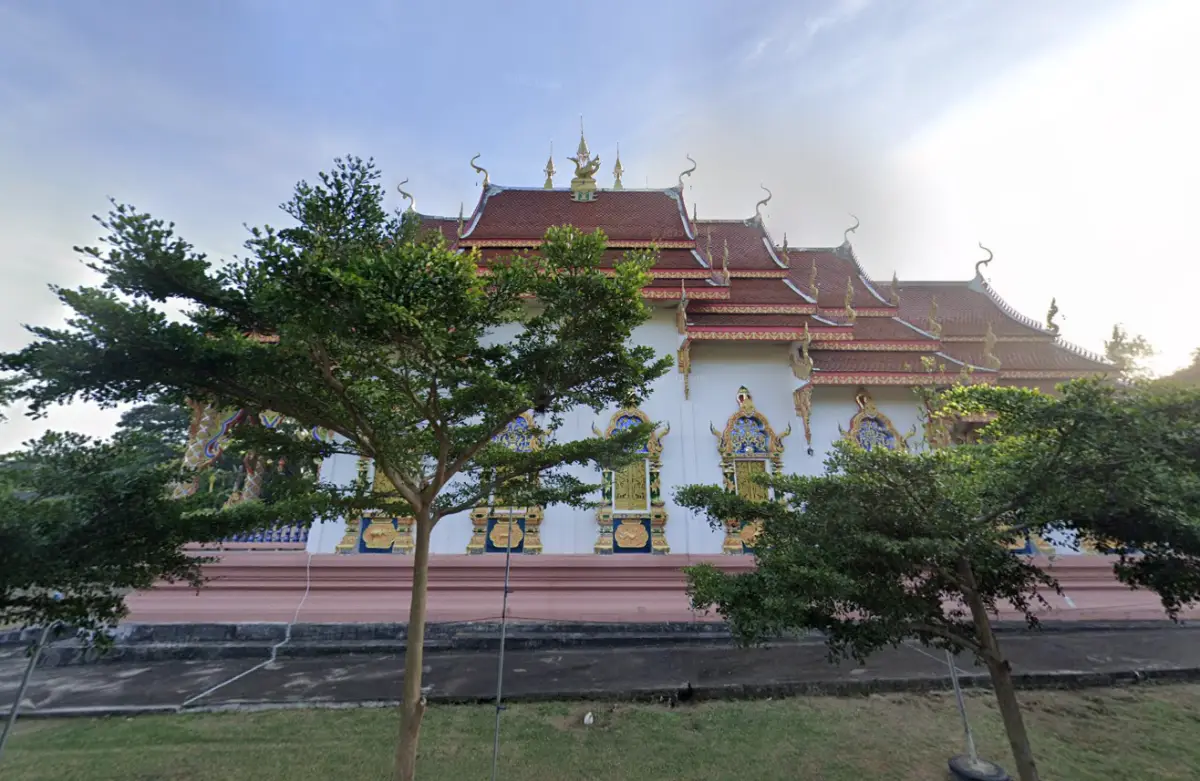
Open Days: Daily
Opening Hours: 08.00 – 17.00
Wat Ban Mai Pu Chae is a local Buddhist temple in the Maha Nikaya tradition, located in Moo 4, Ban Mai Pu Chae, along the Fang–Tha Ton route in Mae Ai Subdistrict, Mae Ai District, Chiang Mai Province 50280. Officially established as a temple in 1939, it is led by Phra Athikan Aphisit Dhammasaro and remains an important religious and community site for Ban Mai Pu Chae.
Wat Ban Mai Pu Chae is best understood as a living community temple rather than a large commercial tourist attraction. Its value lies in its quiet atmosphere, its long-standing role in the village, and its continuing connection with local Buddhist life. Travelers passing through the Fang–Mae Ai–Tha Ton route can stop here to make merit, pay respect, and experience the calm character of a northern Thai village temple.
Ban Mai Pu Chae is part of Mae Ai Subdistrict, a northern area of Chiang Mai Province connected with Fang, Tha Ton, Wat Phra That Pu Chae, Wat Mae Ai Luang, and routes toward Chiang Rai. The surrounding area includes villages, temples, rural landscapes, and cultural travel routes. Wat Ban Mai Pu Chae therefore belongs to a wider spiritual landscape that continues to shape local life in Mae Ai.
The temple was officially established in 1939. During that period, temples in northern Thai villages were essential centers for religious practice, social gatherings, moral learning, and community ceremonies. The establishment of Wat Ban Mai Pu Chae reflects the need of the local community to have a temple close to home, allowing villagers to make merit and join Buddhist activities without having to travel long distances.
The history of the temple is closely tied to the growth of Ban Mai Pu Chae as a local settlement. In many northern Thai communities, temples were created alongside villages because they provided a spiritual anchor and a shared space for social life. Wat Ban Mai Pu Chae is therefore not only a religious building; it is part of the way the village formed its identity and maintained its connection with Buddhism.
The name Wat Ban Mai Pu Chae follows the name of the village. This naming pattern is common in northern Thailand, where a temple often carries the name of the settlement it serves. The name shows a close relationship between the temple and the local community, making the temple a marker of both faith and village identity.
Phra Athikan Aphisit Dhammasaro is associated with the abbotship of Wat Ban Mai Pu Chae. In a community temple, the abbot plays an important role in caring for the temple grounds, guiding Buddhist activities, and maintaining the relationship between monks and local residents. This role is especially important for a temple that has served the village since 1939.
The atmosphere at Wat Ban Mai Pu Chae is calm and modest. Visitors should approach it as an active place of worship. Modest clothing, quiet behavior, and respect for monks and local residents are expected. The temple is not designed as a staged tourist attraction; it is a community temple where religious life continues in a natural and local way.
The main things to appreciate at Wat Ban Mai Pu Chae are the temple grounds, the merit-making space, the village setting, and the quiet relationship between the temple and the community. Travelers interested in Lanna culture and local Buddhist life will find this kind of temple meaningful because it shows how faith is practiced in everyday village life.
The area around Ban Mai Pu Chae is also connected with Wat Phra That Pu Chae, another important religious site in Moo 4 of Mae Ai Subdistrict. Wat Phra That Pu Chae is known for its revered stupa and its annual bathing ceremony held on Visakha Bucha Day. This makes the Ban Mai Pu Chae area a meaningful stop for travelers interested in local faith, community temples, and Buddhist traditions in Mae Ai.
In Lanna culture, temples are centers of community identity. Buddhist holy days, the rainy-season retreat, robe-offering ceremonies, and village merit-making events bring people together and reinforce the bond between households and the temple. Wat Ban Mai Pu Chae reflects this role as a temple that supports the spiritual and social life of the local community.
For travelers interested in local history, Wat Ban Mai Pu Chae helps explain how communities in northern Chiang Mai developed around Buddhism. Having a temple within the village made it easier for people to join religious activities and reduced the difficulty of traveling to more distant temples. The temple therefore tells a story about settlement, faith, and community life in Mae Ai.
Wat Ban Mai Pu Chae is suitable for cultural travelers, visitors interested in local temples, and those who want to explore Mae Ai beyond its best-known tourist sites. It can be included as a short stop before continuing to Wat Phra That Pu Chae, Wat Mae Ai Luang, Wat Tha Ton Royal Temple, or the Tha Ton riverside area.
Getting There is easiest by private car. From Chiang Mai city, travel north via Mae Rim, Chiang Dao, Fang, and Mae Ai, then continue toward the Fang–Tha Ton route near Ban Mai Pu Chae. From Chiang Rai, travelers can approach the area through Mae Chan and Tha Ton before entering Mae Ai. Public transport users can travel by bus or van toward Fang or Tha Ton and then use local transport for the final section.
A practical itinerary can begin with Wat Ban Mai Pu Chae in the morning, followed by Wat Phra That Pu Chae, Wat Mae Ai Luang, and Wat Tha Ton Royal Temple. Travelers with more time can continue to Tha Ton Boat Pier, Thanathon Orchard, Roi Jai Rak Project, or other attractions in the Mae Ai and Tha Ton area. This route combines temples, village culture, river scenery, local food, and northern Thai landscapes in one trip.
For photography, Wat Ban Mai Pu Chae is best suited to respectful images of a local temple environment, village life, and quiet Buddhist spaces. Visitors should avoid disturbing monks or residents and should not take close-up photos of people without permission. Since the temple remains an active place of worship, respectful behavior is more important than searching for photo angles.
Wat Ban Mai Pu Chae is a worthwhile stop for travelers who want to understand Mae Ai in greater depth. Its significance comes from its role as a Maha Nikaya community temple officially established in 1939 and its continuing function as a spiritual center for Ban Mai Pu Chae. It adds a local Buddhist and community dimension to travel in northern Chiang Mai.
| Name | Wat Ban Mai Pu Chae |
| Location | Moo 4, Ban Mai Pu Chae, Fang–Tha Ton Road, Mae Ai Subdistrict, Mae Ai District, Chiang Mai Province |
| Address | Moo 4, Mae Ai Subdistrict, Mae Ai District, Chiang Mai 50280, Thailand |
| Highlights | Maha Nikaya community temple of Ban Mai Pu Chae, officially established in 1939 |
| History | Officially established as a temple in 1939 and connected with the Ban Mai Pu Chae community in Mae Ai |
| Name Origin | Named after Ban Mai Pu Chae village, reflecting the close relationship between the temple and the local community |
| Distinctive Features | Quiet local temple atmosphere, suitable for merit-making, respectful cultural visits, and learning about Buddhist community life in Mae Ai |
| Travel Information | Accessible by private car via Chiang Mai–Mae Rim–Chiang Dao–Fang–Mae Ai or from Chiang Rai via Mae Chan and Tha Ton; local transport is needed for the final section |
| Current Status | Active community temple and Buddhist site in Mae Ai Subdistrict |
| Open Days | Daily |
| Opening Hours | 08.00 – 17.00 |
| Facilities | Parking area and merit-making space within the temple grounds |
| Main Areas / Zones | Temple grounds, religious activity area, and community merit-making space |
| Abbot / Caretaker | Phra Athikan Aphisit Dhammasaro |
| Main Contact Number | 053-856-106 |
| Nearby Tourist Attractions | 1. Wat Phra That Pu Chae, about 2 km 2. Wat Mae Ai Luang, about 5 km 3. Wat Tha Ton Royal Temple, about 17 km 4. Tha Ton Boat Pier, about 18 km 5. Thanathon Orchard, about 18 km 6. Roi Jai Rak Project, about 25 km |
| Nearby Restaurants | 1. Ae Noi Pork Dip Buffet & Spicy Salad Ban Mai Pu Chae, about 1 km, Tel. 082-892-2563 2. Noodle Shop in Front of Wat Ban Mai Pu Chae, about 1 km 3. Lap Pa Noi Ban Mai Pu Chae, about 2 km 4. OV House, about 4 km 5. Ban Rai Chai Daen, about 4 km 6. Kuai Tiao Jeng Shabu, about 4 km |
| Nearby Accommodations | 1. Thaton Hill Resort, about 16 km 2. Saranya River House, about 18 km, Tel. 053-053-672, 089-851-7072 3. Areeya Phuree Resort, about 18 km 4. Thaton Beach Resort, about 18 km 5. Thaton River View Resort, about 18 km 6. Maekok River Village Resort, about 20 km, Tel. 053-053-628 |
Frequently Asked Questions (FAQ)
Q: Where is Wat Ban Mai Pu Chae located?
A: Wat Ban Mai Pu Chae is located in Moo 4, Ban Mai Pu Chae, Fang–Tha Ton Road, Mae Ai Subdistrict, Mae Ai District, Chiang Mai Province 50280.
Q: Why is Wat Ban Mai Pu Chae important?
A: It is a Maha Nikaya community temple officially established in 1939 and serves as a spiritual center for Ban Mai Pu Chae in Mae Ai.
Q: Is Wat Ban Mai Pu Chae open every day?
A: Yes. The temple is open daily from 08.00 to 17.00.
Q: What is the contact number for Wat Ban Mai Pu Chae?
A: The main contact number for Wat Ban Mai Pu Chae is 053-856-106.
Q: What is the main highlight of Wat Ban Mai Pu Chae?
A: Its main highlight is its role as an old community temple with a quiet local atmosphere and a strong connection to village life in Mae Ai.
Q: How can travelers get to Wat Ban Mai Pu Chae?
A: The most convenient way is by private car via Chiang Mai, Mae Rim, Chiang Dao, Fang, and Mae Ai, or from Chiang Rai through Mae Chan and Tha Ton.
Q: What nearby attractions can be visited with Wat Ban Mai Pu Chae?
A: Nearby attractions include Wat Phra That Pu Chae, Wat Mae Ai Luang, Wat Tha Ton Royal Temple, Tha Ton Boat Pier, Thanathon Orchard, and Roi Jai Rak Project.
 Category: ●Places of Worship
 Group: ●Temple
Last Update : 3 DayAgo
 Last Update : 3 DayAgo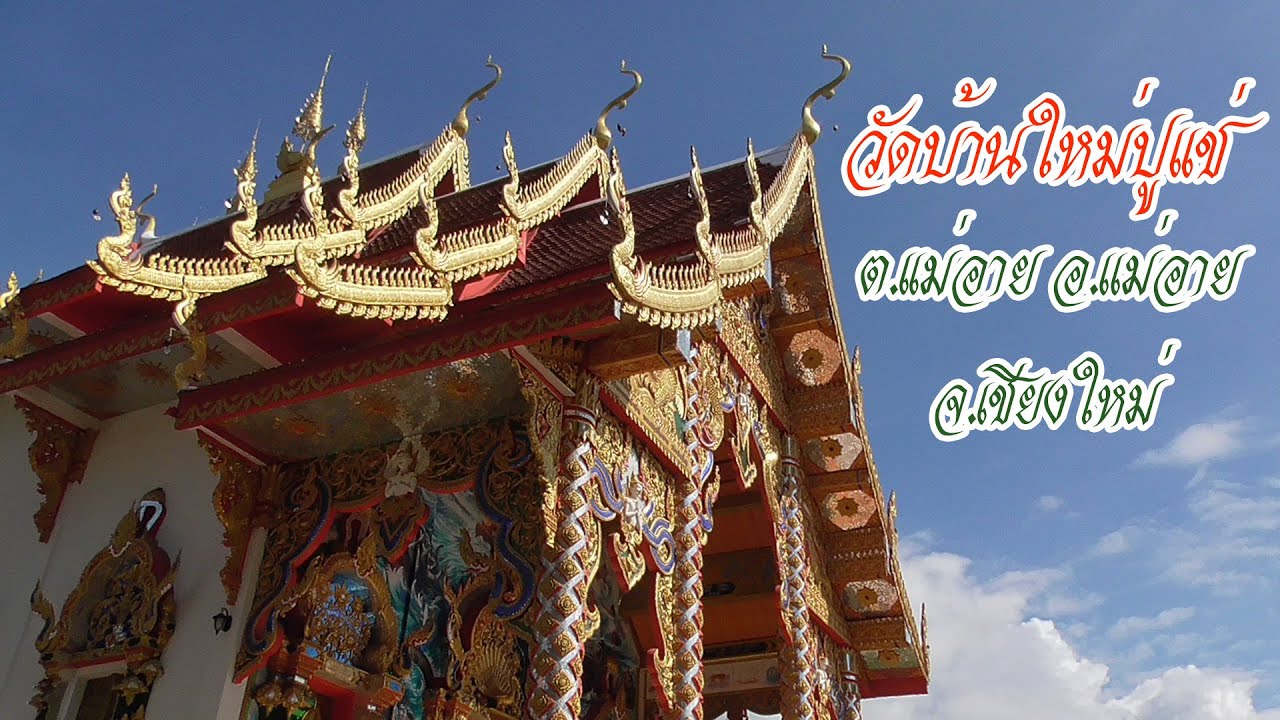
 Click to Access the Navigation Map GPS
Wat Ban Mai Pu Chae Map
Recommend

 Muang Chiang Mai(121)Chom Thong(47)Mae Chaem(25)Chiang Dao(33)Doi Saket(68)Mae Taeng(85)Mae Rim(69)Samoeng(29)Fang(71)Mae Ai(59)Phrao(70)San Pa Tong(103)San Kamphaeng(66)San Sai(73)Hang Dong(74)Hot(32)Doi Tao(22)Omkoi(11)Saraphi(74)Wiang Haeng(15)Chai Prakan(28)Mae Wang(32)Mae On(22)Doi Lo(34)Galyani Vadhana(1)


