
lovethailand home >North Travel Attractions >Chiang Mai Travel Attractions >Mae Ai >Mae Ai > Wat Don Chai (Mae Ai)
TL;DR: Wat Don Chai (Mae Ai) is located at Moo 2, Ban Mae Laeng, Mae Ai Subdistrict, Mae Ai District, Chiang Mai Province, open Daily, hours 08.00 – 17.00.

Wat Don Chai (Mae Ai)
Open Days: Daily
Opening Hours: 08.00 – 17.00
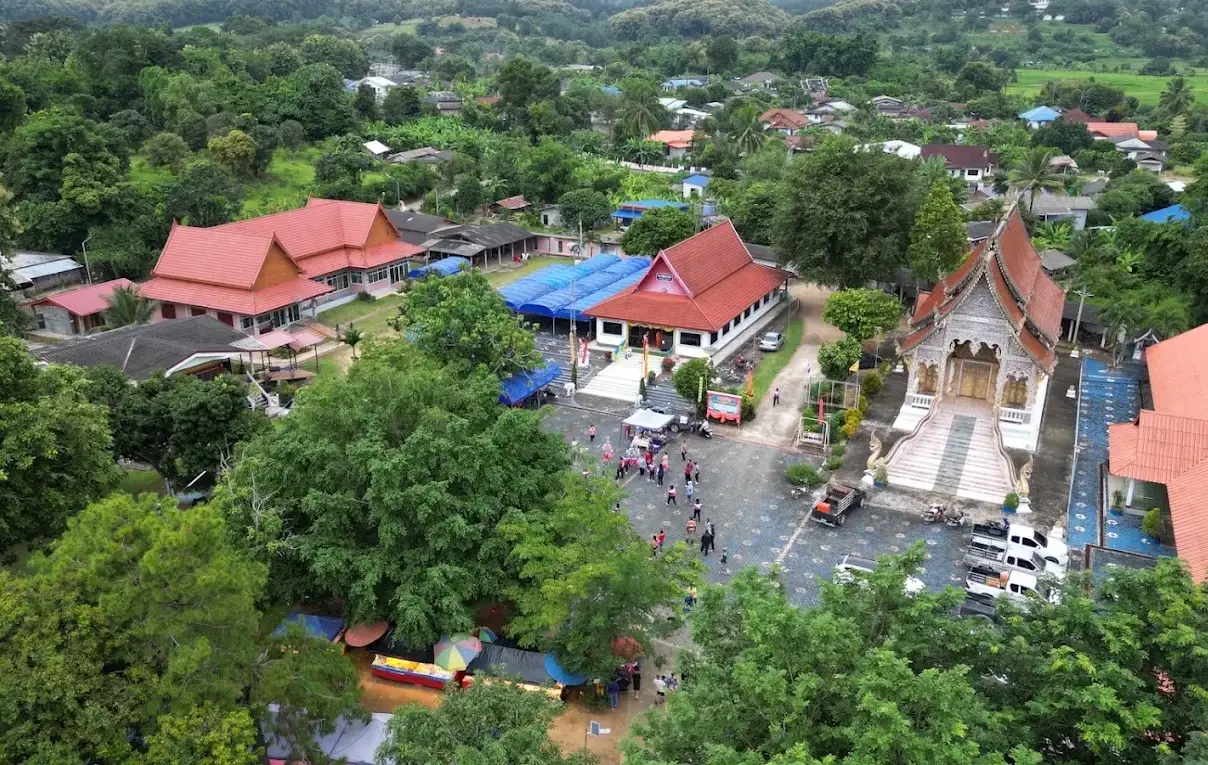
Wat Don Chai (Mae Ai) is a local Buddhist temple in the Maha Nikaya tradition, located in Ban Mae Laeng, Moo 2, Mae Ai Subdistrict, Mae Ai District, Chiang Mai Province. Officially established as a temple in 1876 and granted its royal consecrated boundary on 19 March 2007, Wat Don Chai remains an important religious and community landmark in northern Chiang Mai.
Wat Don Chai is not a large tourist temple built for crowds or commercial sightseeing. Its value lies in its role as a long-standing community temple where local people continue to make merit, gather for Buddhist ceremonies, and maintain the relationship between village life and faith. For travelers who want to see a quieter side of Mae Ai beyond the better-known attractions, this temple offers a meaningful glimpse into local Buddhist culture.
The temple is situated in Mae Ai, a northern district of Chiang Mai connected with travel routes toward Fang, Tha Ton, and Chiang Rai. This makes Wat Don Chai a suitable stop for travelers following the Chiang Mai – Fang – Mae Ai – Tha Ton route, especially those interested in temples, Lanna culture, and slower local travel.
The history of Wat Don Chai dates back to 1876. During that period, temples in northern communities functioned not only as places of worship but also as social centers, learning spaces, and gathering places for villagers. Wat Don Chai therefore reflects the traditional role of a local Lanna temple, where religious life and village identity have been closely connected for generations.
The temple’s royal consecrated boundary, granted in 2007, is an important part of its religious status. In Thai Buddhism, a consecrated boundary is associated with formal monastic ceremonies. This confirms Wat Don Chai’s continuing function as an active temple serving the Buddhist community of Mae Ai.
As a community temple, Wat Don Chai is best appreciated through its atmosphere rather than through grand architecture. Visitors will find a peaceful temple environment, a local religious setting, and a sense of daily village life. It is suitable for merit-making, paying respect to the Buddha, quiet reflection, and understanding how temples continue to support communities in northern Thailand.
The name “Don Chai” carries a local and auspicious tone. In Thai, “don” often refers to slightly raised ground, while “chai” suggests victory or auspicious success. Although no detailed local legend about the name is confirmed, the name fits the pattern of many northern Thai temple names that reflect both landscape and blessing.
For Thai and international travelers, Wat Don Chai is a good stop for those who prefer authentic local places over crowded tourist landmarks. It allows visitors to see a functioning temple that remains connected to its village. The experience is quiet, respectful, and culturally grounded.
According to available temple information, Phra Khru Wiratsarasophon Nanthasaro is associated with the abbotship of Wat Don Chai. In a local temple, the abbot plays a central role in maintaining the temple grounds, guiding religious activities, and supporting the spiritual life of the surrounding community.
The temple is also part of the wider Buddhist and cultural landscape of Mae Ai. In this district, travelers can combine local temples with scenic and cultural attractions such as Wat Tha Ton, the Tha Ton boat pier, Thanathon Orchard, Roi Jai Rak Project, and Fang Hot Spring. This makes Wat Don Chai useful as a small but meaningful stop within a broader northern Chiang Mai itinerary.
Visitors should dress modestly, keep their voices low, and respect the temple as an active place of worship. Since Wat Don Chai is a living community temple rather than a staged tourist site, the best way to visit is with calm attention and respect for monks, local residents, and ongoing religious activities.
The best experience at Wat Don Chai is a slow visit. Rather than looking only for photo spots, travelers should take time to observe the atmosphere of the temple courtyard, the rhythm of village life, and the temple’s role as a spiritual anchor for Mae Ai. The site is especially suitable for travelers interested in Thai Buddhist culture, northern village temples, and local heritage.
Getting There is most convenient by private car. From Chiang Mai city, travel north via Mae Rim, Chiang Dao, and Fang before continuing into Mae Ai District. From Chiang Rai, travelers can approach Mae Ai through the Tha Ton route. Those using public transport can take a bus or van toward Fang or Tha Ton and then use local transport to reach Ban Mae Laeng and the temple.
For a half-day route, Wat Don Chai can be combined with Wat Mae Ai Luang, Wat Tha Ton, and the Tha Ton boat pier. For a full-day itinerary, travelers can continue to Thanathon Orchard, Roi Jai Rak Project, Fang Hot Spring, or Doi Pha Hom Pok National Park. This route brings together local faith, mountain scenery, riverside culture, and rural northern Thai life.
Wat Don Chai is therefore a worthwhile stop for travelers searching for temples in Mae Ai, quiet Buddhist sites in northern Chiang Mai, or cultural stops along the Fang – Mae Ai – Tha Ton route. Its importance lies in its age, its continued religious function, and its connection with the local community since 1876.
| Name | Wat Don Chai (Mae Ai) |
| Location | Moo 2, Ban Mae Laeng, Mae Ai Subdistrict, Mae Ai District, Chiang Mai Province |
| Address | 151 Moo 2, Ban Mae Laeng, Mae Ai Subdistrict, Mae Ai District, Chiang Mai 50280, Thailand |
| Highlights | Long-standing Maha Nikaya community temple established in 1876 and granted its royal consecrated boundary on 19 March 2007 |
| History | Officially established as a temple in 1876 and closely connected with the Ban Mae Laeng and Mae Ai communities |
| Name Origin | The name combines “don,” often referring to raised ground, with “chai,” an auspicious word associated with victory and blessing |
| Distinctive Features | Quiet local temple atmosphere, suitable for merit-making, respectful cultural visits, and learning about community temple life in Mae Ai |
| Travel Information | Best reached by private car via Chiang Mai – Mae Rim – Chiang Dao – Fang – Mae Ai, or from Chiang Rai through the Tha Ton route; local transport is needed for the final section to Ban Mae Laeng |
| Current Status | Active community temple and Buddhist site in Mae Ai Subdistrict |
| Open Days | Daily |
| Opening Hours | 08.00 – 17.00 |
| Facilities | Parking area |
| Main Areas / Zones | Temple grounds, religious activity area, and community merit-making space |
| Abbot / Caretaker | Phra Khru Wiratsarasophon Nanthasaro |
| Nearby Tourist Attractions | 1. Wat Mae Ai Luang, about 2 km 2. Wat Tha Ton Royal Temple, about 15 km 3. Tha Ton Boat Pier, about 16 km 4. Thanathon Orchard, about 16 km 5. Roi Jai Rak Project, about 23 km 6. Fang Hot Spring, about 32 km |
| Nearby Restaurants | 1. Chonglak Khao Man Kai Ton, about 2 km, Tel. 095-687-8225 2. Mae Amara Cooked-to-Order Restaurant, about 5 km, Tel. 093-264-6864 3. Kuai Tiao Chaika Sam Yaek Hua Khua, about 12 km, Tel. 093-043-8729 4. Sunshine Cafe Thaton, about 16 km, Tel. 094-619-3599 5. Sane Chai Nam Thaton, about 16 km, Tel. 087-177-1727 |
| Nearby Accommodations | 1. Thaton Hill Resort, about 14 km, Tel. 053-053669 2. Saranya River House, about 16 km, Tel. 053-053672 3. Areeya Phuree Resort, about 16 km, Tel. 053-053658 4. Thaton Beach Resort, about 16 km 5. Maekok River Village Resort, about 18 km, Tel. 053-053628 |
Frequently Asked Questions (FAQ)
Q: Where is Wat Don Chai (Mae Ai) located?
A: Wat Don Chai is located in Ban Mae Laeng, Moo 2, Mae Ai Subdistrict, Mae Ai District, Chiang Mai Province.
Q: Why is Wat Don Chai important?
A: It is a long-standing Maha Nikaya community temple established in 1876 and granted its royal consecrated boundary on 19 March 2007.
Q: Is Wat Don Chai open every day?
A: Yes. The temple is open daily from 08.00 to 17.00.
Q: What is the main highlight of Wat Don Chai?
A: Its main highlight is its role as an old community temple with a quiet local atmosphere and a strong connection to Buddhist life in Mae Ai.
Q: How can travelers get to Wat Don Chai?
A: The most convenient way is by private car via Chiang Mai, Mae Rim, Chiang Dao, Fang, and Mae Ai, or from Chiang Rai through the Tha Ton route.
Q: What kind of travelers will enjoy visiting Wat Don Chai?
A: It is suitable for travelers interested in local temples, Lanna community life, quiet Buddhist sites, and cultural routes in northern Chiang Mai.
Q: What nearby attractions can be visited with Wat Don Chai?
A: Nearby attractions include Wat Mae Ai Luang, Wat Tha Ton Royal Temple, Tha Ton Boat Pier, Thanathon Orchard, Roi Jai Rak Project, and Fang Hot Spring.
 Category: ●Places of Worship
 Group: ●Temple
Last Update : 2 WeekAgo
 Last Update : 2 WeekAgo
 Click to Access the Navigation Map GPS
Wat Don Chai (Mae Ai) Map
Recommend

 Muang Chiang Mai(121)Chom Thong(47)Mae Chaem(25)Chiang Dao(33)Doi Saket(68)Mae Taeng(85)Mae Rim(69)Samoeng(29)Fang(71)Mae Ai(59)Phrao(70)San Pa Tong(103)San Kamphaeng(66)San Sai(73)Hang Dong(73)Hot(32)Doi Tao(22)Omkoi(11)Saraphi(74)Wiang Haeng(15)Chai Prakan(28)Mae Wang(32)Mae On(22)Doi Lo(33)Galyani Vadhana(1)


