
lovethailand home >North Travel Attractions >Chiang Mai Travel Attractions >Mae Ai >Mae Sao > Wat Mok Pao
TL;DR: Wat Mok Pao is located at Village No. 10, Ban Mok Pao, Mae Sao Subdistrict, Mae Ai District, Chiang Mai Province, open Open As An Active Community Temple For Worship, Merit-Making, And Buddhist.

Wat Mok Pao
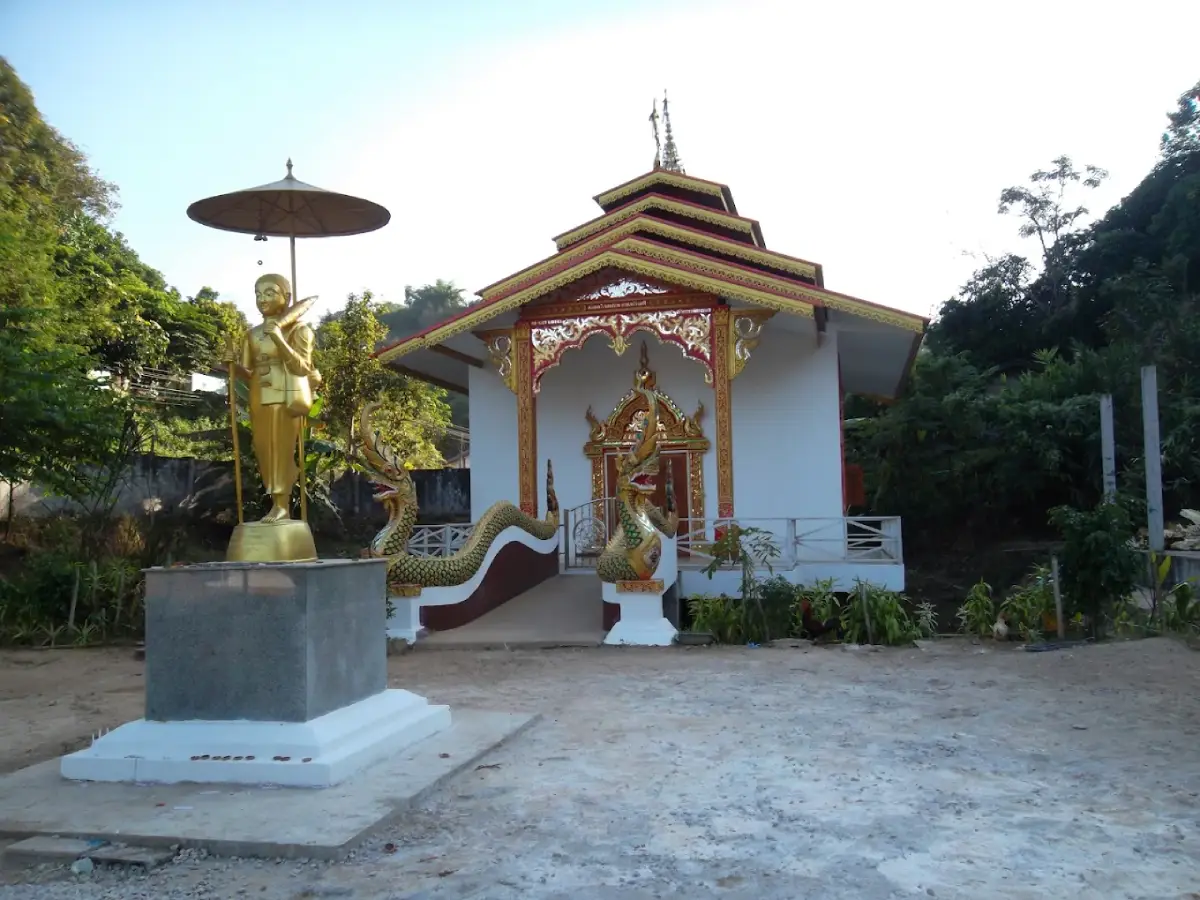
Open Days: Open As An Active Community Temple For Worship, Merit-Making, And Buddhist Activities
Recommended Visiting Time: Daytime
Wat Mok Pao is located in Village No. 10, Ban Mok Pao, Mae Sao Subdistrict, Mae Ai District, Chiang Mai Province. It is a private Buddhist temple under the Mahanikaya order and serves as a local community temple for worship, merit-making, and Buddhist activities. The temple is closely connected with Ban Mok Pao, a satellite village of the Mae Sao Mueang Nong community, and with the Tai Yai cultural landscape of Mae Sao. Although publicly available information about specific buildings, Buddha images, or named sacred objects inside the temple is limited, Wat Mok Pao is important as a living village temple within the religious and community network of Mae Sao.
Wat Mok Pao is suitable for travelers who want a quiet community temple visit rather than a large, crowded tourist attraction. The temple stands within a rural landscape connected with streams, farmland, local roads, and the wider Mae Sao community. Visitors can come to make merit, pay respect, and understand a more local side of Mae Ai before continuing to Wat Phra That Doi Nam Khang, Wat Mueang Nong, Wat Mae Sao, Wat Tha Ton, Thanathon Orchard, Doi Pu Muen, and the riverside rest area of Ban Mok Pao.
The context of Wat Mok Pao is best understood through the history of Mae Sao Mueang Nong and Ban Mok Pao. Mae Sao Mueang Nong is a community where most residents are Tai Yai people who migrated from Myanmar and settled in Mae Sao. The community lies near the Mae Sao stream, locally called Nam Sao, and is located only a few kilometers from Mae Ai town. The surrounding area has long been valued for farming, water resources, and village settlement.
Ban Mok Pao was formed during the expansion of the Mae Sao Mueang Nong community. It developed as a satellite village of Mae Sao Mueang Nong during the period around the Second World War. This makes Ban Mok Pao more than a modern settlement name. It reflects the growth of local communities, migration history, and the building of new village life in Mae Sao. As the community developed, the temple became an important religious space where villagers could gather, make merit, and preserve Buddhist practice.
The name Mok Pao carries a strong image of nature and local atmosphere. Ban Mok Pao lies in Village No. 10 of Mae Sao Subdistrict, close to the Mae Sao stream and Mae Sao weir. The area is associated with water, agriculture, greenery, and quiet rural scenery. Travelers entering this area often notice the slower village rhythm, natural surroundings, and the less commercial character of the place compared with major tourist sites.
Wat Mok Pao is also geographically and culturally connected with Wat Mueang Nong and Wat Phra That Doi Nam Khang. Wat Mueang Nong reflects the Tai Yai community identity of Ban Mueang Nong, while Wat Phra That Doi Nam Khang is a hill temple and meditation site in the same Village No. 10 area. Wat Mok Pao therefore stands within a local religious network that includes community temples, meditation sites, and hilltop sacred places.
As a private Mahanikaya temple, Wat Mok Pao reflects the role of a local village temple in northern Thailand. Such temples are usually built and supported by villagers rather than functioning as large royal temples. Their value lies in the way they support everyday Buddhist life: Buddhist holy days, merit-making, Kathin, robe-offering ceremonies, Buddhist Lent, the end of Lent, family merit activities, and village gatherings.
The most important thing to appreciate at Wat Mok Pao is its atmosphere as a real community temple. Visitors should not judge it by the standards of large urban temples in Chiang Mai. Its value lies in its quietness, local setting, relationship with villagers, and role in the life of Ban Mok Pao. The temple reflects the religious life of a small community rather than the scale of a major tourist landmark.
The worship area inside the temple is suitable for paying respect, making merit, and calming the mind. Visitors should dress modestly, speak softly, and respect monks and local residents. Wat Mok Pao is an active village temple, so visitors should avoid entering monastic or private areas without permission and should prioritize respectful behavior over photography or casual sightseeing.
Wat Mok Pao serves Ban Mok Pao as a spiritual center. Local residents use the temple for Buddhist activities and community religious events. The temple helps connect monks, villagers, families, and community networks through merit-making and religious practice. This is one of the core roles of a village temple in northern Thailand.
In the wider Lanna and Tai Yai cultural context, Wat Mok Pao reflects the cultural diversity of Mae Sao. Village No. 10 is connected with Tai Yai settlement history, migration, and the development of new communities in Mae Ai. Temples in this landscape are not only places of worship; they also carry memory, identity, and continuity for local communities.
Ban Mok Pao also has a natural character that makes the area pleasant for a slow visit. The route to Ban Mok Pao can be reached through Mae Sao Soi 4, passing Mae Sao weir, with signs along the way. The village is known as a quiet riverside place where visitors can sit, rest, and enjoy the sound of flowing water. When combined with a visit to Wat Mok Pao, the area offers both local faith and nature in the same trip.
Mae Sao weir is also part of the local landscape. The Fang River Basin development project in 1975 led to the construction of Mae Sao weir to distribute water through Mae Sao Subdistrict. This water system helped support agriculture and village life. Wat Mok Pao therefore sits within a landscape where temple, village, water, farming, and local roads are closely connected.
Visitors interested in local history should understand Wat Mok Pao together with Mae Sao Mueang Nong. The larger community history includes migration, farming, cotton cultivation, road building, and water management. These details help explain why small village temples matter: they are part of the process of building settlement, community stability, and spiritual life.
Wat Mok Pao is suitable for a cultural route with Wat Mueang Nong and Wat Phra That Doi Nam Khang. Wat Mueang Nong represents Tai Yai community history, while Wat Phra That Doi Nam Khang is a hilltop meditation temple. Together with Wat Mok Pao, these sites show the religious and cultural character of Village No. 10 in Mae Sao.
Travelers can also extend the route to other temples in Mae Sao, including Wat Mae Sao, Wat Rattanawas, Wat Si Don Kaeo, Wat Si Bun Rueang, Wat Panja Kana Nusorn, and Wat Si Wiang. Each temple has a different character. Wat Mae Sao has a large temple gateway and shaded grounds. Wat Rattanawas is known for an ancient golden teak Buddha image. Wat Si Don Kaeo has a two-storey ordination hall and murals of local life. Wat Si Wiang is linked with cultural learning activities.
Beyond Mae Sao, Wat Mok Pao can be connected with major attractions in Mae Ai and Tha Ton, such as Wat Tha Ton, Wat Phra That Sob Fang, Thanathon Orchard, Wiang Malika, Doi Pu Muen, Pu Muen Waterfall, Ban Lek Nai Pa Yai, and Hom Phaen Din Vineyard. This route is best enjoyed slowly, combining temples, local communities, mountain scenery, streams, agriculture, and local food.
Getting There is easiest by private car. Travelers can use the Fang–Mae Ai–Tha Ton route to reach Mae Sao Subdistrict, then continue into Ban Mok Pao, Village No. 10. From Chiang Mai city, the route heads north through Mae Rim, Mae Taeng, Chiang Dao, Chai Prakan, and Fang before reaching Mae Ai. Because the distance is long, the trip is better planned as a multi-stop or overnight journey in the Mae Ai and Tha Ton area.
Travelers starting from Fang or Mae Ai will reach Wat Mok Pao more conveniently. The Ban Mok Pao area is connected with Mae Sao local roads and the route toward Tha Ton and the Kok River. During the rainy season, travelers should drive carefully because local roads near streams, weirs, and slopes can be affected by heavy rain or landslides. Daytime travel and route checking are recommended.
Food and accommodation options are more concentrated around Tha Ton and Mae Ai, while Ban Mok Pao itself offers a quieter local atmosphere and farmstay-style lodging options. Riverside restaurants and resort restaurants near Tha Ton are practical stops after visiting the temple. For overnight stays, the Tha Ton area gives convenient access to the Kok River and onward routes toward Chiang Rai, Doi Mae Salong, Fang, and other northern destinations.
In summary, Wat Mok Pao is a Mahanikaya community temple in Village No. 10, Ban Mok Pao, Mae Sao Subdistrict, Mae Ai District, Chiang Mai Province. It is linked with Ban Mok Pao, a satellite village of Mae Sao Mueang Nong, and with the Tai Yai cultural landscape of Mae Sao. The temple is suitable for travelers who want a quiet local temple, merit-making, village history, and a route connected with Wat Phra That Doi Nam Khang, Wat Mueang Nong, Ban Mok Pao riverside areas, and the wider Mae Ai–Tha Ton travel corridor.
| Name | Wat Mok Pao |
| Location | Village No. 10, Ban Mok Pao, Mae Sao Subdistrict, Mae Ai District, Chiang Mai Province |
| Address | Village No. 10, Mae Sao Subdistrict, Mae Ai District, Chiang Mai 50280, Thailand |
| Temple Type | Private Buddhist temple under the Mahanikaya order |
| Local Context | A community temple in Ban Mok Pao, a satellite village of Mae Sao Mueang Nong with Tai Yai cultural connections |
| Distinctive Features | A quiet Village No. 10 community temple near Ban Mok Pao, the Mae Sao stream, Mae Sao weir, and the route to Wat Phra That Doi Nam Khang |
| Sacred Objects / Key Areas | Worship area and community religious space for Ban Mok Pao residents |
| Main Areas | Worship area, temple grounds, and space for community Buddhist activities |
| Suitable For | Merit-making, quiet temple visits, learning about Ban Mok Pao, and connecting with a Mae Sao temple route |
| Travel Information | Best reached by private car via the Fang–Mae Ai–Tha Ton route into Mae Sao Subdistrict and Ban Mok Pao |
| Current Status | A community temple in Mae Sao that appears in tourism and temple listings for Mae Ai District |
| Open Days | Open as a community temple for worship, merit-making, and Buddhist activities |
| Recommended Visiting Time | Daytime |
| Related Traditions | Buddhist holy days, Buddhist Lent, the end of Lent, Kathin, robe-offering ceremonies, and Ban Mok Pao community merit-making activities |
| Local Administrative Contact | Mae Sao Subdistrict Administrative Organization, Tel. 053-054100 |
| Nearby Tourist Attractions | 1. Ban Mok Pao Riverside Area, about 1 km 2. Wat Phra That Doi Nam Khang, about 3–5 km 3. Wat Mueang Nong, about 3–5 km 4. Wat Mae Sao, about 8 km 5. Wat Tha Ton, about 15 km 6. Thanathon Orchard, about 18 km 7. Doi Pu Muen, about 30 km |
| Nearby Restaurants | 1. Tha Ton River View, about 15 km, Tel. 053-459-289, 053-373-173-5, 093-256-7969 2. Tha Ton Hill, about 14 km, Tel. 053-053-669 3. Tha Ton Chom Chan Cafe & Restaurant Homestay, about 15 km, Tel. 088-435-4467 4. Khun Mai Baan Suan Resort, about 15 km, Tel. 053-053-551, 088-952-6196, 081-885-3564 5. Hom Phaen Din Vineyard Restaurant, about 22 km, Tel. 080-860-0368 |
| Nearby Accommodations | 1. GumbieVillage & FarmStay, Ban Mok Pao, about 1 km 2. Thaton River View Resort, about 15 km, Tel. 053-373-174 3. Thaton Chalet, about 15 km, Tel. 053-373-155 4. Apple House Resort, about 15 km, Tel. 053-373-144 5. Thaton Hill Resort, about 14 km, Tel. 053-053-669 6. Thaton Garden Resort, about 15 km, Tel. 053-053-686 |
Frequently Asked Questions (FAQ)
Q: Where is Wat Mok Pao located?
A: Wat Mok Pao is located in Village No. 10, Ban Mok Pao, Mae Sao Subdistrict, Mae Ai District, Chiang Mai Province.
Q: What type of temple is Wat Mok Pao?
A: Wat Mok Pao is a private Buddhist temple under the Mahanikaya order and serves the Ban Mok Pao community.
Q: Why is Wat Mok Pao important?
A: It is a spiritual center for Ban Mok Pao and is connected with the history of Ban Mok Pao as a satellite village of Mae Sao Mueang Nong.
Q: What kind of travelers is Wat Mok Pao suitable for?
A: It is suitable for travelers who want a quiet local temple visit, merit-making, and a deeper understanding of Ban Mok Pao and Mae Sao community life.
Q: Is there confirmed public information about the abbot of Wat Mok Pao?
A: No clearly confirmed public source was found for the current abbot, so the abbot’s name is not included in the article.
Q: How can travelers reach Ban Mok Pao?
A: Travelers can enter through Mae Sao Soi 4, pass Mae Sao weir, and follow local signs toward Ban Mok Pao.
Q: What nearby places can be visited with Wat Mok Pao?
A: Nearby places include Wat Phra That Doi Nam Khang, Wat Mueang Nong, Wat Mae Sao, Wat Tha Ton, Thanathon Orchard, Doi Pu Muen, and the Ban Mok Pao riverside area.
 Category: ●Places of Worship
 Group: ●Temple
Last Update : 22 HourAgo
 Last Update : 22 HourAgo
 Click to Access the Navigation Map GPS
 Muang Chiang Mai(121)Chom Thong(47)Mae Chaem(25)Chiang Dao(33)Doi Saket(68)Mae Taeng(85)Mae Rim(69)Samoeng(29)Fang(71)Mae Ai(59)Phrao(70)San Pa Tong(105)San Kamphaeng(66)San Sai(73)Hang Dong(74)Hot(32)Doi Tao(22)Omkoi(11)Saraphi(74)Wiang Haeng(15)Chai Prakan(28)Mae Wang(32)Mae On(22)Doi Lo(34)Galyani Vadhana(1)


