
lovethailand home >North Travel Attractions >Chiang Mai Travel Attractions >Mae Ai >Mae Sao > Wat Phra That Doi Nam Khang
TL;DR: Wat Phra That Doi Nam Khang is located at Ban Mueang Nong, Village No. 10, Mae Sao Subdistrict, Mae Ai District, Chiang Mai Province, open Open As An Active Community Temple For Worship, Merit-Making, And Dhamma.
Wat Phra That Doi Nam Khang
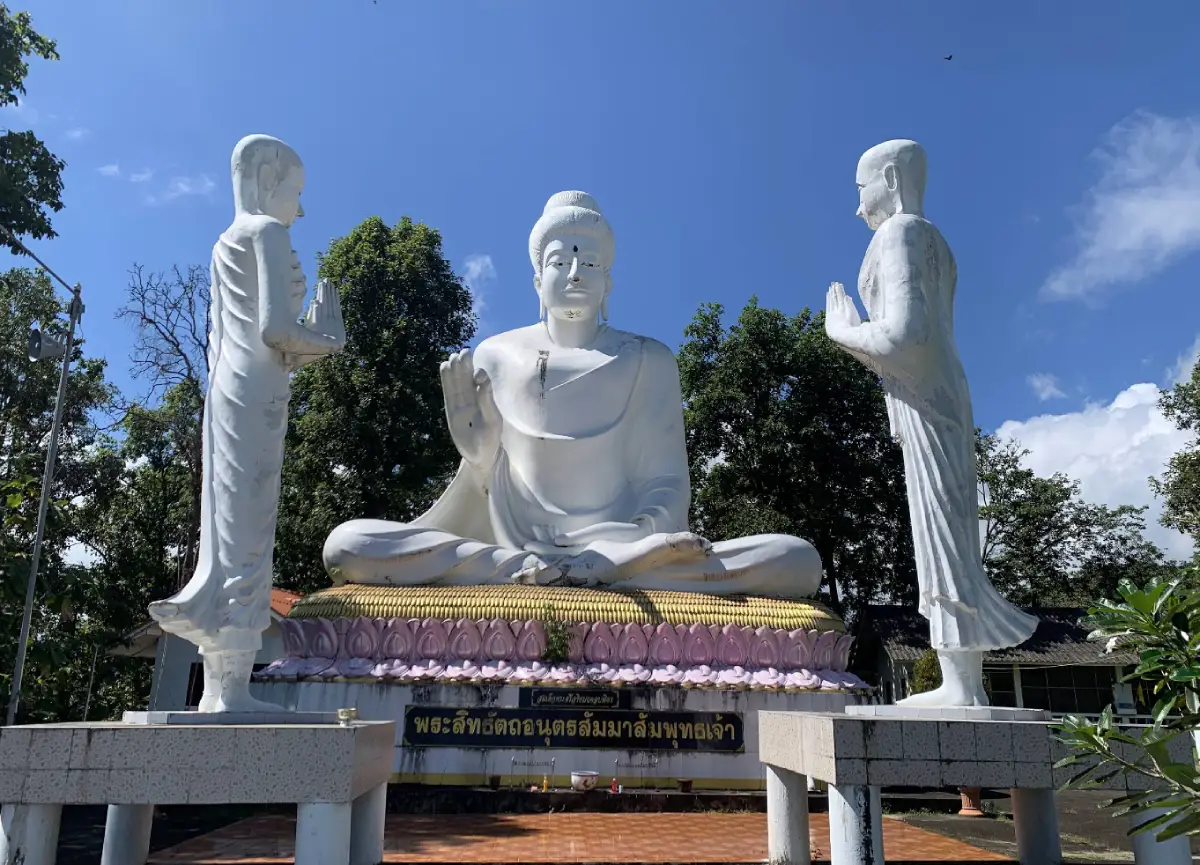
Open Days: Open As An Active Community Temple For Worship, Merit-Making, And Dhamma Practice
Recommended Visiting Time: Daytime
Wat Phra That Doi Nam Khang is located on Khao Nang Lae in Village No. 10, Ban Mueang Nong, Mae Sao Subdistrict, Mae Ai District, Chiang Mai Province. It is a private Buddhist temple under the Mahanikaya order, set within a large temple area of about 275 rai. The temple was first built in 1917 and was formally established on 17 June 1937. It is an important religious and meditation site for Ban Mueang Nong and Mae Sao Subdistrict, known for its old hilltop chedi, ordination hall, stairway leading up to the sacred chedi, bell tower, Dhamma practice areas, monks’ quarters, and peaceful forested surroundings.
Wat Phra That Doi Nam Khang has a different atmosphere from many village temples in Mae Sao because it stands on a hill about 2 kilometers from the village. The setting is quiet, natural, and suitable for Buddhist practice. Visitors can experience a hilltop temple with trees, forest shade, walking meditation areas, practice grounds, and viewpoints overlooking the Mae Sao and Mae Ai landscape. This makes the temple suitable for travelers who want a peaceful temple visit, meditation, Buddhist worship, and a deeper connection with nature.
The history of Wat Phra That Doi Nam Khang began in 1917, before it was formally established as a temple on 17 June 1937. During this period, communities in Mae Sao and Mae Ai were developing around village settlements, farmland, and hill landscapes. A hill temple like this had special meaning for the community because it served as a sacred place, a spiritual refuge, and a quiet environment for monks and laypeople to practice Dhamma. Wat Phra That Doi Nam Khang is therefore more than a scenic temple. It is a long-standing Buddhist practice site of Mae Sao.
The abbots in the temple’s history show its continuous development. Phra Khru Thammarot served as abbot from 1954 to 1957, followed by Phra Thawi Charuwanno from 1957 to 1958. Phra Athikan Ueafuea Thanatinno, also known by the ecclesiastical title Phra Khru Thapanakit Withan, became an important abbot in the temple’s development from 1970 onward. He was known as a meditation monk who taught calmness practice and insight meditation. He also helped protect the forest, preserve the trees, and develop key monastic structures within the temple. The current abbot listed in the most recent temple activity information is Phra Khru Samu Phunsawat Thitasilo.
Phra Khru Thapanakit Withan played an especially important role in shaping the identity of Wat Phra That Doi Nam Khang. His work did not focus only on temple construction. It also emphasized the preservation of forest, trees, and a quiet environment suitable for meditation. The development of the ordination hall, stairway to the chedi, bell tower, Lanna Buddhist park area, Abhidhamma school, Dhamma practice ground, and monks’ quarters helped make the temple a complete religious, educational, and meditation center.
The hilltop Phra That Doi Nam Khang is the spiritual heart of the temple. It stands on the upper area of the hill where visitors can see the surrounding landscape. A chedi on a hilltop carries strong symbolic meaning in northern Buddhist culture, representing faith, elevation, reverence, and the movement from everyday life toward a sacred space. Visitors who go up to the chedi experience not only a place of worship, but also the quiet power of nature and landscape.
The ordination hall is one of the temple’s major sacred buildings. It supports important Buddhist ceremonies and monastic activities. At a hill temple like this, the ordination hall is not only an architectural structure. It is a place where the Sangha, lay devotees, and the local community meet through Buddhist faith. Visitors should enter the area respectfully, dress modestly, speak softly, and avoid disturbing monks or practitioners.
The stairway leading up to Phra That Doi Nam Khang is another important element of the temple. It guides visitors from the lower area toward the sacred hilltop chedi. Walking upward creates a gradual transition from ordinary surroundings to a place of worship and reflection. Visitors should walk carefully, especially during rain or when the steps are wet, and should maintain a calm attitude before reaching the chedi area.
The bell tower of Wat Phra That Doi Nam Khang is particularly distinctive because its bell was made from a bomb casing from the Second World War. The sound is said to carry farther than an ordinary bell. This gives the temple a unique historical layer. An object once connected with war has been transformed into a Buddhist sound instrument, turning memory of violence into a signal of mindfulness, peace, and religious life.
The Dhamma practice ground is one of the temple’s strongest features. Visitors interested in meditation can use the peaceful surroundings for sitting meditation, walking meditation, and insight practice. The forested environment, quiet air, and distance from busy village activity make the temple suitable for those who want to calm the mind and return attention to the present moment.
Wat Phra That Doi Nam Khang also has a Buddhist Sunday learning center. This expands the temple’s role beyond worship and meditation. It helps local residents, children, students, and laypeople learn Buddhist teachings, religious manners, mindfulness, compassion, gratitude, and responsible community life. In this way, the temple supports both individual spiritual practice and community Buddhist education.
The temple’s Abhidhamma school, at the junior Abhidhamma learning level, adds another important educational dimension. Abhidhamma study involves a deeper understanding of mind, mental factors, form, and liberation. The presence of such learning at the temple shows that Wat Phra That Doi Nam Khang connects worship, Dhamma study, and meditation practice in one place.
The Lanna Buddhist park area further strengthens the temple’s identity as a religious and contemplative space. It reflects the idea of arranging a Buddhist landscape within a Lanna cultural setting, where faith, nature, and practice are connected. Walking through the temple grounds shows that the temple has developed not only buildings, but also an environment designed for quiet learning and inner practice.
The monks’ quarters and other monastic structures support the residence and practice of monks. A forested hill temple with wide grounds is especially suitable for simple monastic life and meditation. The presence of resident monks and ongoing Buddhist activities shows that the temple remains active, not merely a sightseeing spot. Visitors should respect monastic privacy and avoid entering residential areas without permission.
Wat Phra That Doi Nam Khang plays an important role for Ban Mueang Nong and Mae Sao Subdistrict. It is a place for worship, merit-making, Dhamma study, meditation, Buddhist Lent activities, the end of Lent, Kathin, robe-offering ceremonies, and community merit-making. The temple also connects people in Mae Ai and Fang with teachers of meditation and Dhamma practice.
The setting of Ban Mueang Nong gives the temple additional cultural meaning. Ban Mueang Nong is a community in Village No. 10 of Mae Sao Subdistrict with connections to Tai Yai or Shan communities who migrated from the Kengtung and Myanmar side. The community carries memories of older homelands, agricultural life, and Buddhist faith. Wat Phra That Doi Nam Khang, standing on the hill above the community, connects nature, Buddhism, and local identity in a powerful way.
Key things to see and experience at Wat Phra That Doi Nam Khang include the hilltop chedi, ordination hall, stairway to the chedi, bell tower with the Second World War bomb-casing bell, Lanna Buddhist park area, Abhidhamma school, Dhamma practice ground, monks’ quarters, and the forested temple atmosphere. Visitors who want to take photos should avoid disturbing practitioners, while those who want to meditate should choose appropriate areas and maintain silence.
Wat Phra That Doi Nam Khang is best suited to travelers interested in hill temples, meditation temples, and peaceful Buddhist environments. It is not a place to rush through in a few minutes. Its value is best understood by walking slowly, paying respect at the chedi, observing the quiet surroundings, listening to the natural sounds, and allowing time for reflection.
Proper etiquette is important. Visitors should dress modestly, speak softly, avoid playing loud music, avoid entering monastic or private areas without permission, and avoid touching sacred objects without approval. Since the temple is also a meditation site, visitors should be especially careful not to disturb monks, practitioners, or local worshippers.
Wat Phra That Doi Nam Khang can be included in a temple route through Mae Sao Subdistrict. Nearby temples include Wat Mueang Nong, Wat Mae Sao, Wat Rattanawas, Wat Si Don Kaeo, Wat Si Bun Rueang, Wat Panja Kana Nusorn, and Wat Si Wiang. These temples together show different sides of Mae Sao: Tai Yai community temples, large village temples, teak Buddha art, murals, Buddhist art traditions, and community learning spaces.
Beyond Mae Sao, the temple can connect with major attractions in Mae Ai and Tha Ton, such as Wat Tha Ton, Wat Phra That Sob Fang, Thanathon Orchard, Wiang Malika, and Doi Pu Muen. Wat Tha Ton is a well-known riverside temple near the Kok River. Thanathon Orchard is a popular agricultural attraction. Wiang Malika is connected with local Mae Ai history, while Doi Pu Muen is known for mountain scenery, coffee, tea, and highland community life. Including Wat Phra That Doi Nam Khang in this route adds faith, meditation, nature, community, and local food to one journey.
Getting There is easiest by private car. Travelers can use the Fang–Mae Ai–Tha Ton route to reach Mae Sao Subdistrict and Ban Mueang Nong, then continue up Khao Nang Lae to the temple. From Chiang Mai city, the route heads north through Mae Rim, Mae Taeng, Chiang Dao, Chai Prakan, and Fang before reaching Mae Ai. Because the distance is long, the trip is best planned as an overnight or multi-stop journey in the Fang, Mae Ai, and Tha Ton area.
Travelers starting from Fang or Mae Ai will reach the temple more conveniently. Since the temple is on a hill, drivers should check the vehicle condition and drive carefully, especially in rainy weather or when the road is wet. Traveling during daylight, preparing the route in advance, and allowing extra time will make the visit safer and smoother.
Food and accommodation options are more concentrated around Tha Ton and Mae Ai than directly beside the temple. Riverside restaurants and resort restaurants near Tha Ton are practical stops after visiting the temple. For overnight stays, the Tha Ton area offers convenient access to the Kok River and onward routes toward Chiang Rai, Doi Mae Salong, Fang, and other northern destinations.
In summary, Wat Phra That Doi Nam Khang is a hilltop temple on Khao Nang Lae in Ban Mueang Nong, Mae Sao Subdistrict, Mae Ai District, Chiang Mai Province. It was built in 1917 and formally established on 17 June 1937, with a temple area of about 275 rai. Its main highlights include the old hilltop chedi, scenic natural surroundings, ordination hall, stairway to the chedi, bomb-casing bell from the Second World War, Dhamma practice ground, Abhidhamma school, Buddhist Sunday learning center, and peaceful forest atmosphere. Travelers interested in meditation temples, sacred hilltop sites, and quiet Buddhist routes in Mae Ai should include Wat Phra That Doi Nam Khang as a meaningful stop in Mae Sao.
| Name | Wat Phra That Doi Nam Khang |
| Location | Ban Mueang Nong, Village No. 10, Mae Sao Subdistrict, Mae Ai District, Chiang Mai Province |
| Address | 142 Moo 10, Mae Sao Subdistrict, Mae Ai District, Chiang Mai 50280, Thailand |
| Setting | Khao Nang Lae, Ban Mueang Nong, Mae Sao Subdistrict |
| Area Reference Coordinates | 20.014531, 99.264425 |
| Temple Type | Private Buddhist temple under the Mahanikaya order |
| History | Built in 1917 and formally established as a temple on 17 June 1937 |
| Temple Area | About 275 rai |
| Current Abbot | Phra Khru Samu Phunsawat Thitasilo |
| Important Historical Abbots | Phra Khru Thammarot, Phra Thawi Charuwanno, Phra Athikan Ueafuea Thanatinno / Phra Khru Thapanakit Withan |
| Highlights | Hilltop Phra That Doi Nam Khang, ordination hall, stairway to the chedi, bomb-casing bell from the Second World War, Lanna Buddhist park area, Abhidhamma school, meditation ground, and shaded natural surroundings |
| Main Buildings / Areas | Ordination hall, stairway to the chedi, bell tower, Lanna Buddhist park area, junior Abhidhamma school, Dhamma practice ground, monks’ quarters, and forested temple area |
| Sacred Objects / Key Evidence | Phra That Doi Nam Khang on the hilltop and the temple’s worship areas |
| Distinctive Features | A hill temple with strong meditation practice, shaded natural surroundings, scenic views, and a central role in the Buddhist life of Ban Mueang Nong and Mae Sao |
| Travel Information | Best reached by private car via the Fang–Mae Ai–Tha Ton route into Mae Sao Subdistrict and Ban Mueang Nong, then continuing up Khao Nang Lae to the temple |
| Current Status | An active temple/monastic site with resident monks and Buddhist activities |
| Open Days | Open as a community temple for worship, merit-making, and Dhamma practice |
| Recommended Visiting Time | Daytime |
| Temple Phone | 053-856-130 |
| Related Traditions | Buddhist holy days, Buddhist Lent, the end of Lent, Kathin, robe-offering ceremonies, Dhamma practice activities, and Buddhist Sunday learning activities |
| Local Administrative Contact | Mae Sao Subdistrict Administrative Organization, Tel. 053-054100 |
| Nearby Tourist Attractions | 1. Wat Mueang Nong, about 3 km 2. Wat Mae Sao, about 7 km 3. Wat Rattanawas, about 10 km 4. Wiang Malika, about 12 km 5. Wat Tha Ton, about 15 km 6. Thanathon Orchard, about 18 km 7. Doi Pu Muen, about 30 km |
| Nearby Restaurants | 1. Tha Ton River View, about 15 km, Tel. 053-459-289, 053-373-173-5, 093-256-7969 2. Tha Ton Hill, about 14 km, Tel. 053-053-669 3. Tha Ton Chom Chan Cafe & Restaurant Homestay, about 15 km, Tel. 088-435-4467 4. Khun Mai Baan Suan Resort, about 15 km, Tel. 053-053-551, 088-952-6196, 081-885-3564 5. Hom Phaen Din Vineyard Restaurant, about 22 km, Tel. 080-860-0368 |
| Nearby Accommodations | 1. Thaton River View Resort, about 15 km, Tel. 053-373-174 2. Thaton Chalet, about 15 km, Tel. 053-373-155 3. Apple House Resort, about 15 km, Tel. 053-373-144 4. Thaton Hill Resort, about 14 km, Tel. 053-053-669 5. Thaton Garden Resort, about 15 km, Tel. 053-373-154 |
Frequently Asked Questions (FAQ)
Q: Where is Wat Phra That Doi Nam Khang located?
A: Wat Phra That Doi Nam Khang is located on Khao Nang Lae in Village No. 10, Ban Mueang Nong, Mae Sao Subdistrict, Mae Ai District, Chiang Mai Province.
Q: What is the history of Wat Phra That Doi Nam Khang?
A: The temple was built in 1917 and formally established on 17 June 1937. It is a hilltop temple with an important role in worship and meditation practice in Mae Sao.
Q: Who is the current abbot of Wat Phra That Doi Nam Khang?
A: The current abbot is Phra Khru Samu Phunsawat Thitasilo. Phra Khru Thapanakit Withan is an important historical abbot known for temple development and meditation teaching.
Q: What makes Wat Phra That Doi Nam Khang distinctive?
A: Its highlights include the hilltop chedi, ordination hall, stairway to the chedi, Second World War bomb-casing bell, Dhamma practice ground, and peaceful forested surroundings.
Q: What kind of travelers is Wat Phra That Doi Nam Khang suitable for?
A: It is suitable for travelers who want to pay respect at a sacred hilltop chedi, make merit, practice meditation, walk meditation, and experience a quiet natural temple in Mae Ai.
Q: What Dhamma practice activities are associated with the temple?
A: The temple has areas for sitting meditation, walking meditation, Dhamma practice, and insight meditation, along with a Buddhist Sunday learning center and an Abhidhamma school.
Q: What nearby attractions can be visited with Wat Phra That Doi Nam Khang?
A: Nearby places include Wat Mueang Nong, Wat Mae Sao, Wat Rattanawas, Wiang Malika, Wat Tha Ton, Thanathon Orchard, and Doi Pu Muen.
 Category: ●Places of Worship
 Group: ●Temple
Last Update : 6 DayAgo
 Last Update : 6 DayAgo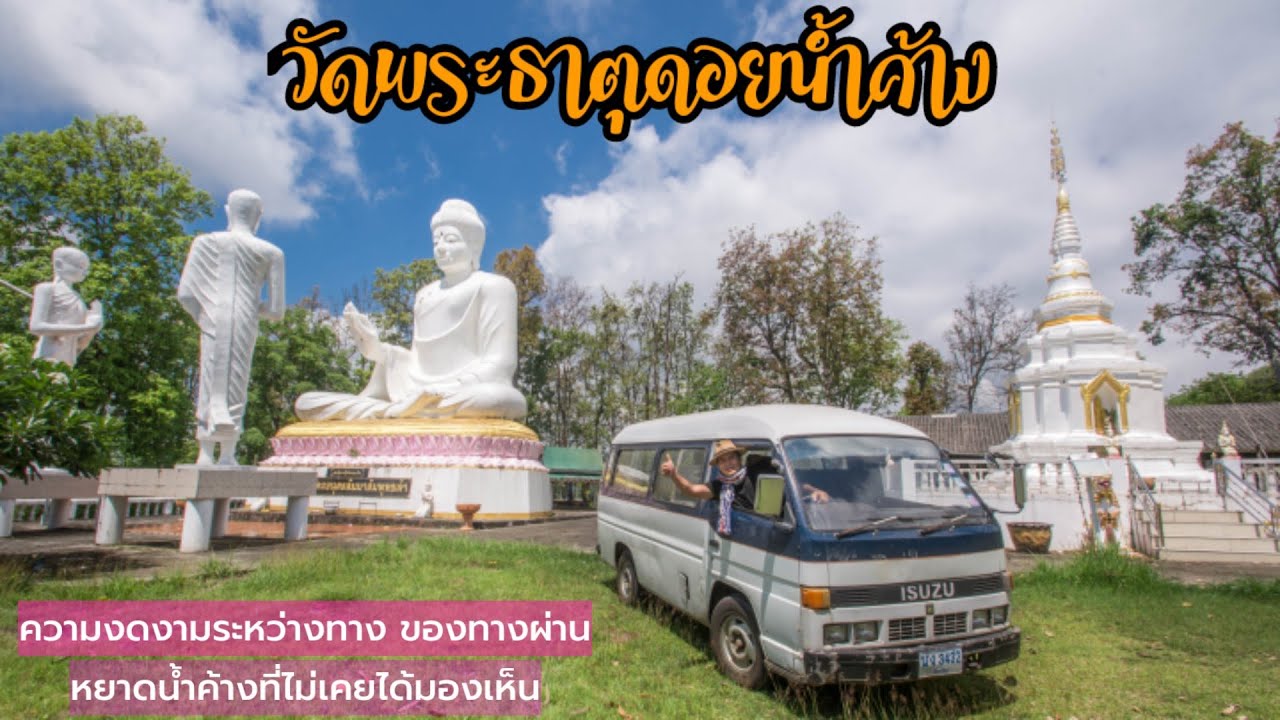
 Click to Access the Navigation Map GPS
Wat Phra That Doi Nam Khang Map
Recommend

 Muang Chiang Mai(121)Chom Thong(47)Mae Chaem(25)Chiang Dao(33)Doi Saket(68)Mae Taeng(85)Mae Rim(69)Samoeng(29)Fang(71)Mae Ai(59)Phrao(70)San Pa Tong(103)San Kamphaeng(66)San Sai(73)Hang Dong(73)Hot(32)Doi Tao(22)Omkoi(11)Saraphi(74)Wiang Haeng(15)Chai Prakan(28)Mae Wang(32)Mae On(22)Doi Lo(34)Galyani Vadhana(1)


