
lovethailand home >North Travel Attractions >Chiang Mai Travel Attractions >Mae Ai >Mae Sao > Wat Mueang Nong
TL;DR: Wat Mueang Nong is located at Ban Mueang Nong, Village No. 10, Mae Sao Subdistrict, Mae Ai District, Chiang Mai Province, open Open As An Active Community Temple For Merit-Making And Buddhist Activities.
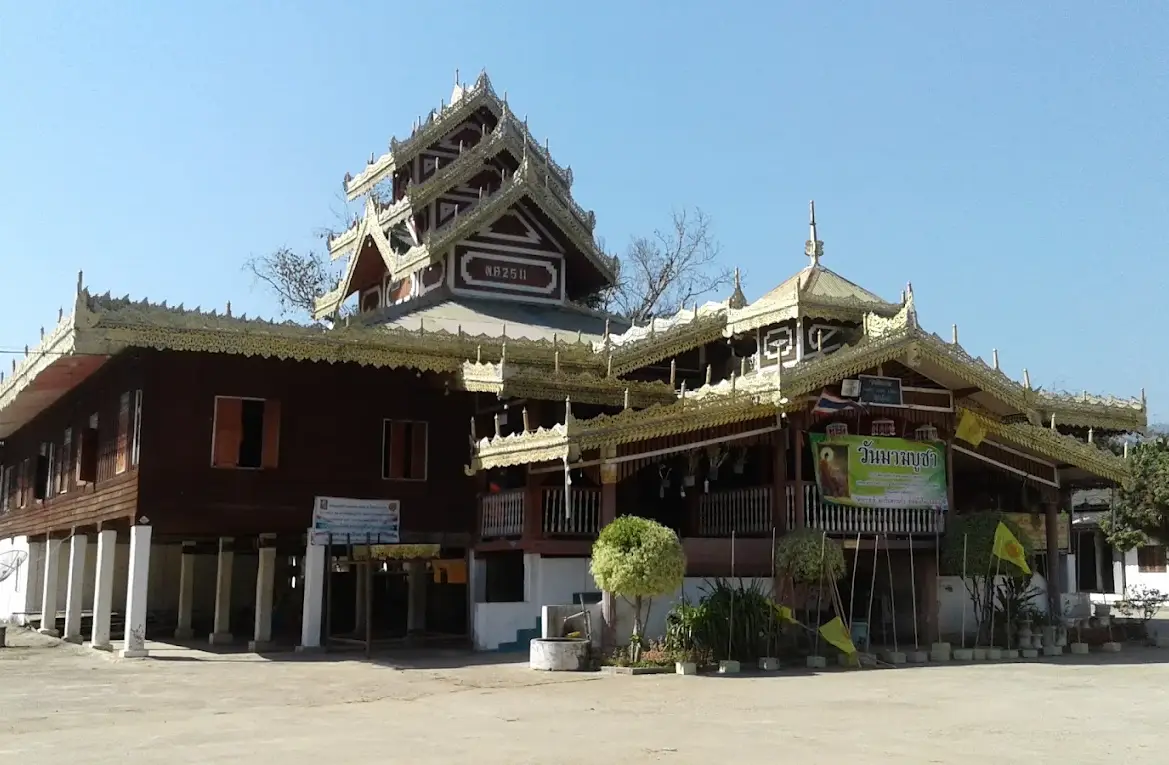
Wat Mueang Nong
Open Days: Open As An Active Community Temple For Merit-Making And Buddhist Activities
Recommended Visiting Time: Daytime
Wat Mueang Nong is located in Village No. 10, Ban Mueang Nong, Mae Sao Subdistrict, Mae Ai District, Chiang Mai Province. It is a private Buddhist temple under the Mahanikaya order. The temple was officially established in 1919 and received its royal Wisungkhamasima boundary in 1987. Wat Mueang Nong is an important religious center for Ban Mueang Nong and is closely connected with the Tai Yai or Shan community in Mae Sao. Its current abbot is Phra Maha Surasak Suchinno, according to the most recent temple activity listing found during verification.
Wat Mueang Nong is distinctive because it reflects the cultural roots of the Tai Yai community. Its identity can be seen through its history, community background, Shan-style monastic architecture, chedi, and large hall used for Buddhist activities on important religious days. The temple is suitable for visitors who want to make merit, pay respect to the Buddha, see Shan-influenced temple architecture, and understand the relationship between Ban Mueang Nong and Buddhism along the Fang–Mae Ai–Tha Ton route.
The history of Wat Mueang Nong is tied to people from Mueang Nong in Kengtung, Myanmar, who migrated and settled in the Mae Sao area. The temple name preserves the memory of the original Mueang Nong temple in Kengtung. As more people from Mueang Nong settled in Mae Sao, the community built a temple to serve as a Buddhist and spiritual center. The temple began as a small local temple and gradually developed as the population and community faith grew.
The official establishment of the temple in 1919 makes Wat Mueang Nong one of the historic community temples of Mae Sao Subdistrict. Its age is meaningful not only as a date, but also as evidence of migration, settlement, and the preservation of Buddhist faith by a Tai Yai community in a new homeland. The temple helps visitors understand that Mae Sao is culturally diverse, with both Lanna and Shan cultural layers shaping local religious life.
The royal Wisungkhamasima granted on 2 November 1987 is an important religious milestone. A Wisungkhamasima boundary is a designated monastic area used for important Sangha acts, especially ordination. This recognition strengthened the temple’s role within the local Buddhist community. Wat Mueang Nong therefore functions not only as a village worship place, but also as a proper religious site supporting monastic and community Buddhist activities.
Ban Mueang Nong, Village No. 10, is the community directly connected with the temple. It lies in Mae Sao Subdistrict, Mae Ai District, an area of northern Chiang Mai with villages, farmland, local roads, and culturally diverse communities. The community’s background includes people connected with Lanna culture and people with Tai Yai roots from Kengtung. Wat Mueang Nong therefore stands within a living cultural landscape where village identity, memory of migration, and Buddhism are closely connected.
The architecture of Wat Mueang Nong reflects Shan or Tai Yai influence. Its monastic buildings are described as being in a Tai Yai form, giving the temple a different character from many purely Lanna-style temples in the area. Shan temple architecture often has distinctive rooflines, decorative details, and a refined but dignified atmosphere. This makes Wat Mueang Nong a meaningful stop for travelers interested in the diversity of Buddhist architecture in northern Thailand.
The chedi of Wat Mueang Nong is an important sacred structure where local people can pay respect. In Tai Yai and Lanna Buddhist culture, a chedi is closely connected with reverence for the Triple Gem and the continuity of Buddhist faith. The chedi helps give the temple its devotional center and provides a place for quiet worship. Visitors should approach the chedi respectfully and observe how it relates to the temple buildings and the wider community space.
The large hall at Wat Mueang Nong is another important part of the temple. It is used for Buddhist activities on important religious days, especially for the Tai Yai community. In a village temple, a large hall is more than a building. It is a place where villagers gather, listen to Dhamma, prepare merit-making activities, welcome visitors, and participate in ceremonies. This makes the hall a key link between the monks and the community.
The worship areas of Wat Mueang Nong are important for visitors who want to make merit and experience the atmosphere of a local Shan community temple. Publicly available details about specific Buddha images are limited, but the temple clearly functions as a Buddhist place for worship, merit-making, and religious practice. Visitors should spend time calmly, dress modestly, and appreciate the temple’s architecture, chedi, hall, and community atmosphere.
The most distinctive feature of Wat Mueang Nong is its identity as a Tai Yai community temple that preserves memory of the original homeland. The name “Mueang Nong” is not only a place name in Mae Sao. It also points back to the old Mueang Nong in Kengtung. A visit to this temple therefore offers more than a simple temple stop. It gives insight into migration history, ethnic diversity, and Buddhist continuity in a Lanna borderland setting.
Wat Mueang Nong serves as a spiritual center for the local community. Temple activities connect generations: elders who preserve Tai Yai memory, working adults who support temple events, and younger people who learn Buddhist manners and local culture through community participation. The temple remains important for Buddhist holy days, Buddhist Lent, the end of Lent, Kathin, robe-offering ceremonies, and local merit-making.
In the broader context of Lanna and Tai Yai culture, Wat Mueang Nong shows that Mae Sao is not shaped by a single cultural pattern. The temple’s name, Shan-style architecture, chedi, and large ceremonial hall all point to a community with roots in Kengtung and an active Buddhist identity in Mae Ai. For visitors interested in northern Thai culture, the temple is a useful place to understand the cultural variety within Mae Sao Subdistrict.
Key things to appreciate at Wat Mueang Nong include the Tai Yai-style monastic buildings, the chedi, the large ceremonial hall, the worship area, and the atmosphere of Ban Mueang Nong. Visitors interested in local history should pay attention to the migration story from Kengtung and the naming of the temple after the original Mueang Nong. These details make the temple culturally distinct from other temples in Mae Sao.
Visitors should behave respectfully when visiting Wat Mueang Nong. Modest clothing, soft speech, and awareness of monastic areas are important. Visitors should not enter private or restricted areas without permission and should avoid touching religious objects or old items. If monks or villagers are conducting religious activities, visitors should keep a respectful distance. This is an active community temple, so it should be treated as a living sacred space.
Wat Mueang Nong can be included in a temple route through Mae Sao Subdistrict. It is in the same Village No. 10 area as Wat Phra That Doi Nam Khang, a place associated with meditation practice, sitting meditation, walking meditation, and insight practice. Travelers can also continue to Wat Mae Sao, Wat Si Don Kaeo, Wat Si Bun Rueang, Wat Panja Kana Nusorn, Wat Si Wiang, and Wat Rattanawas. Together, these temples show the religious diversity of Mae Sao, including Lanna temples, Tai Yai temples, meditation sites, and temples linked with local Buddhist art.
Beyond Mae Sao, Wat Mueang Nong can connect with major attractions in Mae Ai and Tha Ton, including Wat Tha Ton, Wat Phra That Sob Fang, Thanathon Orchard, Wiang Malika, and Doi Pu Muen. Wat Tha Ton is a well-known riverside temple near the Kok River. Thanathon Orchard is a popular agricultural attraction. Wiang Malika is connected with local history, while Doi Pu Muen is known for mountain scenery, coffee, tea, and highland community life. Including Wat Mueang Nong in this route adds a Shan cultural and religious dimension to the journey.
Getting There is easiest by private car. Travelers can use the Fang–Mae Ai–Tha Ton route to reach Mae Sao Subdistrict and Ban Mueang Nong, Village No. 10. From Chiang Mai city, the route heads north through Mae Rim, Mae Taeng, Chiang Dao, Chai Prakan, and Fang before reaching Mae Ai. Because the distance is long, the trip is best planned as an overnight or multi-stop journey in the Fang, Mae Ai, and Tha Ton area rather than a rushed same-day return from Chiang Mai city.
Travelers starting from Fang or Mae Ai will reach Wat Mueang Nong more conveniently. Mae Sao connects toward Tha Ton and the Kok River area. During the rainy season or in the evening, visitors should drive carefully on local roads, especially where agricultural vehicles, motorcycles, and village traffic may share the route. Preparing the route in advance will make the journey smoother.
Food and accommodation options are more concentrated around Tha Ton and Mae Ai than directly beside the temple. Riverside restaurants and resort restaurants near Tha Ton are practical stops after visiting the temple. For overnight stays, the Tha Ton area offers convenient access to the Kok River and onward routes toward Chiang Rai, Doi Mae Salong, Fang, and other northern destinations.
In summary, Wat Mueang Nong is a Mahanikaya community temple in Ban Mueang Nong, Village No. 10, Mae Sao Subdistrict, Mae Ai District, Chiang Mai Province. Established in 1919 and granted royal Wisungkhamasima in 1987, the temple is strongly connected with Tai Yai community history and migration from Kengtung. Its main highlights are Shan-style monastic architecture, a chedi, a large hall for religious activities, and its role as a spiritual center for Ban Mueang Nong. Travelers interested in Shan temples, local Buddhist culture, and quieter routes in northern Chiang Mai should include Wat Mueang Nong as a meaningful stop in Mae Sao.
| Name | Wat Mueang Nong |
| Location | Ban Mueang Nong, Village No. 10, Mae Sao Subdistrict, Mae Ai District, Chiang Mai Province |
| Address | Village No. 10, Mae Sao Subdistrict, Mae Ai District, Chiang Mai 50280, Thailand |
| Area Reference Coordinates | 20.014531, 99.264425 |
| Temple Type | Private Buddhist temple under the Mahanikaya order |
| History | Officially established as a temple in 1919 and granted royal Wisungkhamasima on 2 November 1987 |
| Abbot | Phra Maha Surasak Suchinno |
| Local Context | A Tai Yai community temple connected with migration from Mueang Nong in Kengtung to Mae Sao |
| Highlights | Shan-style monastic architecture, chedi, large ceremonial hall, and the temple’s role in the Tai Yai community of Ban Mueang Nong |
| Main Buildings / Areas | Tai Yai-style monastic buildings, chedi, worship area, and large hall for Buddhist activities |
| Sacred Objects / Key Evidence | Temple chedi and worship area used by the Tai Yai Buddhist community of Ban Mueang Nong |
| Distinctive Features | A Shan community temple preserving the memory of migration from Kengtung and the continuation of Buddhist faith in Mae Ai |
| Travel Information | Best reached by private car via the Fang–Mae Ai–Tha Ton route into Mae Sao Subdistrict and Ban Mueang Nong |
| Current Status | An active community temple with resident monks and Buddhist activities |
| Open Days | Open as a community temple for merit-making and Buddhist activities |
| Recommended Visiting Time | Daytime |
| Related Traditions | Buddhist holy days, Buddhist Lent, the end of Lent, Kathin, robe-offering ceremonies, and local Tai Yai merit-making activities |
| Local Administrative Contact | Mae Sao Subdistrict Administrative Organization, Tel. 053-054100 |
| Nearby Tourist Attractions | 1. Wat Phra That Doi Nam Khang, about 3 km 2. Wat Mae Sao, about 8 km 3. Wat Rattanawas, about 10 km 4. Wiang Malika, about 12 km 5. Wat Tha Ton, about 15 km 6. Thanathon Orchard, about 18 km 7. Doi Pu Muen, about 30 km |
| Nearby Restaurants | 1. Tha Ton River View, about 15 km, Tel. 053-459-289, 053-373-173-5, 093-256-7969 2. Tha Ton Hill, about 14 km, Tel. 053-053-669 3. Tha Ton Chom Chan Cafe & Restaurant Homestay, about 15 km, Tel. 088-435-4467 4. Khun Mai Baan Suan Resort, about 15 km, Tel. 053-053-551, 088-952-6196, 081-885-3564 5. Hom Phaen Din Vineyard Restaurant, about 22 km, Tel. 080-860-0368 |
| Nearby Accommodations | 1. Thaton River View Resort, about 15 km, Tel. 053-373-174 2. Thaton Chalet, about 15 km, Tel. 053-373-155 3. Apple House Resort, about 15 km, Tel. 053-373-144 4. Thaton Hill Resort, about 14 km, Tel. 053-053-669 5. Thammachat Garden Home Resort, about 15 km, Tel. 053-373-015 |
Frequently Asked Questions (FAQ)
Q: Where is Wat Mueang Nong located?
A: Wat Mueang Nong is located in Village No. 10, Ban Mueang Nong, Mae Sao Subdistrict, Mae Ai District, Chiang Mai Province.
Q: What is the history of Wat Mueang Nong?
A: Wat Mueang Nong was officially established in 1919 and granted royal Wisungkhamasima on 2 November 1987. Its history is closely connected with Tai Yai people from Mueang Nong in Kengtung who settled in Mae Sao.
Q: Who is the abbot of Wat Mueang Nong?
A: The current abbot listed in the most recent temple activity source is Phra Maha Surasak Suchinno.
Q: What makes Wat Mueang Nong distinctive?
A: Its highlights include Shan-style monastic architecture, a chedi, a large hall for Buddhist activities, and its role as a spiritual center for the Tai Yai community of Ban Mueang Nong.
Q: What kind of travelers is Wat Mueang Nong suitable for?
A: It is suitable for travelers who want a quiet local temple visit, merit-making, and a deeper understanding of Tai Yai culture in Mae Ai District.
Q: What nearby attractions can be visited with Wat Mueang Nong?
A: Nearby places include Wat Phra That Doi Nam Khang, Wat Mae Sao, Wat Rattanawas, Wiang Malika, Wat Tha Ton, Thanathon Orchard, and Doi Pu Muen.
Q: Why is Wat Mueang Nong important to the local community?
A: It is a spiritual center for Ban Mueang Nong, a place for Buddhist activities, and a cultural site preserving the memory of Tai Yai migration from Kengtung to Mae Sao.
 Category: ●Places of Worship
 Group: ●Temple
Last Update : 4 DayAgo
 Last Update : 4 DayAgo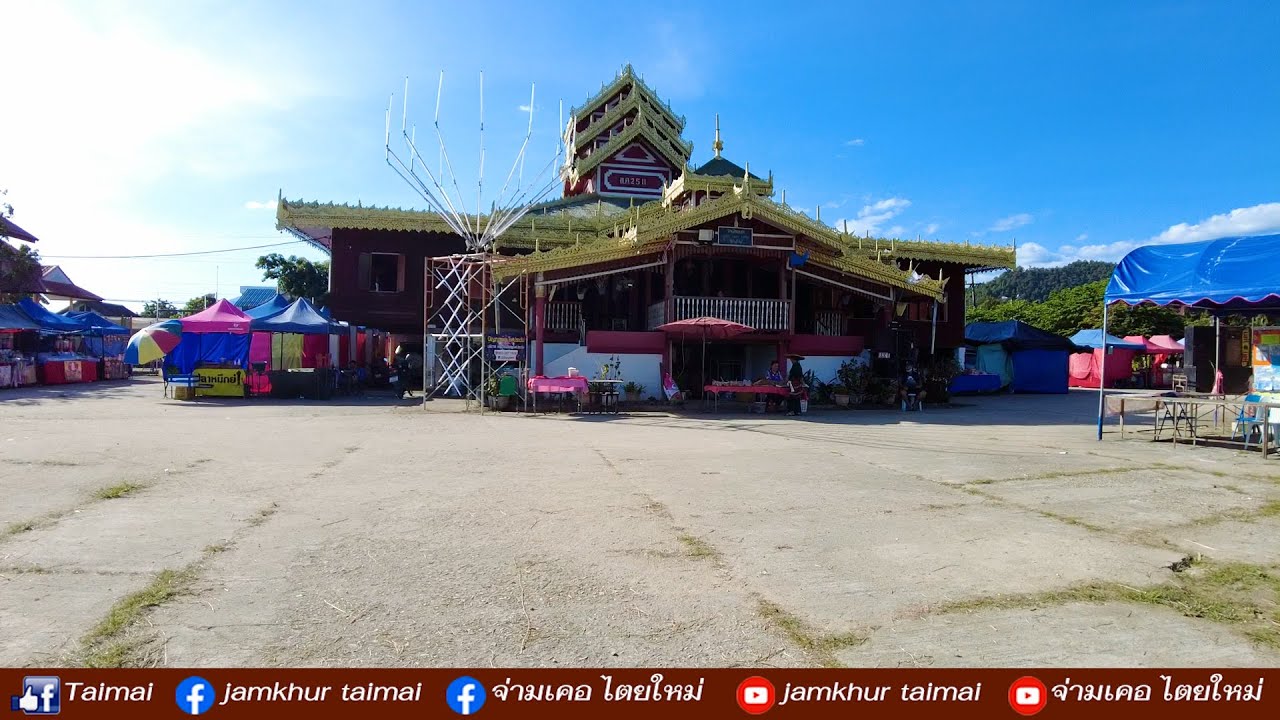
 Click to Access the Navigation Map GPS
Wat Mueang Nong Map
Recommend

 Muang Chiang Mai(121)Chom Thong(47)Mae Chaem(25)Chiang Dao(33)Doi Saket(68)Mae Taeng(85)Mae Rim(69)Samoeng(29)Fang(71)Mae Ai(59)Phrao(70)San Pa Tong(103)San Kamphaeng(66)San Sai(73)Hang Dong(73)Hot(32)Doi Tao(22)Omkoi(11)Saraphi(74)Wiang Haeng(15)Chai Prakan(28)Mae Wang(32)Mae On(22)Doi Lo(34)Galyani Vadhana(1)


