
lovethailand home >North Travel Attractions >Chiang Mai Travel Attractions >Mae Ai >Mae Sao > Wat San Wiang Mun
TL;DR: Wat San Wiang Mun is located at Ban San Pa Kha, Village No. 9, Mae Sao Subdistrict, Mae Ai District, Chiang Mai Province, open Daily, hours 08.00 – 17.00.

Wat San Wiang Mun
Open Days: Daily
Opening Hours: 08.00 – 17.00
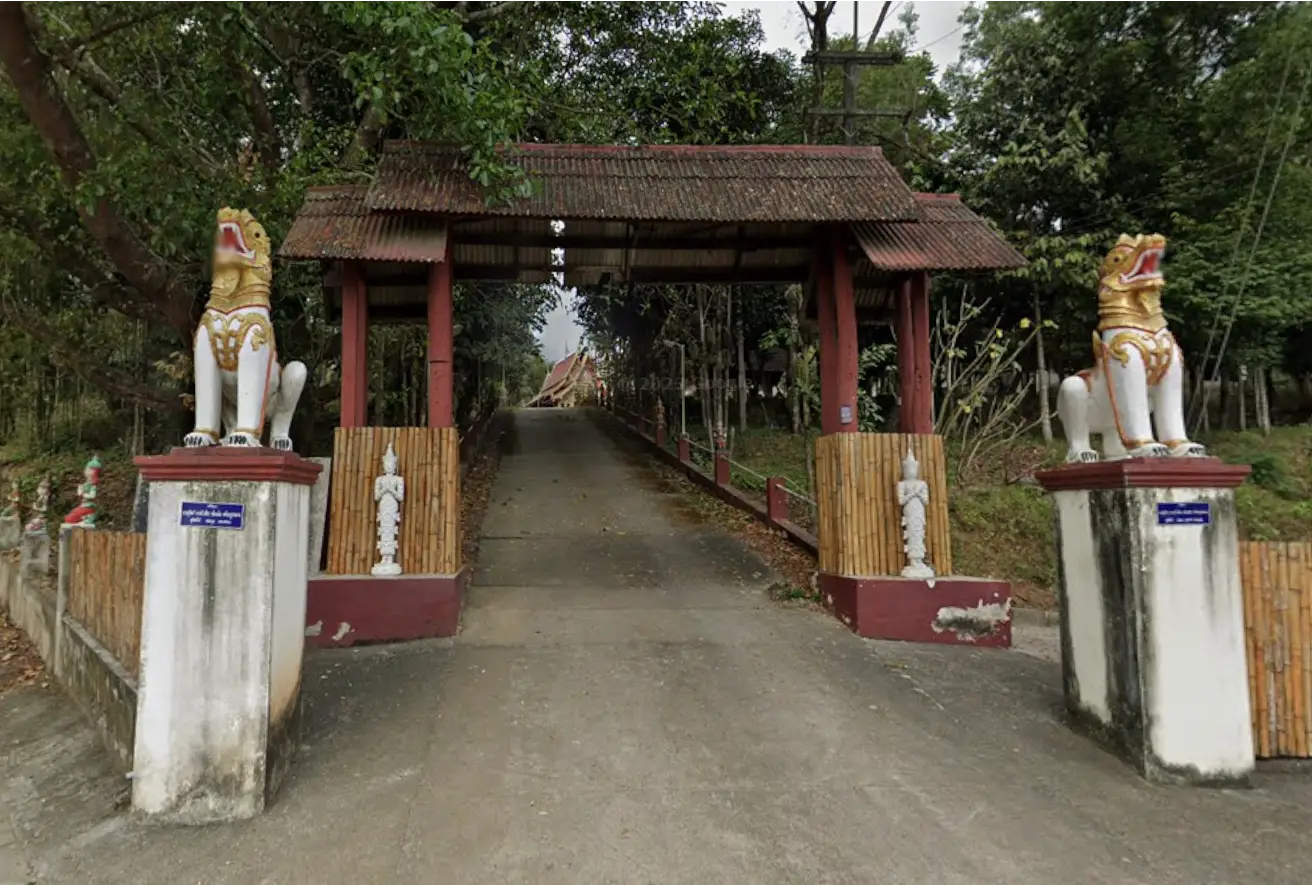
Wat San Wiang Mun is located at 39 Moo 9, Ban San Pa Kha, on the Fang–Tha Ton road in Mae Sao Subdistrict, Mae Ai District, Chiang Mai Province. It is a private Buddhist temple under the Mahanikaya order and was officially permitted to be established as a temple on 29 November 1989. The temple serves the Ban San Pa Kha community and is a suitable stop for travelers who want to make merit, pay respect to the Buddha, and experience a quiet village temple in northern Chiang Mai.
Wat San Wiang Mun is not a large tourist temple like the well-known temples in central Chiang Mai. Its value comes from its role as a community temple. The temple stands in Ban San Pa Kha, Village No. 9 of Mae Sao Subdistrict, an area connected with the Fang–Mae Ai–Tha Ton route, agricultural land, waterways, and the mountain landscape of Mae Ai District. This makes the temple suitable for travelers who prefer a calm local visit rather than a crowded tourist attraction.
The name Wat San Wiang Mun is closely connected with the local area, and some map sources also identify the temple with the name Wat San Pa Kha. This reflects a common pattern in northern Thai villages, where temple names are often tied to village names, landscape features, or traditional local usage. For visitors, this connection helps explain why the temple is best understood as part of the Ban San Pa Kha community rather than as an isolated destination.
The history of Wat San Wiang Mun centers on its official temple establishment in 1989. This formal status shows that the temple grew from a local need for a proper Buddhist space within Ban San Pa Kha. As a community temple, Wat San Wiang Mun functions not only as a place of worship, but also as a space for village merit-making, Buddhist ceremonies, and local gatherings. It helps maintain the relationship between Buddhist practice and everyday rural life in Mae Sao.
The temple grounds cover about 15 rai of land, recorded as land under the Royal Forest Department. Its boundaries are connected with villagers’ land, a public road, an irrigation canal, and a reserved forest area in the Fang watershed. These details show that Wat San Wiang Mun stands within a rural landscape where community land, public infrastructure, agricultural water systems, and forest areas meet. The temple is therefore part of the living environment of Ban San Pa Kha.
The monastic buildings at Wat San Wiang Mun include a sermon hall, monks’ quarters, a multipurpose pavilion, and a kitchen. The important sacred object recorded at the temple is a Buddha image in the Mara-vijaya posture. These elements reflect the practical structure of a local temple: the sermon hall supports religious gatherings, the monks’ quarters support monastic life, the multipurpose pavilion serves community activities, and the kitchen is important during merit-making events and village ceremonies.
The Buddha image in the Mara-vijaya posture is the main object of worship for visitors. This posture represents the Buddha’s victory over Mara before enlightenment and carries a meaning of inner steadiness and spiritual strength. Visitors can pay respect, sit quietly, and make merit according to their faith. The experience is simple but meaningful, especially for travelers who want to understand how village temples function in daily Buddhist life.
Phra Khru Nakhon Burananurak Kittisaro is listed as the abbot of Wat San Wiang Mun. His name also appears in connection with Chiang Mai monastic activities, showing that the temple is part of the wider Buddhist administrative and religious network of Mae Ai and Chiang Mai Province. In a community temple, the abbot plays an important role not only in caring for the temple and monks, but also in guiding local religious life, merit-making activities, and the proper use of temple space.
Mae Sao Subdistrict has a clear local history. It was formerly a village area of Mae Ai District before population growth, including migration from places such as Hang Dong and San Pa Tong, led to the expansion of the community and the formation of Mae Sao as a separate subdistrict. The name Mae Sao is associated with the Mae Sao stream. Today, Mae Sao includes several villages, including Ban San Pa Kha, where Wat San Wiang Mun is located. This background helps place the temple within a community shaped by settlement, water sources, roads, and farming life.
The geography of Mae Sao includes sloping highland areas and lowland village zones. The northern and central parts of the subdistrict are more mountainous, while the southern area contains many of the villages. As a result, a visit to Wat San Wiang Mun gives travelers a different picture of Chiang Mai from the urban temple routes. The area has a rural atmosphere, with roads, farms, waterways, and village communities forming the setting around the temple.
Wat San Wiang Mun’s role in Ban San Pa Kha is closely linked to Buddhist merit-making and community life. Local temples in northern Thailand often function as more than ritual spaces. They are places where villagers gather, support ceremonies, maintain traditions, and pass on Buddhist culture to younger generations. Activities such as Buddhist holy days, the Buddhist Lent period, Kathin, robe-offering ceremonies, and merit-making events all help keep the relationship between temple and community alive.
The atmosphere of Wat San Wiang Mun is best suited for quiet travelers. It is not designed as a commercial tourism site, but its calm setting is precisely what makes it worthwhile. Visitors should dress respectfully, keep their voices low, and avoid disturbing monks or local residents. Since this is an active community temple, the most rewarding way to visit is to move gently, pay respect, and appreciate the temple as a sacred place still used by the village.
Key areas to notice include the worship area for the Mara-vijaya Buddha image, the sermon hall, the multipurpose pavilion, the temple courtyard, and the monastic buildings. The sermon hall is important because it supports religious activities and community merit-making. The multipurpose pavilion and kitchen also show how the temple supports local gatherings and ceremonies. These features reveal the practical side of a rural Buddhist temple in northern Thailand.
Travelers interested in temples within Mae Sao Subdistrict can combine Wat San Wiang Mun with Wat Mae Sao and Wat Phra That Doi Nam Khang. Wat Mae Sao is promoted by the Mae Sao Subdistrict Administrative Organization as a local attraction and is known for its large, colorful temple gate. Wat Phra That Doi Nam Khang, located in Village No. 10, Ban Mueang Nong, is associated with meditation, walking meditation, and insight practice. Visiting these places together gives a broader view of the religious landscape of Mae Sao.
Wat San Wiang Mun can also connect with broader Mae Ai and Tha Ton routes. Travelers can continue to Wat Tha Ton, Wat Phra That Sob Fang, Wiang Malika, Thanathon Orchard, and Doi Pu Muen. A practical one-day route can begin with a morning visit to Wat San Wiang Mun, continue to nearby temples in Mae Sao, then proceed toward Tha Ton for the Kok River scenery, food, or overnight accommodation. Travelers interested in nature and highland products can also include Doi Pu Muen, known for coffee and tea cultivation in the Daen Lao mountain range.
Getting There is easiest by private car. Travelers can use the Fang–Tha Ton road to reach Mae Sao Subdistrict and Ban San Pa Kha. From Chiang Mai city, the route heads north through Mae Rim, Mae Taeng, Chiang Dao, Chai Prakan, and Fang before reaching Mae Ai. Because the distance is long, the trip is best planned as part of a broader Fang–Mae Ai–Tha Ton itinerary rather than a rushed day trip from Chiang Mai city.
Travelers starting from Fang or Mae Ai will reach Wat San Wiang Mun more conveniently. The temple lies along a route that can continue toward Tha Ton and the Kok River area. During the rainy season, visitors should drive carefully, especially on local village roads, near waterways, and in areas where agricultural vehicles may be present.
Food and accommodation are easier to find around Tha Ton and Mae Ai than directly in Ban San Pa Kha. Riverside restaurants and resort restaurants near Tha Ton are suitable after visiting the temple. Tha Ton accommodations are convenient for travelers who want to stay near the Kok River and continue toward Chiang Rai, Doi Mae Salong, Fang, or other northern destinations the next day. This makes Wat San Wiang Mun a useful stop within a wider cultural and nature route.
In summary, Wat San Wiang Mun is a Mahanikaya community temple in Ban San Pa Kha, Mae Sao Subdistrict. It was officially established in 1989, covers about 15 rai, and includes a sermon hall, monks’ quarters, a multipurpose pavilion, a kitchen, and a Buddha image in the Mara-vijaya posture. Its main appeal is its quiet local atmosphere and its connection with the Fang–Tha Ton route. Travelers who want to explore the lesser-known temple landscape of Mae Ai can include Wat San Wiang Mun together with Wat Mae Sao, Wat Phra That Doi Nam Khang, Wat Tha Ton, and nearby natural attractions.
| Name | Wat San Wiang Mun |
| Location | Ban San Pa Kha, Village No. 9, Mae Sao Subdistrict, Mae Ai District, Chiang Mai Province |
| Address | 39 Moo 9, Ban San Pa Kha, Fang–Tha Ton Road, Mae Sao Subdistrict, Mae Ai District, Chiang Mai 50280, Thailand |
| Coordinates | 19.97111, 99.22797 |
| Temple Type | Private Buddhist temple under the Mahanikaya order |
| History | Officially permitted to be established as a temple on 29 November 1989 |
| Temple Area | About 15 rai |
| Highlights | A quiet community temple in Ban San Pa Kha, suitable for merit-making and for connecting with Wat Mae Sao, Wat Phra That Doi Nam Khang, Wat Tha Ton, and attractions in Mae Sao Subdistrict |
| Sacred Object | Buddha image in the Mara-vijaya posture |
| Main Buildings / Areas | Sermon hall, monks’ quarters, multipurpose pavilion, and kitchen |
| Distinctive Features | A calm rural temple connected with Ban San Pa Kha and the local life of Mae Sao Subdistrict |
| Travel Information | Best reached by private car via the Fang–Tha Ton road into Mae Sao Subdistrict and Ban San Pa Kha |
| Current Status | Open for temple visits and merit-making during the stated visiting hours |
| Open Days | Daily |
| Opening Hours | 08.00 – 17.00 |
| Abbot | Phra Khru Nakhon Burananurak Kittisaro |
| Local Administrative Contact | Mae Sao Subdistrict Administrative Organization, Tel. 053-054100 |
| Nearby Tourist Attractions | 1. Wat Mae Sao, about 6 km 2. Wat Phra That Doi Nam Khang, about 8 km 3. Wiang Malika, about 12 km 4. Wat Tha Ton, about 20 km 5. Thanathon Orchard, about 22 km 6. Doi Pu Muen, about 35 km |
| Nearby Restaurants | 1. Tha Ton River View, about 20 km, Tel. 053-459-289, 053-373-173-5, 093-256-7969 2. Tha Ton Chom Chan Cafe & Restaurant Homestay, about 20 km, Tel. 088-435-4467 3. Tha Ton Hill, about 18 km, Tel. 053-053-669 4. Khun Mai Baan Suan Resort, about 20 km, Tel. 053-053-551, 088-952-6196, 081-885-3564 5. Hom Phaen Din Vineyard Restaurant, about 25 km, Tel. 080-860-0368 |
| Nearby Accommodations | 1. Thaton River View Resort, about 20 km, Tel. 053-373-174 2. Thaton Chalet, about 20 km, Tel. 053-373-155, 053-373-156 3. Apple House Resort, about 20 km, Tel. 053-373-144 4. Khun Mai Baan Suan Resort, about 20 km, Tel. 053-373-214, 088-952-6196 5. Thaton Garden Resort, about 20 km, Tel. 081-951-7102 |
Frequently Asked Questions (FAQ)
Q: Where is Wat San Wiang Mun located?
A: Wat San Wiang Mun is located at 39 Moo 9, Ban San Pa Kha, Fang–Tha Ton Road, Mae Sao Subdistrict, Mae Ai District, Chiang Mai Province.
Q: What are the opening hours of Wat San Wiang Mun?
A: Wat San Wiang Mun is open daily from 08.00 to 17.00.
Q: What is the history of Wat San Wiang Mun?
A: Wat San Wiang Mun is a private Buddhist temple under the Mahanikaya order and was officially permitted to be established as a temple on 29 November 1989.
Q: What important features are inside Wat San Wiang Mun?
A: The temple includes a sermon hall, monks’ quarters, a multipurpose pavilion, a kitchen, and a Buddha image in the Mara-vijaya posture.
Q: What kind of travelers is Wat San Wiang Mun suitable for?
A: It is suitable for travelers who want a quiet local temple visit, merit-making, and a cultural route connected with nearby temples in Mae Sao and Tha Ton.
Q: How do travelers get to Wat San Wiang Mun?
A: The most convenient way is by private car via the Fang–Tha Ton road into Mae Sao Subdistrict and Ban San Pa Kha.
Q: What nearby attractions can be visited with Wat San Wiang Mun?
A: Nearby places include Wat Mae Sao, Wat Phra That Doi Nam Khang, Wiang Malika, Wat Tha Ton, Thanathon Orchard, and Doi Pu Muen.
 Category: ●Places of Worship
 Group: ●Temple
Last Update : 5 DayAgo
 Last Update : 5 DayAgo
 Click to Access the Navigation Map GPS
Wat San Wiang Mun Map
Recommend

 Muang Chiang Mai(121)Chom Thong(47)Mae Chaem(25)Chiang Dao(33)Doi Saket(68)Mae Taeng(85)Mae Rim(69)Samoeng(29)Fang(71)Mae Ai(59)Phrao(70)San Pa Tong(103)San Kamphaeng(66)San Sai(73)Hang Dong(73)Hot(32)Doi Tao(22)Omkoi(11)Saraphi(74)Wiang Haeng(15)Chai Prakan(28)Mae Wang(32)Mae On(22)Doi Lo(34)Galyani Vadhana(1)


