
lovethailand home >North Travel Attractions >Chiang Mai Travel Attractions >Mae Ai >Tha Ton > Wat Tha Ma Kaeng
TL;DR: Wat Tha Ma Kaeng is located at Ban Tha Ma Kaeng, Moo 7, Tambon Tha Ton, Mae Ai District, Chiang Mai Province, open Contact The Temple Before Visiting, hours Daytime Visits Are Recommended.
Wat Tha Ma Kaeng
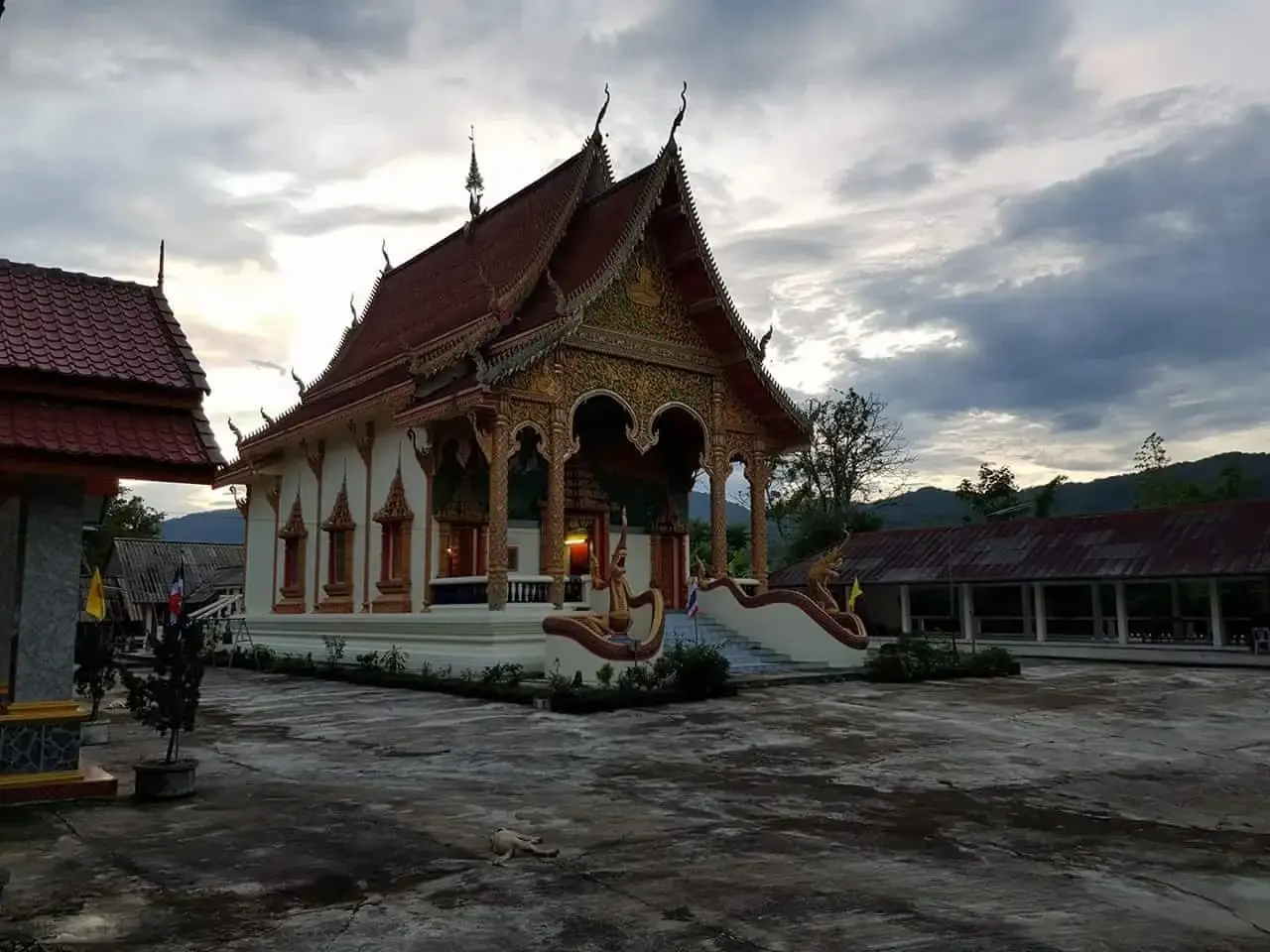
Open Days: Contact The Temple Before Visiting
Opening Hours: Daytime Visits Are Recommended
Wat Tha Ma Kaeng is located in Ban Tha Ma Kaeng, Moo 7, Tambon Tha Ton, Mae Ai District, Chiang Mai Province. It is a community Buddhist temple under the Maha Nikaya order and was officially permitted as a temple in 1937. The current abbot is Phra Athikan Chom Ming Thitathammo. The temple serves as the spiritual center of Ban Tha Ma Kaeng and remains important for merit-making, Buddhist holy day observances, local ceremonies, and village religious life.
Ban Tha Ma Kaeng is part of Tambon Tha Ton, a culturally rich area in Mae Ai District. The subdistrict includes the Kok River, agricultural communities, hill temples, Shan cultural temples, orchards, hot springs, and travel routes connecting Chiang Mai with Chiang Rai. In this setting, Wat Tha Ma Kaeng represents the quieter village-temple side of Tha Ton. It is not a large landmark attraction, but it plays an important role in local Buddhist life.
The temple is located at 163 Ban Tha Ma Kaeng, on the Tha Ton–Mueang Ngam road, Tambon Tha Ton, Mae Ai District, Chiang Mai 50280, Thailand. The temple land covers 10 rai, 1 ngan, and 40 square wah. Its surroundings are closely connected with rice fields, the Tha Ton–Mueang Ngam road, and Ban Tha Ma Kaeng village. This location shows how deeply the temple is embedded in the village landscape.
The temple’s official establishment in 1937 is an important historical marker. In northern Thai villages, temples were often established because local residents needed a nearby place for sermons, alms-giving, Buddhist holy day observances, family merit-making, Kathin, and robe-offering ceremonies. Wat Tha Ma Kaeng reflects this community-based Buddhist pattern. It grew as a temple serving village life rather than as a tourist landmark.
The name Wat Tha Ma Kaeng is directly connected with Ban Tha Ma Kaeng, the village where the temple is located. Many village temples in northern Thailand use the name of the local community because the temple and village are inseparable in social and religious life. The name therefore identifies the place, the community, and the temple’s main base of lay support.
The temple’s important monastic structures include a local-style sermon hall, monks’ residences, and a bowl hall. The sermon hall is a key building in a community temple because it supports sermons, religious gatherings, merit-making, and village events. The monks’ residences support the daily life of monks and novices, while the bowl hall is connected with food offerings and merit-making practices.
The main sacred object at Wat Tha Ma Kaeng is a brick-and-plaster Buddha image. Such Buddha images are often associated with local craftsmanship and durable community devotion. The Buddha image serves as the central object of worship for villagers and visitors, especially during Buddhist holy days and merit-making ceremonies. Visitors should begin their visit by paying respect calmly and respectfully.
The local-style sermon hall gives the temple a clear village character. Community temples in Mae Ai and Tha Ton are often valued not for size or grandeur, but for practical religious use. The sermon hall is where villagers gather to listen to Dhamma, join ceremonies, and support temple activities. It is a shared religious and social space for the community.
Known abbot information includes Phra Saman Chan Hom in the temple’s historical record, while the current abbot is Phra Athikan Chom Ming Thitathammo. A community temple requires continuity of monastic care across generations. Abbots maintain temple order, lead religious ceremonies, care for temple structures, and coordinate with lay supporters. Wat Tha Ma Kaeng continues through this relationship between monks and villagers.
For Ban Tha Ma Kaeng, the temple functions as a spiritual and social center. Villagers use the temple for Buddhist holy day observances, alms-giving, sermons, Kathin, forest robe offerings, and regular merit-making. These activities are religious, but they also strengthen community relationships because families, elders, youth, monks, and lay supporters gather through shared acts of faith.
Wat Tha Ma Kaeng is part of the wider temple network of Tambon Tha Ton. Nearby temples include Wat Tha Ton Royal Temple, Wat San Ton Du, Wat Hat Chomphu, Wat Phra That Sop Fang, Wat Mai Mok Cham, Wat Phawana Nimit, and Wat Huai Pu. Each temple has a different identity. Wat Tha Ton is a major hill temple, Wat Mai Mok Cham reflects Tai Yai culture, Wat Phawana Nimit is known for Shan-style architecture, and Wat Tha Ma Kaeng represents a grounded village temple with a long local history.
The atmosphere of Wat Tha Ma Kaeng is calm, local, and suitable for visitors who want to understand everyday Buddhism in Mae Ai District. It is best visited as a working community temple. Visitors can observe the sermon hall, monks’ residences, bowl hall, temple courtyard, worship area, and the surrounding village setting while respecting the temple’s everyday religious function.
Important things to see at Wat Tha Ma Kaeng include the brick-and-plaster Buddha image, the local-style sermon hall, monks’ residences, bowl hall, temple courtyard, and the peaceful atmosphere of Ban Tha Ma Kaeng. The temple’s value lies in its authenticity as a local religious center rather than in large-scale tourist infrastructure.
Religious activities connected with the temple include Kathin after Buddhist Lent, forest robe offerings, Buddhist holy day observances, alms-giving, and regular merit-making. Kathin is one of the most important annual Buddhist events because lay supporters offer robes and requisites to monks after the rains retreat. Forest robe offerings also help support temple maintenance and strengthen the relationship between the temple and the community.
Visitors should observe proper temple etiquette. Dress modestly, speak quietly, avoid disturbing monks or villagers during ceremonies, and do not enter monastic residences or restricted areas without permission. Photography should be respectful and should not interfere with worship or merit-making. The temple is an active religious site and should be treated as such.
Getting There is convenient by road. From Chiang Mai city, travel north through Mae Rim, Mae Taeng, Chiang Dao, Fang, and Mae Ai before entering Tambon Tha Ton. Continue to Ban Tha Ma Kaeng, Moo 7, along the Tha Ton–Mueang Ngam road. The temple is best reached by private car, rental car, or local transport from Tha Ton.
A practical travel route can begin at Wat Tha Ma Kaeng for merit-making in a local temple atmosphere, then continue to Wat San Ton Du, Wat Hat Chomphu, Wat Phra That Sop Fang, Wat Tha Ton Royal Temple, and Tha Ton Pier. Travelers with more time can add Wat Mai Mok Cham, Wat Phawana Nimit, Thanathon Orchard, Malika Hot Spring, and riverside accommodation in Tha Ton.
Wat Tha Ma Kaeng is therefore worth including in a Tha Ton and Mae Ai travel route for visitors who want to see the quieter community-temple side of northern Chiang Mai. Its official establishment in 1937, its village location, its local-style sermon hall, its brick-and-plaster Buddha image, and its relationship with Ban Tha Ma Kaeng make it a meaningful local Buddhist site.
| Name | Wat Tha Ma Kaeng |
| Location | Ban Tha Ma Kaeng, Moo 7, Tambon Tha Ton, Mae Ai District, Chiang Mai Province |
| Address | 163 Ban Tha Ma Kaeng, Tha Ton–Mueang Ngam Road, Tambon Tha Ton, Mae Ai District, Chiang Mai 50280, Thailand |
| Coordinates | 20.06375, 99.44853 |
| Temple Type | Community temple under the Maha Nikaya order |
| Temple Code | 350100502 |
| Temple Area | 10 rai, 1 ngan, 40 square wah |
| History | Established and officially permitted as a Buddhist temple in 1937; a local community temple of Ban Tha Ma Kaeng in Tambon Tha Ton, Mae Ai District |
| Name Origin | The temple name is connected with Ban Tha Ma Kaeng, the village where the temple is located and its main community of lay supporters |
| Temple Boundaries | North: Rice fields, about 93 meters South: Tha Ton–Mueang Ngam road, about 93 meters East: Ban Tha Ma Kaeng village, about 73 meters West: Ban Tha Ma Kaeng village, about 73 meters |
| Highlights | A long-standing community temple of Moo 7, Tambon Tha Ton, with a local-style sermon hall, monks’ residences, a bowl hall, and a brick-and-plaster Buddha image |
| Distinctive Features | A quiet village temple suitable for merit-making, observing local Buddhist life, and understanding community temples in the Tha Ton area |
| Main Structures / Areas | Local-style sermon hall, monks’ residences, bowl hall, temple courtyard, worship area, and community merit-making space |
| Sacred Object | Brick-and-plaster Buddha image |
| Travel Information | Travel from Chiang Mai through Mae Rim, Mae Taeng, Chiang Dao, Fang, and Mae Ai to Tambon Tha Ton, then continue to Ban Tha Ma Kaeng, Moo 7, on the Tha Ton–Mueang Ngam road. Best reached by private car, rental car, or local transport from Tha Ton |
| Current Status | Active community temple used for Buddhist worship, merit-making, and local religious activities in Ban Tha Ma Kaeng |
| Open Days | Contact the temple before visiting |
| Opening Hours | Daytime visits are recommended |
| Abbot / Caretaker | Phra Athikan Chom Ming Thitathammo |
| Related Religious Events | Kathin after Buddhist Lent, forest robe offerings, Buddhist holy day activities, alms-giving, and regular merit-making events |
| Nearby Tourist Attractions | 1. Wat San Ton Du, about 4 km 2. Wat Hat Chomphu, about 4 km 3. Wat Phra That Sop Fang, about 6 km 4. Wat Tha Ton Royal Temple, about 9 km 5. Tha Ton Pier / Kok River Boat Route, about 9 km 6. Thanathon Orchard, about 12 km |
| Nearby Restaurants | 1. Tha Ton River View, about 9 km, Tel. 053-459-289, 053-373-173-5, 093-256-7969 2. Tha Ton Hill, about 10 km, Tel. 053-053-669 3. Tha Ton Chom Chan Cafe & Restaurant Homestay, about 10 km, Tel. 088-435-4467 4. Khun Mai Baan Suan Resort, about 11 km, Tel. 053-053-551, 088-952-6196, 081-885-3564 5. Nam Som Thanathon, about 12 km, Tel. 083-734-9555 |
| Nearby Accommodations | 1. Tha Ton River View Resort, about 9 km, Tel. 063-014-3787 2. Tha Ton Chalet, about 9 km, Tel. 053-373-155 3. Tha Ton Hill Resort, about 10 km, Tel. 053-053-669 4. Khun Mai Baan Suan Resort, about 11 km, Tel. 053-053-551, 088-952-6196, 081-885-3564 5. Nicha Homestay Tha Ton, about 15 km, Tel. 093-549-7419 |
Frequently Asked Questions (FAQ)
Q: Where is Wat Tha Ma Kaeng located?
A: Wat Tha Ma Kaeng is located at 163 Ban Tha Ma Kaeng, Tha Ton–Mueang Ngam Road, Moo 7, Tambon Tha Ton, Mae Ai District, Chiang Mai 50280, Thailand.
Q: When was Wat Tha Ma Kaeng officially established?
A: Wat Tha Ma Kaeng was established and officially permitted as a Buddhist temple in 1937.
Q: Who is the abbot of Wat Tha Ma Kaeng?
A: The abbot is Phra Athikan Chom Ming Thitathammo.
Q: What are the main things to see at Wat Tha Ma Kaeng?
A: Main features include the brick-and-plaster Buddha image, local-style sermon hall, monks’ residences, bowl hall, temple courtyard, and the peaceful atmosphere of Ban Tha Ma Kaeng.
Q: Who should visit Wat Tha Ma Kaeng?
A: It is suitable for travelers who want to make merit, visit a quiet village temple, and explore the cultural route around Tha Ton and Mae Ai.
Q: How large is the temple area?
A: The temple land covers 10 rai, 1 ngan, and 40 square wah.
Q: How can visitors travel to Wat Tha Ma Kaeng?
A: From Chiang Mai city, travel through Mae Rim, Mae Taeng, Chiang Dao, Fang, and Mae Ai to Tambon Tha Ton, then continue to Ban Tha Ma Kaeng, Moo 7, on the Tha Ton–Mueang Ngam road.
Q: What nearby places can be visited with Wat Tha Ma Kaeng?
A: Nearby places include Wat San Ton Du, Wat Hat Chomphu, Wat Phra That Sop Fang, Wat Tha Ton Royal Temple, Tha Ton Pier, and Thanathon Orchard.
 Category: ●Places of Worship
 Group: ●Temple
Last Update : 2 WeekAgo
 Last Update : 2 WeekAgo
 Click to Access the Navigation Map GPS
 Muang Chiang Mai(121)Chom Thong(47)Mae Chaem(25)Chiang Dao(33)Doi Saket(68)Mae Taeng(85)Mae Rim(69)Samoeng(29)Fang(71)Mae Ai(59)Phrao(70)San Pa Tong(103)San Kamphaeng(66)San Sai(73)Hang Dong(73)Hot(32)Doi Tao(22)Omkoi(11)Saraphi(74)Wiang Haeng(15)Chai Prakan(28)Mae Wang(32)Mae On(22)Doi Lo(33)Galyani Vadhana(1)


