
lovethailand home >North Travel Attractions >Chiang Mai Travel Attractions >Mae On >On Klang > Wat On Klang
TL;DR: Wat On Klang is located at 5, Moo 7, Ban On Klang, On Klang Subdistrict, Mae On District, Chiang Mai 50130, Thailand. is located at 5, Moo 7, Ban On Klang, On Klang Subdistrict, Mae On District, Chiang Mai 50130. It is a community Buddhist temple of the.
Wat On Klang
Operating day: Daily
Operating time: 08.00 - 17.00
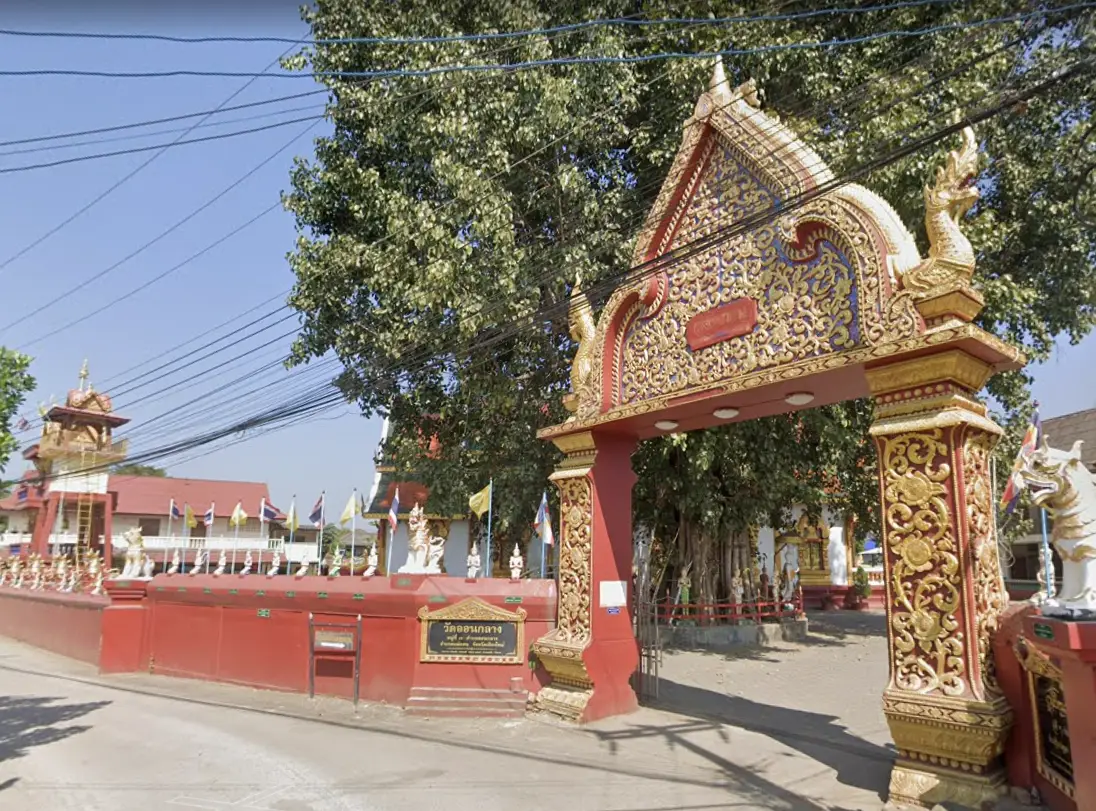
Wat On Klang is located at 5, Moo 7, Ban On Klang, On Klang Subdistrict, Mae On District, Chiang Mai 50130. It is a community Buddhist temple of the Mahanikaya order, registered under temple code 350230206. Established in 1827, the monastery occupies approximately 2 rai, 3 ngan and 39 square wah and has been closely connected with the development of Ban On Klang for almost two centuries. The temple has served not only as a place of worship but also as a center for Buddhist learning, local cultural transmission and community activity. One of the important religious landmarks associated with the village is Chedi Si Sutthichit, a stupa identified by community records as a principal ceremonial site for residents of Moo 7.
Before Wat On Klang was established, residents of the early On Klang community did not have a monastery of their own. Local history records that villagers traveled to Wat Ban Wak for Buddhist merit-making, while education was connected with Wat Pao Sam Kha. The establishment of Wat On Klang in 1827 was therefore an important turning point, giving the growing community its own religious center for worship, sermons, ordinations, funerals and seasonal merit-making.
The early population of the wider Mueang On area included Tai Khoen settlers brought south during the period of King Kawila, when Chiang Mai was being repopulated after decades of warfare. Groups of people moved through Chiang Saen into Mueang On and established settlements in areas that later became Ban On Klang and neighboring communities.
The first households cultivated upland rice and cotton before expanding wet-rice agriculture. Weaving, basketry and farming became important parts of the local economy. As the village became more permanent, a monastery provided a shared institution through which religion, family ceremonies and communal cooperation could be organized.
Historical community accounts refer to the monastery as Wat Si Mueang On or Wat Si On Klang. The word “Si” is associated locally with sa-ri, the northern Thai term used in connection with Bodhi trees that once grew abundantly around the temple grounds. The older name therefore preserves both the religious and environmental character of the site.
From 1827 to 2026, Wat On Klang spans approximately 199 years of community history. During that time Mae On changed from a rural agricultural landscape into a modern district linked by paved roads, schools and public services, while tourism expanded through Muang On Cave, San Kamphaeng Hot Springs, farms, cafés and the road toward Mae Kampong.
Despite these changes, Wat On Klang has remained a religious center for Moo 7 and nearby settlements. Community history notes that residents of neighboring parts of Ban On Klang also used the temple for merit-making before population growth eventually led to new administrative village divisions.
The cultural background of On Klang is especially interesting because northern Thai speech in the area includes influences associated with Tai Khoen communities. The migration history helps explain some of the cultural diversity that developed in Mae On, while the temple became one of the spaces in which religious customs and local identity could be transmitted from one generation to another.
The temple covers approximately 2 rai, 3 ngan and 39 square wah. It is not a monumental urban monastery, but its scale suits the village environment. The compound includes a viharn, religious activity areas, monastic facilities and the village's important stupa.
The viharn remains an important ceremonial space. Contemporary events in 2026 demonstrate that it continues to be used for major religious rites, including the funeral ceremonies of the late abbot. The building therefore remains a living part of community religious practice rather than functioning merely as an architectural attraction.
Chedi Si Sutthichit is another important religious feature. Community records identify the stupa as a principal ceremonial site for Moo 7, demonstrating that it continues to hold significance within local Buddhist life.
Wat On Klang has a notable history of Sunday Buddhist education. The temple operated a Sunday Buddhist Study Center where children and young people could learn Buddhist principles outside normal school hours. Such centers traditionally combine religious teaching with ethics, community values and cultural learning.
The monastery also has a history as a location for the Thai Cultural Promotion Center, Saiyai Chumchon. This role reflects the wider function of a rural temple as a repository for local customs, language, ritual knowledge and community memory.
This cultural role is also reflected in earlier records of monks associated with the temple. Phra Khru Wibun Silawong, based at Wat On Klang, appeared in Chiang Mai's records of monastic local-wisdom teachers with expertise in customs and culture. The record illustrates that cultural transmission at Wat On Klang was supported by individuals with direct local knowledge.
Another important figure was Phra Khru Baidika Anon Dhammathiro, who later received the ecclesiastical title Phra Khru Thirathammanon on 25 December 2022. He served as both abbot of Wat On Klang and head of the On Klang monastic district.
His role extended beyond formal ceremonies. A 2024 incident involving an elderly villager demonstrated the social responsibilities of a community abbot. When the family lacked sufficient resources for funeral arrangements, Phra Khru Thirathammanon and local residents helped organize Buddhist funeral rites at the temple and mobilized support from the community.
Phra Khru Thirathammanon passed away peacefully on 26 July 2026 at 17:38, aged 72, after 52 years in the monkhood. His body was placed in the viharn at Wat On Klang for funeral rites and the royal bathing ceremony. His passing marked an important transition in the recent history of the monastery.
Religious activity nevertheless continues. Current 2026 Kathin information lists Wat On Klang as an active community monastery with five resident monks and schedules its annual Kathin ceremony for 20 November 2026 at 09:30. This confirms that the monastery continues to function after the passing of its former abbot.
Kathin is particularly important in a village temple because it brings residents and supporters together after the Buddhist rains retreat. Families help prepare food, offerings and temple spaces, while people who have moved away often return to participate.
Wat On Klang also exists within a wider Lanna cultural cycle that includes Lanna New Year, Suep Chata blessing ceremonies, Tan Kuai Salak merit-making and ordinary Buddhist observance days. These traditions connect Buddhist practice with family life, agriculture and community memory.
Pi Mai Mueang, the northern Thai New Year, is traditionally associated with temple merit-making, respect for elders and community renewal. During this period monasteries provide religious settings while villages organize ceremonies honoring senior family and community members.
Suep Chata is another well-known Lanna custom associated with longevity, spiritual encouragement and blessing. It can be performed for individuals, families or communities and demonstrates how local ceremonial practice developed alongside Buddhist teachings.
Tan Kuai Salak is a merit-making tradition based on offerings distributed without designating a specific monk in advance. It often includes dedication of merit to deceased relatives and emphasizes cooperation among families and neighbors.
The economy of Ban On Klang combines agriculture and wage employment. Dairy farming became particularly important within the wider Mae On area after agricultural development initiatives in the 1970s. Although dairy farming requires substantial investment and is not practiced by every household, it became an important part of the district's modern identity.
This economic change occurred while Wat On Klang continued serving as the village's religious institution. The monastery therefore witnessed the transition from a community based mainly on rice, cotton and traditional crafts to one shaped by dairy farming, wage labor, commerce and a growing tourism economy.
Modern On Klang contains schools, government offices, restaurants, cafés and accommodation near the temple. This makes Wat On Klang a useful starting point for travelers who want to understand the lower Mae On area before continuing to caves, hot springs and mountain villages.
Ban On Klang School is located in the same village and continues to operate. The proximity of the temple and school reflects a familiar pattern in rural Thailand in which religion and education developed as neighboring institutions.
Wat Phra That Doi Pha Tang, in Moo 9, is one of the most important nearby sacred sites. The relic temple is associated with Kruba Srivichai and is regarded as a major Buddhist landmark of Mae On. Visiting Wat On Klang and Doi Pha Tang together provides both community and district-level perspectives on local Buddhist history.
Wat Pao Sam Kha is another nearby monastery with a strong history of Buddhist education, including Dhamma Studies and Sunday Buddhist learning. Together with Wat On Klang, it illustrates the educational role that village temples have played in On Klang.
Wat Ban Wak preserves an even older layer of local religious history. Combining Wat Ban Wak, Wat Pao Sam Kha, Wat On Klang and Wat Phra That Doi Pha Tang creates a compact temple route showing the development of Buddhist community life across On Klang.
Muang On Cave is an easy natural extension of the itinerary. The limestone cave contains stalactites, stalagmites and Buddhist shrines and can be visited after a morning temple route.
San Kamphaeng Hot Springs provides another popular stop, with geothermal pools, landscaped grounds and bathing facilities. A full-day itinerary can therefore combine temples, a cave and hot springs without covering excessive distances.
A half-day cultural route can begin at Wat On Klang, continue to Wat Phra That Doi Pha Tang and Wat Pao Sam Kha, and finish with lunch in On Klang. A full day can add Wat Ban Wak, Muang On Cave and the hot springs.
Weekdays generally provide a quieter atmosphere for worship and historical exploration. On Buddhist observance days or during merit-making festivals, the temple becomes more active as residents gather for ceremonies.
Visitors should dress respectfully, cover shoulders and knees, remove shoes before entering the viharn or other designated buildings and avoid entering monastic residential areas without permission.
Allowing forty-five minutes to one hour provides enough time to worship, observe Chedi Si Sutthichit, explore the main temple area and understand the relationship between the monastery and the surrounding village.
Getting There from Chiang Mai city is straightforward. Travel east through San Kamphaeng toward Mae On and continue into On Klang Subdistrict and Ban On Klang, Moo 7. The temple can be reached by private car, rental car, motorcycle or hired driver without using a four-wheel-drive vehicle.
The central Moo 7 community coordinate is approximately 18.76951, 99.25761, while contemporary map services place Wat On Klang near location code Q794+PWF. Navigation users should search specifically for “Wat On Klang Mae On Chiang Mai.”
Older published temple information lists daily access from 08:00 to 17:00 and the telephone number 053-859-118. Because this information has been in circulation for many years, daytime visits are the most practical choice, while access to individual buildings depends on religious activities taking place on the day.
An important current detail is that Phra Khru Thirathammanon, formerly abbot and head of the On Klang monastic district, passed away on 26 July 2026. The temple nevertheless continues with five resident monks and an announced 2026 Kathin ceremony.
Nearby food options include On Klang Beef Noodle Shop, telephone 084-012-7319, and Hom Krun Huan Coffee @ Mae On, telephone 086-401-4144. Both are convenient options for travelers exploring the lower Mae On area.
Yunnan Mala Restaurant in the On Klang area can be contacted at 091-665-6549. Villa At On Organic Farm Cafe & Restaurant, telephone 083-046-6494, combines dining with a farm environment, while Skugga Vineyard, telephone 081-146-2652, offers dining within a vineyard setting.
Nearby accommodation includes Lakeview Resort, telephone 092-889-5622, and Sheruta 108, telephone 080-262-3998. Both are located within the lower Mae On area.
Sabai Sabai Retreat is another On Klang accommodation option, with current direct contact listed as 094-729-6449. Raksri Homestay Resort, telephone 081-948-7054, and Solhem Farm, telephone 086-356-1454, provide further rural accommodation choices.
Staying in On Klang is practical for a two-day Mae On itinerary. The first day can cover Wat On Klang, Wat Phra That Doi Pha Tang, Wat Pao Sam Kha, Wat Ban Wak and Muang On Cave. The second can continue to the hot springs or farther into Huai Kaeo and Mae Kampong.
Wat On Klang is particularly valuable for travelers interested in community temples, Tai Khoen settlement history and the relationship between Buddhism and education. Its importance does not depend on monumental architecture; it comes from almost two centuries of continuous community function.
The history of the Sunday Buddhist Study Center and the Thai Cultural Promotion Center gives the monastery a clear educational dimension. Children did not visit only during religious festivals but also had opportunities to learn Buddhist principles and local traditions within the temple itself.
Chedi Si Sutthichit further reinforces the relationship between the monastery and village ritual life. The stupa is recognized locally as a main ceremonial site, showing how individual sacred structures can become deeply embedded within community memory.
The recent history of Phra Khru Thirathammanon is another important layer. From his earlier title as Phra Khru Baidika Anon Dhammathiro to his 2022 elevation and service as abbot and monastic district head, his career represents a significant period in the temple's modern development.
The announced Kathin ceremony on 20 November 2026 at 09:30 is particularly meaningful after this transition. It demonstrates the continuity of the monastery beyond any individual leader and reflects the continuing support of monks and lay devotees.
From its establishment in 1827 to the present, Wat On Klang has witnessed major changes in Mae On: agricultural transformation, village expansion, education, dairy farming and tourism. Yet its essential role remains recognizable—as a place for merit-making, Buddhist learning, cultural preservation, mutual assistance and community identity.
Wat On Klang therefore offers travelers a different way to understand Chiang Mai. Instead of focusing only on monumental temples or famous tourism landmarks, visitors can experience a village monastery that has preserved local memory for nearly two centuries and continues to serve the people living around it today.
| Name | Wat On Klang |
| Historical Name | Wat Si Mueang On / Wat Si On Klang |
| Type | Community Buddhist Temple, Mahanikaya Order |
| Temple Code | 350230206 |
| Address | 5, Moo 7, Ban On Klang, On Klang Subdistrict, Mae On District, Chiang Mai 50130, Thailand |
| Community Coordinates | Approximately 18.76951, 99.25761 |
| Established | 1827 |
| Temple Age | Approximately 199 years in 2026 |
| Temple Area | 2 rai, 3 ngan and 39 square wah |
| Main Religious Features | Viharn, Chedi Si Sutthichit, worship areas and monastic facilities |
| Main Stupa | Chedi Si Sutthichit, identified as a principal ceremonial site of Moo 7 |
| Educational Role | Historical Sunday Buddhist Study Center for children and young people |
| Cultural Role | Historical Thai Cultural Promotion Center, Saiyai Chumchon, and local cultural knowledge transmission |
| Most Recent Publicly Documented Abbot | Phra Khru Thirathammanon (Anon Dhammathiro), former head of the On Klang monastic district; passed away on 26 July 2026 |
| Resident Monks | Five monks according to the 2026 Kathin record |
| 2026 Kathin | 20 November 2026 at 09:30 |
| Community Traditions | Kathin, Lanna New Year, Suep Chata, Tan Kuai Salak, Buddhist observance days and seasonal merit-making |
| Community Life | Agriculture, dairy farming, wage labor, commerce and services |
| Getting There | Travel east from Chiang Mai through San Kamphaeng toward Mae On, then continue to On Klang Subdistrict and Ban On Klang, Moo 7. Search for Wat On Klang Mae On Chiang Mai. |
| Current Status | Active community monastery with resident monks and continuing Buddhist ceremonies |
| Nearby Attractions | 1. Wat Phra That Doi Pha Tang – about 1–2 km 2. Wat Pao Sam Kha – about 2 km 3. Wat Ban Wak – about 3 km 4. Muang On Cave – about 5 km 5. Skugga Vineyard – about 4–5 km, Tel. 081-146-2652 6. San Kamphaeng Hot Springs – about 7–8 km |
| Nearby Restaurants And Cafés | 1. On Klang Beef Noodle Shop – about 1–2 km, Tel. 084-012-7319 2. Hom Krun Huan Coffee @ Mae On – about 2 km, Tel. 086-401-4144 3. Yunnan Mala Restaurant – about 2–3 km, Tel. 091-665-6549 4. Villa At On Organic Farm Cafe & Restaurant – about 3 km, Tel. 083-046-6494 5. Skugga Vineyard – about 4–5 km, Tel. 081-146-2652 |
| Nearby Accommodations | 1. Lakeview Resort – about 1–2 km, Tel. 092-889-5622 2. Sheruta 108 – about 2 km, Tel. 080-262-3998 3. Sabai Sabai Retreat – about 2–3 km, Tel. 094-729-6449 4. Raksri Homestay Resort – about 3 km, Tel. 081-948-7054 5. Solhem Farm – about 3–4 km, Tel. 086-356-1454 |
Frequently Asked Questions (FAQ)
Q: Where is Wat On Klang?
A: Wat On Klang is located at 5, Moo 7, Ban On Klang, On Klang Subdistrict, Mae On District, Chiang Mai 50130.
Q: When was Wat On Klang established?
A: Wat On Klang was established in 1827. By 2026, the monastery has approximately 199 years of history.
Q: What was Wat On Klang historically called?
A: Community history refers to the monastery as Wat Si Mueang On or Wat Si On Klang, with the name linked to Bodhi trees that once grew around the temple area.
Q: What are the important features of Wat On Klang?
A: Publicly documented features include the viharn, community worship areas and Chedi Si Sutthichit, which is identified as a principal ceremonial site for Moo 7.
Q: What educational role has Wat On Klang played?
A: The monastery has a history of operating a Sunday Buddhist Study Center and serving as a community cultural learning space for children and local residents.
Q: Who was the most recent publicly documented abbot?
A: Phra Khru Thirathammanon, formerly Anon Dhammathiro, served as abbot and head of the On Klang monastic district until his passing on 26 July 2026. The monastery continues to function with resident monks.
Q: Is Wat On Klang still active?
A: Yes. The 2026 Kathin information records five resident monks and schedules the temple's Kathin ceremony for 20 November 2026 at 09:30.
Q: What can I visit after Wat On Klang?
A: Nearby options include Wat Phra That Doi Pha Tang, Wat Pao Sam Kha, Wat Ban Wak, Muang On Cave, Skugga Vineyard and San Kamphaeng Hot Springs.
 Category: ●Places of Worship
 Group: ●Temple
Last Update : 3 DayAgo
 Last Update : 3 DayAgo
 Click to Access the Navigation Map GPS
 Muang Chiang Mai(121)Chom Thong(47)Mae Chaem(25)Chiang Dao(33)Doi Saket(68)Mae Taeng(85)Mae Rim(69)Samoeng(29)Fang(71)Mae Ai(59)Phrao(70)San Pa Tong(103)San Kamphaeng(66)San Sai(73)Hang Dong(73)Hot(32)Doi Tao(22)Omkoi(11)Saraphi(74)Wiang Haeng(15)Chai Prakan(28)Mae Wang(32)Mae On(22)Doi Lo(33)Galyani Vadhana(1)


