
lovethailand home >North Travel Attractions >Chiang Mai Travel Attractions >Mae On >Huai Kaeo > Wat Ban Pok
TL;DR: Wat Ban Pok is located at Moo 1, Ban Pok, Huai Kaeo, Mae On District, Chiang Mai 50130, Thailand. is a community Buddhist temple in Moo 1, Ban Pok, Huai Kaeo Subdistrict, Mae On District, Chiang Mai Province. It is a private community.
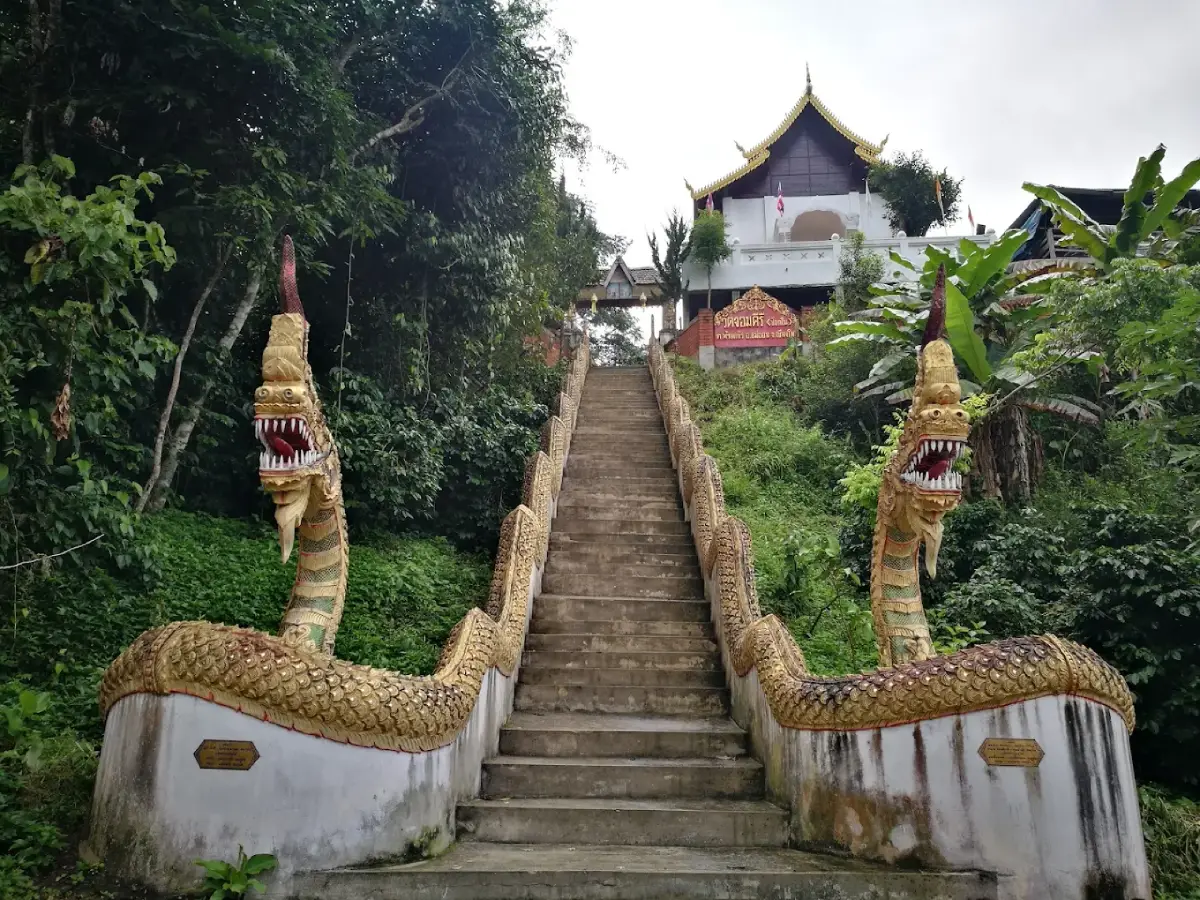
Wat Ban Pok
Operating day: Daily
Operating time: 08.00 - 17.00
Wat Ban Pok is a community Buddhist temple in Moo 1, Ban Pok, Huai Kaeo Subdistrict, Mae On District, Chiang Mai Province. It is a private community temple of the Mahanikaya order, registered under temple code 350230402 and established in 1936. Wat Ban Pok remains an active monastery with resident monks and continuing Buddhist activities. The temple stands within one of Mae On's highest mountain communities, where Buddhism, miang tea gardens, Arabica coffee, watershed forest and local resource management have developed together over generations.
Older temple information identified Phra Suthat Niramayo as abbot, but the more recent 2025 Kathin record lists Phra Kittiphong Tuladhammo as abbot and records five monks in residence. The current article therefore uses Phra Kittiphong Tuladhammo as the present abbot, while Phra Suthat Niramayo belongs to the earlier period of temple administration.
Wat Ban Pok continues to appear in the current Buddhist temple register for Huai Kaeo Subdistrict. The 2025 Kathin information also recorded five resident monks and scheduled the temple's Kathin ceremony for 2 November 2025 at 09.00. Together, these records show that Wat Ban Pok remains a functioning religious institution rather than an abandoned or purely historical site.
The history of the temple is best understood together with the history of Ban Pok itself. Community oral history records that Lua people were among the earlier inhabitants of the area approximately two centuries ago. After some of the earlier population moved away, northern Thai families from the Ban Pa Ngio and Pa Fang areas of Doi Saket District settled in the mountains and developed livelihoods based on miang tea gardens, rice cultivation and upland farming.
Life in early Ban Pok was physically demanding. Travel between mountain settlements depended on walking and on pack horses and cattle for transporting goods. Establishing a village monastery therefore had practical as well as spiritual importance because residents could make merit, listen to Dhamma, organize ceremonies and maintain community relationships without repeatedly traveling long distances to another settlement.
The name Ban Pok is connected with the settlement pattern itself. Houses were organized in clustered groups known locally as pok. The community developed three main settlement sections: Pang Nok, Pang Klang and Pang Nai. Wat Ban Pok became a religious center linking residents from these different sections.
The temple was established in 1936. By 2026, Wat Ban Pok has a history of about ninety years. During that period, the mountain communities east of Chiang Mai changed dramatically, moving from an era of footpaths and pack animals to paved access roads, highland agricultural development, commercial Arabica coffee and a growing tourism economy connected with Mae Kampong, Mae Lai and Ban Pok.
The physical environment gives Wat Ban Pok much of its character. Ban Pok lies at an average elevation of approximately 1,300 to 1,500 metres above sea level. The terrain combines mountain plateaus, steep slopes and watershed forests in the Mae On basin. Temperatures are generally cooler than the Chiang Mai lowlands, particularly during the late rainy season and winter.
Ban Pok also maintains a community forest of approximately 1,692 rai. The forest provides watershed protection, medicinal plants, local food resources and an environmental buffer for surrounding agricultural land. Community management of this forest is one of the defining features of Ban Pok and is directly related to the sustainability of tea and coffee farming.
This relationship between monastery, forest and agriculture is important. Water from the forest supports households and farms, while shade, humidity and soil conditions contribute to the cultivation of miang tea and Arabica coffee. Wat Ban Pok exists within the same ecological system rather than in a separate religious zone.
Miang has been part of Ban Pok's economy and cultural life since the community's early development. The leaves are processed into fermented tea traditionally eaten across northern Thailand. Mountain humidity and cooler temperatures are well suited to tea cultivation, allowing households to develop miang gardens as a long-term livelihood.
Arabica coffee later became increasingly important. Ban Pok farmers developed organized coffee production and community-enterprise networks, including quality tea and coffee groups and larger cooperative farming initiatives. Provincial agricultural agencies have highlighted Ban Pok coffee as an example of rural economic development linked to forest conservation.
The community has also developed products such as tea-leaf pillows, demonstrating an effort to create additional value from local agricultural resources. Coffee, tea products, homestays and nature-based businesses now provide several income streams rather than leaving households dependent on a single crop.
Wat Ban Pok should therefore be seen within this broader community economy. The temple supports Buddhist ceremonies and merit-making while residents manage farms, community forest and tourism businesses. Temple, households, forest and agricultural land remain closely interconnected in everyday life.
Current public sources do not provide sufficiently reliable measurements, construction dates or architectural descriptions for individual structures such as the viharn, ubosot, stupa, principal Buddha image, bell tower or assembly hall at Wat Ban Pok. For that reason, this article does not transfer architectural details from other temples with similar names or from neighboring monasteries.
This distinction is particularly important because Chiang Mai has more than one temple with a similar Ban Pok or Ban Pok spelling. A separate Wat Ban Pok in Samoeng District has a different history and foundation date. The temple discussed here is specifically the monastery in Moo 1, Huai Kaeo Subdistrict, Mae On District.
Visitors should begin with the public worship areas that are open at the time of their visit and treat the monastery as a functioning religious site. Monks' residential areas should not be entered without permission, and sacred objects should not be handled unnecessarily.
Kathin is the clearest currently documented annual religious event. In 2025, Wat Ban Pok scheduled its Kathin ceremony for 2 November at 09.00, with five monks in residence during the rains retreat. In a small mountain community, Kathin also serves as an important social gathering, bringing together resident families, relatives and supporters from other areas.
Residents help prepare food, offerings and ceremonial space during Kathin. Visitors who attend should give priority to worshippers, avoid blocking processions and ask permission before photographing monks or participants at close range.
As an active monastery, Wat Ban Pok also participates in normal Buddhist observances throughout the year. No unverified schedule for specific forest-robe ceremonies, relic-bathing festivals or other annual events is added here because current public announcements for such events were not available.
The most recent abbot information identifies Phra Kittiphong Tuladhammo. This replaces the name Phra Suthat Niramayo that appears in older travel information and illustrates why current temple administration should be checked rather than copied from older destination pages.
Ban Pok is geographically close to Mae Kampong but offers a different visitor experience. Mae Kampong has a highly developed homestay, restaurant and café economy, while Ban Pok remains more dispersed and strongly associated with forest, coffee cultivation and mountain scenery. Wat Ban Pok is therefore useful for travelers looking for a quieter community environment.
The Giant Chiangmai is one of Ban Pok's best-known visitor destinations. Built around a large tree in the mountain forest, the café helped introduce the village to a wider tourism audience. Its location makes it practical to combine with a visit to Wat Ban Pok.
The road between local attractions can be narrow and steep. Travelers should use low speeds, particularly during the rainy season. Large vehicles require extra care, while drivers without mountain-road experience may prefer hired local transport.
Luge Inthara Forest Hill offers another activity within the wider Ban Pok area for travelers interested in outdoor recreation. Those seeking a quieter trip can instead focus on cafés, forest views and an overnight stay.
Mae Kampong Village is only a short mountain drive from Ban Pok. Current accommodation mapping places Wat Ban Pok roughly three kilometres from the Mae Kampong area, making it realistic to combine both communities in a single day.
Wat Khantha Phueksa, commonly known as Wat Mae Kampong, adds another religious dimension to the route. It is known for its carved wooden viharn and water-surrounded ordination hall. Visiting Wat Ban Pok and Wat Khantha Phueksa on the same trip allows travelers to compare two village temples within the same highland subdistrict.
Wat Ban Pok is closely linked with forest and agricultural identity, while Wat Khantha Phueksa is strongly associated with the built heritage and tourism history of Mae Kampong. Their proximity makes them complementary rather than competing destinations.
Mae Kampong Waterfall can be added after the temple visits, while travelers with additional time can continue toward Kew Fin Viewpoint. Mountain roads should not be underestimated: a short distance on a map may still require careful driving because of gradients, curves and traffic.
The cool season and late rainy season are particularly attractive in Ban Pok. Forests are green, temperatures are comfortable and mist can develop under suitable conditions. During the rainy season, however, road surfaces may become slippery and visibility can deteriorate quickly.
Vehicles should be in good condition, especially brakes and tires. Motorcycles are practical only for riders experienced on steep mountain roads. Helmets should be worn at all times, and unnecessary speed should be avoided through residential areas.
Getting There from Chiang Mai city normally involves traveling east through San Kamphaeng toward Mae On, entering Huai Kaeo Subdistrict and continuing through the Mae Lai–Mae Kampong mountain corridor toward Ban Pok. Total distance is generally around 50 to 60 kilometres depending on the starting point and route. Private car, rental car or hired driver is the most practical option.
Navigation users should search specifically for “Wat Ban Pok, Huai Kaeo, Mae On, Chiang Mai”. A similarly named Wat Ban Pok in Samoeng District is a completely different temple. Checking the subdistrict and district before departure prevents a major navigation error.
Respectful temple clothing is appropriate. Shoulders and knees should be covered, shoes removed when entering designated sacred buildings and voices kept low. Visitors should remember that this is a monastery used by residents rather than a tourism site created primarily for outsiders.
Photography should also respect local residents. Do not block village roads or photograph people at close range without permission. The narrow roads are working routes used by farmers, residents and local businesses throughout the day.
Food and café options can be integrated easily into a Ban Pok route. The Giant Chiangmai is approximately one kilometre from the temple area and can be contacted at 086-776-2946. Evergreen 2 is another combination resort, café and restaurant, with contact number 063-632-6826. Lan Na Wild offers accommodation and dining and can be contacted at 089-143-9225.
Closer to Mae Kampong, At-Mae-Kampong can be contacted at 082-760-8079, while Kampong Coffee can be reached at 081-951-4797. These options make it easy to continue from Ban Pok into Mae Kampong without returning to the lowlands for meals.
Lannawild Resort lies in Moo 1, Huai Kaeo and is approximately 1.3 kilometres from Wat Ban Pok according to current accommodation mapping. The property can be contacted at 089-143-9225. Evergreen 2, Ban Pok HUG VIEW and Thammada Riverside Homestay are additional nearby options.
Ban Pok HUG VIEW can be contacted at 087-575-9579, while Thammada Riverside Homestay uses 061-365-2429. Tamnan Ban Pok is another local accommodation option, with current business information listing 083-864-4888.
Staying overnight provides a quieter experience than a day trip. Morning temperatures are cool, local traffic is lighter and travelers have more time to explore the monastery, coffee culture and surrounding forest without rushing.
Guests should conserve water and electricity, reduce plastic waste and keep noise down at night. Ban Pok remains a residential mountain community, not a resort compound separated from local life.
The community forest is also suitable for travelers interested in conservation, but access should follow local rules. Plants, wildlife and forest products should not be removed, and fire should never be used outside designated areas, particularly during the dry season.
The forest directly supports Ban Pok's agricultural economy. Coffee and miang gardens depend on shade, humidity and water generated by the watershed. Buying community coffee therefore connects tourism spending with a local production system that benefits from forest conservation.
Wat Ban Pok provides an effective starting point for understanding these relationships. From the monastery, travelers can continue toward coffee businesses, forest-based attractions, accommodation and Mae Kampong, creating a route in which religion, economy and ecology remain connected.
A half-day itinerary can combine Wat Ban Pok with The Giant Chiangmai and other Ban Pok forest cafés. A full day can add Mae Kampong Village, Wat Khantha Phueksa and Mae Kampong Waterfall. Travelers staying overnight can extend the route toward Kew Fin or Teen Tok Royal Project Development Center the following morning.
Visiting Ban Pok and Mae Kampong together is particularly useful for understanding two different models of highland community tourism. Ban Pok remains strongly identified with community forest and coffee, while Mae Kampong has developed a more intensive homestay and village-tourism economy.
The strength of Wat Ban Pok therefore lies not in a single monumental landmark but in its relationship with village history, miang culture, coffee, community forest and continuing Buddhist practice. The significance of a mountain community temple is measured less by architectural scale than by its role in the lives of residents.
From the early Lua settlement and migration from Doi Saket to miang cultivation, the establishment of the temple in 1936, the rise of Arabica coffee and the development of tourism, Ban Pok has changed repeatedly while retaining a strong local identity. Wat Ban Pok remains one of the institutions linking these historical periods.
Travelers should allow enough time to observe the surrounding mountains, village roads, gardens, cafés and forest rather than treating the monastery as a quick stop. The broader landscape explains why Wat Ban Pok matters to the community.
For travelers who prefer slow travel and local temples, Wat Ban Pok offers a quieter alternative to Chiang Mai's crowded religious attractions. Visitors can make merit in a cool mountain environment and continue through a community where agriculture and forest remain highly visible.
Wat Ban Pok today is therefore a living Buddhist monastery, a record of the development of a highland community and a cultural link between faith, watershed forest, miang and coffee. Its resident monks, current abbot and continuing Kathin tradition show that the temple remains an active part of contemporary Lanna village life.
| Name | Wat Ban Pok |
| Type | Community Buddhist Temple, Mahanikaya Order |
| Temple Code | 350230402 |
| Location | Moo 1, Ban Pok, Huai Kaeo, Mae On District, Chiang Mai 50130, Thailand |
| Established | 1936 |
| Current Abbot | Phra Kittiphong Tuladhammo |
| Earlier Abbot Information | Phra Suthat Niramayo |
| Resident Monks | Five monks according to the 2025 Kathin record |
| Documented Annual Event | Kathin on 2 November 2025 at 09.00 |
| Community Character | Highland settlement divided into Pang Nok, Pang Klang and Pang Nai, with miang tea, coffee and watershed-forest traditions |
| Community Elevation | Approximately 1,300–1,500 metres above sea level |
| Ban Pok Community Forest | Approximately 1,692 rai of watershed and community-managed forest |
| Traditional Livelihoods | Miang tea gardens, Arabica coffee, upland agriculture and tea-leaf products |
| Community Role | Village Buddhist center for worship, merit-making, Kathin and community religious activities |
| Getting There | Travel east from Chiang Mai through San Kamphaeng and Mae On, then continue into Huai Kaeo along the Mae Lai–Mae Kampong–Ban Pok mountain corridor. Search specifically for Wat Ban Pok, Huai Kaeo, Mae On. |
| Current Status | Active Buddhist monastery with resident monks and continuing religious activities |
| Nearby Attractions | 1. The Giant Chiangmai, about 1 km 2. Luge Inthara Forest Hill, about 2 km 3. Mae Kampong Village, about 3 km 4. Wat Khantha Phueksa / Wat Mae Kampong, about 3 km 5. Mae Kampong Waterfall, about 4 km |
| Nearby Restaurants And Cafés | 1. The Giant Chiangmai, about 1 km, Tel. 086-776-2946 2. Evergreen 2, about 2 km, Tel. 063-632-6826 3. Lan Na Wild, about 2 km, Tel. 089-143-9225 4. At-Mae-Kampong, about 3 km, Tel. 082-760-8079 5. Kampong Coffee, about 3 km, Tel. 081-951-4797 |
| Nearby Accommodations | 1. Lannawild Resort, about 1 km, Tel. 089-143-9225 2. Evergreen 2, about 2 km, Tel. 063-632-6826 3. Ban Pok HUG VIEW, about 2 km, Tel. 087-575-9579 4. Thammada Riverside Homestay, about 2 km, Tel. 061-365-2429 5. Tamnan Ban Pok, about 3 km, Tel. 083-864-4888 |
Frequently Asked Questions (FAQ)
Q: Where is Wat Ban Pok?
A: Wat Ban Pok is in Moo 1, Ban Pok, Huai Kaeo Subdistrict, Mae On District, Chiang Mai 50130. It is a community Buddhist temple of the Mahanikaya order.
Q: When was Wat Ban Pok established?
A: Wat Ban Pok was established in 1936. By 2026, the temple has served the highland Ban Pok community for approximately ninety years.
Q: Who is the current abbot of Wat Ban Pok?
A: Phra Kittiphong Tuladhammo is listed as abbot in the 2025 Kathin information. Older sources identified Phra Suthat Niramayo.
Q: What is culturally important about Ban Pok?
A: Ban Pok is a historic highland community associated with miang tea gardens, Arabica coffee and a community-managed watershed forest of approximately 1,692 rai.
Q: What important religious event is held at Wat Ban Pok?
A: Kathin is the best-documented annual event. In 2025, it was scheduled for 2 November at 09.00, with five monks recorded in residence.
Q: Is Wat Ban Pok in Mae On the same temple as Wat Ban Pok in Samoeng?
A: No. This Wat Ban Pok is in Moo 1, Huai Kaeo Subdistrict, Mae On District and was established in 1936. The similarly named temple in Samoeng is a separate monastery with a different history.
Q: How do I get to Wat Ban Pok?
A: Travel from Chiang Mai through San Kamphaeng and Mae On into Huai Kaeo, then follow the Mae Lai–Mae Kampong mountain corridor toward Ban Pok. Mountain roads can be narrow and steep, so a well-maintained car or experienced hired driver is recommended.
Q: What can I visit after Wat Ban Pok?
A: Nearby options include The Giant Chiangmai, Mae Kampong Village, Wat Khantha Phueksa and Mae Kampong Waterfall. Staying overnight in Ban Pok also allows more time for coffee, forest scenery and quiet morning travel.
 Category: ●Places of Worship
 Group: ●Temple
Last Update : 5 HourAgo
 Last Update : 5 HourAgo
 Click to Access the Navigation Map GPS
 Muang Chiang Mai(121)Chom Thong(47)Mae Chaem(25)Chiang Dao(33)Doi Saket(68)Mae Taeng(85)Mae Rim(69)Samoeng(29)Fang(71)Mae Ai(59)Phrao(70)San Pa Tong(103)San Kamphaeng(66)San Sai(73)Hang Dong(73)Hot(32)Doi Tao(22)Omkoi(11)Saraphi(74)Wiang Haeng(15)Chai Prakan(28)Mae Wang(32)Mae On(22)Doi Lo(34)Galyani Vadhana(1)


