
lovethailand home >North Travel Attractions >Chiang Mai Travel Attractions >Mae On >Mae Tha > Wat Chom Tham
TL;DR: Wat Chom Tham is located at 84 Moo 1, Ban Tha Mon, Mae Tha, Mae On District, Chiang Mai 50130, Thailand, open Daily, hours 09.00 – 17.00.
Wat Chom Tham
Open Days: Daily
Opening Hours: 09.00 – 17.00
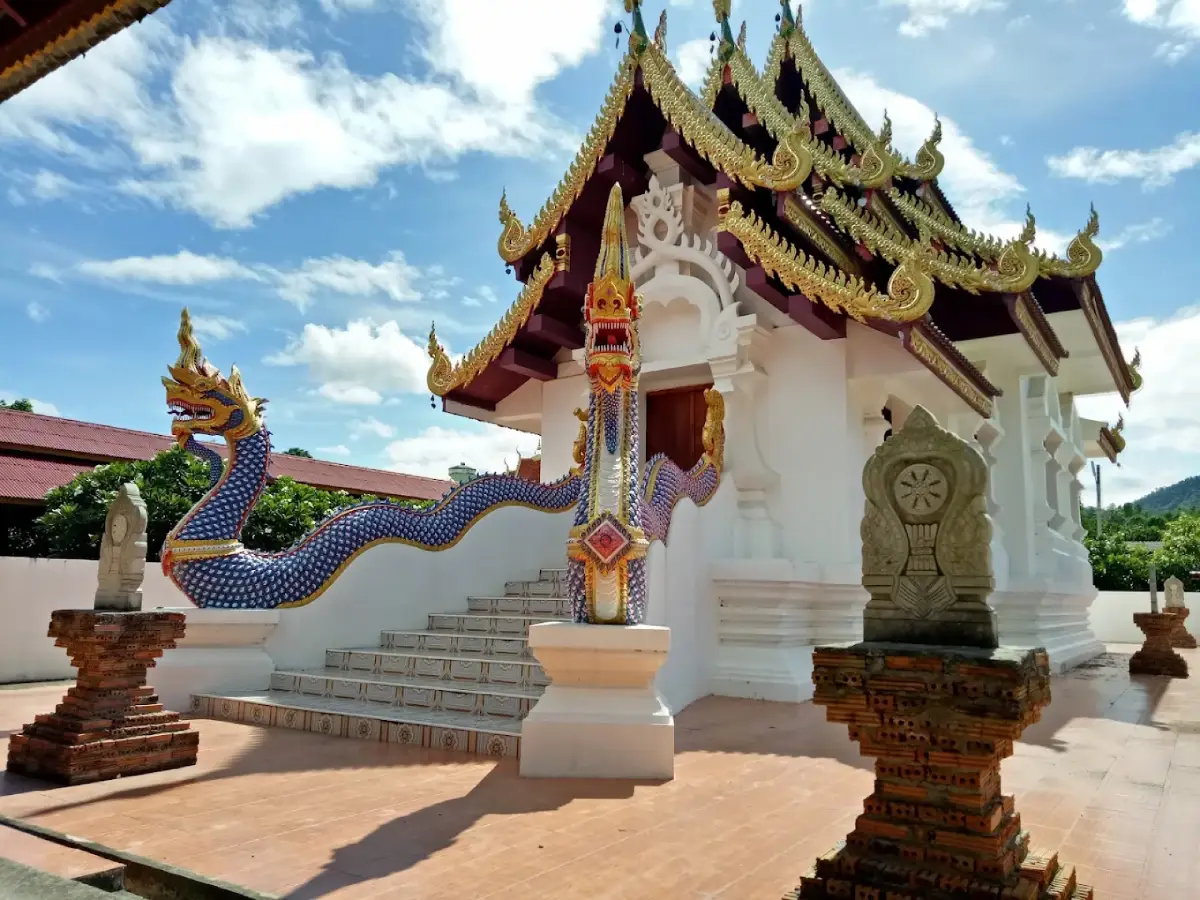
Wat Chom Tham, located in Ban Tha Mon, Moo 1, Mae Tha Subdistrict, Mae On District, Chiang Mai Province, is a historic community temple of the Mahanikaya tradition with a recorded foundation date of 6 June 1642. With more than 380 years of history, the temple represents a long connection between Buddhism, Lanna village life, agriculture, and the rural communities east of Chiang Mai. Today it is also widely known for its monumental golden Phra Maha Ganapati, a nine-headed and eighteen-armed form of Ganesha, together with a large white Phra Chao Than Chai Buddha image and a collection of Hindu deities, naga imagery, Buddhist buildings, stupas and meditation facilities.
Wat Chom Tham stands at 84 Moo 1, Ban Tha Mon, Mae Tha Subdistrict, Mae On District, Chiang Mai 50130. The temple occupies a hilly rural setting surrounded by farmland, village houses and mountain scenery. Its position on elevated ground is closely connected with its traditional identity. Local historical records also refer to the temple as Wat Mon Chom Tham, with the northern Thai word “mon” commonly used for a hill or raised area. The setting remains one of the temple's defining features because visitors experience both a religious compound and the quieter agricultural landscape of Mae On.
The temple was officially established on 6 June 1642. This date places its origins deep within the historical Lanna period and shows that Wat Chom Tham existed centuries before Mae On developed as a modern tourism destination. A village temple in northern Thailand traditionally served many functions. It was a place for merit-making and Buddhist ceremonies, but it also functioned as a meeting point, a place for education, a venue for annual festivals and an important institution through which community relationships were maintained.
Early monastic figures associated with the creation and administration of Wat Chom Tham include Kruba Tepin, Kruba Potha and Kruba Puttha. Historical temple records describe construction as a collaborative effort involving monks and local devotees, who helped make bricks and build the religious structures together. This form of community-based construction was characteristic of many rural Lanna temples, where religious buildings emerged from collective labor and village faith rather than from a single centralized construction program.
The succession of monks who governed the temple provides another important record of its continuity. Names preserved in local documentation include Kruba Tepin, Kruba Potha, Kruba Puttha, Phra Buntha Attamitto, Phra In Kham, Phra Sao Chandawangso, Phra Bunsri Kalyano, Phra Lan Chandasaro, Phra In Kaeo Kantasilo, Phra Bunloet Piyasilo, Phra Kham Attadanto and Phisut Subhattho. The latter later received the ecclesiastical title Phra Khru Suphatthara Thammarangsi.
Phra Khru Suphatthara Thammarangsi (Phisut Subhattho) has played a particularly important role in shaping the modern temple. A major phase of development began around 2010, during which several buildings and facilities were constructed or improved. Recent records continue to identify him as the abbot of Wat Chom Tham, and his activities extend into the surrounding community. In March 2026, for example, he participated in an educational event in Mae On and gave Buddhist guidance to graduating students, illustrating the continuing relationship between the temple, local schools and village society.
Wat Chom Tham received its royal boundary for the ordination hall, or Wisungkhamasima, on 6 February 2013. The consecrated boundary measures approximately 20 by 40 metres. This status is significant because it formally defines the sacred area in which Sangha acts can be carried out according to Buddhist monastic discipline. The temple's reinforced-concrete ubosot itself measures around 20 by 40 metres and was constructed in 2012. Its principal Buddha image is seated in meditation posture and measures approximately 50 inches across the lap.
One of the most historically significant structures is the viharn. Temple documentation records dimensions of approximately 4.50 by 9.55 metres and associates the structure with the original foundation year of 1642. Although buildings of such age inevitably undergo repair and restoration over generations, the viharn remains an important link between the present compound and the temple's early history. In the traditional Lanna temple plan, the viharn serves as one of the principal spaces for devotional practice and communal worship.
The temple's preaching and assembly hall, or sala kan parian, measures approximately 7.50 by 16 metres and was constructed in 2008 as a part-masonry, part-timber building. Inside is another principal Buddha image in meditation posture with a lap width of approximately 60 inches. The hall accommodates merit-making ceremonies, sermons, meetings and community gatherings, making it one of the spaces where the religious and social functions of Wat Chom Tham overlap most clearly.
A reinforced-concrete chanting hall measuring approximately 9 by 25 metres was constructed in 2009. The temple also has at least two monks' residences, one reinforced-concrete building and one timber building. A multipurpose hall measuring about 12 by 50 metres was constructed in 2011, while a merit-making hall dates to 2008. Together, these structures allow Wat Chom Tham to support daily monastic life, Buddhist ceremonies, funeral and memorial activities, community programs and events involving larger groups of residents.
Other facilities include a bell tower, a drum tower, a kitchen, storage facilities, guest houses and a large meditation facility measuring approximately 12 by 80 metres. The presence of these buildings is important for understanding Wat Chom Tham as an active monastery rather than simply a tourist attraction. Rural temples must provide spaces for monks, visitors, village ceremonies, food preparation, religious retreats and community work, and Wat Chom Tham retains this broad functional character.
The temple contains a substantial collection of Buddhist images. In addition to the principal images in the ubosot and assembly hall, records describe six large Buddha images with lap widths of around 6 metres, one image with a lap width of around 10 metres, twenty-eight bronze Buddha images measuring approximately 20 inches across the lap and six standing Buddha images around 2 metres high. The temple also contains at least two stupas, with recorded bases of approximately 8 by 8 metres and 6 by 6 metres.
These structures show that Wat Chom Tham has developed in two broad phases. The first is the historical Lanna village-temple tradition represented by the viharn, stupas, monks' quarters and long record of community patronage. The second is the major modern development phase from around 2010 onward, during which larger buildings, meditation facilities and new sacred monuments were added. This combination is fundamental to the temple's character today.
The most visually striking modern landmark is Phra Maha Ganapati, the nine-headed and eighteen-armed Ganesha. The monumental golden sculpture rises approximately 9.99 metres from its base to the top of the heads. Its eighteen arms hold a variety of symbolic objects, while one hand is presented in a blessing gesture. The complex form, multiple heads and extensive gilded detailing make it dramatically different from the more familiar four-armed Ganesha images commonly seen in Thailand.
Ganapati is one of the principal names of Ganesha, the Hindu deity widely associated with wisdom, learning, arts, success and the removal of obstacles. Devotion to Ganesha has a long history in Thailand and appears in both specifically Hindu shrines and some Buddhist religious environments. At Wat Chom Tham, the monumental image has become a major gateway through which new visitors discover the temple. Many people arrive because of their interest in Ganesha and then continue to explore the Buddhist history and architecture of the wider monastery.
The Phra Maha Ganapati area includes additional sacred figures such as Shiva, Uma Devi, Lakshmi and Saraswati. There is also an image of Mucalinda Naga and a representation of Thao Wessuwan near the devotional area. Together they create a contemporary sacred landscape that reflects the broad range of devotional practices now found in Thailand. Visitors should remember that these figures come from different religious and cultural traditions and should approach each area respectfully rather than viewing the complex only as a collection of photo opportunities.
Another major landmark nearby is the large white Phra Chao Than Chai Buddha image. Elaborate naga sculptures form part of the visual setting around the image, while the elevated location opens onto views of the surrounding countryside. This section of the temple provides a very different visual experience from the golden Ganesha complex, combining a monumental Buddha image with northern Thai religious symbolism and rural scenery.
The Mucalinda Naga imagery also has a direct connection with Buddhist tradition. According to Buddhist narratives, Mucalinda protected the Buddha from rain and wind after enlightenment by sheltering him beneath his expanded hood. Naga figures subsequently became among the most widespread protective motifs in Thai and Lanna Buddhist art. Their presence at Wat Chom Tham therefore connects the newer devotional zone with established Buddhist symbolism.
Visitors who want to understand Wat Chom Tham properly should not go directly to the nine-headed Ganesha and leave immediately afterward. The older Buddhist areas tell a different and equally important story. The viharn, ubosot, stupas, chanting hall, principal Buddha images and monastic buildings show that the temple's identity developed over centuries before the modern Ganapati monument became famous.
The registered temple land covers approximately 5 rai, 1 ngan and 99 square wah, while two additional monastic land plots total around 20 rai. This allows the temple compound to spread across several functional areas rather than concentrating every structure within a small courtyard. Visitors encounter Buddhist worship spaces, monastic areas, halls, elevated viewpoints, devotional sculptures and open areas as they move through the site.
Wat Chom Tham also has an important role in Buddhist education and community outreach. A local public-training unit was established in 2019, while a large meditation facility supports religious practice and teaching. This continues the traditional social function of the northern Thai monastery as a place where ethical teaching, community relationships and religious learning extend beyond formal ceremonies.
The temple and its surrounding community have also been associated with programs promoting observance of the Five Precepts, orderly temple environments and community participation. Such work is important because the maintenance and development of a rural monastery depend on cooperation between monks and local residents. Religious buildings, festivals and community facilities are sustained by this relationship rather than by tourism alone.
Wat Chom Tham continues to participate in the traditional Buddhist annual cycle. Kathin, held after the end of the rains retreat, remains an important community event. In 2025, the temple's Kathin ceremony was scheduled for 5 November and records listed five monks in residence for the rains retreat. Kathin is particularly significant in village temples because relatives, former residents and supporters often return to participate, strengthening ties between the monastery and the wider community.
Other major Buddhist observances typically shape temple life throughout the year, including Makha Bucha, Visakha Bucha, Asalha Bucha, the beginning and end of Buddhist Lent and locally organized merit-making. Travelers seeking a quiet visit should generally choose an ordinary weekday, while visitors interested in community religious culture may find major Buddhist days more active and socially engaging.
Wat Chom Tham is especially interesting as an example of how a historic Lanna community temple can change without completely losing its original function. A site founded in the seventeenth century now includes one of the most visually distinctive contemporary Ganapati monuments in northern Thailand. Yet monks still reside here, villagers continue to hold Buddhist ceremonies, and the older religious buildings remain part of the functioning monastery.
The popularity of the nine-headed Ganesha has also brought Wat Chom Tham into searches for sacred places and Ganesha worship in Chiang Mai. Visitors frequently come with personal interests related to work, education, business, arts or new beginnings. This modern devotional interest has increased the temple's visibility, but respectful conduct remains essential because the site is still an active Buddhist monastery rather than a purpose-built attraction.
At the Phra Maha Ganapati monument, it is worth spending time observing the sculpture before beginning any devotional practice. The nine heads and eighteen arms create a visual complexity rarely encountered in standard Ganesha imagery. The golden surface catches natural light, while the surrounding statues provide different viewing angles. Walking around the area slowly reveals more detail than taking only a frontal photograph.
Offerings are available in the devotional area for visitors who do not bring their own. There is therefore little need to carry elaborate offerings from Chiang Mai city. More important than the size of an offering is respectful behavior and observance of the temple's instructions. Weekends and religious holidays may attract more visitors, while weekdays and early opening hours generally provide a calmer experience.
Visitors should dress as they would for any functioning Thai temple. Shoulders and knees should be covered, shoes should be removed before entering sacred indoor spaces, and loud behavior should be avoided. Do not climb onto statue bases or touch religious images simply to create photographs. When people are praying or participating in ceremonies, allow sufficient space and avoid blocking access to sacred areas.
Morning and late afternoon are practical times to visit. Temperatures are usually more comfortable than at midday, and softer light brings out the gold details of the Ganapati monument. Because parts of the temple occupy sloping terrain, comfortable footwear is advisable. Extra care is useful during the rainy season, both on the approach road and on wet surfaces inside the compound.
The surrounding landscape is also part of the attraction. The road into Mae Tha passes through rural communities, agricultural land and low mountain scenery, offering a very different experience from temple-hopping inside Chiang Mai's old city. Travelers who enjoy independent road trips can therefore include Wat Chom Tham in a broader Mae On route rather than treating it as a single isolated destination.
Getting There is easiest by private car, rental car or hired driver. From Chiang Mai city, travelers can approach through San Kamphaeng and Mae On before continuing toward Mae Tha Subdistrict. Another approach is possible from the Ban Thi side of Lamphun Province. The final section toward the elevated temple areas includes bends and gradients, so drivers should reduce speed and take particular care during rain.
When using navigation apps, search specifically for “Wat Chom Tham, Mae Tha, Mae On, Chiang Mai” and verify the district and subdistrict before departure because several temples in Thailand have similar names. The correct Wat Chom Tham for the nine-headed Ganesha is in Ban Tha Mon, Moo 1, Mae Tha Subdistrict, Mae On District, Chiang Mai Province.
A visit of around one to two hours is suitable for travelers with a half-day itinerary. Begin with the traditional Buddhist section, pay respect to the principal Buddha images and examine the viharn and stupas before continuing toward Phra Maha Ganapati, Shiva, the goddess images, Mucalinda, Thao Wessuwan and Phra Chao Than Chai. This order helps place the modern devotional zone within the longer history of the monastery.
With a full day available, Wat Chom Tham can be combined with Muang On Cave and San Kamphaeng Hot Springs. Muang On Cave adds a natural and religious dimension, while the hot springs provide an easy place to relax after visiting the temple. Community-based attractions and smaller religious sites in the Mae On and San Kamphaeng area can also be added to create a broader itinerary focused on rural Chiang Mai.
The surrounding area offers local restaurants, cafés and small eateries scattered along the Mae On and San Kamphaeng routes. Dining choices range from simple local food to cafés and restaurants near the hot-spring area. Because some establishments are small independent businesses, travelers planning a late meal should keep more than one option in mind.
Accommodation is also available across Mae On and the neighboring San Kamphaeng area. Choices include small resorts, rural guest accommodation and properties near the hot springs. Staying overnight is useful for travelers planning a slower exploration of Mae On, while visitors interested only in Wat Chom Tham, Muang On Cave and the hot springs can comfortably complete the route as a day trip from Chiang Mai.
Basic visitor facilities at Wat Chom Tham include parking and toilets. The elevated terrain should still be considered by elderly visitors and anyone with limited mobility, as some areas require walking across sloping or uneven ground. Families should allow enough time to move between different sections without rushing.
What makes Wat Chom Tham particularly valuable is that its identity goes far beyond the phrase “nine-headed Ganesha temple.” The celebrated Ganapati image represents only the newest layer of a religious site whose history stretches back to 1642. The succession of abbots, the historic viharn, stupas, Buddha images, monastic facilities, major redevelopment from 2010 onward and long relationship with Ban Tha Mon together reveal a much fuller story.
Wat Chom Tham is therefore suitable for Buddhist visitors, Ganesha devotees, travelers interested in Lanna religious history, photographers and anyone exploring Mae On beyond its best-known attractions. The temple combines centuries of village history with contemporary devotional art in a setting where Buddhist practice, local community life, farmland and mountain scenery continue to coexist.
Travelers who previously knew Wat Chom Tham only through photographs of its monumental golden Ganapati will find considerably more on site. The temple's story extends from seventeenth-century monks and villagers making bricks together to the modern development led by Phra Khru Suphatthara Thammarangsi; from an old Lanna viharn and stupas to a modern ordination hall and meditation complex; and from traditional Buddha images to the monumental nine-headed Ganapati. Together, these layers make Wat Chom Tham a living religious landscape rather than simply a visual landmark.
| Name | Wat Chom Tham |
| Type | Community Buddhist Temple, Mahanikaya Tradition |
| Address | 84 Moo 1, Ban Tha Mon, Mae Tha, Mae On District, Chiang Mai 50130, Thailand |
| Coordinates | Approximately 18.7380548, 99.2469183 |
| Established | 6 June 1642 |
| Wisungkhamasima | Granted on 6 February 2013; sacred boundary approximately 20 x 40 metres |
| Abbot | Phra Khru Suphatthara Thammarangsi (Phisut Subhattho) |
| Temple Land | Approximately 5 rai, 1 ngan and 99 square wah, with two additional monastic land plots totaling around 20 rai |
| Highlights | Golden nine-headed, eighteen-armed Phra Maha Ganapati approximately 9.99 metres high, large Phra Chao Than Chai Buddha image, Mucalinda Naga and multiple sacred figures |
| Main Religious Buildings | Viharn, ubosot, sala kan parian, chanting hall, monks' residences, multipurpose hall, merit-making hall, bell tower, drum tower, meditation facility and stupas |
| Principal Buddha Images | Meditating Buddha image in the ubosot with approximately 50-inch lap width and another in the assembly hall with approximately 60-inch lap width |
| Other Sacred Objects | Large Buddha images, 28 bronze Buddha images, six standing Buddha images and at least two stupas |
| Other Sacred Figures | Phra Maha Ganapati, Shiva, Uma Devi, Lakshmi, Saraswati, Mucalinda Naga, Thao Wessuwan and Phra Chao Than Chai |
| Community Role | Religious center of Ban Tha Mon, venue for Buddhist ceremonies, community activities, public training and meditation |
| Annual Religious Activities | Buddhist observances and Kathin; the 2025 Kathin ceremony was scheduled for 5 November |
| Open Days | Daily |
| Opening Hours | 09.00 – 17.00 |
| Facilities | Parking and toilets |
| Travel Information | Best reached by private car, rental car or hired driver via San Kamphaeng–Mae On or from the Ban Thi side of Lamphun; the final approach includes bends and gradients |
| Current Status | Active Buddhist monastery with resident monks and continuing religious activities |
| Nearby Tourist Attractions | 1. Ban Pong–Huai Lan Community Ecotourism Group, about 5 km 2. Muang On Cave, about 5 km 3. Barami Tham Stupa Site, about 6 km 4. Sukkho Buddhist Forest Practice Site, about 8 km 5. San Kamphaeng Hot Springs, about 9 km |
| Nearby Restaurants And Cafés | 1. Madam Khon Suai Café, about 3 km, Tel. 064-193-5464 2. Baan Chan Café, about 7 km, Tel. 094-498-0513 3. The Spring 61 Restaurant, about 9 km, Tel. 089-759-5100 4. Him Khua Café, about 11 km, Tel. 064-261-9600 5. Paula Café Restaurant, about 12 km, Tel. 081-020-8841 |
| Nearby Accommodations | 1. Sangkham Resort, about 3 km, Tel. 094-939-2691 2. 100 LOVE Resort Mae On, about 5 km, Tel. 065-462-5627 3. Burilasai Hot Spring Resort & Spa, about 9 km, Tel. 053-317-887 4. AERA House, about 9 km, Tel. 085-666-5699 5. Baan Suan View Suai Resort Chiang Mai, about 10 km, Tel. 091-738-7465 |
Frequently Asked Questions (FAQ)
Q: Where is Wat Chom Tham in Chiang Mai?
A: Wat Chom Tham is at 84 Moo 1, Ban Tha Mon, Mae Tha Subdistrict, Mae On District, Chiang Mai 50130. It is a rural hill temple east of Chiang Mai city.
Q: When was Wat Chom Tham established?
A: Wat Chom Tham was established on 6 June 1642. Kruba Tepin, Kruba Potha and Kruba Puttha are among the early monks associated with its construction and administration.
Q: Who is the current abbot of Wat Chom Tham?
A: The current abbot is Phra Khru Suphatthara Thammarangsi, also known as Phisut Subhattho. He has played a major role in the temple's modern development since around 2010.
Q: What is special about the nine-headed Ganesha at Wat Chom Tham?
A: Phra Maha Ganapati is a monumental golden Ganesha with nine heads and eighteen arms, measuring approximately 9.99 metres from the base to the top. It is the best-known modern landmark at Wat Chom Tham.
Q: What else can visitors see besides Phra Maha Ganapati?
A: The temple contains a historic viharn, ubosot, stupas, chanting hall, meditation facilities, numerous Buddha images, a large Phra Chao Than Chai image, Mucalinda Naga, Shiva, Uma Devi, Lakshmi, Saraswati and Thao Wessuwan.
Q: What are the opening hours of Wat Chom Tham?
A: Wat Chom Tham is open daily from 09.00 to 17.00. Morning and late afternoon are generally more comfortable for walking and photography.
Q: How do travelers reach Wat Chom Tham?
A: Private car, rental car or a hired driver is the most practical option. Travelers can approach from San Kamphaeng and Mae On or from the Ban Thi side of Lamphun. The final approach includes bends and gradients, so careful driving is recommended.
Q: What attractions can be combined with Wat Chom Tham?
A: Muang On Cave and San Kamphaeng Hot Springs are practical additions to the same trip, while community attractions and smaller religious sites in the Mae On and San Kamphaeng area can create a full-day rural Chiang Mai itinerary.
 Category: ●Places of Worship
 Group: ●Temple
Last Update : 4 DayAgo
 Last Update : 4 DayAgo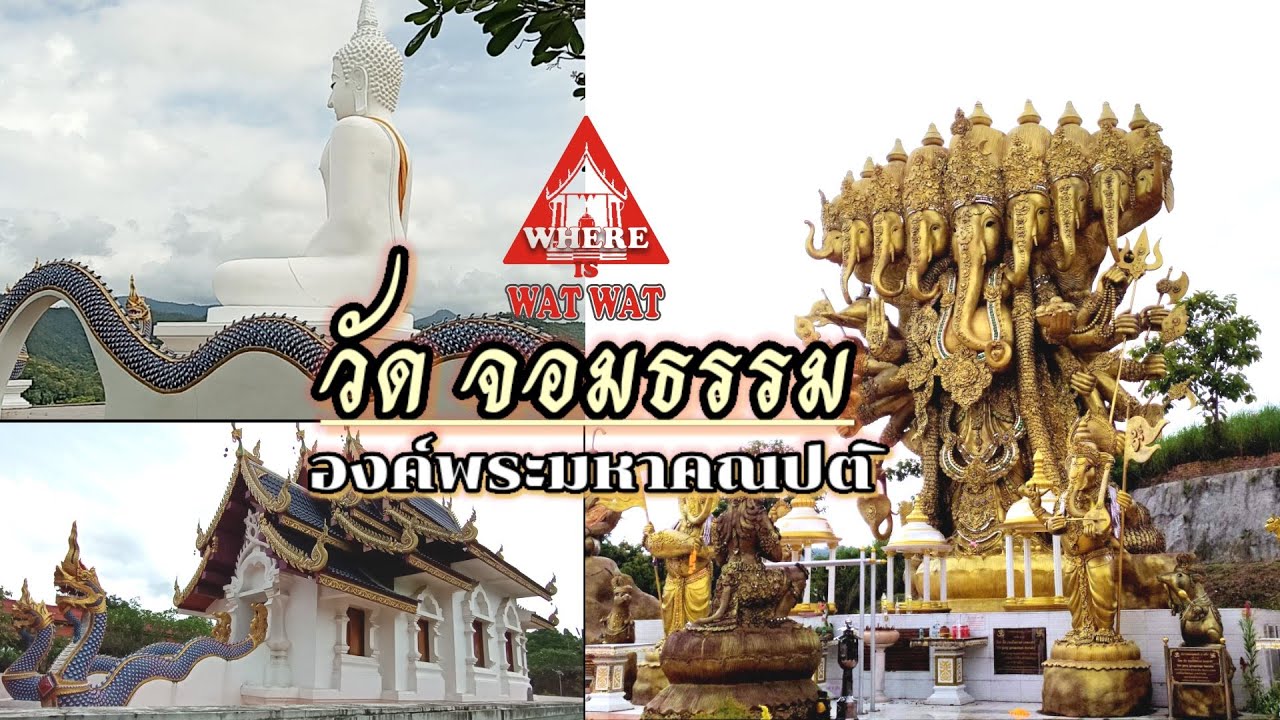
 Click to Access the Navigation Map GPS
Wat Chom Tham Map
Recommend

 Muang Chiang Mai(121)Chom Thong(47)Mae Chaem(25)Chiang Dao(33)Doi Saket(68)Mae Taeng(85)Mae Rim(69)Samoeng(29)Fang(71)Mae Ai(59)Phrao(70)San Pa Tong(103)San Kamphaeng(66)San Sai(73)Hang Dong(73)Hot(32)Doi Tao(22)Omkoi(11)Saraphi(74)Wiang Haeng(15)Chai Prakan(28)Mae Wang(32)Mae On(22)Doi Lo(33)Galyani Vadhana(1)


