
lovethailand home >North Travel Attractions >Chiang Mai Travel Attractions >Mae Wang >Mae Win > Wat Sop Win
TL;DR: Wat Sop Win is located at Ban Sop Win, Moo 9, Mae Win Subdistrict, Mae Wang District, Chiang Mai 50360, Thailand, open Daily, hours 08:00 - 17:00.

Wat Sop Win
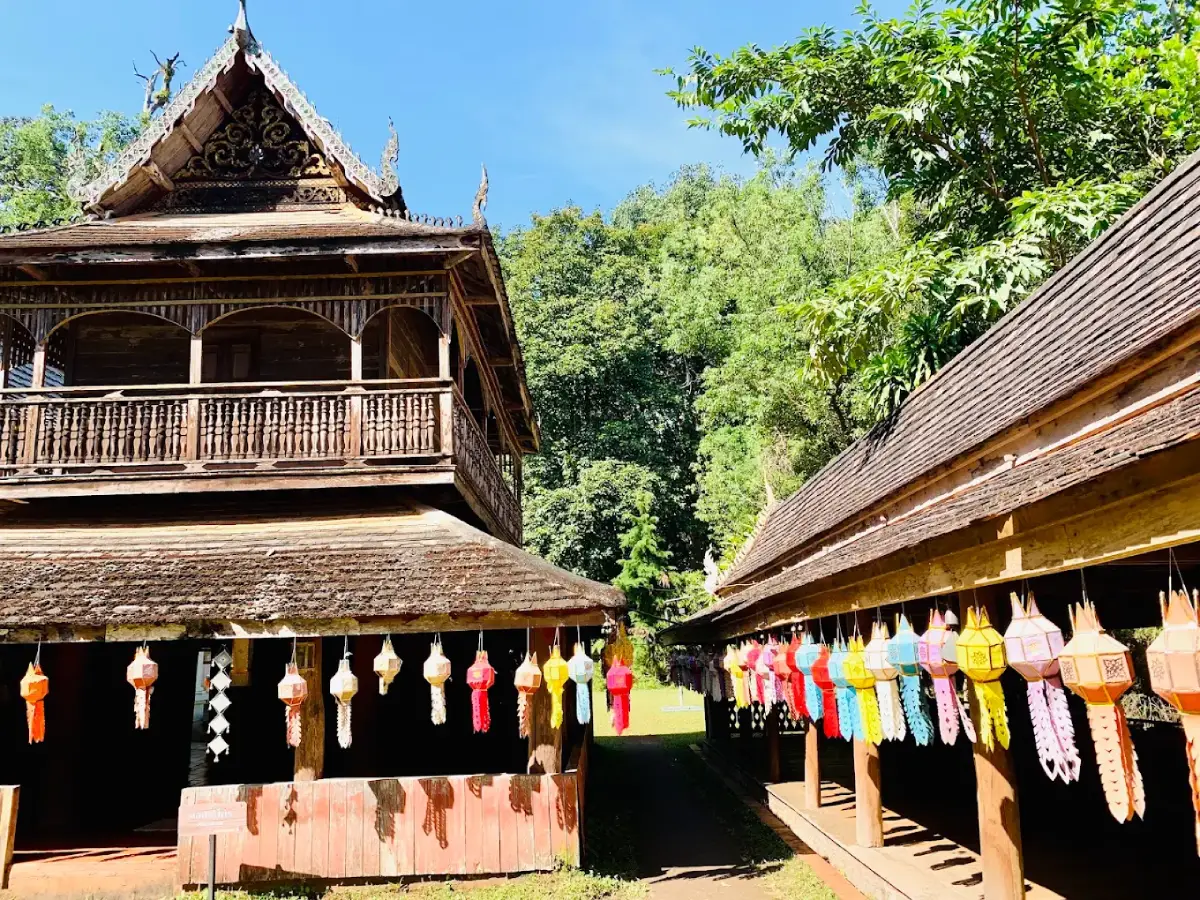
Open Days: Daily
Opening Hours: 08:00 - 17:00
Wat Sop Win is located in Ban Sop Win, Moo 9, Mae Win Subdistrict, Mae Wang District, Chiang Mai 50360, Thailand. It is a public non-royal Buddhist temple of the Mahanikaya order, registered under temple code 350220404 and officially established in 1897. By 2026, the monastery has approximately 129 years of registered history. Wat Sop Win remains listed as an active Buddhist temple and continues to serve the Ban Sop Win community, an important village known for its Buddhist heritage, agriculture, handicrafts, community forest, bamboo rafting and tourism. Its position is particularly significant because it also serves as one of the key landmarks on the route toward the remote forest monastery of Wat Luang Khun Win.
Current Buddhist temple registers continue to identify Wat Sop Win as a Mahanikaya public temple in Ban Sop Win, Moo 9, Mae Win Subdistrict, Mae Wang District, under registration code 350220404. A 2024 document from Thailand’s National Office of Buddhism also lists Phra Kittisak Suthiro as a monk affiliated with Wat Sop Win, confirming continuing monastic activity at the temple in the modern period.
The establishment year of 1897 places Wat Sop Win in the late nineteenth century, when Lanna was undergoing major administrative change. At village level, however, life remained strongly dependent on agriculture, forests, rivers and local travel routes. In such communities, monasteries were fundamental institutions. They supported merit-making, sermons, ordinations, funerary rites, Buddhist observances and collective village activities.
Ban Sop Win itself has a particularly interesting geographical identity. The village lies in a valley west of the Mae Wang district center. The Mae Wang River is the principal waterway, while the Mae Win River flows down from the Khun Win mountain area and joins it near the western side of the village. The Thai northern word “sop” refers to the meeting point of waterways, making the name Sop Win a direct description of the village landscape.
Local community history also preserves an older name, “Mueang Wit,” connected with a legend about a partial Buddha footprint on a large rock. The northern word “wit” or the related expression for something incomplete is said to have gradually evolved into “Win.” This belongs to the realm of local tradition rather than formal administrative history, but it provides valuable insight into the way residents have interpreted their landscape and place names across generations.
Mae Win Subdistrict Administrative Organization describes Ban Sop Win as a kind of principal village or local center within the subdistrict because many of Mae Win’s best-known activities are concentrated here. Roads, tourism services, handicrafts, accommodation, restaurants and river activities meet within the community. For travelers arriving from the lower Mae Wang area, Ban Sop Win marks a clear transition into the mountain and river landscapes of Mae Win.
Community-forest records describe Ban Sop Win as having approximately 238 households, with 284 male and 287 female residents, for a total population of about 571 people. The community manages approximately 1,004 rai of forest containing mixed deciduous and dry dipterocarp woodland. Residents make seasonal use of resources including wild vegetables, bamboo shoots, bamboo, ant eggs and other forest products.
This forest-management system is important for understanding Wat Sop Win because the monastery belongs to the same cultural landscape. Religion, forest resources, agriculture and river life are not isolated from one another. They form parts of the same village system in which residents worship at the temple, manage woodland, farm surrounding areas and increasingly earn income from tourism.
Ban Sop Win is also promoted as a handicraft tourism village. Mae Win Subdistrict Administrative Organization records a community OTOP center where locally produced goods are displayed and sold. Bamboo craft, decorative items and locally developed creative products are part of the village economy. Sop Win handicrafts, including miniature boat forms and bamboo work, have also appeared in provincial cultural and trade exhibitions.
Bamboo craft has a direct relationship with northern Thai cultural life. Bamboo is used not only for household objects but also for decorations, ceremonial items and offerings. Local craft knowledge therefore exists within the same cultural environment as the monastery even when individual objects are not specifically documented as Wat Sop Win temple products.
One of Ban Sop Win’s best-known modern activities is bamboo rafting on the Mae Wang River. Ecological research on the river identifies Ban Sop Win as a major end point for rafting, where bamboo rafts are removed from the water and transported back upstream. Restaurants and small businesses developed along the riverbanks to serve visitors, transforming an agricultural and ecological resource into part of the local tourism economy.
The relationship between the community and the Mae Wang River is not limited to tourism. Mae Win local authorities have organized river-cleaning activities using bamboo rafts, demonstrating that the village’s economic use of the river also creates a direct need for environmental stewardship.
Wat Sop Win fits naturally into this community-tourism landscape. Visitors can begin by paying respect at the temple and learning about the village, then continue to handicraft areas, restaurants or the Mae Wang River. Including the temple in an itinerary gives cultural depth to a trip that might otherwise focus only on outdoor recreation.
The monastery is especially important as a landmark on the route to Wat Luang Khun Win, an old forest temple located deep in the mountains. Official Thai tourism information recommends traveling along the Mae Wang road into Ban Sop Win, passing Wat Sop Win and continuing toward Huai Yuak before ascending the mountain route.
This gives Wat Sop Win a role extending beyond the temple compound itself. It effectively marks the entrance to a cultural and religious route leading from an accessible village monastery into a remote forest environment. Travelers moving toward Wat Luang Khun Win pass from houses and community roads into increasingly steep and isolated mountain terrain.
Wat Luang Khun Win lies approximately 7 km from Wat Sop Win by mapped location, although mountain-road conditions make the journey much slower than the distance suggests. Sections can be narrow, steep and rough. Thai government travel information recommends suitable vehicles or locally operated transport, particularly when road conditions are difficult.
This makes Wat Sop Win a sensible place to stop before proceeding into the mountains. Travelers can check weather, road conditions and available time before continuing. It also creates an opportunity to understand the relationship between the lower village community and the remote forest temple.
The connection is also cultural. Ban Sop Win’s local stories about Mueang Wit and the wider Khun Win area form part of the same regional memory in which mountains, sacred places and Buddhist traditions are linked. Wat Sop Win serves the principal village below, while Wat Luang Khun Win occupies a much more secluded forest setting.
Public sources currently provide limited reliable detail about individual architectural structures inside Wat Sop Win. Specific descriptions of the viharn, ubosot, principal Buddha image, chedi, bell tower or preaching hall are not sufficiently documented in modern sources. The temple should therefore be understood primarily through what is firmly established: its founding date, registered Mahanikaya status, location within Ban Sop Win and its continuing role within community life.
This lack of detailed architectural documentation does not reduce the temple’s importance. Many village monasteries derive their value from continuous use rather than monumental architecture. Wat Sop Win has remained part of its community for more than a century while the village has changed from a largely agricultural settlement into one of Mae Win’s best-known tourism centers.
As an active Mahanikaya community temple, Wat Sop Win belongs to the normal Buddhist cycle of holy days, Lent, the end of Lent, Kathin and family merit-making. Detailed public schedules for temple-specific annual festivals are not currently available, so the strongest way to understand its religious role is as the principal Buddhist institution of Ban Sop Win.
Ban Sop Win is predominantly a northern Thai community, which distinguishes it from many highland villages farther into Mae Win where Karen and other ethnic groups are more numerous. Agriculture remains part of the local economy, while tourism services have expanded substantially around the river and main road.
Over recent decades, bamboo rafting, accommodation, cafés, restaurants and outdoor tourism have brought increasing numbers of visitors into the village. Nevertheless, the monastery, community forest and handicraft traditions continue to reveal the older structure of Ban Sop Win beneath the modern tourism economy.
A 2026 tourism-community feature continues to promote Ban Sop Win as a bamboo-rafting destination and as a gateway to Wat Luang Khun Win. This recent coverage shows that the village remains a major part of Mae Win’s tourism identity rather than having been replaced by newer destinations.
The Mae Wang River remains central to that identity. Rafting allows visitors to see the valley from water level, while temple visits reveal the village’s religious structure. Combining both experiences produces a more complete understanding of Ban Sop Win than treating the river merely as an adventure attraction.
Wat Matchimaram lies approximately 1 km from Wat Sop Win. It is another community monastery of Mae Win but has a much longer registered history, dating to 1744. Visiting the two temples together provides a useful comparison between neighboring Buddhist communities.
Wat Tham Doi Ton lies approximately 5 km away and offers a very different atmosphere. It is known for its natural cave, mountain setting, sacred structures and Vipassana practice. Traveling from Wat Sop Win to Wat Tham Doi Ton therefore shifts the experience from village Buddhism toward meditation and natural seclusion.
Mae Wang Waterfall lies roughly 4 km from the temple and can easily be added to a cultural route. A relaxed day can begin at Wat Sop Win, continue to a neighboring temple, and finish with the waterfall or the Mae Wang River.
Travelers heading to Wat Luang Khun Win should allow considerably more time than the mapped distance suggests. The road climbs into mountain terrain and conditions may vary with weather. Using local transport can improve safety and also support community income.
Wat Sop Win therefore suits several kinds of visitors. Cultural travelers can learn about village life and Buddhism. Nature-oriented visitors can continue to rivers, waterfalls and community forest areas. Travelers interested in historic temples can use the monastery as a gateway toward Wat Luang Khun Win.
Food options around Ban Sop Win have expanded significantly. Nearby choices include Maewang elephant cafe @ River at approximately 0.6 km, MEEDEE Restaurant & Cafe at about 1.2 km, Plern Malee De Wang at around 1.9 km, Ma Mueang Win at about 3 km and Wang Ya Woo Cafe at around 4.2 km.
These businesses reflect the changing local economy. Some focus on Thai meals, others on coffee and light food, while several are integrated with accommodation or riverside tourism. Visitors no longer need to return to Mae Wang town for every meal.
Accommodation is also available close to the monastery. Rimtharnn Homestay Maewin is approximately 0.8 km away, Vivi Fiore and Karen Eco Lodge around 1.4 km, Chiang Mai Elephant Friends about 2 km and Serenity Resort - Chiang Mai approximately 4 km.
Staying overnight provides a much better opportunity to understand Ban Sop Win. The village feels different in the early morning and evening after day visitors leave. Community-style accommodation can also provide greater contact with local food, customs and the landscape.
Older community-homestay information describes cultural activities such as northern-style meals, bai sri su khwan blessing ceremonies, local dance and music. These activities illustrate the way residents have transformed existing cultural practices into community-based tourism experiences.
Visitors should remember that Ban Sop Win is a living village rather than a tourism park. Homes, temples, shops, farms and tourist businesses share the same space. Parking, noise and photography should therefore be approached with consideration for residents.
Temple visitors should dress modestly and behave quietly. Sacred buildings should only be entered when open, shoes should be removed where required and monastic activities should not be disturbed.
Wat Sop Win does not operate as a ticketed tourist attraction. Normal visits for worship and merit-making do not involve an admission charge. Donations may be made voluntarily according to Buddhist custom.
The 08:00–17:00 opening period used here is a practical general visiting window for a community temple because no current official opening-hours notice for Wat Sop Win has been published. It should not be interpreted as a formally announced temple schedule.
Getting There from Chiang Mai city, take Highway 108 south through Hang Dong toward San Pa Tong. Turn onto Highway 1013 toward Mae Wang and Mae Win. Continue past the Mae Wang rafting area into Ban Sop Win, Moo 9. The temple is located within the village and serves as an important landmark for the route to Wat Luang Khun Win.
The temple is located at approximately latitude 18.65485 and longitude 98.68896, based on geographic survey data for religious sites in Mae Win. Its location is relatively accessible compared with the mountain monasteries farther west.
The cool season offers comfortable temperatures for combining temple visits with outdoor activities. The hot season is popular for river activities, while the rainy season brings particularly lush scenery but can make mountain roads more difficult.
A half-day itinerary can combine Wat Sop Win, the village handicraft area and the Mae Wang River. A full day allows time for Wat Matchimaram, Mae Wang Waterfall or Wat Tham Doi Ton. Wat Luang Khun Win deserves additional time because of the mountain access route.
The Wat Sop Win–Wat Luang Khun Win route is especially rewarding for travelers interested in Buddhist culture because it begins with an accessible village monastery and gradually enters a remote forest landscape. The journey demonstrates the wide range of settings in which Lanna Buddhist institutions developed.
Wat Sop Win can therefore be understood through at least four dimensions. Historically, it dates to 1897. Religiously, it remains a registered Mahanikaya community temple. Geographically, it stands at the meeting point of village, river and mountain routes. Socially, it forms part of a community that manages more than 1,000 rai of forest while supporting tourism, handicrafts and river-based livelihoods.
The temple’s significance does not depend on monumental architecture. Its value comes from its position at the meeting point of Buddhism, community life, rivers, forest, handicraft and travel. From the temple, visitors can understand Ban Sop Win as a complete cultural landscape rather than simply a rafting destination.
For travelers seeking a deeper understanding of Mae Win beyond bamboo rafting and mountain scenery, Wat Sop Win provides an important starting point. The village had its Buddhist community, rivers, forest and craft traditions long before modern tourism expanded. Today the monastery remains part of that living landscape and continues to serve as a cultural gateway between the Mae Wang valley and the mountain world of Khun Win.
| Name | Wat Sop Win |
| Location | Ban Sop Win, Moo 9, Mae Win Subdistrict, Mae Wang District, Chiang Mai 50360, Thailand |
| Latitude | 18.65485 |
| Longitude | 98.68896 |
| Temple Registration Code | 350220404 |
| Temple Type | Public non-royal Buddhist temple, Mahanikaya order |
| Established | 1897 |
| Open Days | Daily |
| Opening Hours | 08:00 - 17:00 |
| Admission | No admission charge for normal worship and merit-making visits |
| Community Context | Ban Sop Win, Moo 9, is a major Mae Win community with approximately 238 households and about 571 residents |
| Community Forest | Approximately 1,004 rai of mixed deciduous and dry dipterocarp forest |
| Area Highlights | Historic community temple, bamboo rafting, Mae Wang and Mae Win rivers, handicraft tourism village and gateway route to Wat Luang Khun Win |
| Community Handicrafts | OTOP products, bamboo handicrafts, decorative craftwork and locally produced goods |
| Community Role | Buddhist spiritual center of Ban Sop Win and an important cultural landmark along the Mae Win tourism route |
| Getting There | Take Highway 108 from Chiang Mai through Hang Dong and San Pa Tong, then Highway 1013 toward Mae Wang and Mae Win until reaching Ban Sop Win, Moo 9 |
| Current Status | Active registered Buddhist temple; a 2024 National Office of Buddhism document also records a monk affiliated with Wat Sop Win |
| Nearby Attractions and Temples | 1. Wat Matchimaram, about 1 km 2. Elephant Freedom Elephant Sanctuary Chiang Mai, about 0.4 km, Tel. +66 95 785 5191 3. Elephant Discovery Chiang Mai, about 1.7 km, Tel. +66 64 336 6553 4. Mae Wang Waterfall, about 4.2 km 5. Wat Tham Doi Ton, about 5.1 km, Tel. +66 53 106 126 6. Wat Luang Khun Win, about 7.2 km, Tel. +66 81 929 0246 |
| Nearby Restaurants and Cafes | 1. Maewang elephant cafe @ River, about 0.6 km, Tel. +66 85 665 1969 2. MEEDEE Restaurant & Cafe, about 1.2 km, Tel. +66 96 174 6564 3. Plern Malee De Wang, about 1.9 km, Tel. +66 62 859 5954 4. Ma Mueang Win, about 3 km, Tel. +66 81 035 5395 5. Wang Ya Woo Cafe, about 4.2 km, Tel. +66 64 909 6135 |
| Nearby Accommodation | 1. Rimtharnn Homestay Maewin, about 0.8 km 2. Vivi Fiore, about 1.4 km, Tel. +66 97 007 6130 3. Karen Eco Lodge, about 1.4 km, Tel. +66 2 965 8874 4. Chiang Mai Elephant Friends, about 2 km, Tel. +66 99 551 4514 5. Serenity Resort - Chiang Mai, about 4 km, Tel. +66 63 265 3216 |
Frequently Asked Questions (FAQ)
Q: Where is Wat Sop Win located?
A: Wat Sop Win is located in Ban Sop Win, Moo 9, Mae Win Subdistrict, Mae Wang District, Chiang Mai 50360, Thailand.
Q: When was Wat Sop Win established?
A: Wat Sop Win was officially established in 1897 and is a public non-royal Buddhist temple of the Mahanikaya order.
Q: How is Wat Sop Win connected with the local community?
A: The monastery serves Ban Sop Win, one of Mae Win’s important communities, where Buddhism, agriculture, community forest management, handicrafts and tourism all remain closely connected.
Q: Where does the name Ban Sop Win come from?
A: The name refers to the area where the Mae Win River meets the Mae Wang River. In northern Thai usage, “sop” refers to the confluence of waterways.
Q: How is Wat Sop Win connected with the route to Wat Luang Khun Win?
A: Wat Sop Win is an important landmark on the recommended route. Travelers enter Ban Sop Win from Highway 1013, pass the temple and continue toward Huai Yuak before climbing toward Wat Luang Khun Win.
Q: What is Ban Sop Win known for?
A: The community is known for bamboo rafting on the Mae Wang River, handicrafts and OTOP products, community forest management and its role as a gateway to mountain attractions in Mae Win.
Q: What nearby places can be visited together with Wat Sop Win?
A: Nearby options include Wat Matchimaram, Mae Wang Waterfall, Wat Tham Doi Ton, Wat Luang Khun Win and the bamboo-rafting areas of Ban Sop Win.
Q: How do visitors reach Wat Sop Win from Chiang Mai city?
A: Take Highway 108 south through Hang Dong and San Pa Tong, then turn onto Highway 1013 toward Mae Wang and Mae Win. Continue through the Mae Wang rafting area until reaching Ban Sop Win, Moo 9.
 Category: ●Places of Worship
 Group: ●Temple
Last Update : 2 DayAgo
 Last Update : 2 DayAgo
 Click to Access the Navigation Map GPS
Wat Sop Win Map
Recommend

 Muang Chiang Mai(121)Chom Thong(47)Mae Chaem(25)Chiang Dao(33)Doi Saket(68)Mae Taeng(85)Mae Rim(69)Samoeng(29)Fang(71)Mae Ai(59)Phrao(70)San Pa Tong(103)San Kamphaeng(66)San Sai(73)Hang Dong(73)Hot(32)Doi Tao(22)Omkoi(11)Saraphi(74)Wiang Haeng(15)Chai Prakan(28)Mae Wang(32)Mae On(22)Doi Lo(33)Galyani Vadhana(1)


