
lovethailand home >North Travel Attractions >Chiang Mai Travel Attractions >Mae Wang >Ban Kat > Wat Pa Daet (Ban Kat)
TL;DR: Wat Pa Daet (Ban Kat) is located at 96 Moo 6, Ban Nam Ton, Ban Kat Subdistrict, Mae Wang District, Chiang Mai 50360, Thailand, open Daily, hours 08:00 – 17:00.
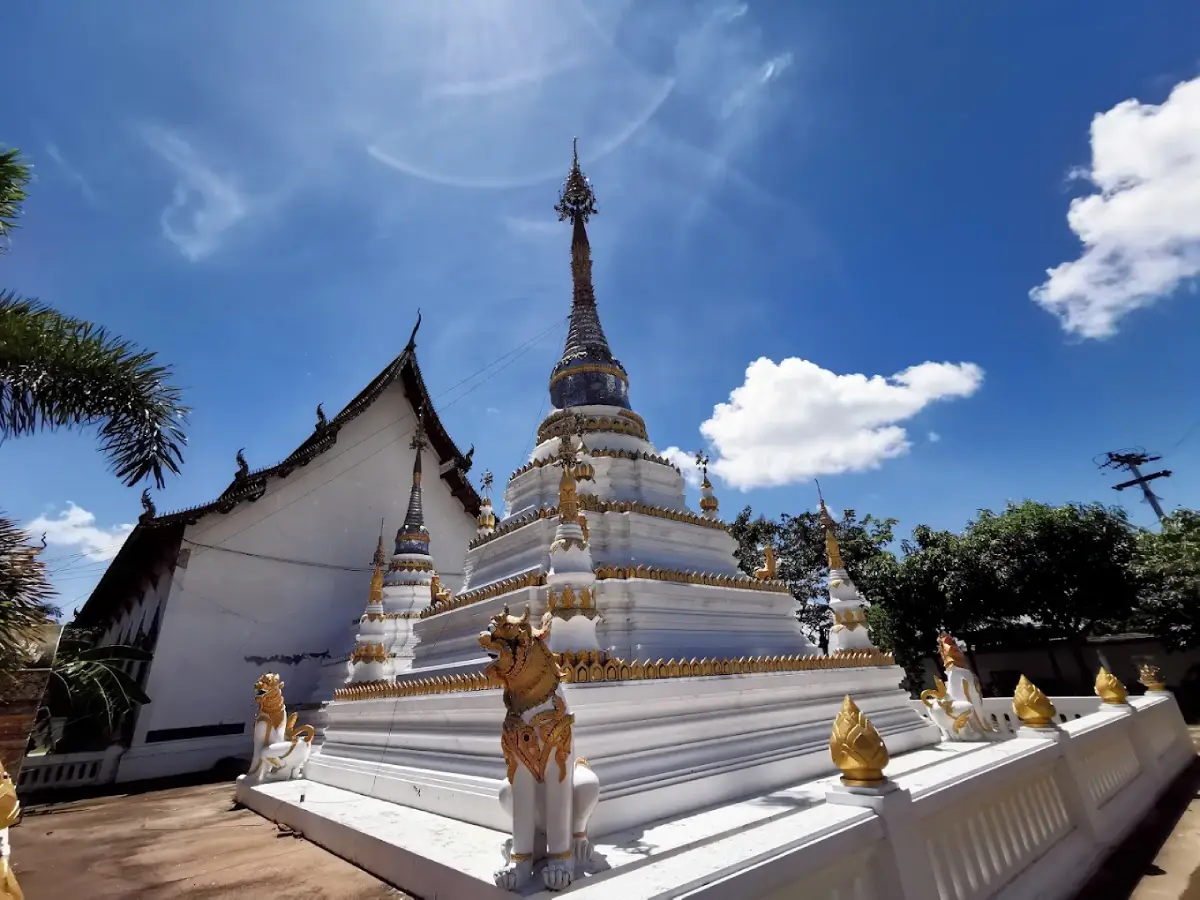
Wat Pa Daet (Ban Kat)
Open Days: Daily
Opening Hours: 08:00 – 17:00
Wat Pa Daet (Ban Kat) is located at 96 Moo 6, Ban Nam Ton, Ban Kat Subdistrict, Mae Wang District, Chiang Mai 50360, Thailand. It is a public non-royal Buddhist temple of the Mahanikaya order, officially established in 1842. The temple received its royal consecrated boundary on 10 July 2007 and is registered under temple code 350220103. Phra Khru Weerasat Bunkit Kattapanyo is the current abbot. Beyond its religious role, Wat Pa Daet remains an important spiritual center of Ban Nam Ton, particularly through its annual sacred-relic bathing tradition, Buddhist ceremonies, community activities, and its connection with local early-childhood education.
The name Wat Pa Daet requires careful geographical distinction because Chiang Mai Province has several temples with the same name. The temple discussed here is specifically Wat Pa Daet in Ban Nam Ton, Moo 6, Ban Kat Subdistrict, Mae Wang District. It is not the well-known Wat Pa Daet in Mueang Chiang Mai associated with Ganesha worship, nor the historic Wat Pa Daet in Mae Chaem. For navigation and research, the terms “Ban Kat,” “Mae Wang,” or “Ban Nam Ton” are essential for identifying the correct temple.
Thailand’s official Buddhist temple register records this Wat Pa Daet as a Mahanikaya public temple in Ban Nam Ton, Ban Kat, Mae Wang. The temple was established in 1842 and received its royal consecrated boundary on 10 July 2007. By 2026, its registered history extends for approximately 184 years, making it one of the long-established community temples of the Ban Kat and Mae Wang area.
The year 1842 places the foundation of Wat Pa Daet in a period when rural Chiang Mai society was still deeply dependent on agriculture, village waterways, and local networks of settlement. Buddhist temples played essential roles in this environment. They were places for worship and merit-making but also provided communal space for ordination, funerals, religious instruction, meetings, and seasonal celebrations. Wat Pa Daet developed within this traditional relationship between monastery and village.
Ban Nam Ton forms part of Ban Kat Subdistrict in Mae Wang District. The surrounding municipal area remains strongly agricultural, with a large proportion of land historically used for farming. This rural context is important for understanding Wat Pa Daet because the temple developed as part of an agricultural community rather than as an independent tourism attraction.
The temple remains part of the active religious network of Mae Wang Municipality together with Wat Chamlong, Wat Amparam, Wat Sirichai Nimit and other local Buddhist institutions. Each of these temples is closely associated with a particular settlement. Wat Pa Daet is especially connected with Ban Nam Ton, making it an important spiritual and cultural reference point for the residents of Moo 6.
A major institutional milestone occurred in 2007, when Wat Pa Daet received its royal consecrated boundary. Known in Thai as wisungkhamsima, this boundary defines the sacred area in which formal acts of the Buddhist Sangha can be performed, particularly ordination. The granting of the boundary represents the temple’s continuing institutional development within the Thai monastic system.
The current abbot is Phra Khru Weerasat Bunkit Kattapanyo. A 2024 record of a Kathin ceremony at Wat Pa Daet identifies Phra Khru Weerasat Bunkit as abbot, while Chiang Mai Buddhist administration records also contain his name among local ecclesiastical figures. His continuing association with the temple reflects the active status of the monastery and its resident Buddhist community.
An important historical religious figure associated with the temple is Phra Khru Praphakon Phisut, widely known locally as Khruba Bunpan Pabhakaro, a former abbot of Wat Pa Daet. He was born in Ban Nam Ton and became a respected monk among residents of Mae Wang and neighboring districts. His memory illustrates the importance of monastic leadership in shaping the relationship between temple and community across generations.
The most clearly documented sacred focus of Wat Pa Daet is its relic monument, which stands at the center of the annual sacred-relic bathing tradition. Mae Wang Municipality identifies the bathing of the sacred relic at Wat Pa Daet as one of the municipality’s important cultural traditions, demonstrating that the ceremony is not simply an internal temple activity but part of the cultural identity of Ban Nam Ton and the wider Mae Wang community.
The tradition continues today. Municipal records for fiscal year 2026 include a project specifically supporting the sacred-relic bathing ceremony of Moo 6, Ban Nam Ton, at Wat Pa Daet. A 2025 implementation report also records that the ceremony was held at the temple in April. These recent records confirm that the tradition remains active rather than surviving only in historical descriptions.
In Lanna Buddhist culture, bathing a sacred relic monument expresses reverence, purification, merit-making, and community solidarity. The ceremony brings residents together around an important Buddhist symbol and reinforces the relationship between local identity and religious belief. At Wat Pa Daet, this tradition is one of the clearest expressions of the temple’s continuing significance to Ban Nam Ton.
The timing of the ceremony around April also connects naturally with the Lanna New Year season, when northern Thai communities traditionally make merit, bathe Buddha images, pay respect to elders, and renew community relationships. The temple therefore becomes an important setting in which Buddhist devotion and local seasonal traditions meet.
Kathin is another continuing Buddhist tradition at Wat Pa Daet. In 2024, a Kathin ceremony was scheduled for 8 November at 09:00. The same record identified five monks residing at the temple during the rains retreat. Kathin is one of the most important annual ceremonies following the end of Buddhist Lent, when lay supporters present robes and associated offerings to monks who have completed the rains retreat.
The presence of resident monks demonstrates that Wat Pa Daet remains a functioning Buddhist monastery rather than a historic site preserved only for visitors. Monks provide religious services, perform ceremonies, teach Buddhist principles, receive community invitations, and maintain the close relationship between the temple and everyday village life.
The temple’s community role extends beyond formal Buddhist ceremonies. Mae Wang Municipality identifies Wat Pa Daet as the location of one of its child development centers. This demonstrates a continuing Thai tradition in which temple grounds can function as shared civic and educational space as well as sacred territory.
The child development center connects the temple with families on a daily basis. Children, parents, teachers, monks, and community members all interact with the area, preventing the monastery from becoming a place used only during Buddhist holy days. This is an important example of how community temples continue to adapt to contemporary social needs.
The continued importance of Wat Pa Daet can also be seen in municipal infrastructure planning. Mae Wang Municipality’s 2026 operational plan includes improvements to the Ban Nam Ton–Wat Pa Daet road, with reinforced-concrete shoulder extensions along sections of the route. Such investment shows that access to the temple remains relevant to everyday movement within the village.
Ban Nam Ton is situated near Ban Kat and other communities such as Ban Ampharam and Ban Rim Wang. This location makes Wat Pa Daet relatively easy to combine with other temples, local markets, restaurants, and services in the lower Mae Wang area. Visitors traveling by private vehicle can explore several community sites without returning to Chiang Mai city between stops.
Wat Pa Daet is best suited to travelers interested in community temples, local Buddhist traditions, and everyday Lanna culture. Its importance does not depend on monumental architecture or large-scale commercial tourism. Instead, the temple is valuable because of its long history, its sacred relic tradition, its resident Sangha, and its continuing function within Ban Nam Ton.
Paying respect to the sacred relic is one of the most meaningful aspects of a visit. The annual bathing ceremony confirms the central position of the relic in local devotion. During ordinary periods, the temple offers a quieter atmosphere, while the annual festival reveals the strong relationship between the monastery and the village community.
The temple is also valuable for understanding the historical development of Mae Wang. Its 1842 foundation predates the modern administrative district by many decades. Administrative boundaries, roads, public utilities, and the local economy have changed dramatically, but Wat Pa Daet has remained in Ban Nam Ton as a continuing religious institution.
The history of monastic leadership also links past and present. Former abbot Khruba Bunpan Pabhakaro remains part of local religious memory, while Phra Khru Weerasat Bunkit Kattapanyo now serves as abbot. This succession illustrates the continuity of Buddhist leadership that has allowed the temple to maintain its religious and community responsibilities across generations.
Travelers should avoid confusing this temple with other Wat Pa Daet temples in Chiang Mai. Information about Ganesha worship, the famous Viharn Luang Lai Kham, or nineteenth-century mural paintings generally refers to other temples of the same name and should not be applied to Wat Pa Daet in Ban Nam Ton. The defining features of this temple are its Mae Wang location, its long registered history, its sacred relic tradition, and its community role.
A community temple route can connect Wat Pa Daet with Wat Amparam, Wat Chamlong, Wat Sirichai Nimit, Wat Sopharam, and Wat Ban Mai Pang Toem. Each temple has a different historical character. Wat Chamlong is especially connected with Shan cultural heritage, Wat Ban Mai Pang Toem reflects village relocation and community-building, while Wat Pa Daet is distinguished by its age and sacred-relic bathing tradition.
Ban Kat provides convenient food and refreshment options. Lamoon Cha, Milk Tea, King Fried Mussels near Big C Ban Kat, and Blessing Camp Cafe are among the current establishments with publicly listed locations and telephone numbers. These make it easy to combine a morning temple visit with lunch or a café stop before continuing into other parts of Mae Wang.
Accommodation is also available in the wider district. Silver Homestay is located in Ban Kat, while Raibumrungphol, Namrae Maewang Phairin Resort, and Chombua MaeWang provide additional options in Mae Wang. Staying in the district makes it practical to spend one day exploring local temples and communities and another day visiting the natural attractions around Mae Win.
Travelers interested in nature can continue toward Pha Chor in Mae Wang National Park, famous for its eroded sediment cliffs and earth pillars, or travel farther toward Mae Win for river landscapes, bamboo rafting, and forested mountain scenery. A visit to Wat Pa Daet therefore works well as the cultural component of a broader Mae Wang itinerary.
Another option is to connect Wat Pa Daet with temples in Thung Pi and communities along the Mae Wang River, including Wat Don Kaeo, Wat Bun Yuen, and Wat Tha Chang. Such a route provides a broader understanding of Mae Wang’s village-temple network and how individual Buddhist institutions developed alongside different settlements.
The most culturally distinctive period to visit is around the annual sacred-relic bathing festival, when local participation becomes especially visible. The exact date may vary according to the community calendar each year. Travelers seeking a quieter visit can come on an ordinary day to make merit, pay respect to the sacred relic, and experience the atmosphere of an active rural temple.
During Buddhist Lent and the period following its conclusion, the temple participates in the normal cycle of Buddhist community life. The documented Kathin ceremony provides a clear example of the continuing relationship between resident monks and lay supporters.
Visitors should dress modestly and behave quietly because Wat Pa Daet remains an active Buddhist monastery. Shoes should be removed where required, and temple ceremonies should always take priority over sightseeing or photography.
Getting There from Chiang Mai city, take Highway 108 south through Hang Dong toward San Pa Tong. Turn onto Highway 1013, the San Pa Tong–Mae Wang–Mae Win route, and continue toward Ban Kat before entering Ban Nam Ton, Moo 6. Private car or rental vehicle is the most convenient option, especially for travelers planning to combine the temple with other Mae Wang attractions.
Wat Pa Daet can serve as an effective starting point for exploring lower Mae Wang. Ban Kat provides food, accommodation, markets, and services, while Mae Win and Mae Wang National Park offer natural attractions farther west. This allows visitors to combine Buddhist heritage, village culture, and nature within the same journey.
Overall, Wat Pa Daet is important in three closely connected ways. Historically, it has existed since 1842. Religiously, it remains an active Mahanikaya monastery with a consecrated boundary, resident monks, a sacred relic tradition, and Kathin ceremonies. Socially, it continues to serve Ban Nam Ton through community festivals, early-childhood education, and its role as a shared village institution.
The temple’s value therefore lies less in fame or monumental scale than in continuity. For more than 180 years, Wat Pa Daet has remained part of Ban Nam Ton as local administration, roads, livelihoods, and tourism have changed around it. The temple still brings together monks, families, children, and community organizations through Buddhist practice and local tradition.
For travelers seeking to understand Mae Wang beyond bamboo rafting and nature tourism, Wat Pa Daet offers an important cultural perspective. Its long history, sacred relic, active annual tradition, and close relationship with Ban Nam Ton reveal the everyday Buddhist and Lanna foundations that continue to shape community life in this part of Chiang Mai.
| Name | Wat Pa Daet (Ban Kat) |
| Location | 96 Moo 6, Ban Nam Ton, Ban Kat Subdistrict, Mae Wang District, Chiang Mai 50360, Thailand |
| Latitude | 18.58690 |
| Longitude | 98.82967 |
| Temple Registration Code | 350220103 |
| Temple Type | Public non-royal Buddhist temple, Mahanikaya order |
| Established | 1842 |
| Royal Consecrated Boundary | Granted on 10 July 2007 |
| Current Abbot | Phra Khru Weerasat Bunkit Kattapanyo |
| Open Days | Daily |
| Opening Hours | 08:00 – 17:00 |
| Important Sacred Feature | Sacred relic monument associated with Ban Nam Ton’s annual relic-bathing tradition |
| Major Traditions | Annual sacred-relic bathing ceremony and post-Buddhist-Lent Kathin ceremony |
| Community Role | Spiritual center of Ban Nam Ton, venue for Buddhist ceremonies and community traditions, and location of a local child development center |
| Getting There | Take Highway 108 from Chiang Mai through Hang Dong and San Pa Tong, then Highway 1013 toward Mae Wang and continue to Ban Nam Ton, Moo 6 |
| Current Status | Active temple listed in current Buddhist temple directories; municipal projects in 2026 continue to support the sacred-relic festival and improve the Ban Nam Ton–Wat Pa Daet access road |
| Nearby Attractions and Temples | 1. Ban Kat Fresh Market, about 2 km 2. Wat Amparam, about 2 km 3. Wat Chamlong, about 3 km 4. Wat Sirichai Nimit, about 4 km 5. Wat Sopharam, about 5 km 6. Pha Chor, Mae Wang National Park, about 20 km |
| Nearby Restaurants and Cafes | 1. Lamoon Cha Ban Kat, about 2 km, Tel. 098-892-5464 2. Milk Tea Ban Kat, about 2 km, Tel. 062-029-9905, 052-010-193 3. King Fried Mussels near Big C Ban Kat, about 2 km, Tel. 066-119-1189 4. Blessing Camp Cafe, about 3 km, Tel. 098-270-6515 5. Raibumrungphol Restaurant and Cafe, about 8 km, Tel. 066-065-8118 |
| Nearby Accommodation | 1. Silver Homestay, about 3 km, Tel. 089-755-6519 2. Raibumrungphol, about 8 km, Tel. 066-065-8118 3. Namrae Maewang Phairin Resort, about 9 km, Tel. 052-001-410 4. Chombua MaeWang, about 10 km, Tel. 081-903-2172 5. Resorts and guesthouses in Mae Win, about 20 km or more |
Frequently Asked Questions (FAQ)
Q: Where is Wat Pa Daet in Mae Wang located?
A: Wat Pa Daet is located at 96 Moo 6, Ban Nam Ton, Ban Kat Subdistrict, Mae Wang District, Chiang Mai 50360, Thailand.
Q: When was Wat Pa Daet in Mae Wang established?
A: The temple was officially established in 1842, giving it approximately 184 years of registered history by 2026.
Q: Who is the current abbot of Wat Pa Daet?
A: The current abbot is Phra Khru Weerasat Bunkit Kattapanyo.
Q: When did Wat Pa Daet receive its royal consecrated boundary?
A: The temple received its royal consecrated boundary on 10 July 2007.
Q: What is the most important local tradition at Wat Pa Daet?
A: The temple is particularly associated with the annual sacred-relic bathing ceremony of Ban Nam Ton. The tradition continues to receive support from Mae Wang Municipality.
Q: What role does Wat Pa Daet play in the Ban Nam Ton community?
A: The temple serves as a Buddhist spiritual center, a venue for local ceremonies and festivals, and the location of a community child development center.
Q: Is this the same Wat Pa Daet that is famous for Ganesha worship in Chiang Mai city?
A: No. This Wat Pa Daet is located in Ban Nam Ton, Ban Kat Subdistrict, Mae Wang District. The well-known Ganesha temple of the same name is in Mueang Chiang Mai District.
Q: What places can be visited together with Wat Pa Daet?
A: Nearby options include Ban Kat Fresh Market, Wat Amparam, Wat Chamlong, Wat Sirichai Nimit, Wat Sopharam, and Pha Chor in Mae Wang National Park.
 Category: ●Places of Worship
 Group: ●Temple
Last Update : 3 DayAgo
 Last Update : 3 DayAgo
 Click to Access the Navigation Map GPS
Wat Pa Daet (Ban Kat) Map
Recommend

 Muang Chiang Mai(121)Chom Thong(47)Mae Chaem(25)Chiang Dao(33)Doi Saket(68)Mae Taeng(85)Mae Rim(69)Samoeng(29)Fang(71)Mae Ai(59)Phrao(70)San Pa Tong(103)San Kamphaeng(66)San Sai(73)Hang Dong(73)Hot(32)Doi Tao(22)Omkoi(11)Saraphi(74)Wiang Haeng(15)Chai Prakan(28)Mae Wang(32)Mae On(22)Doi Lo(33)Galyani Vadhana(1)


