
lovethailand home >North Travel Attractions >Chiang Mai Travel Attractions >Mae Wang >Don Pao > Wat Doi Sapphanyu
TL;DR: Wat Doi Sapphanyu is located at Ban Huai Niam, Moo 6, Don Pao Subdistrict, Mae Wang District, Chiang Mai 50360, open Daily, hours 08.00 – 17.00.
Wat Doi Sapphanyu
Open Days: Daily
Opening Hours: 08.00 – 17.00
Wat Doi Sapphanyu is located in Ban Huai Niam, Moo 6, Don Pao Subdistrict, Mae Wang District, Chiang Mai Province 50360. It is a local Buddhist temple under the Mahanikaya order and one of Mae Wang’s most distinctive religious sites. Set on a hillside landscape connected with forest, nature study areas, meditation spaces, and Buddhist education, the temple is best known for the large Four-Directional Buddha image, the Light of Dhamma Park, the replica of Phra That Doi Suthep, and its role as a place for monastic learning, moral training, and nature conservation.
The temple has a deep historical background. Before its modern restoration, the site was an abandoned temple known as Wat Nam Bo Tip or Wat Nam Bo Thip. The original founding year and founder are not recorded, but important traces remained, including the sacred well known as Nam Bo Thip and an old ubosot. These remains show that the area had a religious life long before the modern development of Wat Doi Sapphanyu.
In 1994, Luang Pho Phra Ratcharattanakon, former abbot of Wat Phra That Doi Suthep, and Luang Pho Phra Yannasomphothi, later known as Phra Thep Worasisathachan, restored the abandoned temple and developed it into a living monastery with resident monks and novices. The restoration was dedicated as royal merit for His Majesty King Bhumibol Adulyadej on the occasion of the 50th anniversary of his accession to the throne on 9 June 1996.
This restoration gave Wat Doi Sapphanyu a meaning beyond ordinary temple revival. It linked the faith of the Sangha, Wat Phra That Doi Suthep, Ban Huai Niam, Don Pao Subdistrict, and Buddhist devotees in Mae Wang. A once-abandoned religious site became a center of learning, practice, and public benefit for monks, novices, laypeople, students, and visitors.
The temple originally had about 76 rai of land. Later purchases expanded the temple area to about 120 rai, and the temple also looks after around 500 rai of forest area. A later land survey by the Chiang Mai Provincial Office of Buddhism recorded a title-deed survey for Wat Doi Sapphanyu covering about 180 rai. This large land base gives the temple the character of a religious, educational, and natural landscape rather than a small village temple compound.
The name Doi Sapphanyu is meaningful. Doi refers to a hill or mountain in northern Thai usage, while Sapphanyu refers to the Buddha as the all-knowing one. The name therefore suggests a place where physical elevation and spiritual wisdom meet. This meaning fits the temple’s hillside setting, large Buddha images, stupa, meditation areas, and education-focused mission.
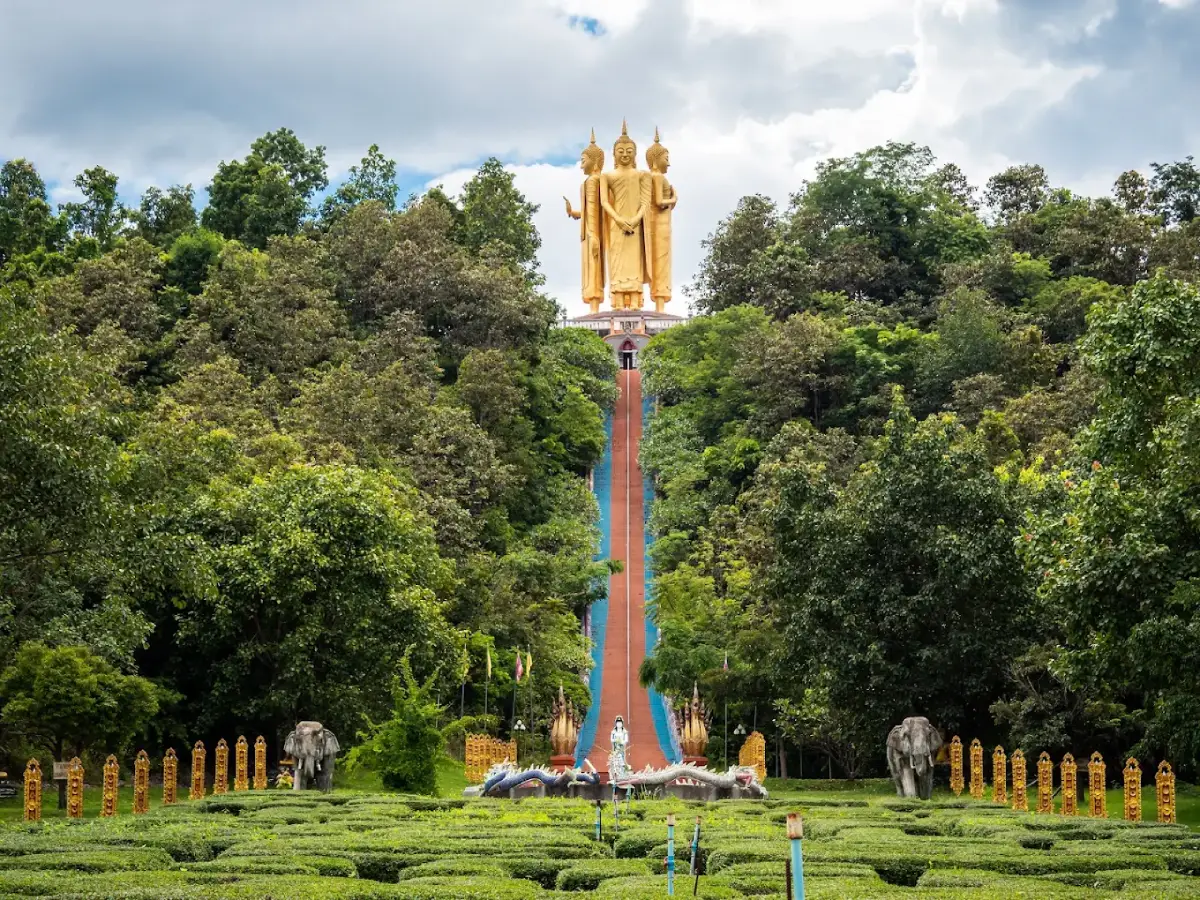
The best-known landmark is Phra Phuttha Chaturathit Mingmongkhon, also known locally as the Four-Directional Buddha or Phra Chao Si Thit. This group of large standing golden Buddha images faces the four cardinal directions and rises more than 50 meters high. The arrangement expresses auspiciousness, protection, and the spreading of Buddhist virtue in every direction. It is the main image visitors come to worship and one of the most memorable sights in Mae Wang.
The Four-Directional Buddha features different standing postures on each side. The east-facing image is in the contemplating posture, the north-facing image is in a reflective posture, the south-facing image is in the forbidding-relatives posture, and the west-facing image is in the alms-bowl posture. Together, these images create a powerful religious symbol that can be viewed from multiple angles around the hilltop setting.
A 198-step seven-headed naga staircase leads toward the Four-Directional Buddha. The stairway is part of the experience of the temple. As visitors climb, they gradually move from the lower temple grounds toward a higher sacred space. The climb encourages a slower pace, more mindful attention, and a stronger sense of reverence before reaching the main Buddha images.
Another important feature is the stupa in the Light of Dhamma Park. Its form is distinctive and different from many conventional Lanna stupas. Visitors can walk up to viewing areas and look across the surrounding landscape of Mae Wang, including houses, farms, hills, and distant mountain ranges. Inside, different levels contain Buddhist images and symbolic displays related to revered monks, important Buddha images, and Buddhist cosmology.
The replica of Phra That Doi Suthep is another major worship point. It connects Wat Doi Sapphanyu with the spiritual prestige of Wat Phra That Doi Suthep, one of Chiang Mai’s most important temples. This connection also reflects the role of senior monks from Wat Phra That Doi Suthep in restoring and supporting Wat Doi Sapphanyu.
Nam Bo Thip and the old ubosot preserve the memory of the earlier abandoned temple. The well symbolizes the sacred water source associated with the original site, while the old ubosot confirms that the area once served as a formal Buddhist place of worship. These features give Wat Doi Sapphanyu a historical layer beyond its modern landmarks and viewpoints.
Wat Doi Sapphanyu has a strong educational role. It serves as a place of study for monks and novices in Dhamma, Pali, and general Buddhist education from Matthayom 1 to Matthayom 6. Sapphanyu Wittaya School, a Phrapariyattidhamma general education school, is located at Wat Doi Sapphanyu in Don Pao Subdistrict, Mae Wang District, Chiang Mai Province. This makes the temple an important educational center for monastic students in northern Thailand.
The temple also supports moral and ethical training for government agencies, private organizations, laypeople, students, and educational institutions. It hosts annual summer novice ordination training and Sunday Buddhist school activities. These roles make the temple useful to many groups, from monks and novices to youth, local residents, and organizations seeking a quiet place for moral development.
Wat Doi Sapphanyu is also used for Pali preparation before national Pali examinations from levels 1–2 through level 5 in Ecclesiastical Region 7. It also hosts Sangha activities such as Dhamma examination work and monastic meetings. This gives the temple significance beyond the village level, linking it with Buddhist education and Sangha administration at a wider regional scale.
The temple’s large forested area makes it an educational park for nature study. It supports the conservation of forest and medicinal plants, allowing visitors to experience the relationship between dhamma and nature. The forest setting is important not only for the environment but also for meditation, as a quiet natural atmosphere helps support mindfulness and contemplation.
Wat Doi Sapphanyu serves Ban Huai Niam and Don Pao Subdistrict in several ways. It is a place for Buddhist ceremonies, a learning center for monks and novices, a moral training site for the public, a natural education area, and a religious-nature attraction in Mae Wang. These overlapping roles make the temple one of the most multi-dimensional religious sites in the district.
Don Pao Subdistrict contains both village temples and specialized religious sites. Wat Don Pao is a historic community temple linked with the former Wat San Khayom. Wat Chai Mongkhon and Wat Thung Sila are local community temples. Wat Doi Sapphanyu adds a hilltop, educational, and nature-based dimension to this temple network. Visiting these temples together reveals the diversity of Buddhist life in Don Pao.
Important traditions and activities connected with Wat Doi Sapphanyu include Buddhist Lent, the end of Buddhist Lent, Kathin, robe offerings, meditation, summer novice ordination training, Sunday Buddhist school, Pali preparation, Dhamma examinations, and Sangha meetings. These activities keep the temple active throughout the year, not only during tourist visits.
Kathin and robe-offering events at Wat Doi Sapphanyu support both religious facilities and education. Because the temple is home to monks, novices, monastic schooling, and meditation spaces, donations help sustain more than buildings. They also support monastic learning, practice, and the continued role of the temple as an educational and spiritual center.
Wat Doi Sapphanyu is suitable for visitors who want to make merit, worship large Buddha images, climb the naga staircase, enjoy Mae Wang views, learn about a restored abandoned temple, and experience a hillside Buddhist education center. It is also suitable for families, cultural travelers, Buddhist practitioners, and visitors who want to combine temple travel with nature.
Visitors should allow enough time because the temple grounds are broad and there are several important points to see. A good route begins at the Four-Directional Buddha, continues along the naga staircase and surrounding viewpoints, then moves to the Light of Dhamma Park, the replica of Phra That Doi Suthep, Nam Bo Thip, the old ubosot, and the natural areas of the temple.
Proper conduct is important. Visitors should dress modestly, keep quiet near worship areas, halls, classrooms, and meditation areas, and avoid disturbing monks, novices, students, and practitioners. Anyone wishing to photograph monks, novices, people, or classroom areas should ask permission first. Comfortable shoes and drinking water are recommended because the temple includes stairs and hillside paths.
Wat Doi Sapphanyu can be connected with several nearby attractions. A temple-focused route can include Wat Don Pao, Wat Chai Mongkhon, Wat Thung Sila, Wat Rangsi Suttharam, and Wat Luang Khun Win. A nature-focused route can continue to Huai Manao Reservoir, Ban Kat Market, Mae Wang Elephant Camp, Mae Wang bamboo rafting, Mae Wang Waterfall, and Mae Wang National Park.
Huai Manao Reservoir lies on a route related to Don Pao and the road toward the temple, making it a suitable stop for nature scenery. Ban Kat Market is a useful food and community stop. Mae Wang Elephant Camp and bamboo rafting are well-known activity points in the district. Combining these with Wat Doi Sapphanyu creates a balanced itinerary of faith, nature, village life, and local food.
The best time to visit is in the morning or late afternoon, when the weather is cooler and the light is suitable for viewing the hilltop scenery. The cool season is especially pleasant in Mae Wang. The rainy season brings greener forests and mountains, but visitors should drive carefully on hillside and access roads, especially after rain.
Getting There from Chiang Mai city is easiest by following Highway 108 through Hang Dong and San Pa Tong into Mae Wang District. After passing Ban Kat Market for about 1 kilometer, visitors will reach an intersection near the Mae Wang municipal building. Turn right toward the Huai Manao Reservoir route and continue for about 5 kilometers until the sign for Wat Doi Sapphanyu appears on the right. A private car or rental car is the most convenient option for combining the temple with nearby places.
Travelers without a private vehicle can take public transport from Chiang Mai city to Mae Wang and then arrange local transport to Don Pao and Ban Huai Niam. This requires planning because the temple is in a hillside area and is not always directly served by regular public transport. A private vehicle is recommended for a safer and more flexible day trip.
For food and accommodation, travelers can use restaurants, cafés, homestays, resorts, and guesthouses in Don Pao, Ban Kat, Mae Wang, and nearby areas. Staying overnight in Mae Wang gives more time to visit Wat Doi Sapphanyu, Wat Don Pao, Wat Luang Khun Win, local markets, reservoirs, bamboo rafting routes, and elephant attractions without rushing back to Chiang Mai city.
In summary, Wat Doi Sapphanyu is a Mahanikaya community temple in Ban Huai Niam, Moo 6, Don Pao Subdistrict, Mae Wang District, Chiang Mai Province. Formerly the abandoned Wat Nam Bo Tip or Wat Nam Bo Thip, it was restored in 1994 by senior monks from Wat Phra That Doi Suthep as a royal merit dedication for King Bhumibol Adulyadej’s 50th accession anniversary. Today, the temple is known for the Four-Directional Buddha, the replica of Phra That Doi Suthep, the Light of Dhamma Park stupa, Nam Bo Thip, the old ubosot, monastic education, meditation spaces, and forest conservation areas. It is one of Mae Wang’s strongest destinations for visitors seeking worship, Buddhist learning, hilltop views, nature, food, and nearby accommodation in one route.
| Name | Wat Doi Sapphanyu |
| Former Name | Wat Nam Bo Tip / Wat Nam Bo Thip |
| Temple Type | Community Buddhist Temple, Mahanikaya Order |
| Location | Ban Huai Niam, Moo 6, Don Pao Subdistrict, Mae Wang District, Chiang Mai 50360 |
| Temple Code | 350220503 |
| Major Restoration | 1994 |
| Key Restoration Figures | Luang Pho Phra Ratcharattanakon and Luang Pho Phra Yannasomphothi, later Phra Thep Worasisathachan |
| Important Patronage | Phra Thep Worasisathachan, abbot of Wat Phra That Doi Suthep |
| Temple Land And Managed Area | Originally about 76 rai, later expanded to about 120 rai, with around 500 rai of forest under temple care and a later title-deed survey covering about 180 rai |
| Original Sacred Remains | Nam Bo Thip sacred well and old ubosot |
| Main Worship Points | Four-Directional Buddha, replica of Phra That Doi Suthep, Light of Dhamma Park stupa, Nam Bo Thip, and old ubosot |
| Four-Directional Buddha | Large standing golden Buddha images over 50 meters high, facing four directions, reached by a 198-step seven-headed naga staircase |
| Educational Role | Monastic education in Dhamma, Pali, and general Buddhist studies from Matthayom 1–6 through Sapphanyu Wittaya School |
| Dhamma Training Role | Moral training, summer novice training, Sunday Buddhist school, and Pali preparation before national examinations in Ecclesiastical Region 7 |
| Nature Role | Educational park and conservation area for forest and medicinal plants, combining nature study with Buddhist learning |
| Community Role | Religious ceremony site, monastic school, moral training center, nature education area, and religious-nature attraction of Don Pao |
| Key Traditions And Activities | Buddhist Lent, end of Buddhist Lent, Kathin, robe offerings, meditation, summer novice training, Sunday Buddhist school, Pali training, Dhamma examinations, and Sangha meetings |
| Current Status | Active temple in the current temple registry of Don Pao, Mae Wang, Chiang Mai |
| Open Days | Daily |
| Opening Hours | 08.00 – 17.00 |
| Travel Information | From Chiang Mai, follow Highway 108 through Hang Dong and San Pa Tong to Mae Wang. About 1 km after Ban Kat Market, turn right near the Mae Wang municipal building toward Huai Manao Reservoir and continue about 5 km to the temple sign. |
| Nearby Tourist Attractions | 1. Huai Manao Reservoir, About 6 km 2. Wat Don Pao, About 8 km 3. Ban Kat Market, About 9 km 4. Wat Chai Mongkhon, About 9 km 5. Wat Thung Sila, About 10 km 6. Mae Wang Elephant Camp, About 18 km 7. Mae Wang Bamboo Rafting, About 19 km 8. Wat Luang Khun Win, About 36 km |
| Nearby Restaurants | 1. Milk Tea, About 9 km, Tel. 062-029-9905, 052-010-193 2. Mangkon Thong Boat Noodles Mae Wang Branch, About 9 km 3. Café Amazon DD2251 PTT Mae Wang, About 10 km, Tel. 096-379-6021 4. Catz.B Burger Mae Wang Branch, About 10 km 5. Wanwan Coffee Huen Baan Ya Cafe', About 10 km 6. Local Restaurants Around Ban Kat And Don Pao, About 9 km |
| Nearby Accommodations | 1. Ban Bon Doi Homestay & Espresso Bar, About 12 km, Tel. 089-558-3241 2. Namrae Maewang Phairin Resort, About 17 km, Tel. 052-001-410 3. Chombua MaeWang, About 17 km 4. Pok Resort MaeWang, About 19 km 5. Plern Malee Resort, About 25 km, Tel. 062-859-5954 6. Homestays In Mae Win And Mae Wang, About 20 km |
Frequently Asked Questions (FAQ)
Q: Where is Wat Doi Sapphanyu located?
A: Wat Doi Sapphanyu is located in Ban Huai Niam, Moo 6, Don Pao Subdistrict, Mae Wang District, Chiang Mai Province 50360.
Q: What was the former name of Wat Doi Sapphanyu?
A: It was formerly an abandoned temple known as Wat Nam Bo Tip or Wat Nam Bo Thip, with remains including Nam Bo Thip and an old ubosot.
Q: Who restored Wat Doi Sapphanyu?
A: It was restored in 1994 by Luang Pho Phra Ratcharattanakon and Luang Pho Phra Yannasomphothi, later known as Phra Thep Worasisathachan.
Q: What are the main highlights of Wat Doi Sapphanyu?
A: Highlights include the Four-Directional Buddha, the replica of Phra That Doi Suthep, the Light of Dhamma Park stupa, meditation spaces, and the hilltop natural setting.
Q: What is the Four-Directional Buddha like?
A: It is a group of large standing golden Buddha images over 50 meters high, facing four directions, reached by a 198-step seven-headed naga staircase.
Q: What is Wat Doi Sapphanyu’s educational role?
A: The temple supports monastic education in Dhamma, Pali, and general Buddhist studies from Matthayom 1–6 through Sapphanyu Wittaya School.
Q: What kind of travelers should visit Wat Doi Sapphanyu?
A: It is suitable for visitors who want to make merit, worship large Buddha images, enjoy Mae Wang viewpoints, learn about a restored abandoned temple, and experience nature with Buddhist learning.
Q: What nearby places can travelers visit after Wat Doi Sapphanyu?
A: Nearby places include Huai Manao Reservoir, Wat Don Pao, Ban Kat Market, Wat Chai Mongkhon, Wat Thung Sila, Mae Wang Elephant Camp, Mae Wang bamboo rafting, and Wat Luang Khun Win.
 Category: ●Places of Worship
 Group: ●Temple
Last Update : 2 WeekAgo
 Last Update : 2 WeekAgo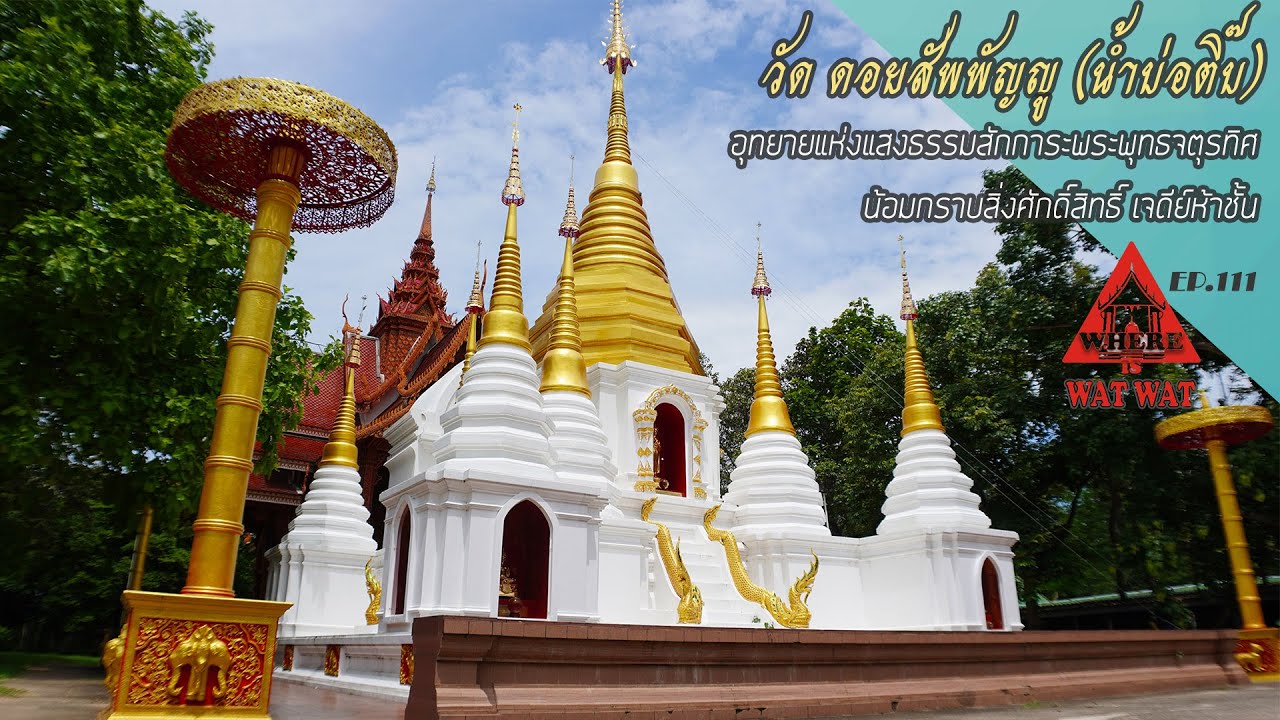
 Click to Access the Navigation Map GPS
Wat Doi Sapphanyu Map
Recommend

 Muang Chiang Mai(121)Chom Thong(47)Mae Chaem(25)Chiang Dao(33)Doi Saket(68)Mae Taeng(85)Mae Rim(69)Samoeng(29)Fang(71)Mae Ai(59)Phrao(70)San Pa Tong(103)San Kamphaeng(66)San Sai(73)Hang Dong(73)Hot(32)Doi Tao(22)Omkoi(11)Saraphi(74)Wiang Haeng(15)Chai Prakan(28)Mae Wang(32)Mae On(22)Doi Lo(33)Galyani Vadhana(1)


