
lovethailand home >North Travel Attractions >Chiang Mai Travel Attractions >Mae Wang >Don Pao > Wat Chai Mongkhon
TL;DR: Wat Chai Mongkhon is located at Moo 3, Don Pao Subdistrict, Mae Wang District, Chiang Mai 50360. Highlights include A quiet old community temple in Mae Wang, suitable for worship, merit-making, and learning about Don Pao’s local Buddhist culture.
Wat Chai Mongkhon
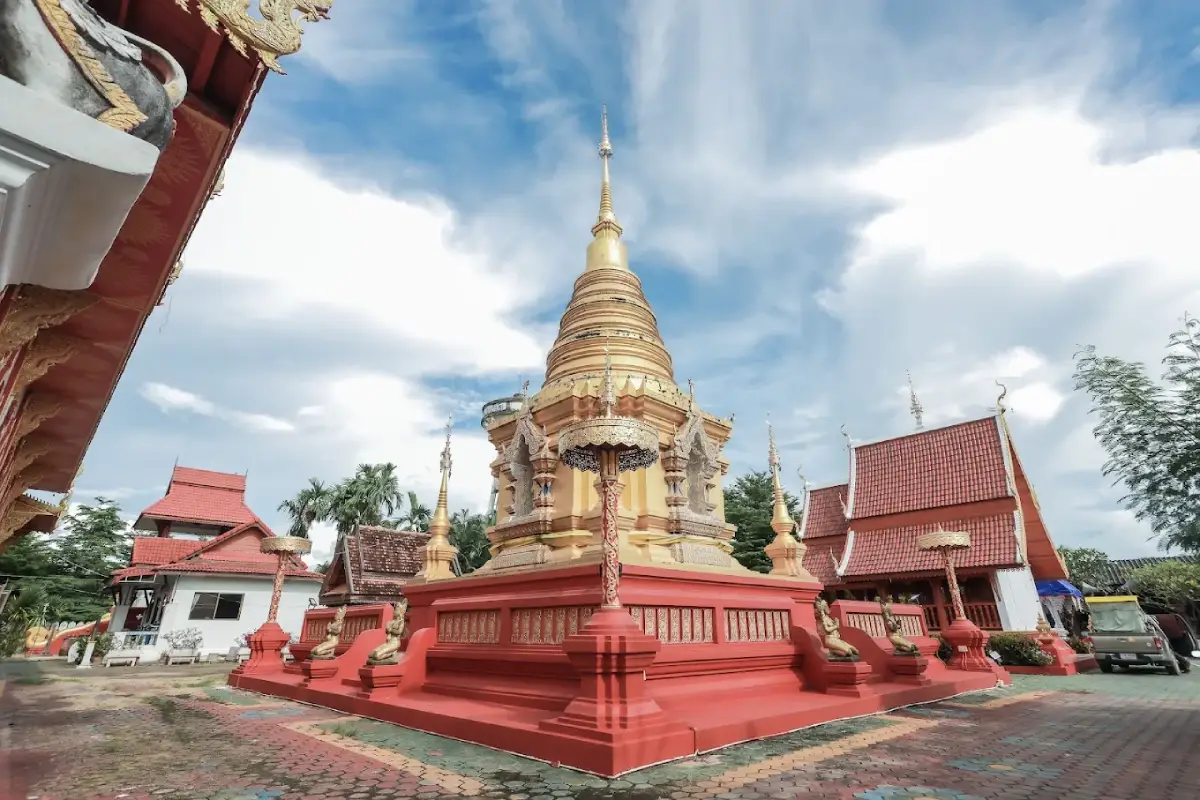
Operating day: Daily
Operating time: 08.00 - 17.00
Wat Chai Mongkhon (Don Pao) is located in Moo 3, Don Pao Subdistrict, Mae Wang District, Chiang Mai Province 50360. It is a local Buddhist temple under the Mahanikaya order and was officially permitted as a temple in 1914. The abbot is Phra Somphon Chotipanyo Chotikaro. Wat Chai Mongkhon is one of the important community temples of Don Pao and Mae Wang, connected with a wider network of local temples such as Wat Don Pao, Wat Thung Sila, Wat Rangsi Suttharam, Wat San Pu Loei, Wat Mai Mueang Sawan, and Wat Luang Khun Win.
The temple is significant because of its long history as a local temple in Don Pao. By 2026, more than 110 years had passed since it was officially established in 1914. Over this long period, Wat Chai Mongkhon became part of the shared memory of local villagers through Buddhist holy days, Kathin, robe offerings, dhamma listening, Lanna traditions, and community activities across generations.
The name Chai Mongkhon carries an auspicious meaning, suggesting victory, blessing, prosperity, and spiritual confidence. The name Don Pao connects the temple directly with its local community and subdistrict. Together, the name Wat Chai Mongkhon (Don Pao) reflects both Buddhist symbolism and the local identity of Mae Wang’s Don Pao area.
Don Pao Subdistrict is an important part of Mae Wang District, with rural communities, agricultural land, local roads, markets, water sources, and travel routes connecting to natural attractions. Don Pao is not simply a passageway to tourist sites; it is a living community with temples, schools, homes, markets, and Lanna traditions. Wat Chai Mongkhon stands within this local landscape where religion and daily life remain closely connected.
Mae Wang District is known for both nature and culture. It is connected to Chiang Mai city through Hang Dong and San Pa Tong, and it is also known for elephant camps, bamboo rafting, waterfalls, community temples, and routes toward Doi Inthanon. Wat Chai Mongkhon can therefore be included in an itinerary that combines village temples with Mae Wang’s natural landscape.
The history of Wat Chai Mongkhon is connected with the wider religious history of Don Pao. Local sources describe Wat Don Pao as having developed from an older temple context known as Wat San Khayom. After the temple community moved closer to the present settlement, related monks and devotees helped establish additional temples in the area. Local accounts mention Phor Nan Kham Suk, then a monk, as one of those who went on to establish Wat Chai Mongkhon. This places Wat Chai Mongkhon within the broader development of Don Pao’s Buddhist landscape.
The presence of several temples in Don Pao, including Wat Chai Mongkhon, Wat Don Pao, Wat Thung Sila, Wat Doi Sapphanyu, Wat Rangsi Suttharam, Wat San Pu Loei, Wat Luang Khun Win, Wat Huai Kaew, and Wat Mai Sawan, shows the strength of Buddhist faith in the area. Each temple serves its own village or community while remaining connected through local traditions, ceremonies, and the relationship between monks and lay supporters.
As a local Mahanikaya temple, Wat Chai Mongkhon functions as a village religious center. A community temple is closely tied to daily life. It supports merit-making, Buddhist holy days, dhamma listening, family ceremonies, ordinations, funerals, Kathin, robe offerings, and annual festivals. The temple is therefore both a sacred space and a social space for the Don Pao community.
Phra Somphon Chotipanyo Chotikaro serves as the abbot of Wat Chai Mongkhon. In a village temple, the abbot’s role extends beyond ritual performance. He helps care for monks, temple grounds, ceremonies, invitations from villagers, and the temple’s continuing relationship with the local community.
Public information about specific architectural details of Wat Chai Mongkhon, such as the ubosot, viharn, stupa, principal Buddha image, bell tower, or sermon hall, is limited. Visitors should therefore appreciate the temple as a working community temple: a place for worship, merit-making, and quiet observation of local Buddhist life rather than a large commercial tourist attraction.
The main appeal of Wat Chai Mongkhon is its character as an old community temple in Don Pao. It is not a high-traffic tourist site, but a quiet place where visitors can understand how temples remain part of everyday village life in Mae Wang. The value of a visit lies in seeing the relationship between temple, village, local memory, and Lanna culture.
Don Pao and Mae Wang remain strongly connected with Buddhist culture. The local area has important traditions such as the end of Buddhist Lent, Poi Sang Long, Poi Luen Sip Et, and the wooden support ceremony. These traditions reflect Lanna Buddhist culture, community cooperation, and the continuing role of temples in local identity.
Buddhist Lent and the end of Buddhist Lent are important periods for community temples. During Buddhist Lent, monks remain in residence and villagers present candles, make merit, observe precepts, and support the monastic community. After the end of Buddhist Lent, Kathin and robe-offering ceremonies bring villagers together to support temple maintenance and religious life.
Kathin and robe-offering events help preserve the relationship between monks and lay supporters. Villagers do not only offer robes or donations; they also prepare the temple grounds, cook food, welcome guests, and work together. These activities make the temple a place of cooperation, generosity, and community bonding.
Poi Sang Long is a northern Buddhist tradition connected with novice ordination, while Poi Luen Sip Et and the wooden support ceremony reflect the idea of supporting Buddhism and strengthening community merit. Although detailed records of these traditions at Wat Chai Mongkhon specifically are not widely published, they form part of the broader cultural setting of Mae Wang and Don Pao.
Wat Chai Mongkhon is suitable for travelers who want a quiet temple visit and a deeper understanding of local context. Visitors can pay respect, walk around respectfully, and observe how a village temple continues to serve the community. This type of visit reveals another side of Mae Wang beyond elephant camps, bamboo rafting, and waterfalls.
A Don Pao temple route can begin at Wat Chai Mongkhon and continue to Wat Don Pao, Wat Thung Sila, Wat Rangsi Suttharam, Wat San Pu Loei, Wat Mai Sawan, and Wat Luang Khun Win. Wat Don Pao is connected with the history of Wat San Khayom and local monastic traditions, while Wat Luang Khun Win is a well-known forest temple in the mountains of Mae Wang.
Travelers who want to combine temple visits with nature can connect Wat Chai Mongkhon with Mae Wang Elephant Camp, Mae Wang bamboo rafting, Mae Wang Waterfall, Mae Sapok Waterfall, Huai Manao Reservoir, and the route toward Doi Inthanon. This gives the trip a balanced mix of religion, culture, community, and natural scenery.
Ban Kat Market and the Don Pao community can also enrich the journey. Mae Wang has local food culture and traditional ingredients, including dishes such as khao som, khao tom yuan, and chor ngiao. A visit to Wat Chai Mongkhon can therefore be combined with local food, markets, and village life.
Mae Wang is best enjoyed slowly. Morning is suitable for temple visits, while late morning or afternoon can be used for natural attractions or local restaurants. The cool season is especially pleasant for travel, while the rainy season brings green fields and mountain scenery. During rainy periods, travelers should drive carefully, especially on routes continuing toward hilly areas.
Getting There from Chiang Mai city can be done by following Highway 108 through Hang Dong and San Pa Tong, then turning onto Highway 1013 toward Mae Wang and Don Pao. The distance from Chiang Mai city to Mae Wang District is about 37 kilometers. A private car or rental car is the most convenient option for combining Wat Chai Mongkhon with Wat Don Pao, Ban Kat Market, Mae Wang Elephant Camp, Mae Wang bamboo rafting, and nearby natural attractions.
Travelers without a private vehicle can use public transport from Chiang Mai city to Mae Wang and continue locally to Don Pao. This requires more planning because community temples and some attractions are not located directly at main public transport stops. A private vehicle is recommended for a flexible day trip.
Visitors should dress modestly, keep quiet in worship areas, and avoid disturbing monks or villagers during ceremonies. If taking photos of people, ask permission first. Wat Chai Mongkhon is an active community temple, so respectful behavior is an essential part of the visit.
For food and accommodation, travelers can use restaurants, cafés, guest rooms, resorts, and homestays in Don Pao, Ban Kat, Mae Wang, and nearby areas. Staying overnight in Mae Wang allows more time to explore community temples, local markets, waterfalls, elephant camps, bamboo rafting, and mountain routes without rushing back to Chiang Mai city.
In summary, Wat Chai Mongkhon (Don Pao) is a long-established Mahanikaya community temple in Moo 3, Don Pao Subdistrict, Mae Wang District, Chiang Mai Province. Officially permitted as a temple in 1914, it is led by Phra Somphon Chotipanyo Chotikaro and remains part of Don Pao’s Buddhist temple network. Its value lies in its age, its local role, its connection with the religious history of Don Pao, and its suitability as a quiet cultural stop on a Mae Wang route that includes temples, markets, nature, food, and accommodation.
| Name | Wat Chai Mongkhon (Don Pao) |
| Temple Type | Community Buddhist Temple, Mahanikaya Order |
| Location | Moo 3, Don Pao Subdistrict, Mae Wang District, Chiang Mai 50360 |
| Temple Code | 350220501 |
| Establishment | Officially permitted as a temple in 1914 |
| Abbot | Phra Somphon Chotipanyo Chotikaro |
| Area Context | Located in Don Pao, a Lanna agricultural and cultural community of Mae Wang, connected with Wat Don Pao, Wat Thung Sila, Wat Rangsi Suttharam, Wat San Pu Loei, Wat Mai Sawan, and Wat Luang Khun Win |
| Importance | Old community temple of Don Pao, serving as a place for worship, merit-making, dhamma listening, Kathin, robe offerings, and village Buddhist activities |
| Local Historical Context | Part of the wider development of Buddhist temples in Don Pao, with local accounts connecting its origin to the religious network around Wat Don Pao and Phor Nan Kham Suk |
| Highlights | A quiet old community temple in Mae Wang, suitable for worship, merit-making, and learning about Don Pao’s local Buddhist culture |
| Community Role | Spiritual center for local villagers, supporting Buddhist ceremonies, annual merit-making, dhamma activities, and community bonds |
| Local Traditions | Buddhist Lent, end of Buddhist Lent, Kathin, robe offerings, Poi Sang Long, Poi Luen Sip Et, wooden support ceremony, and Lanna village merit-making |
| Current Status | Active temple in the current temple registry of Don Pao, Mae Wang, Chiang Mai |
| Travel Information | From Chiang Mai city, follow Highway 108 through Hang Dong and San Pa Tong, then turn onto Highway 1013 toward Mae Wang and Don Pao. Private car or rental car is the most convenient option. |
| Nearby Tourist Attractions | 1. Wat Don Pao, About 2 km 2. Ban Kat Market, About 3 km 3. Wat Thung Sila, About 4 km 4. Wat Rangsi Suttharam, About 5 km 5. Huai Manao Reservoir, About 8 km 6. Mae Wang Elephant Camp, About 12 km 7. Mae Wang Bamboo Rafting, About 13 km 8. Wat Luang Khun Win, About 30 km |
| Nearby Restaurants | 1. Milk Tea, About 3 km, Tel. 062-029-9905, 052-010-193 2. Mangkon Thong Boat Noodles Mae Wang Branch, About 3 km, Tel. 061-995-4008 3. Mae Wang Mountain View, About 8 km 4. Food Stalls Around Ban Kat Market, About 3 km 5. Local Restaurants In Don Pao And Ban Kat, About 3 km |
| Nearby Accommodations | 1. Ban Bon Doi Homestay & Espresso Bar, About 7 km 2. Chombua MaeWang, About 10 km, Tel. 081-903-2172 3. Pok Resort Chiang Mai, About 12 km 4. Mae Wang Phairin Mineral Water Hotel, About 12 km 5. Homestays In Mae Win And Mae Wang, About 18 km |
Frequently Asked Questions (FAQ)
Q: Where is Wat Chai Mongkhon (Don Pao) located?
A: Wat Chai Mongkhon is located in Moo 3, Don Pao Subdistrict, Mae Wang District, Chiang Mai Province 50360.
Q: What type of temple is Wat Chai Mongkhon?
A: It is a community Buddhist temple under the Mahanikaya order and is listed in the current temple registry of Don Pao, Mae Wang, Chiang Mai.
Q: When was Wat Chai Mongkhon officially established?
A: Wat Chai Mongkhon was officially permitted as a temple in 1914.
Q: Who is the abbot of Wat Chai Mongkhon?
A: The abbot is Phra Somphon Chotipanyo Chotikaro.
Q: Why is Wat Chai Mongkhon important to Don Pao?
A: It is an old community temple that serves as a spiritual center for local villagers and supports merit-making, dhamma activities, Kathin, robe offerings, and Lanna Buddhist traditions.
Q: What kind of travelers should visit Wat Chai Mongkhon?
A: The temple is suitable for travelers interested in Lanna community temples, Don Pao history, Mae Wang temple routes, and quiet cultural travel.
Q: How can travelers get to Wat Chai Mongkhon from Chiang Mai city?
A: Follow Highway 108 through Hang Dong and San Pa Tong, then turn onto Highway 1013 toward Mae Wang and Don Pao. A private car or rental car is the most convenient option.
Q: What nearby places can travelers visit after Wat Chai Mongkhon?
A: Nearby places include Wat Don Pao, Ban Kat Market, Wat Thung Sila, Wat Rangsi Suttharam, Huai Manao Reservoir, Mae Wang Elephant Camp, Mae Wang bamboo rafting, and Wat Luang Khun Win.
 Category: ●Places of Worship
 Group: ●Temple
Last Update : 1 DayAgo
 Last Update : 1 DayAgo
 Click to Access the Navigation Map GPS
 Muang Chiang Mai(121)Chom Thong(47)Mae Chaem(25)Chiang Dao(33)Doi Saket(68)Mae Taeng(85)Mae Rim(69)Samoeng(29)Fang(71)Mae Ai(59)Phrao(70)San Pa Tong(103)San Kamphaeng(66)San Sai(73)Hang Dong(73)Hot(32)Doi Tao(22)Omkoi(11)Saraphi(74)Wiang Haeng(15)Chai Prakan(28)Mae Wang(32)Mae On(22)Doi Lo(34)Galyani Vadhana(1)


