
lovethailand home >North Travel Attractions >Chiang Mai Travel Attractions >Mae Rim >Sa Luang > Wat Pa Saluang
TL;DR: Wat Pa Saluang is located at Moo 3, Ban Saluang Nok, Saluang Subdistrict, Mae Rim District, Chiang Mai Province, open Daily, hours 08.00 – 17.00.
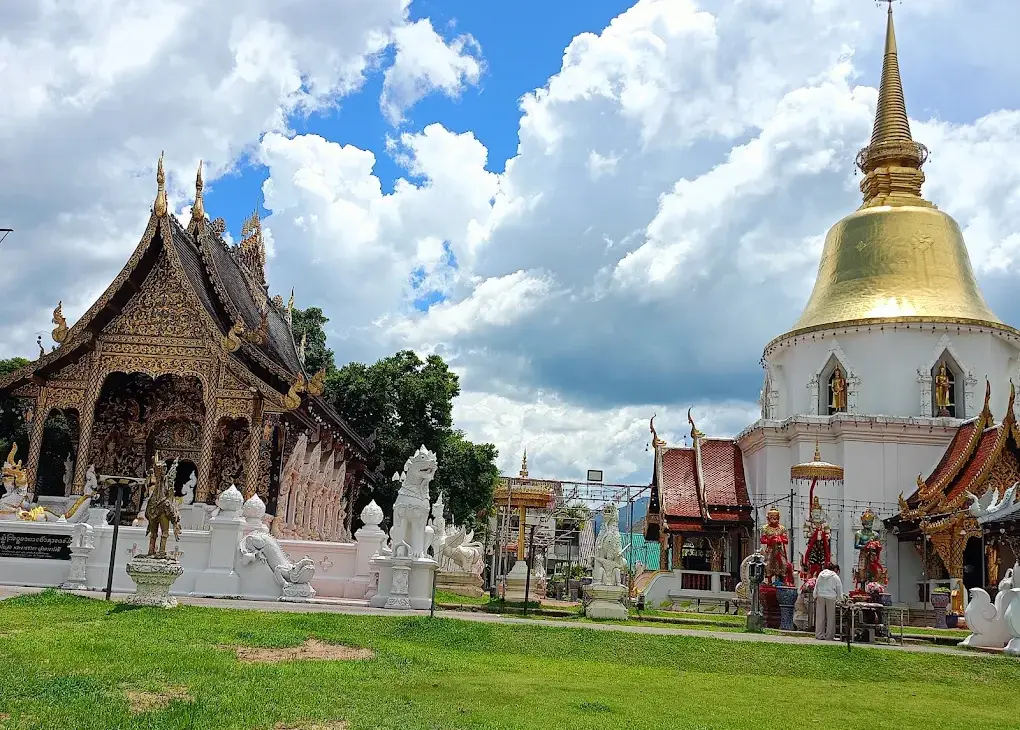
Wat Pa Saluang
Open Days: Daily
Opening Hours: 08.00 – 17.00
Wat Pa Saluang is located in Moo 3, Ban Saluang Nok, Saluang Subdistrict, Mae Rim District, Chiang Mai Province. It is a local Buddhist temple under the Dhammayut order and an important forest-temple site for the Ban Saluang Nok community. The temple was officially permitted to be established in 2001, with Phra Khru Santayathikhun listed as the abbot. Wat Pa Saluang is meaningful not only as a registered temple, but also as a quiet place associated with forest monks and meditation practice in the Mae Rim area.
Wat Pa Saluang is suitable for visitors who want a calm merit-making stop rather than a busy tourist attraction. The word “pa” means forest, and the temple’s name reflects a quiet, contemplative character. The word “Saluang” connects the temple directly with its local setting in Ban Saluang Nok, Moo 3, Saluang Subdistrict. Visitors should therefore approach the temple as a local Dhammayut forest temple with a peaceful atmosphere and a strong community identity.
Ban Saluang Nok is an important village in Saluang Subdistrict, Mae Rim District, with postal code 50330. The wider Saluang area also has historical importance for Mae Rim, because Mae Rim was formerly connected with the old administrative area known as Khwaeng Saluang. Local history records that this earlier administrative identity was associated with Ban Saluang Nok, Moo 3, before later changes in settlement, transport, and administration. This gives the area around Wat Pa Saluang a deeper local-historical context.
The temple’s official establishment in 2001 makes Wat Pa Saluang relatively recent in formal registration compared with many older temples in Mae Rim. However, the spiritual story of the place goes deeper than its official registration year. Accounts connected with forest monks describe Wat Pa Saluang as a place where monks and novices stayed for meditation practice before the temple became widely known through its current registered status.
A biographical account of Phra Khru Wimon Thammarat mentions Wat Pa Saluang as a meditation place where novice Si Nuan stayed several times, each time for several weeks. At that time, the temple had one water well used for bathing, drinking, and daily monastic activities. This detail gives a clear picture of a simple forest-temple environment focused on practice rather than comfort.
The same account notes that Wat Pa Saluang had been associated with several important forest monks, including Luang Pu Waen Suchinno, Phra Ajahn Plien Panyapatipo, and Phra Ajahn Prasit Punnamakaro. These associations give the temple a deeper spiritual dimension. Even though detailed public information about current individual structures is limited, the temple’s historical role as a place of forest-monk practice is a major part of its identity.
Phra Ajahn Plien Panyapatipo is also associated with Wat Pa Saluang in accounts of his practice. His biography refers to his return to Wat Pa Saluang before the rains retreat, where he focused on training himself in mindfulness, concentration, and close observation of the mind. This makes Wat Pa Saluang meaningful as a place connected with meditation, discipline, and the Thai forest tradition, rather than only as a village temple.
Wat Pa Saluang belongs to the Dhammayut order. This gives the temple a character associated with discipline, simplicity, and quiet religious practice. Visitors should understand that the temple is best suited for merit-making, reflection, and respectful worship. It is not a place for loud sightseeing or intrusive photography. A visit should preserve the quiet character of the temple and respect monastic space.
Phra Khru Santayathikhun is listed as the abbot of Wat Pa Saluang. The abbot of a local forest temple plays an important role in maintaining monastic discipline, caring for temple affairs, coordinating with lay supporters, and preserving the religious life of the community. Wat Pa Saluang continues through the cooperation of monks, lay supporters, and residents of Ban Saluang Nok.
The name Wat Pa Saluang carries both landscape and spiritual meaning. “Pa” suggests forest, seclusion, and simplicity. “Saluang” identifies the temple with the local community and the wider historical area of Mae Rim. The name therefore immediately tells visitors that this is a forest temple connected with a specific local place, not a generic tourist attraction.
Saluang Subdistrict is linked with mountains, village routes, and religious destinations such as Wat Phra Phutthabat Si Roi and the cultural memory of Khun Luang Wilangkha. This makes Wat Pa Saluang suitable for a route that combines forest temples, local communities, mountain scenery, and northern Thai belief. The temple can be understood as part of a wider spiritual and cultural landscape in Mae Rim.
Public details about individual buildings inside Wat Pa Saluang are limited, so the temple is best presented through its confirmed identity as a Dhammayut forest temple and meditation-related site. Visitors should focus on the peaceful temple grounds, worship areas, and the quiet atmosphere associated with forest practice. The value of the temple is not based on grand architecture, but on stillness, simplicity, and spiritual continuity.
The most meaningful things to observe at Wat Pa Saluang are the forest-temple atmosphere, the worship space, the quiet surroundings, and the relationship between the temple and Ban Saluang Nok. Travelers who know Mae Rim mainly through cafés, resorts, and nature attractions will find a different side of the district here: a Mae Rim connected with meditation, forest monks, local faith, and village life.
As a local Dhammayut temple, Wat Pa Saluang supports Buddhist activities according to the religious calendar, including Buddhist holy days, merit-making ceremonies, Kathin, robe-offering ceremonies, Buddhist Lent, and the end of Buddhist Lent. During ceremonies, visitors should give priority to monks and local residents using the temple for religious purposes.
The community role of Wat Pa Saluang can be understood on three levels. Spiritually, it is a place for worship, merit-making, and listening to Buddhist teachings. Practically, it is a peaceful space connected with forest meditation and monastic discipline. Socially, it gives Ban Saluang Nok a religious center that links the village with Buddhist tradition and local identity.
A travel route from Wat Pa Saluang can include several nearby cultural and religious sites. Visitors can combine the temple with Wat Saluang, Wat Mueang Ka, Wat Pa Huai Som Suk, Wat Phra Phutthabat Si Roi, and the Khun Luang Wilangkha stupa. For a wider Mae Rim route, travelers can continue toward the Mae Rim-Samoeng road, Queen Sirikit Botanic Garden, or mountain areas around Mae Rim depending on available time.
Wat Pa Saluang is suitable for visitors who want quiet merit-making, travelers interested in Dhammayut temples, those following stories of the Thai forest tradition, people who prefer uncrowded temples, and visitors planning a route toward Wat Phra Phutthabat Si Roi or the Mae Rim-Samoeng area. Its strength lies in its calm atmosphere, Ban Saluang Nok setting, and meditation-related history.
Visitors should dress respectfully, speak quietly, avoid loud music, and not enter monks’ residential areas without permission. Photography should be done with care, especially around monks, practitioners, and sacred areas. A respectful visit helps preserve the quiet atmosphere of Wat Pa Saluang for monks, villagers, and future visitors.
Getting There is most convenient by private car. From Chiang Mai city, travel toward Mae Rim District, then continue to Saluang Subdistrict and Ban Saluang Nok, Moo 3. The route can connect with the Mae Rim-Samoeng road and the road toward Wat Phra Phutthabat Si Roi. Morning and late afternoon are good times to visit for a quieter atmosphere and more comfortable weather.
In summary, Wat Pa Saluang is a Dhammayut forest temple in Ban Saluang Nok, Saluang Subdistrict, Mae Rim District, Chiang Mai Province. It was officially established in 2001 and is associated with Phra Khru Santayathikhun. Its value lies in its calm forest-temple character, its connection with Ban Saluang Nok, and its meditation-related history linked with forest monks who once practiced in the area.
| Name | Wat Pa Saluang |
| Location | Moo 3, Ban Saluang Nok, Saluang Subdistrict, Mae Rim District, Chiang Mai Province |
| Address | Moo 3, Ban Saluang Nok, Saluang Subdistrict, Mae Rim District, Chiang Mai 50330, Thailand |
| Buddhist Order | Dhammayut |
| Temple Type | Rat Temple / Community Forest Temple |
| Temple Code | 650070501 |
| Highlights | Dhammayut forest temple in Ban Saluang Nok, associated with forest-monk practice and quiet Buddhist life in Mae Rim |
| History | Officially permitted to be established as a temple in 2001 |
| Abbot / Caretaker | Phra Khru Santayathikhun |
| Community Context | Ban Saluang Nok is an important village in Saluang Subdistrict and is connected with the historical identity of Mae Rim’s former Khwaeng Saluang area |
| Important Areas | Dhammayut forest-temple grounds for worship, merit-making, monastic residence, and meditation practice |
| Distinctive Features | Quiet forest-temple atmosphere connected with Ban Saluang Nok and the Thai forest-meditation tradition in Mae Rim |
| Community Role | A spiritual center for worship, merit-making, Buddhist holy days, Kathin, robe-offering ceremonies, and community Buddhist activities in Ban Saluang Nok |
| Open Days | Daily |
| Opening Hours | 08.00 – 17.00 |
| Current Status | Listed in current temple, travel, local, and Ban Saluang Nok area-related sources in Saluang Subdistrict, Mae Rim District, Chiang Mai Province |
| Travel Information | Travel by private car from Chiang Mai city toward Mae Rim District, then continue to Saluang Subdistrict and Ban Saluang Nok, Moo 3; the route can connect with the Mae Rim-Samoeng road and Wat Phra Phutthabat Si Roi route |
| Nearby Tourist Attractions | 1. Ban Saluang Nok, about 1 km 2. Wat Saluang, about 2 km 3. Khun Luang Wilangkha Stupa, about 8 km 4. Wat Mueang Ka, about 9 km 5. Wat Pa Huai Som Suk, about 10 km 6. Wat Phra Phutthabat Si Roi, about 15 km 7. Queen Sirikit Botanic Garden, about 25 km |
| Nearby Restaurants | 1. Petchburirama, about 3 km, Tel. 090-840-0030 2. Coffee Saijai, about 10 km, Tel. 081-163-4822 3. Kieng Namrim, about 13 km, Tel. 085-929-1746 4. Banchong Cups Cakes Cookies, about 15 km, Tel. 063-791-6165 5. Baan Suan Mae Rim, about 19 km, Tel. 053-297-421, 088-266-5549 6. Rabieng Na Maerim, about 22 km, Tel. 080-802-6633 |
| Nearby Accommodations | 1. Secret Window Chiangmai, about 8 km, Tel. 095-747-9580 2. MJ Homestay & Camping, about 10 km 3. Mon Chom Dao @ Saluang, about 12 km, Tel. 065-553-9690 4. Forest Falls Garden, about 16 km, Tel. 064-609-4618 5. The Meadow Resort & Glamping, about 17 km, Tel. 081-931-2583 6. BaanNakanoHomestay, about 18 km |
Frequently Asked Questions (FAQ)
Q: Where is Wat Pa Saluang located?
A: Wat Pa Saluang is located in Moo 3, Ban Saluang Nok, Saluang Subdistrict, Mae Rim District, Chiang Mai Province.
Q: Which Buddhist order does Wat Pa Saluang belong to?
A: Wat Pa Saluang is a Dhammayut community forest temple.
Q: When was Wat Pa Saluang officially established?
A: Wat Pa Saluang was officially permitted to be established as a temple in 2001.
Q: Who is the abbot of Wat Pa Saluang?
A: The abbot of Wat Pa Saluang is Phra Khru Santayathikhun.
Q: What is the main highlight of Wat Pa Saluang?
A: Its main highlight is its quiet Dhammayut forest-temple atmosphere and its connection with forest monks who once stayed for meditation practice in the Wat Pa Saluang area.
Q: What are the opening hours of Wat Pa Saluang?
A: Wat Pa Saluang is open daily from 08.00 to 17.00.
Q: What nearby places can be visited with Wat Pa Saluang?
A: Nearby places include Wat Saluang, Khun Luang Wilangkha Stupa, Wat Mueang Ka, Wat Pa Huai Som Suk, Wat Phra Phutthabat Si Roi, and attractions along the Mae Rim-Samoeng route.
 Category: ●Places of Worship
 Group: ●Temple
Last Update : 3 WeekAgo
 Last Update : 3 WeekAgo
 Click to Access the Navigation Map GPS
 Muang Chiang Mai(121)Chom Thong(47)Mae Chaem(25)Chiang Dao(33)Doi Saket(68)Mae Taeng(85)Mae Rim(69)Samoeng(29)Fang(71)Mae Ai(59)Phrao(70)San Pa Tong(103)San Kamphaeng(66)San Sai(73)Hang Dong(73)Hot(32)Doi Tao(22)Omkoi(11)Saraphi(74)Wiang Haeng(15)Chai Prakan(28)Mae Wang(32)Mae On(22)Doi Lo(33)Galyani Vadhana(1)


