
lovethailand home >North Travel Attractions >Chiang Mai Travel Attractions >Mae Rim >Rim Nuea > Wat Tham Santi Chedi
TL;DR: Wat Tham Santi Chedi is located at Ban Klang, Moo 3, Rim Nuea Subdistrict, Mae Rim District, Chiang Mai Province, open Daily, hours Morning To Late Afternoon.
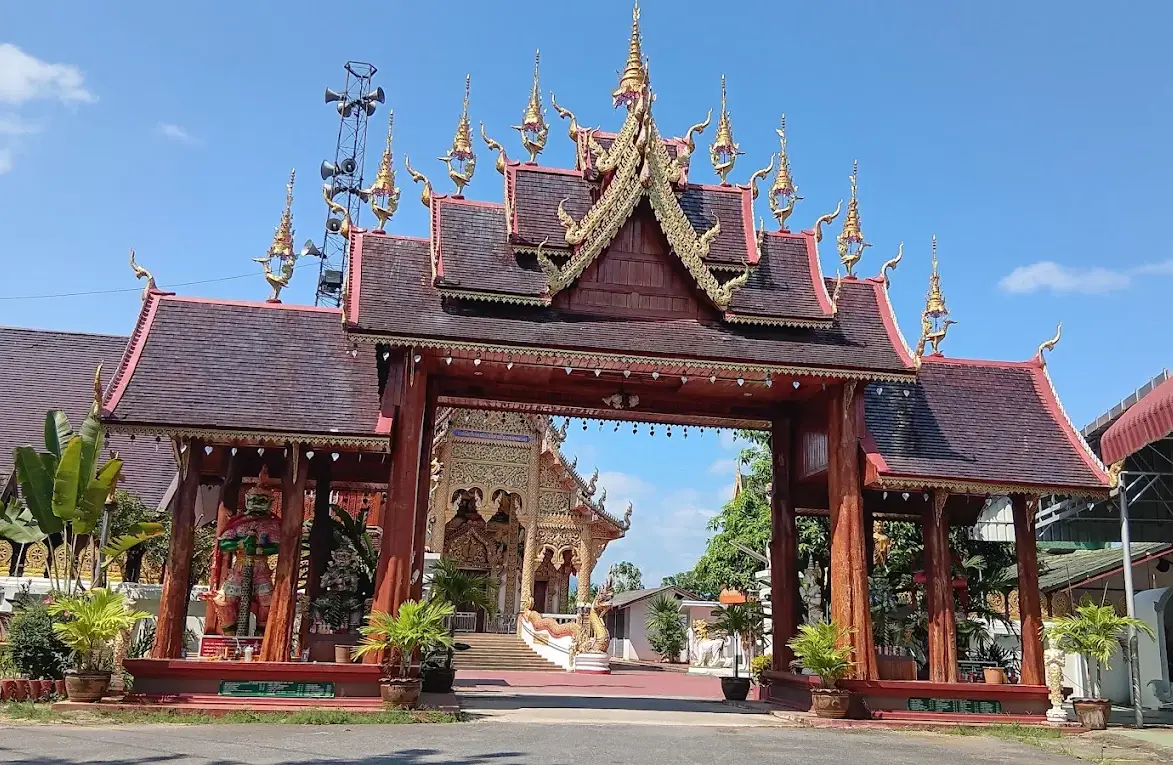
Wat Tham Santi Chedi
Open Days: Daily
Opening Hours: Morning To Late Afternoon
Wat Tham Santi Chedi is located in Ban Klang, Moo 3, Rim Nuea Subdistrict, Mae Rim District, Chiang Mai Province. It is a local Buddhist temple under the Dhammayut order. The temple has a distinctive history because it was formerly an abandoned temple known as Wat Chedi Kut before being restored to the status of a temple with resident monks and renamed Wat Tham Santi Chedi in 2003. This makes the temple meaningful not only as a place of worship, but also as a site of religious revival and community memory.
The main highlight of Wat Tham Santi Chedi is its transformation from an abandoned temple into an active Dhammayut temple. This kind of history is different from many village temples that have continued without interruption. Wat Tham Santi Chedi represents the return of Buddhist life to a place that had once lost its active monastic status. For visitors interested in local Buddhist history, this is the most important story of the temple.
The temple’s earlier name, Wat Chedi Kut, suggests that the site was associated with a chedi or remains of an old sacred structure. It was located in Ban Klang, Moo 3, Rim Nuea Subdistrict, Mae Rim District, Chiang Mai Province. The revival of the abandoned temple gave the site a new religious role, while the new name still preserves the memory of the old chedi-related identity through the word “chedi.”
On 30 June 2003, the Sangha Supreme Council approved the elevation of Wat Chedi Kut, an abandoned temple in Rim Nuea, Mae Rim, Chiang Mai, into a temple with resident monks. The council also approved the new name “Wat Tham Santi Chedi.” Temple registration records later list the temple’s establishment date as 4 August 2003. This period marks the formal return of the site to active Buddhist use.
The temple land covers approximately 1 rai, 2 ngan, and 54 square wah, under land-title deed number 29263. This indicates that Wat Tham Santi Chedi is a compact temple rather than a large tourist-oriented complex. Its scale makes it more suitable for quiet worship, merit-making, and respectful visits focused on local Buddhist life rather than mass tourism.
The name “Tham Santi Chedi” carries a layered meaning. “Tham” refers to Dhamma, or Buddhist truth and teaching. “Santi” means peace. “Chedi” connects the temple with its former identity as Wat Chedi Kut. Together, the name suggests a place of Dhamma, peace, and renewed sacred meaning. It also helps link the old abandoned temple with its present role as an active Dhammayut temple.
Rim Nuea Subdistrict is an important part of Mae Rim District, located not far from Chiang Mai city. It contains village communities, local temples, agricultural areas, and routes that connect toward the wider Mae Rim tourism corridor. Wat Tham Santi Chedi is located in Ban Klang, a local community within Rim Nuea. The temple should therefore be understood through its relationship with Ban Klang and the surrounding village environment.
As a Dhammayut temple, Wat Tham Santi Chedi has a character associated with order, simplicity, and calm religious practice. Visitors should approach it as a quiet place for merit-making and respectful worship. It is not a temple for noisy sightseeing or casual photography. Its value lies in stillness, local history, and the continued presence of Buddhist practice in a revived temple site.
Publicly available details about individual buildings inside Wat Tham Santi Chedi are limited. However, official records confirm that the site had monastic structures before its elevation from abandoned-temple status. For visitors, the most appropriate focus is the overall temple atmosphere, worship areas, and the meaning of a once-abandoned temple returning to active Buddhist life.
The most meaningful things to observe at Wat Tham Santi Chedi are the calm Dhammayut temple atmosphere, the historical connection with Wat Chedi Kut, and the temple’s role within Ban Klang. The temple does not stand out because of grand scale or heavy tourist facilities. It is valuable because it preserves a specific local story: the revival of an old sacred site and its return to the Buddhist life of the community.
Wat Tham Santi Chedi is suitable for visitors who prefer quiet temples, local history, and cultural routes outside the mainstream tourism flow. It offers a different experience from the famous temples of central Chiang Mai or the larger attractions of Mae Rim. A visit here is best approached slowly, with respect for the monks, the local community, and the quiet character of the temple.
As a local Buddhist temple, Wat Tham Santi Chedi supports religious activities according to the Buddhist calendar. These include Buddhist holy days, merit-making ceremonies, Kathin, robe-offering ceremonies, Buddhist Lent, the end of Buddhist Lent, and community religious gatherings. Visitors arriving during ceremonies should give priority to monks and local residents using the temple for religious purposes.
The community role of Wat Tham Santi Chedi can be understood on three levels. Spiritually, it is a place for worship, merit-making, and listening to Buddhist teachings. Historically, it preserves the memory of Wat Chedi Kut, the abandoned temple that preceded it. Socially, it gives Ban Klang a local religious space for Buddhist observances and community merit-making.
Wat Tham Santi Chedi can be included in a broader Rim Nuea temple route. Visitors can combine it with Wat Chedi Sathan, Wat Rom Sai Kham, Wat Pa Daraphirom, and other sites in Mae Rim. This route is suitable for travelers who want to understand community temples and local Buddhist history rather than visiting only famous tourist temples.
The temple also fits well into a wider Mae Rim itinerary. After visiting Wat Tham Santi Chedi, travelers can continue to restaurants in Rim Nuea or Rim Tai, then move on to Mae Sa Waterfall, Queen Sirikit Botanic Garden, or the Mae Rim-Mae Taeng route. The area also has several homestays, villas, resorts, and hotels suitable for travelers who want to stay overnight in Mae Rim.
Wat Tham Santi Chedi is suitable for people who want to make merit quietly, visitors interested in Dhammayut temples, travelers researching abandoned temple revival, and those who prefer small community temples with a specific history. Its strength lies in its quiet atmosphere, its compact scale, and the story of restoring religious life to a former abandoned temple.
Visitors should dress respectfully, speak quietly, and avoid entering monastic or private areas without permission. Photography should be done with care, especially around monks, worshippers, and sacred areas. A respectful visit helps preserve the peaceful atmosphere of the temple for the local community and future visitors.
Getting There is most convenient by private car. From Chiang Mai city, travel toward Mae Rim District, then continue into Rim Nuea Subdistrict and Ban Klang, Moo 3. The temple is suitable for a short merit-making stop, a half-day cultural route, or a calm visit before continuing to other attractions in Mae Rim. Morning and late afternoon are good times to visit for a quieter atmosphere and more comfortable weather.
In summary, Wat Tham Santi Chedi is a Dhammayut community temple in Ban Klang, Rim Nuea, Mae Rim, Chiang Mai. It was formerly the abandoned temple Wat Chedi Kut before being elevated to the status of an active temple with resident monks in 2003. Its significance lies in its revival, its peaceful Dhammayut character, and its role as a local religious space for Ban Klang and Rim Nuea.
| Name | Wat Tham Santi Chedi |
| Former / Related Name | Wat Chedi Kut, formerly an abandoned temple |
| Location | Ban Klang, Moo 3, Rim Nuea Subdistrict, Mae Rim District, Chiang Mai Province |
| Address | Moo 3, Ban Klang, Rim Nuea Subdistrict, Mae Rim District, Chiang Mai 50180, Thailand |
| Buddhist Order | Dhammayut |
| Temple Type | Rat Temple / Community Dhammayut Temple |
| Temple Code | 650070201 |
| Highlights | Dhammayut temple revived from the former abandoned temple Wat Chedi Kut, with a quiet community-temple atmosphere in Ban Klang, Rim Nuea |
| History | Approved by the Sangha Supreme Council in 2003 to be elevated from an abandoned temple into a temple with resident monks; temple records list the establishment date as 4 August 2003 |
| Temple Land | Approximately 1 rai, 2 ngan, and 54 square wah, under land-title deed number 29263 |
| Name Origin | The name combines Dhamma, peace, and the chedi-related memory of the former Wat Chedi Kut |
| Important Areas | Dhammayut temple grounds for monastic residence, worship, merit-making, and community Buddhist activities |
| Distinctive Features | Compact, peaceful temple with a history of revival from an abandoned sacred site |
| Community Role | A local spiritual center for worship, merit-making, Buddhist holy days, Kathin, robe-offering ceremonies, and community Buddhist activities |
| Open Days | Daily |
| Opening Hours | Morning To Late Afternoon |
| Current Status | Listed in current temple, Dhammayut temple, map, and place-related sources for Rim Nuea Subdistrict, Mae Rim District, Chiang Mai Province |
| Travel Information | Travel by private car from Chiang Mai city toward Mae Rim District, then continue to Rim Nuea Subdistrict and Ban Klang, Moo 3 |
| Nearby Tourist Attractions | 1. Wat Chedi Sathan, about 2 km 2. Wat Rom Sai Kham, about 3 km 3. Wat Pa Daraphirom, about 5 km 4. Dara Pirom Palace Museum, about 6 km 5. Wat Pa Nam Rin, about 8 km 6. Mae Sa Waterfall, about 12 km 7. Queen Sirikit Botanic Garden, about 18 km |
| Nearby Restaurants | 1. Rabiang Palm Mae Rim, about 2 km, Tel. 080-029-3070 2. Khao Soi Pa Pha Mae Rim, about 5 km, Tel. 087-660-1722, 091-543-8958 3. Baan Landai Mae Rim, about 6 km 4. N Three Restaurant, about 6 km 5. Rabieng Na Maerim, about 7 km 6. Kloem Garden Folk & Restaurant Maerim, about 8 km, Tel. 095-676-9942 |
| Nearby Accommodations | 1. YooDeeKinDee Homestay, about 2 km, Tel. 082-029-4117 2. Baan Are Gong Homestay Mae Rim Chiang Mai, about 2 km 3. Rice Villa ChiangMai, about 4 km 4. River Bend Villas, about 5 km 5. Ban Thung Lom Resort, about 5 km 6. The Grand Morocc Hotel, about 6 km, Tel. 053-299-835 |
Frequently Asked Questions (FAQ)
Q: Where is Wat Tham Santi Chedi located?
A: Wat Tham Santi Chedi is located in Ban Klang, Moo 3, Rim Nuea Subdistrict, Mae Rim District, Chiang Mai Province.
Q: What was Wat Tham Santi Chedi formerly called?
A: The site was formerly the abandoned temple Wat Chedi Kut before being revived as Wat Tham Santi Chedi.
Q: When was Wat Tham Santi Chedi established?
A: The Sangha Supreme Council approved the elevation of the former abandoned temple in 2003, and temple records list 4 August 2003 as the establishment date.
Q: Which Buddhist order does Wat Tham Santi Chedi belong to?
A: Wat Tham Santi Chedi belongs to the Dhammayut order.
Q: What is the main highlight of Wat Tham Santi Chedi?
A: Its main highlight is the revival of the former abandoned temple Wat Chedi Kut into a peaceful Dhammayut community temple in Ban Klang.
Q: What type of visitors is Wat Tham Santi Chedi suitable for?
A: It is suitable for visitors who want quiet merit-making, local Buddhist history, Dhammayut temple atmosphere, and a small community temple experience in Mae Rim.
Q: What nearby places can be visited with Wat Tham Santi Chedi?
A: Nearby places include Wat Chedi Sathan, Wat Rom Sai Kham, Wat Pa Daraphirom, Dara Pirom Palace Museum, Wat Pa Nam Rin, Mae Sa Waterfall, and Queen Sirikit Botanic Garden.
 Category: ●Places of Worship
 Group: ●Temple
Last Update : 7 DayAgo
 Last Update : 7 DayAgo
 Click to Access the Navigation Map GPS
Wat Tham Santi Chedi Map
Recommend

 Muang Chiang Mai(121)Chom Thong(47)Mae Chaem(25)Chiang Dao(33)Doi Saket(68)Mae Taeng(85)Mae Rim(69)Samoeng(29)Fang(71)Mae Ai(59)Phrao(70)San Pa Tong(103)San Kamphaeng(66)San Sai(73)Hang Dong(73)Hot(32)Doi Tao(22)Omkoi(11)Saraphi(74)Wiang Haeng(15)Chai Prakan(28)Mae Wang(32)Mae On(22)Doi Lo(34)Galyani Vadhana(1)


