
lovethailand home >North Travel Attractions >Chiang Mai Travel Attractions >Mae Rim >Mueang Kaeo > Wat Phrom Pradit
TL;DR: Wat Phrom Pradit is located at Moo 2, Ban Ton Phueng, Mueang Kaeo Subdistrict, Mae Rim District, Chiang Mai Province, open Daily, hours 08.00 – 17.00.

Wat Phrom Pradit
Open Days: Daily
Opening Hours: 08.00 – 17.00
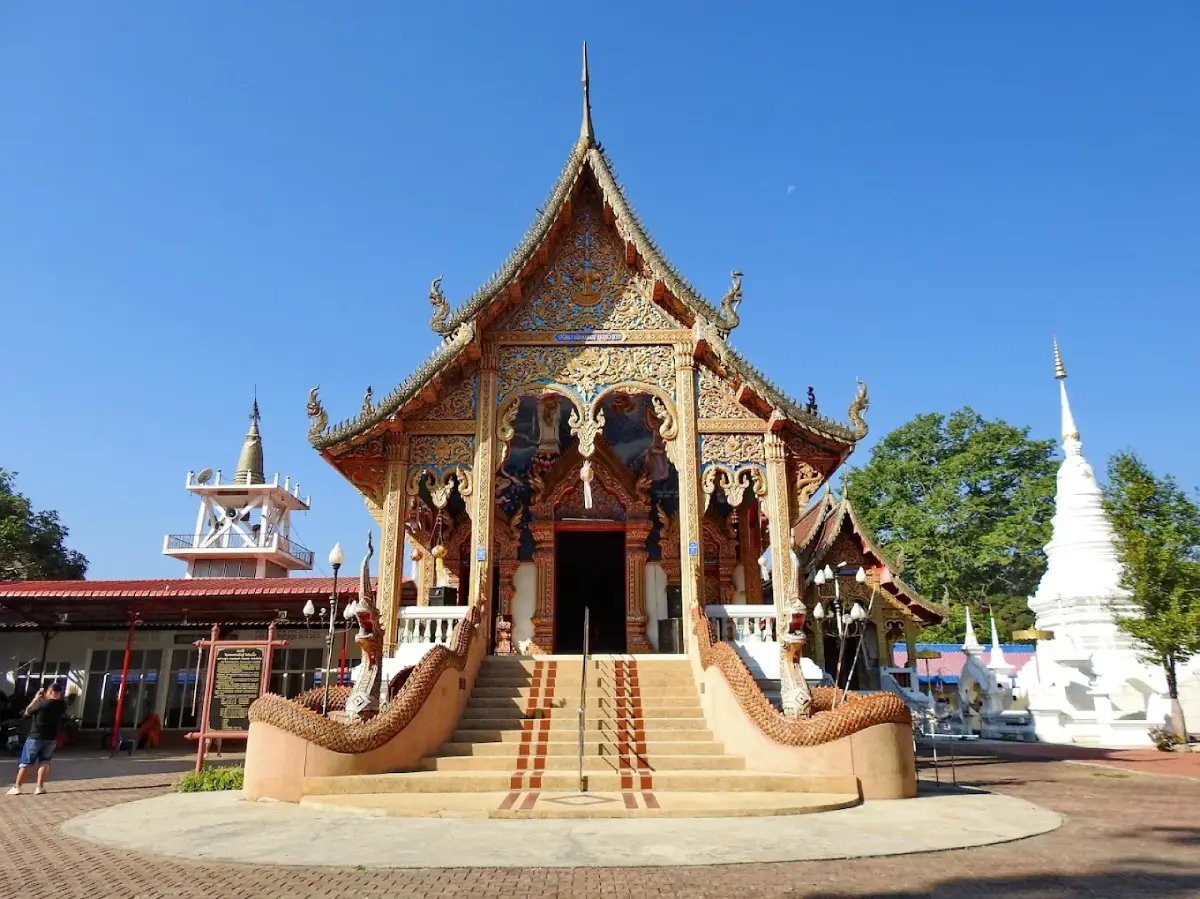
Wat Phrom Pradit is located in Moo 2, Ban Ton Phueng, Mueang Kaeo Subdistrict, Mae Rim District, Chiang Mai Province. It is a local Buddhist temple under the Mahanikaya order and has a strong historical connection with Ban Ton Phueng. The temple was officially permitted to be established in 1857 and was granted Wisungkhamsima in 1947. Its importance lies not only in its role as a village temple, but also in its local history, the formation of Ban Ton Phueng, and the change from its former name “Wat Ton Phueng” to the present name Wat Phrom Pradit.
Wat Phrom Pradit is suitable for travelers who want to explore a quiet community temple in Mae Rim with a clear historical story. Visitors can pay respect, make merit, observe the atmosphere of an old village temple, and combine the visit with nearby temples in Mueang Kaeo, such as Wat Weluwan, Wat Si Ping Chai, Wat Wichit Waree, Wat Don Tan, Wat Nantawat, and Wat Chomphunut. The temple is also close to flower-garden routes, restaurants, cafés, and accommodations in Mae Rim, making it a good stop for a half-day or full-day cultural itinerary.
The history of Wat Phrom Pradit begins with Ban Ton Phueng. Local accounts describe people who migrated from Luang Prabang in Laos. As more people settled in the area, a community developed, and the villagers built a temple near a large wild rubber tree where many giant honeybees had made their nests. The temple was therefore called Wat Ton Phueng, and the surrounding village came to be known as Ban Ton Phueng. This name preserves the memory of the original landscape, the natural environment, and the early formation of the community.
The former name Wat Ton Phueng gives the temple a distinctive identity. It connects the temple with a large tree, honeybee colonies, and the settlement of the village. In Lanna village culture, a large tree often carries meaning beyond shade or landscape. It may become a focal point of memory, shelter, and local belief. When villagers built a temple near a tree associated with honeybees, the temple became a place where nature, faith, and community life came together.
Around 1942, during the period of Sangha administrative reform under the government of Field Marshal Plaek Phibunsongkhram, many temples across the country were encouraged to adopt more modern formal names. The district ecclesiastical authority at that time changed the temple’s name from Wat Ton Phueng to Wat Phrom Pradit. The new name has a more formal and auspicious character, but the former name remains important to local memory because it preserves the story of Ban Ton Phueng, the wild rubber tree, and the honeybees that gave the village its identity.
The temple’s official establishment in 1857 confirms the strength of local Buddhist faith in Ban Ton Phueng. Community temples in northern Thailand often began through the collective effort of villagers who needed a place for worship, merit-making, Buddhist teachings, and ceremonies throughout the year. Wat Phrom Pradit therefore reflects both religious history and community history at the same time.
The granting of Wisungkhamsima in 1947 is another important milestone. In Thai Buddhism, Wisungkhamsima is the formally designated monastic boundary used for important Sangha ceremonies, including ordination and other formal acts of the monastic community. This status confirms that Wat Phrom Pradit was not only a village merit-making space, but also a temple with recognized religious functions within the local Sangha system.
Wat Phrom Pradit is a rat temple, meaning a community-supported temple rather than a royal monastery. This gives the temple a close relationship with the residents of Ban Ton Phueng and Mueang Kaeo. Local people support the temple through offerings, merit-making, food offerings, Buddhist observances, Kathin, robe-offering ceremonies, and seasonal religious activities. The temple is therefore a sacred space, a social gathering place, and a center of community memory.
Phra Khru Pradit Phrommakhun Inthanetto is the abbot of Wat Phrom Pradit. In a community temple, the abbot plays an important role in caring for monastic affairs, maintaining temple discipline, coordinating with laypeople, and continuing the religious life of the village. The continuity of a local temple depends on the cooperation between monks, temple committees, and local residents. Wat Phrom Pradit should therefore be understood as a living religious institution, not only as a physical site.
Another important part of the temple’s story is the discovery of a Buddha head around 1980 at an abandoned temple site. Wat Phrom Pradit later used that Buddha head as the basis for casting a complete Buddha image and placed the image under the Bodhi tree in front of the temple. The area was improved as a place of worship for villagers and passersby. This Buddha image connects traces of an older sacred site with present-day community devotion.
The restoration of the Buddha image has cultural significance. It was not simply the making of a new image. It was a way of reviving an old trace of faith and returning it to active religious life. Visitors who pay respect to the Buddha image are therefore engaging with both Buddhist devotion and the community’s effort to preserve and renew sacred heritage.
Key areas at Wat Phrom Pradit include the worship area, the temple grounds used for religious activities, the consecrated boundary connected with Wisungkhamsima, and the Buddha image under the Bodhi tree in front of the temple. Visitors should take time to observe the peaceful atmosphere, the relationship between the temple and the village, and the way trees, sacred objects, and community memory shape the identity of this local temple.
The atmosphere of Wat Phrom Pradit is calm, simple, and local. It is not designed as a large commercial tourist attraction. Instead, it is a temple for worship, merit-making, and learning about local history. Travelers who appreciate old temples, village temples, and cultural routes in Chiang Mai will find value in the temple’s layered history rather than in grand scale or spectacle. Its story begins with people, a tree, honeybees, and the shared faith of Ban Ton Phueng.
Mueang Kaeo Subdistrict is part of Mae Rim District and contains several village temples and old communities. Moo 2, Ban Ton Phueng, is one of the important villages in this subdistrict. Wat Phrom Pradit serves as a spiritual center for the community, supporting Buddhist holy days, merit-making, seasonal ceremonies, and gatherings. Its value is both religious and social, because it continues to hold the community together through shared faith and tradition.
As a community temple, Wat Phrom Pradit supports Buddhist activities according to the religious calendar, such as Buddhist holy days, merit-making ceremonies, Kathin, robe-offering ceremonies, Buddhist Lent, the end of Buddhist Lent, and local religious gatherings. These activities keep the temple connected with everyday village life and help preserve Lanna Buddhist customs within Mueang Kaeo.
The main highlights of Wat Phrom Pradit are the former name Wat Ton Phueng, the story of the large wild rubber tree and honeybee nests, the migration story from Luang Prabang, the renaming of the temple during the Sangha reform period, and the Buddha image restored from a Buddha head found around 1980. Together, these elements make the temple historically rich and culturally distinctive.
Wat Phrom Pradit can be included in a wider Mueang Kaeo cultural route. Visitors can begin at the temple, then continue to Wat Weluwan, Wat Si Ping Chai, Wat Wichit Waree, Wat Don Tan, Wat Nantawat, or Wat Chomphunut. After visiting temples, travelers can continue to flower gardens, cafés, restaurants, or accommodations in the area. This route is suitable for those who want a trip combining local temples, village scenery, food, and the softer rural side of Mae Rim.
Mueang Kaeo is also known for flower-garden tourism in season. The Ban Ton Phueng and Wat Phrom Pradit area has appeared as a reference point for flower-garden attractions in Mae Rim. This gives the temple a travel context that connects Buddhist culture with local agricultural tourism. Visitors can make merit at the temple first, then continue to nearby gardens, cafés, or restaurants as part of the same itinerary.
Wat Phrom Pradit is suitable for travelers who want to make merit quietly, learn about old temples in Mae Rim, understand the story of Ban Ton Phueng, explore village temples instead of major tourist temples, and combine a cultural visit with flower gardens, restaurants, and accommodations in Mueang Kaeo. The temple’s strength lies in its local history and its continuing connection with community life.
Visitors should dress respectfully, speak quietly, and remember that Wat Phrom Pradit is an active religious site for the local community. Photography should be done with care, especially around monks, worshippers, and sacred areas. Visitors should avoid entering monastic or private areas without permission. A respectful visit helps preserve the peaceful atmosphere of the temple for local residents and future visitors.
Getting There is most convenient by private car. From Chiang Mai city, travel toward Mae Rim District, then continue into Mueang Kaeo Subdistrict and Moo 2, Ban Ton Phueng. The temple is suitable for a short cultural visit, a half-day local route, or a calm stop before continuing to other attractions in Mae Rim. Morning and late afternoon are good times to visit for a quieter atmosphere and more comfortable weather.
In summary, Wat Phrom Pradit is a historic community temple in Ban Ton Phueng, Mueang Kaeo. Its significance lies in its establishment in 1857, its Wisungkhamsima granted in 1947, its former name Wat Ton Phueng, the story of the large tree and honeybees, and the restored Buddha image based on a Buddha head found around 1980. For travelers who want to understand Mae Rim beyond mainstream attractions, Wat Phrom Pradit offers a quiet and meaningful cultural stop.
| Name | Wat Phrom Pradit |
| Former / Related Name | Wat Ton Phueng |
| Location | Moo 2, Ban Ton Phueng, Mueang Kaeo Subdistrict, Mae Rim District, Chiang Mai Province |
| Address | Moo 2, Mueang Kaeo Subdistrict, Mae Rim District, Chiang Mai 50180, Thailand |
| Map Code | WX5H+W9F, Mueang Kaeo, Mae Rim District, Chiang Mai 50180 |
| Buddhist Order | Mahanikaya |
| Temple Type | Rat Temple / Community Temple |
| Highlights | Historic temple of Ban Ton Phueng, formerly Wat Ton Phueng, connected with a large wild rubber tree, honeybee nests, and a restored Buddha image based on a Buddha head found around 1980 |
| History | Officially permitted to be established as a temple in 1857 and granted Wisungkhamsima in 1947 |
| Name Origin | The former name Wat Ton Phueng came from a large wild rubber tree where many giant honeybees made nests; the temple was later renamed Wat Phrom Pradit around 1942 |
| Abbot / Caretaker | Phra Khru Pradit Phrommakhun Inthanetto |
| Contact Number | 089-853-4685 |
| Sacred Object | Buddha image restored from a Buddha head found around 1980 and placed under the Bodhi tree in front of the temple |
| Main Areas / Zones | Worship area, temple grounds for religious activities, consecrated boundary related to Wisungkhamsima, and the Buddha image area under the Bodhi tree |
| Distinctive Features | Quiet Lanna community temple with a local history linked to Ban Ton Phueng, migration from Luang Prabang, and village Buddhist life in Mueang Kaeo |
| Community Role | A spiritual center for merit-making, Buddhist observances, Kathin, robe-offering ceremonies, and community religious activities in Ban Ton Phueng and Mueang Kaeo |
| Open Days | Daily |
| Opening Hours | 08.00 – 17.00 |
| Current Status | Listed in current temple, local, Buddhist-office, and map-related sources for Mueang Kaeo Subdistrict, Mae Rim District, Chiang Mai Province |
| Travel Information | Travel by private car from Chiang Mai city toward Mae Rim District, then continue to Mueang Kaeo Subdistrict and Moo 2, Ban Ton Phueng |
| Nearby Tourist Attractions | 1. Mueang Kaeo Flower Gardens, about 2 km 2. Wat Weluwan (Mueang Kaeo), about 2 km 3. Wat Si Ping Chai, about 3 km 4. Wat Wichit Waree, about 3 km 5. Wat Don Tan, about 4 km 6. Wat Nantawat, about 4 km 7. Wat Chomphunut, about 5 km |
| Nearby Restaurants | 1. Din Na Cafe Mae Rim, about 2 km, Tel. 088-251-9191 2. My Backyard Garden, about 3 km, Tel. 062-389-4962 3. R&M Ahan Tam Sang, about 5 km, Tel. 080-123-8331 4. Bluish by Linnil, about 5 km, Tel. 088-459-9155 5. Racing Kingdom, about 5 km, Tel. 082-598-7147 6. Toonaroy Noodles And Thai Food, about 6 km, Tel. 080-630-4295 |
| Nearby Accommodations | 1. Akaliko House, about 3 km, Tel. 063-189-6373 2. The Woodshed Village, about 3 km, Tel. 080-237-5302 3. Naturetalk, about 4 km, Tel. 088-696-5467 4. Naturetalk Homestay, about 4 km, Tel. 080-450-3399 5. Prickhom Homestay, about 5 km 6. Country Retreat, about 11 km, Tel. 094-740-1590 |
Frequently Asked Questions (FAQ)
Q: Where is Wat Phrom Pradit located?
A: Wat Phrom Pradit is located in Moo 2, Ban Ton Phueng, Mueang Kaeo Subdistrict, Mae Rim District, Chiang Mai Province.
Q: What was the former name of Wat Phrom Pradit?
A: The temple was formerly called Wat Ton Phueng, named after a large wild rubber tree where many giant honeybees made nests.
Q: What is the history of Wat Phrom Pradit?
A: Wat Phrom Pradit was officially permitted to be established in 1857 and was granted Wisungkhamsima in 1947. Its history is connected with Ban Ton Phueng and migration from Luang Prabang.
Q: Who is the abbot of Wat Phrom Pradit?
A: The abbot of Wat Phrom Pradit is Phra Khru Pradit Phrommakhun Inthanetto.
Q: What is the main highlight of Wat Phrom Pradit?
A: Its main highlights are the former name Wat Ton Phueng, the story of the honeybee tree, the renaming of the temple during the Sangha reform period, and the Buddha image restored from a Buddha head found around 1980.
Q: What are the opening hours of Wat Phrom Pradit?
A: Wat Phrom Pradit is open daily from 08.00 to 17.00.
Q: What nearby places can be visited with Wat Phrom Pradit?
A: Nearby places include Mueang Kaeo flower gardens, Wat Weluwan, Wat Si Ping Chai, Wat Wichit Waree, Wat Don Tan, Wat Nantawat, and Wat Chomphunut.
 Category: ●Places of Worship
 Group: ●Temple
Last Update : 4 HourAgo
 Last Update : 4 HourAgo
 Click to Access the Navigation Map GPS
 Muang Chiang Mai(121)Chom Thong(47)Mae Chaem(25)Chiang Dao(33)Doi Saket(68)Mae Taeng(85)Mae Rim(69)Samoeng(29)Fang(71)Mae Ai(62)Phrao(70)San Pa Tong(105)San Kamphaeng(66)San Sai(73)Hang Dong(74)Hot(32)Doi Tao(22)Omkoi(11)Saraphi(74)Wiang Haeng(15)Chai Prakan(28)Mae Wang(32)Mae On(22)Doi Lo(34)Galyani Vadhana(1)


