
lovethailand home >North Travel Attractions >Chiang Mai Travel Attractions >Mae Rim >Huai Sai > Wat Tamnak Tham Nimit
TL;DR: Wat Tamnak Tham Nimit is located at Moo 1, Huai Sai Subdistrict, Mae Rim District, Chiang Mai Province, open Daily, hours 08.00 – 17.00.
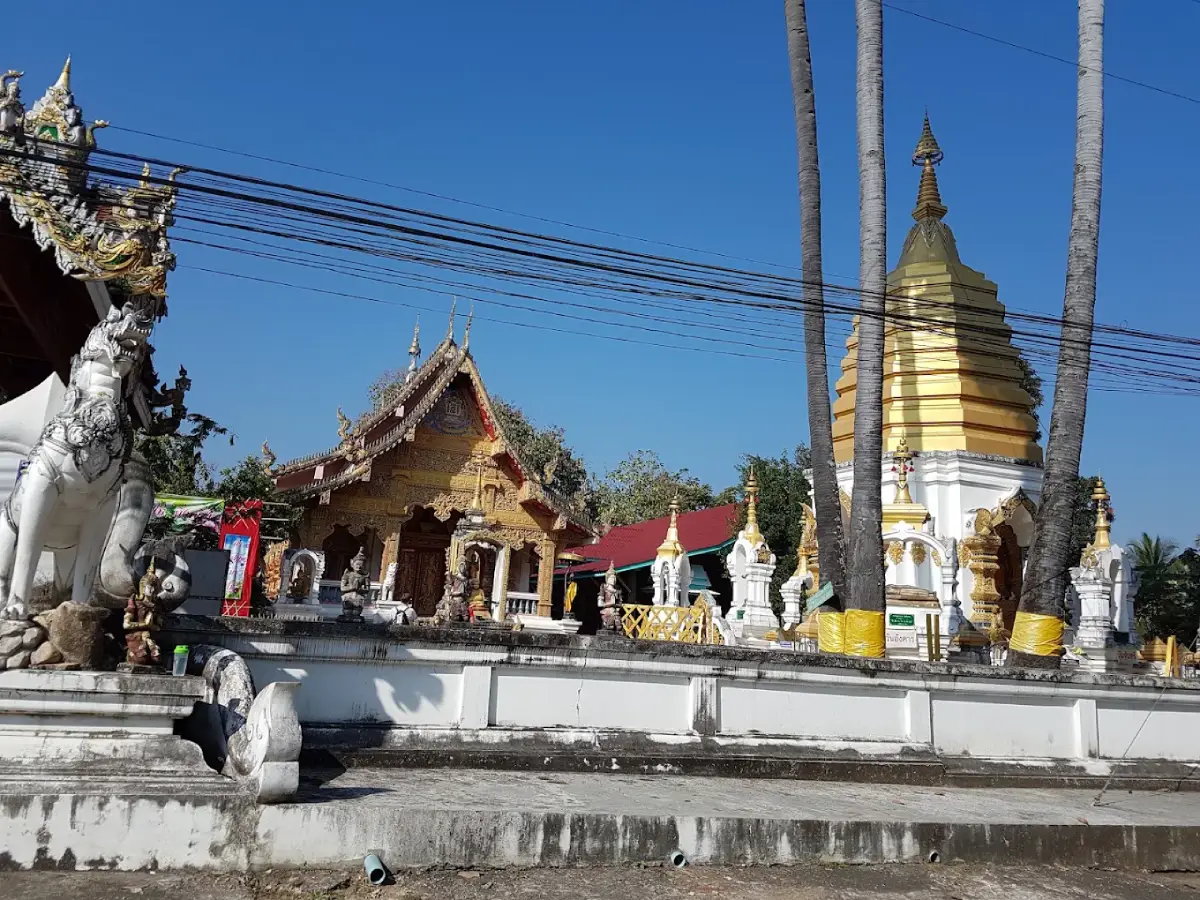
Wat Tamnak Tham Nimit
Open Days: Daily
Opening Hours: 08.00 – 17.00
Wat Tamnak Tham Nimit, also known locally as Wat Ban Oi, is a Maha Nikaya Buddhist temple in Moo 1, Huai Sai Subdistrict, Mae Rim District, Chiang Mai Province 50180. The temple has a detailed founding history recorded on Thursday, September 29, 1910, at 15.19, according to a traditional Lanna auspicious time. It has been known by several earlier names, including Wat San Khwang Don Pin, Wat Thung Tamnak, and Wat Ban Oi, before becoming Wat Tamnak Tham Nimit. The temple is deeply connected with the history of Ban Oi, the migration of villagers from Ban Umong in Chiang Mai city, the settlement along the Mae Rim stream, and the local story of a luminous omen that guided the community in choosing the temple site.
Wat Tamnak Tham Nimit is more than a village temple. Its history is closely tied to the formation of Ban Oi itself. The village was originally called Ban Noi, meaning a small village with only a few households. The founding group migrated from Ban Umong in Mueang Chiang Mai District, led by Pho Chao Nan Mahawong and Mae Chao Usa Kawila, in search of land for settlement and livelihood. They followed the Mae Rim stream until they found a fertile area suitable for farming, residence, and river-based transport of agricultural produce.
In the early period, Ban Noi was a small farming settlement of around 30 families. During the flood season, the village was affected by flooding, so the community agreed to move about one kilometer inland to the present village location. This relocation reflects how Lanna communities adapted to water, landscape, and livelihood conditions. The villagers did not simply move their homes; they preserved their community relationships, ritual life, and shared faith, which later became the foundation of Ban Oi and Wat Tamnak Tham Nimit.
The name Ban Oi came from an important local event. Chao Pho Chiwit Ao, an uncle of Princess Dara Rasmi, visited the area during a forest excursion and stayed at Ban Noi with his attendants. The villagers were pleased that a member of the northern royal family had stayed in their village. They built a pavilion or tamnak for him and offered sugarcane to feed the elephants that accompanied the visit. Because the village had grown beyond a very small settlement and because of the auspicious offering of sugarcane, the village name was changed from Ban Noi to Ban Oi.
After the village became known as Ban Oi, the community agreed that the village should have a temple as a spiritual center. Pho Nan Chai, Mae Thiang, and villagers from 38 households discussed the matter and decided to build a temple for merit-making, Dhamma listening, and Buddhist practice. This decision was not only about constructing religious buildings; it showed that Ban Oi had become a stable community ready to maintain a Buddhist temple of its own.
Before selecting the temple site, village leaders and residents performed a traditional vow and omen-seeking ritual. They prayed that an auspicious sign would appear within three to seven days to indicate the right location. One night, villagers saw a beautiful light, as bright as the moon, descending onto the rice field of Nai Nan Kantha. The field was west of the village, across the river, on a slope from which the whole village could be seen. The villagers took this omen as the sign for the temple site.
Nai Nan Kantha, the owner of the rice field, gladly offered the land for the temple. The founding date was Thursday, September 29, 1910, during the reign of King Chulalongkorn, Rama V. At that time, Khun Bamrung Ratthakhet was the third district chief of Mae Rim, Phra Khru Maha Mongkhon or Khruba Surin of Wat Duang Dee was the first district ecclesiastical chief, Khun Huai Sai Sarakit was the subdistrict headman of Huai Sai, Pho Nan Chai was the village headman, Nai Ki Phromnak was the temple lay steward, Pho Nan Phothi Siroi was the ritual lay leader, and Phra Ajarn Panya Loi Mee was the abbot in the early period.
The name Wat Tamnak Tham Nimit carries layered meaning. Tamnak comes from the pavilion built by villagers for Chao Pho Chiwit Ao during his visit to Ban Oi. Tham Nimit refers to the luminous omen seen by the villagers, which led them to choose the temple site. The name therefore combines community memory, Buddhist meaning, and the unity of villagers who built the temple through shared faith and effort.
The temple’s older names preserve different layers of local history. Wat Ban Oi directly connects the temple with the village. Wat Thung Tamnak reflects the memory of the pavilion and the field landscape. Wat Tamnak Tham Nimit brings together the pavilion, the omen, and the community’s shared spiritual purpose. These names show that the temple is not merely a religious site, but a historical marker of Ban Oi.
The temple remains active today. Recent 2025 Kathin information identifies Wat Tamnak Tham Nimit as a community temple in Huai Sai Subdistrict, Mae Rim District, Chiang Mai Province. It records five monks in residence and names Phra Khru Nimit Thammawat as the abbot. The 2025 Kathin ceremony was listed for October 11, 2025 at 13.00, confirming that the temple continues to function as an active Buddhist site with annual merit-making activities.
Phra Khru Nimit Thammawat is also connected with the more recent history of Wat Ban Oi. Local temple history mentions the period after the passing of Luang Pho Phra Khru Bunloet Akkapunyo, who was his teacher, and the appointment of Phra Khru Nimit Thammawat, then known as Phra Thawat Wachiro, to succeed as abbot of Wat Tamnak Tham Nimit. This continuity of monastic leadership helps explain how the temple has remained an important spiritual center of Ban Oi.
Important religious areas of Wat Tamnak Tham Nimit include the viharn, hall, monks’ residence, ubosot, temple courtyard, and ritual spaces. Local temple history refers to an old viharn, old hall, old residence, and an ubosot with a Mae Thorani image. It also mentions the temple guardian shrine, or ho suea wat, reflecting Lanna local belief connected with the protection of the temple and village.
Mae Thorani is an important Buddhist and local symbol. In Buddhist tradition, Mae Thorani is connected with the Buddha’s victory over Mara before enlightenment. The image of Mae Thorani wringing water from her hair symbolizes accumulated merit and the victory of Dhamma over obstacles. The presence of Mae Thorani in the temple’s local history gives Wat Tamnak Tham Nimit another meaningful layer of Buddhist symbolism and community faith.
The temple guardian shrine reflects a Lanna belief system that often coexists with village Buddhism. Many northern Thai communities maintain beliefs in protective spirits associated with temples and settlements. Such beliefs do not replace Buddhism, but form part of the local spiritual ecology. Wat Tamnak Tham Nimit is therefore important not only as a Buddhist temple, but also as a place where Lanna community belief and Buddhist practice meet.
The main appeal of Wat Tamnak Tham Nimit is its unusually detailed founding history. The temple history includes the founding date and time, the Lanna auspicious hour, local officials and monastic leaders of the period, earlier temple names, the renaming of Ban Noi as Ban Oi, the luminous omen, and the shared effort of 38 households. This makes the temple a valuable place for learning about Ban Oi and Huai Sai community history.
Temple traditions at Wat Tamnak Tham Nimit follow the Buddhist and Lanna community calendar. These include Buddhist holy day merit-making, Buddhist Lent, the end of Lent, Kathin, robe-offering events, Sangha donation ceremonies, funerary merit-making, and community merit-making occasions. Kathin is especially important because it takes place after Buddhist Lent and allows lay supporters to offer robes and donations for temple maintenance and monastic use.
The temple’s role can be understood in several layers. First, it is a Buddhist place for worship, sermons, merit-making, and ceremonies. Second, it preserves the historical memory of Ban Noi, Ban Oi, and the early settlement of the community. Third, it is a social space where villagers gather during merit-making events. Fourth, it is a cultural memory space connecting the pavilion, the luminous omen, Mae Thorani, the temple guardian shrine, and Lanna village life.
For visitors, Wat Tamnak Tham Nimit is suitable for those interested in old community temples, Ban Oi history, Mae Rim settlement history, and Lanna narratives with strong local detail. It is not a commercial tourist complex. Its value lies in its history, community memory, active Buddhist life, and connection with the culture of Huai Sai and Mae Rim.
Getting There from Chiang Mai city is convenient by private car, rental car, or hired vehicle. Take Highway 107, the Chiang Mai–Fang Road, toward Mae Rim District, then continue into Huai Sai Subdistrict and Ban Oi, Moo 1. Visitors using public transport should plan the local transfer from Mae Rim in advance because village temples are not always located on frequent public transport routes.
Wat Tamnak Tham Nimit is open daily from 08.00 to 17.00. The morning is suitable for worship and merit-making, while late afternoon is comfortable for a quiet walk around the temple. Visitors should avoid disturbing monks or local residents during ceremonies and should ask permission before taking close photographs of people or ritual activities.
Wat Tamnak Tham Nimit can be included in a Mae Rim cultural route with Wat Pa Dara Phirom, Daraphirom Palace Museum, Tiger Kingdom Mae Rim, Queen Sirikit Botanic Garden, and nearby community temples in San Pong and Huai Sai. Travelers interested in Lanna history can combine Ban Oi with Daraphirom Palace Museum to better understand the relationship between Mae Rim communities and the history of Princess Dara Rasmi.
Visitors should follow standard Lanna temple etiquette. Modest dress is required, shoulders and knees should be covered, shoes should be removed before entering sacred buildings, loud behavior should be avoided, and sacred objects should not be touched without permission. A community temple is a living religious space, so respect for monks and local worshippers is essential.
Overall, Wat Tamnak Tham Nimit is a meaningful old community temple of Ban Oi, Huai Sai Subdistrict, Mae Rim District. Its value lies in its earlier names, the transformation of Ban Noi into Ban Oi, the pavilion built for Chao Pho Chiwit Ao, the luminous omen that marked the temple site, the unity of 38 households, and its continuing role as a Buddhist temple with resident monks and annual Kathin activity. For travelers who want a quieter and more locally grounded view of Mae Rim, this temple is a worthwhile cultural stop.
| Name | Wat Tamnak Tham Nimit, Also Known As Wat Ban Oi |
| Location | Moo 1, Huai Sai Subdistrict, Mae Rim District, Chiang Mai Province |
| Address | Moo 1, Huai Sai, Mae Rim, Chiang Mai 50180, Thailand |
| Coordinates | 18.943, 98.91999 |
| Highlights | Historic Ban Oi Community Temple With A Detailed Founding Date, Lanna Auspicious Time, Luminous Omen, And The Shared Effort Of 38 Households |
| History | Founded On Thursday, September 29, 1910 At 15.19 During The Reign Of King Rama V |
| Former Temple Names | Wat San Khwang Don Pin, Wat Thung Tamnak, Wat Ban Oi |
| Name Origin | Tamnak Comes From The Pavilion Built For Chao Pho Chiwit Ao; Tham Nimit Refers To The Luminous Omen And The Unity Of Villagers Who Built The Temple |
| Origin Of Ban Oi | The Village Was Formerly Ban Noi And Was Renamed Ban Oi After Villagers Offered Sugarcane To Feed The Elephants During Chao Pho Chiwit Ao’s Visit |
| Important Historical Figures | Pho Chao Nan Mahawong, Mae Chao Usa Kawila, Pho Nan Chai, Mae Thiang, Nai Nan Kantha, Phra Ajarn Panya Loi Mee |
| Current Abbot | Phra Khru Nimit Thammawat |
| Resident Monks | 5 Monks |
| Important Structures And Areas | Viharn, Hall, Monks’ Residence, Ubosot, Temple Courtyard, Temple Guardian Shrine, And Community Merit-Making Areas |
| Sacred Beliefs / Local Symbols | Mae Thorani And The Temple Guardian Shrine Connected With Wat Ban Oi Local History |
| Community Role | Spiritual Center Of Ban Oi, Venue For Worship, Dhamma Listening, Kathin, Robe-Offering Events, Sangha Donations, Funerary Merit-Making, And Village Buddhist Activities |
| Latest Kathin Activity Found | 2025 Kathin Ceremony On October 11, 2025 At 13.00 |
| Travel Information | From Chiang Mai City, Take Highway 107 Or The Chiang Mai–Fang Road Toward Mae Rim, Then Continue Into Huai Sai Subdistrict And Ban Oi, Moo 1. Private Car, Rental Car, Or Hired Vehicle Is Recommended. |
| Current Status | Active Community Buddhist Temple For Worship, Merit-Making, Sermons, Kathin, And Ban Oi Buddhist Activities |
| Open Days | Daily |
| Opening Hours | 08.00 – 17.00 |
| Admission Fee | Official Admission Fee Not Specified |
| Related Traditions / Temple Events | Buddhist Holy Day Merit-Making, Buddhist Lent, The End Of Lent, Kathin, Robe-Offering Events, Sangha Donations, Funerary Merit-Making, And Occasional Temple Celebration Events |
| Nearby Tourist Attractions | 1. Wat Pa Dara Phirom, About 9 Km, Tel. 053-862-890 2. Daraphirom Palace Museum, About 9 Km, Tel. 053-299-175 3. Tiger Kingdom Mae Rim, About 10 Km, Tel. 061-268-2669 4. Wat Phra That Chom Taeng, About 11 Km 5. Queen Sirikit Botanic Garden, About 20 Km, Tel. 053-841-234 6. Mae Sa Waterfall, About 17 Km |
| Nearby Restaurants | 1. Baan Suan Mae Rim, About 9 Km, Tel. 053-297-421, 088-266-5549 2. Tong O Mae Rim, About 10 Km, Tel. 095-452-6949 3. Sala Cafe, About 15 Km, Tel. 053-860-996, 086-914-0777 4. Rabieng Na Mae Rim, About 15 Km, Tel. 053-861-511 Ext. 3 Ext. 118 5. The Ironwood, About 18 Km, Tel. 085-111-7777, 081-858-3555 |
| Nearby Accommodations | 1. Mae Rim Lodge Resort, About 10 Km, Tel. 053-376-105 2. Mae Rim Grace, About 13 Km, Tel. 066-095-7267 3. Four Seasons Resort Chiang Mai, About 14 Km, Tel. 053-298-181 4. Raya Heritage, About 18 Km, Tel. 053-111-670 To 73 5. Mon Chang Nature Home, About 18 Km, Tel. 094-287-4956 |
Frequently Asked Questions (FAQ)
Q: Where Is Wat Tamnak Tham Nimit Located?
A: Wat Tamnak Tham Nimit is located in Moo 1, Huai Sai Subdistrict, Mae Rim District, Chiang Mai Province 50180, Thailand.
Q: What Were The Former Names Of Wat Tamnak Tham Nimit?
A: The temple was formerly known by several names, including Wat San Khwang Don Pin, Wat Thung Tamnak, and Wat Ban Oi.
Q: What Is The Origin Of The Name Wat Tamnak Tham Nimit?
A: Tamnak refers to the pavilion built for Chao Pho Chiwit Ao, while Tham Nimit refers to the luminous omen seen by villagers and the unity of the community in building the temple.
Q: When Was Wat Tamnak Tham Nimit Founded?
A: The temple was founded on Thursday, September 29, 1910, at 15.19 according to local history.
Q: Who Is The Current Abbot Of Wat Tamnak Tham Nimit?
A: The current abbot named in the 2025 Kathin information is Phra Khru Nimit Thammawat.
Q: What Are The Opening Days And Hours Of Wat Tamnak Tham Nimit?
A: Wat Tamnak Tham Nimit is open daily from 08.00 to 17.00.
Q: What Nearby Places Can Be Visited With Wat Tamnak Tham Nimit?
A: Nearby places include Wat Pa Dara Phirom, Daraphirom Palace Museum, Tiger Kingdom Mae Rim, Wat Phra That Chom Taeng, Queen Sirikit Botanic Garden, and Mae Sa Waterfall.
 Category: ●Places of Worship
 Group: ●Temple
Last Update : 3 WeekAgo
 Last Update : 3 WeekAgo
 Click to Access the Navigation Map GPS
Wat Tamnak Tham Nimit Map
Recommend

 Muang Chiang Mai(121)Chom Thong(47)Mae Chaem(25)Chiang Dao(33)Doi Saket(68)Mae Taeng(85)Mae Rim(69)Samoeng(29)Fang(71)Mae Ai(59)Phrao(70)San Pa Tong(103)San Kamphaeng(66)San Sai(73)Hang Dong(73)Hot(32)Doi Tao(22)Omkoi(11)Saraphi(74)Wiang Haeng(15)Chai Prakan(28)Mae Wang(32)Mae On(22)Doi Lo(33)Galyani Vadhana(1)


