
lovethailand home >North Travel Attractions >Chiang Mai Travel Attractions >Mae Rim >San Pong > Wat Si Chomphu
TL;DR: Wat Si Chomphu is located at Moo 2, Ban Pa Tio, San Pong Subdistrict, Mae Rim District, Chiang Mai Province, open Daily, hours 08.00 – 17.00.
Wat Si Chomphu
Open Days: Daily
Opening Hours: 08.00 – 17.00
Wat Si Chomphu, also known locally as Wat Pa Tio, is a Maha Nikaya Buddhist temple in Moo 2, Ban Pa Tio, San Pong Subdistrict, Mae Rim District, Chiang Mai Province 50180. Officially permitted as a Buddhist temple in 1916, it is one of the long-standing community temples of San Pong. The temple remains active as a place for worship, merit-making, Buddhist ceremonies, Kathin, robe-offering events, funerary merit-making, and community activities for Ban Pa Tio.
Wat Si Chomphu is suitable for travelers who want to see Mae Rim beyond its well-known natural attractions, cafés, gardens, and mountain viewpoints. San Pong lies north of Mae Rim town and is connected by Highway 107, the Chiang Mai–Fang Road. The area includes village settlements, agricultural communities, community temples, and local roads. Wat Si Chomphu therefore belongs to a living community landscape rather than a commercial tourist setting.
Ban Pa Tio, Moo 2 of San Pong Subdistrict, is one of the significant village communities in the subdistrict. The formal temple name is Wat Si Chomphu, while the local name Wat Pa Tio reflects the village identity. These two names work together: one identifies the temple formally, and the other preserves local place memory. For local residents, Wat Si Chomphu is the temple of Ban Pa Tio.
The temple’s official establishment in 1916 gives Wat Si Chomphu a history of more than 100 years. In northern Thai villages, a temple was not only a place for worship, but also a center of social life, merit-making, sermons, funerary activities, community gatherings, and moral learning. Wat Si Chomphu therefore represents both Buddhist devotion and the social structure of Ban Pa Tio.
Older temple-history information places Wat Si Chomphu at 117/2 Ban Pa Tio on the Chiang Mai–Fang Road, Moo 2, San Pong Subdistrict, Mae Rim District. It also records that the temple land covers about 5 rai and 68 square wah. This helps define the temple as a real village institution located along an important transport route in Mae Rim.
In 1952, the temple was restored and rebuilt through the support of local villagers and community elders. The names recorded in older temple information include Pho Nan Wong, Pho Ui Ai, Pho Noi Suan, Pho Nan Kaew, Pho Noi Binta, and Pho Noi Jai. This restoration history is important because it shows that Wat Si Chomphu was maintained through community faith and local cooperation, not merely by formal registration.
Older temple information names Phra Athikan Udom Kittiyano in connection with Wat Si Chomphu. The latest Kathin information for 2025 names Phra Khru Sangharak Theerawat Sophonmethi as the current abbot, records five monks in residence, and lists the Kathin ceremony for October 25, 2025 at 15.00. This recent information confirms that the temple remains active in contemporary Buddhist life.
In a community temple, the abbot plays a central role in maintaining Buddhist practice, temple buildings, merit-making events, lay support, and the relationship between monks and villagers. Wat Si Chomphu should therefore be understood as a living religious site, not only a historical name in a temple registry.
Wat Si Chomphu also has a clear modern community role. Mae Rim District once selected the temple as a model site for the “Plant Dhamma, Plant Vegetables” activity based on the Bowon concept: home, temple, and government working together. This activity brought together district officials, community development officers, monks, village leaders, and local residents to plant vegetables and strengthen local food security.
This community activity shows that Wat Si Chomphu is more than a ritual space. It also functions as a local development space where Dhamma, daily life, food security, and community cooperation can meet. The temple helps connect Buddhist values with practical action, such as reducing household expenses, growing vegetables, sharing food, and using the temple as a shared community resource.
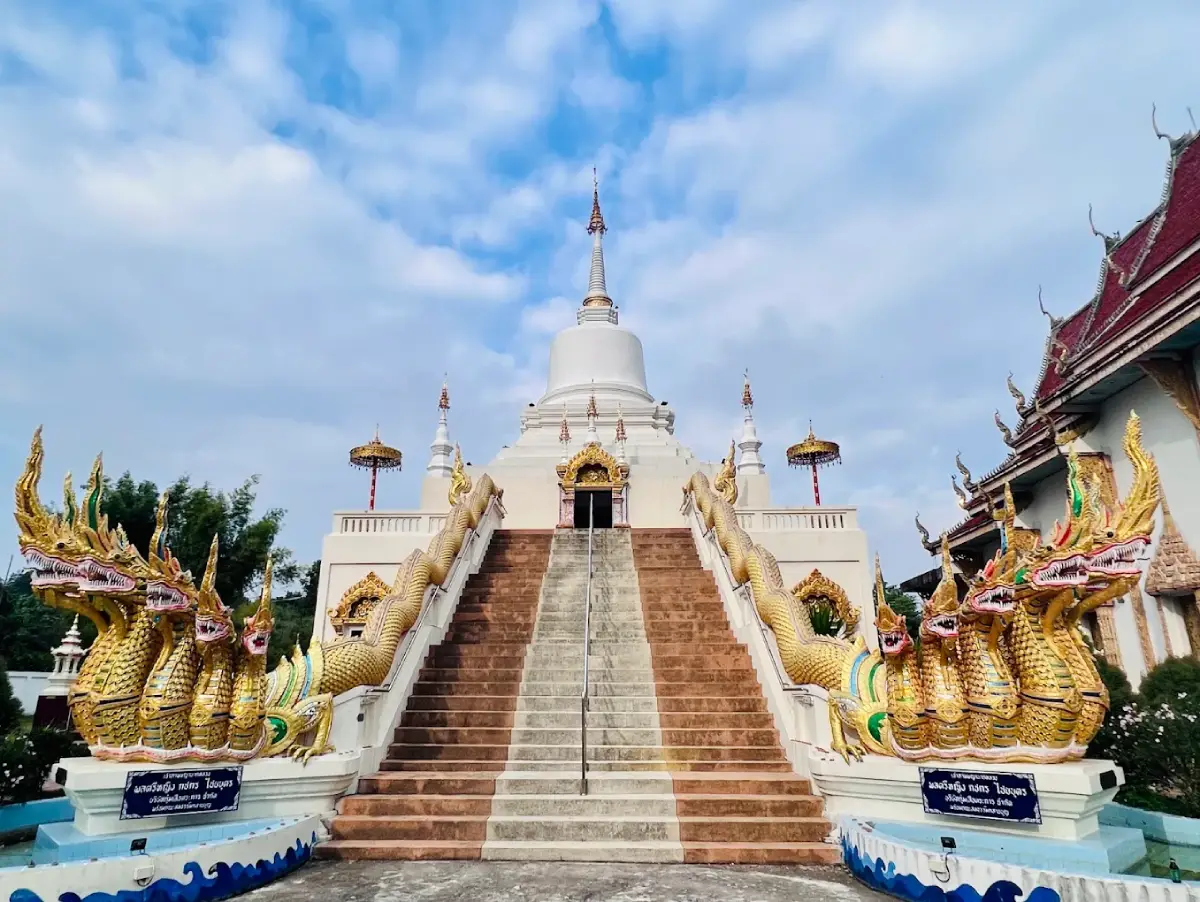
Important areas of Wat Si Chomphu include the worship and ceremony area, temple courtyard, hall, monks’ residence, bell tower, and spaces used for merit-making and community activities. Publicly available information does not provide enough verified detail to describe the viharn, ubosot, chedi, or principal Buddha image in depth. The temple is therefore best appreciated through its age, community role, bell tower, and active village Buddhist life.
The bell tower is one of the temple features mentioned in local news about restoration needs. In a village temple, a bell tower is culturally important because it traditionally helps announce time, ceremonies, and temple activities. Restoring a bell tower therefore means preserving more than a structure; it helps maintain an element of village religious culture.
The worship area is the heart of the temple. It is where monks and local residents chant, listen to sermons, offer donations, observe Buddhist holy days, and join ceremonies. Even when architectural descriptions are not widely published, the religious function of the space remains central to the life of the temple. Visitors should enter respectfully, dress modestly, and avoid disturbing monks or local worshippers.
The temple courtyard has strong social meaning. In northern Thai community temples, the courtyard often becomes a gathering space during Kathin, robe-offering events, funerary merit-making, Buddhist holy days, and village occasions. At Wat Si Chomphu, this function is reinforced by the temple’s role in community projects, making the courtyard both a religious and social space.
The main appeal of Wat Si Chomphu is its identity as an old village temple of Ban Pa Tio. Its value lies in its 1916 official temple history, the 1952 restoration by local residents, the local name Wat Pa Tio, the bell tower, the active monastic community, and the temple’s role in community development. Visitors should not expect a large commercial tourist complex. Instead, the temple offers a calm view of Mae Rim’s village Buddhist life.
Temple traditions at Wat Si Chomphu follow the Buddhist and Lanna community calendar. These include Buddhist holy day merit-making, Buddhist Lent, the end of Lent, Kathin, robe-offering events, funerary merit-making, and village merit-making occasions. The latest Kathin information lists five monks in residence, showing that the temple remains active in contemporary Buddhist practice.
The role of Wat Si Chomphu in Ban Pa Tio can be seen in several layers. First, it is a Buddhist place for worship, sermons, merit-making, and ceremonies. Second, it is a social space where villagers gather. Third, it is a community development space through activities such as vegetable planting and food-security projects. Fourth, it is part of the cultural memory of San Pong and Mae Rim.
Wat Si Chomphu is suitable for travelers interested in community temples, old village temples, local history, and less crowded cultural routes in Mae Rim. It can be visited together with Wat Nantharam, Wat Pho Nimit, Wat Kumpha Pradit, Wat Mani Pradit, Wat Phra That Chom Taeng, Wat Pa Dara Phirom, Daraphirom Palace Museum, and lower Mae Rim attractions.
Wat Phra That Chom Taeng is a good nearby destination to pair with Wat Si Chomphu because it is a significant sacred site in San Pong. Wat Nantharam, Wat Pho Nimit, and Wat Kumpha Pradit also help visitors understand the network of community temples in the same subdistrict. Visiting these temples together gives a clearer view of San Pong as a temple-rich area along the Chiang Mai–Fang route.
Getting There from Chiang Mai city is convenient by private car, rental car, or hired vehicle. Take Highway 107, the Chiang Mai–Fang Road, toward Mae Rim District, then continue to Ban Pa Tio, Moo 2, in San Pong Subdistrict. The temple is located in a community area near the main transport corridor. Visitors using public transport should plan the local transfer from Mae Rim in advance.
Wat Si Chomphu is open daily from 08.00 to 17.00. The morning is suitable for worship and merit-making, while late afternoon is comfortable for a quiet walk around the temple. Visitors who plan to continue to nearby Mae Rim attractions should start early enough to avoid rushing between stops.
Visitors should follow standard temple etiquette. Modest dress is required, shoulders and knees should be covered, shoes should be removed before entering sacred areas, and loud behavior should be avoided. Photographs of monks, ceremonies, or local worshippers should not be taken at close range without permission. A community temple is a living religious space, so respect for local users of the temple is essential.
Overall, Wat Si Chomphu or Wat Pa Tio is a meaningful old community temple of San Pong and Mae Rim. Its value lies in its official temple history from 1916, the local name connected with Ban Pa Tio, the 1952 community restoration, the bell tower, the continuing monastic life, the 2025 Kathin activity, and the temple’s role in community development. For travelers who want a quieter and more locally grounded view of Mae Rim, Wat Si Chomphu is a worthwhile cultural stop.
| Name | Wat Si Chomphu, Also Known As Wat Pa Tio |
| Location | Moo 2, Ban Pa Tio, San Pong Subdistrict, Mae Rim District, Chiang Mai Province |
| Address | 117/2 Ban Pa Tio, Chiang Mai–Fang Road, Moo 2, San Pong, Mae Rim, Chiang Mai 50180, Thailand |
| Temple Area | About 5 Rai And 68 Square Wah |
| Highlights | Old Community Temple Of Ban Pa Tio, Bell Tower, Community Activity Spaces, And Model Site For The Plant Dhamma, Plant Vegetables Activity |
| History | Officially Permitted As A Buddhist Temple In 1916; Restored And Rebuilt By Local Residents In 1952 |
| Name Origin | Wat Si Chomphu Is The Formal Temple Name, While Wat Pa Tio Reflects Ban Pa Tio, The Local Village Name |
| Distinctive Features | A Maha Nikaya Community Temple Reflecting Village Buddhism, Merit-Making, Community Development, And Lanna Local Life |
| Important Structures And Areas | Worship And Ceremony Area, Temple Courtyard, Hall, Monks’ Residence, Bell Tower, And Community Merit-Making Spaces |
| Current Abbot / Caretaker | Phra Khru Sangharak Theerawat Sophonmethi |
| Older Abbot Information Found In Historical Source | Phra Athikan Udom Kittiyano |
| Resident Monks | 5 Monks |
| Latest Kathin Activity Found | 2025 Kathin Ceremony On October 25, 2025 At 15.00 |
| Community Role | Spiritual Center Of Ban Pa Tio, Venue For Buddhist Ceremonies, Kathin, Robe-Offering Events, Funerary Merit-Making, And Community Development Activities |
| Travel Information | From Chiang Mai City, Take Highway 107 Or The Chiang Mai–Fang Road Toward Mae Rim, Then Continue To Ban Pa Tio, Moo 2, San Pong Subdistrict. Private Car, Rental Car, Or Hired Vehicle Is Recommended. |
| Current Status | Active Community Buddhist Temple For Worship, Merit-Making, Sermons, Ceremonies, And Ban Pa Tio Community Activities |
| Open Days | Daily |
| Opening Hours | 08.00 – 17.00 |
| Admission Fee | Official Admission Fee Not Specified |
| Related Traditions / Temple Events | Buddhist Holy Day Merit-Making, Buddhist Lent, The End Of Lent, Kathin, Robe-Offering Events, Funerary Merit-Making, And Ban Pa Tio Community Merit-Making Occasions |
| Nearby Tourist Attractions | 1. Wat Nantharam, About 2 Km 2. Wat Pho Nimit, About 3 Km 3. Wat Kumpha Pradit, About 4 Km 4. Wat Phra That Chom Taeng, About 6 Km 5. Wat Pa Dara Phirom, About 7 Km, Tel. 053-862-890 6. Daraphirom Palace Museum, About 7 Km, Tel. 053-299-175 7. Tiger Kingdom Mae Rim, About 8 Km, Tel. 061-268-2669 8. Queen Sirikit Botanic Garden, About 18 Km, Tel. 053-841-234 |
| Nearby Restaurants | 1. Nattnicha Mae Rim, About 1 Km, Tel. 098-749-1826 2. Hope Cafe Pa Tio Mae Rim, About 1 Km, Tel. 082-225-8942 3. Baan Suan Mae Rim, About 4 Km, Tel. 053-297-421, 088-266-5549 4. Tong O Mae Rim, About 5 Km, Tel. 095-452-6949 5. Sala Cafe, About 11 Km, Tel. 053-860-996, 086-914-0777 6. Rabieng Na Mae Rim, About 12 Km, Tel. 053-861-511 Ext. 3 Ext. 118 |
| Nearby Accommodations | 1. Supisara Daily House, About 4 Km, Tel. 063-798-8878 2. Mae Rim Lodge Resort, About 6 Km, Tel. 053-376-105, 081-288-2649, 085-106-6319 3. Mon Chang Nature Home, About 6 Km, Tel. 094-287-4956 4. Mae Rim Grace, About 9 Km, Tel. 066-095-7267 5. Four Seasons Resort Chiang Mai, About 10 Km, Tel. 053-298-181 6. Raya Heritage, About 15 Km, Tel. 053-111-670 To 73 |
Frequently Asked Questions (FAQ)
Q: Where Is Wat Si Chomphu Located?
A: Wat Si Chomphu is located in Moo 2, Ban Pa Tio, San Pong Subdistrict, Mae Rim District, Chiang Mai Province 50180, Thailand.
Q: Is Wat Si Chomphu The Same As Wat Pa Tio?
A: Yes. Wat Si Chomphu is the formal temple name, while Wat Pa Tio is the local name connected with Ban Pa Tio village.
Q: Why Is Wat Si Chomphu Historically Important?
A: Wat Si Chomphu was officially permitted as a Buddhist temple in 1916 and was restored by local residents in 1952, giving it more than a century of community temple history.
Q: Who Is The Current Abbot Of Wat Si Chomphu?
A: The current abbot named in the 2025 Kathin activity information is Phra Khru Sangharak Theerawat Sophonmethi.
Q: What Are The Opening Days And Hours Of Wat Si Chomphu?
A: Wat Si Chomphu is open daily from 08.00 to 17.00.
Q: What Is Special About Wat Si Chomphu?
A: Its main value is its long community history, local identity as Wat Pa Tio, bell tower, active monastic life, 2025 Kathin activity, and role as a model site for community-based temple activities.
Q: What Nearby Places Can Be Visited With Wat Si Chomphu?
A: Nearby places include Wat Nantharam, Wat Pho Nimit, Wat Kumpha Pradit, Wat Phra That Chom Taeng, Wat Pa Dara Phirom, Daraphirom Palace Museum, Tiger Kingdom Mae Rim, and Queen Sirikit Botanic Garden.
 Category: ●Places of Worship
 Group: ●Temple
Last Update : 2 WeekAgo
 Last Update : 2 WeekAgo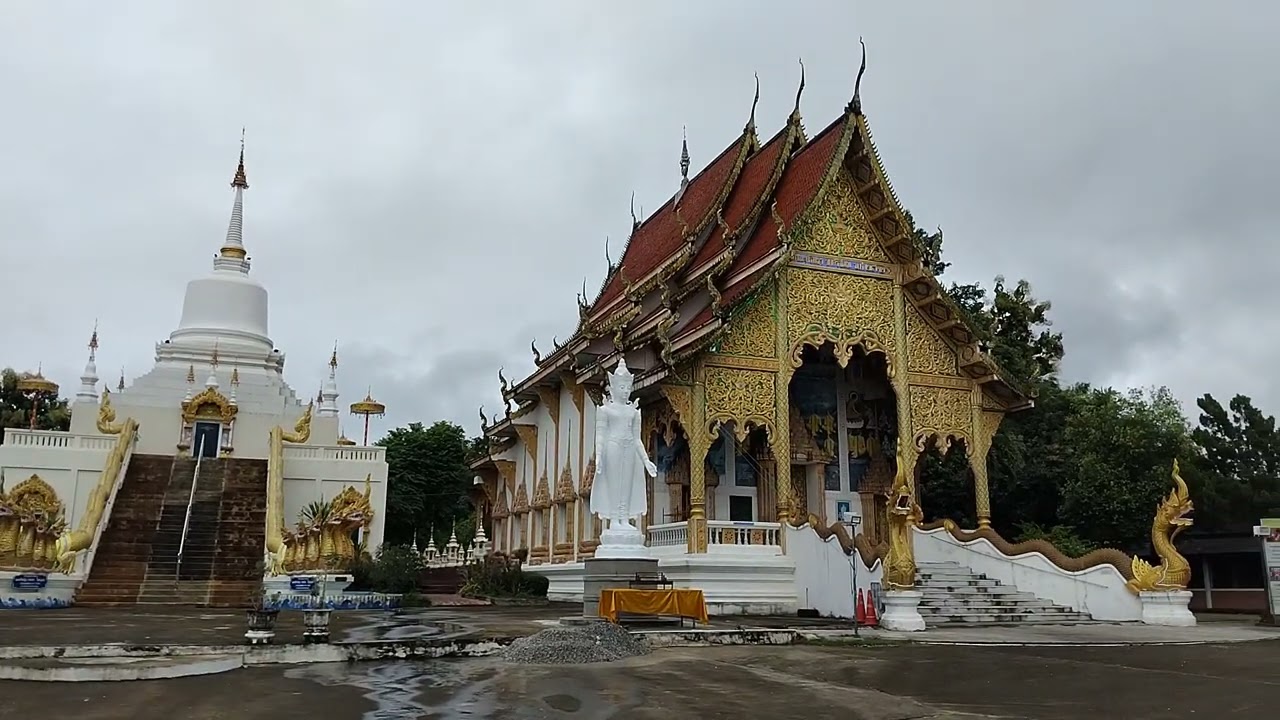
 Click to Access the Navigation Map GPS
Wat Si Chomphu Map
Recommend

 Muang Chiang Mai(121)Chom Thong(47)Mae Chaem(25)Chiang Dao(33)Doi Saket(68)Mae Taeng(85)Mae Rim(69)Samoeng(29)Fang(71)Mae Ai(59)Phrao(70)San Pa Tong(103)San Kamphaeng(66)San Sai(73)Hang Dong(73)Hot(32)Doi Tao(22)Omkoi(11)Saraphi(74)Wiang Haeng(15)Chai Prakan(28)Mae Wang(32)Mae On(22)Doi Lo(33)Galyani Vadhana(1)


