
lovethailand home >North Travel Attractions >Chiang Mai Travel Attractions >Mae Rim >San Pong > Wat Kumpha Pradit
TL;DR: Wat Kumpha Pradit is located at Moo 6, Ban Mo, San Pong Subdistrict, Mae Rim District, Chiang Mai Province, open Daily, hours 08.00 – 17.00.
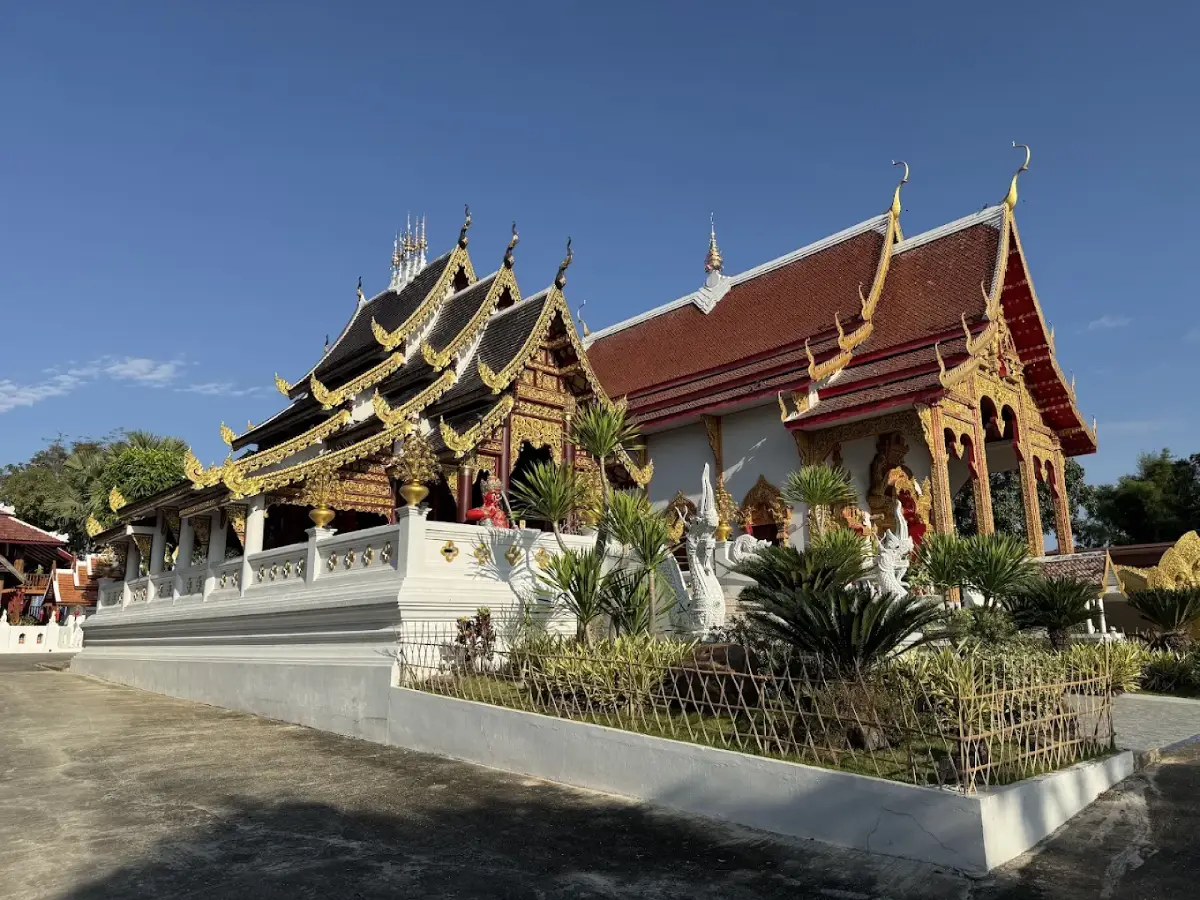
Wat Kumpha Pradit
Open Days: Daily
Opening Hours: 08.00 – 17.00
Wat Kumpha Pradit, widely known locally as Wat Ban Mo, is a Maha Nikaya Buddhist temple in Moo 6, Ban Mo, San Pong Subdistrict, Mae Rim District, Chiang Mai Province. Officially permitted as a temple in 1882, it is one of the historic community temples of San Pong. The temple is associated with Ban Mo, a village name connected with pots and local craft memory, and it remains an active place for worship, merit-making, Buddhist ceremonies, and local community life.
Wat Kumpha Pradit is valuable because it represents the religious and social life of a Mae Rim village temple. It is not a large commercial attraction, but a quiet Lanna community temple with a distinctive viharn, chedi, Luang Pho Phra Phuttha Sothon hall, principal Buddha image, Ganesha shrine, Thao Wessuwan worship area, and a calm temple atmosphere. For travelers who want to understand Mae Rim beyond Mon Jam, cafés, gardens, and major tourist stops, Wat Kumpha Pradit offers a more local and culturally grounded experience.
Ban Mo is a village name that preserves local memory. The word “mo” means pot, and the later official temple name keeps that meaning in a more formal religious form. “Kumpha” means pot, while “pradit” means created or made. The name Wat Kumpha Pradit therefore still carries the meaning of Ban Mo. It connects the temple name with the village identity instead of replacing it completely.
Local stories describe the earlier temple area through the memory of a bodhi tree. Older residents told that a bodhi tree once grew from a decayed tree stump, and local people later placed bricks around it. The site was remembered by a name connected with the sacred bodhi tree of Ban Mo before the name was shortened to Wat Ban Mo. This kind of origin story is common in northern Thai village temples, where sacred trees, local faith, and collective community support often form the early core of a temple space.
The temple was officially permitted in 1882, giving Wat Kumpha Pradit a history of more than 140 years. During that period, Lanna communities still depended strongly on agriculture, village organization, and temple-centered social life. A temple in Ban Mo served as a shared religious space where villagers made merit, listened to sermons, organized ceremonies, learned Buddhist manners, and maintained relationships across generations.
In 1972, the temple name was changed from Wat Ban Mo to Wat Kumpha Pradit during the period when Phra Khru Udom Worakhun served as the ecclesiastical district chief of Mae Rim. The renaming reflected a broader effort to give village temples more formal names while preserving the meaning of local place names. In this case, the new name retained the meaning of “pot” and therefore continued to honor the identity of Ban Mo.
Phra Athikan Thiraphon Thirapañño, also known as Phra Khru Pradit Thiraphon, is the abbot of Wat Kumpha Pradit. Local sources describe him as a development-oriented monk and a spiritual center for the community. His role is connected not only with temple maintenance and Buddhist activity, but also with community development, moral leadership, and efforts such as reducing alcohol and gambling in funerary events. This shows how a community temple can influence everyday social life, not only religious practice.
The main architectural highlight of Wat Kumpha Pradit is its Lanna-style viharn. The viharn gives the temple a strong northern Thai character through its roofline, entrance, serpent stair elements, decorative details, and peaceful setting. Visitors should take time to view the viharn slowly, because the beauty of this type of temple lies in proportion, craftsmanship, and atmosphere rather than monumental size.
The chedi is another important feature of the temple compound. In a Lanna Buddhist temple, a chedi functions as a sacred focal point and a symbol of devotion to the Buddha, the Dhamma, and the Sangha. At Wat Kumpha Pradit, the chedi adds to the completeness of the temple landscape and gives visitors another meaningful point for quiet reflection and worship.
The Luang Pho Phra Phuttha Sothon hall is also worth visiting. Luang Pho Phra Phuttha Sothon is one of the most respected Buddha images in Thai Buddhist devotion, and a dedicated hall at Wat Kumpha Pradit gives visitors a clear place for worship. This feature connects the local temple with a broader national pattern of Buddhist faith.
The principal Buddha image in the viharn is an important sacred object of the temple. Travel sources describe it as an old Buddha image with a long devotional presence in the temple. Visitors should pay respect calmly, dress modestly, remove shoes where required, and avoid disturbing monks or local people who come to worship.
Wat Kumpha Pradit also includes contemporary worship points such as Ganesha, Thao Wessuwan, and large white guardian lions. These features reflect the living nature of Thai temple culture, where Buddhist practice remains central but local devotional forms continue to develop. Visitors should approach these areas as parts of the temple’s sacred environment and behave respectfully.
The atmosphere of Wat Kumpha Pradit is quiet, local, and accessible. It is suitable for people who want a calm temple visit without a crowded tourist environment. The temple can be visited for merit-making, worship, Lanna architecture, respectful photography, or a short cultural stop in Mae Rim. It is especially suitable for travelers who enjoy small community temples and local history.
The role of Wat Kumpha Pradit in Ban Mo can be seen in several layers. It is a Buddhist place for worship, merit-making, sermons, and ceremonies. It is a social space where villagers gather for Kathin, robe-offering events, funerary activities, and community occasions. It is also a moral and cultural center, especially through community initiatives connected with reducing alcohol and gambling in funeral events. This makes the temple meaningful beyond its physical buildings.
Temple traditions at Wat Kumpha Pradit follow the rhythm of Buddhist and Lanna community life. These include Buddhist holy day merit-making, Buddhist Lent, the end of Lent, Kathin, robe-offering events, funerary merit-making, and village merit-making occasions. Recent Kathin information records five monks in residence, showing that the temple remains active in contemporary Buddhist practice.
Kathin is one of the most important annual events for a community temple. It takes place after Buddhist Lent and allows lay supporters to offer robes and donations to monks. Robe-offering events and merit-making activities also support temple maintenance and development. For Wat Kumpha Pradit, these events help maintain the temple as the spiritual center of Ban Mo.
For travelers, Wat Kumpha Pradit works well as part of a lower Mae Rim cultural route. The temple can be combined with Wat Pa Dara Phirom, Daraphirom Palace Museum, Tiger Kingdom Mae Rim, Wat Phra That Chom Taeng, Queen Sirikit Botanic Garden, and Mon Jam. Travelers interested in local temples can also connect the visit with other San Pong temples such as Wat San Pong, Wat Suwannawat, Wat Mani Pradit, and Wat Phra That Chom Taeng.
Getting There from Chiang Mai city is straightforward. Take Highway 107, the Chiang Mai–Fang Road, toward Mae Rim District, then continue into San Pong Subdistrict and Ban Mo, Moo 6. A private car, rental car, or hired vehicle is the most convenient option because it allows visitors to continue easily to nearby temples, museums, restaurants, and Mae Rim attractions. Local transport from Chiang Mai or Mae Rim can also be used with advance planning.
The best time to visit is in the morning or late afternoon. The original visitor information provided for this article lists daily opening from 08.00 to 17.00, so visits should be planned within that period. Morning light and late-afternoon light are also better for appreciating the viharn and taking respectful photographs.
Visitors should dress modestly when entering Wat Kumpha Pradit. Shoulders and knees should be covered, shoes should be removed before entering sacred buildings, loud behavior should be avoided, and photography of monks or ceremonies should not be taken at close range without permission. A community temple is a living religious space, so respect for local worshippers is essential.
Overall, Wat Kumpha Pradit is a meaningful old temple of Ban Mo and San Pong Subdistrict. Its value lies in its official temple history from 1882, the older name Wat Ban Mo, the meaning of Kumpha Pradit, its Lanna viharn, chedi, Luang Pho Phra Phuttha Sothon hall, principal Buddha image, contemporary worship points, and the community leadership connected with Phra Khru Pradit Thiraphon. It is a good stop for travelers who want to experience Mae Rim in a quieter, more local, and more culturally grounded way.
| Name | Wat Kumpha Pradit, also known as Wat Ban Mo |
| Location | Moo 6, Ban Mo, San Pong Subdistrict, Mae Rim District, Chiang Mai Province |
| Address | 179 Ban Mo, Moo 6, San Pong, Mae Rim, Chiang Mai 50180, Thailand |
| Coordinates | 18.9361646, 98.9416588 |
| Highlights | Lanna-style viharn, chedi, Luang Pho Phra Phuttha Sothon hall, principal Buddha image, Ganesha shrine, Thao Wessuwan worship area, and Ban Mo community-temple atmosphere |
| History | Officially permitted as a Buddhist temple in 1882; formerly known as Wat Ban Mo before being renamed Wat Kumpha Pradit in 1972 |
| Name Origin | Kumpha means pot and pradit means created or made, preserving the meaning of Ban Mo, the local village name |
| Distinctive Features | A Lanna community temple near Chiang Mai city, suitable for worship, merit-making, Lanna architecture, and learning about Ban Mo history |
| Important Structures And Areas | Lanna-style viharn, chedi, Luang Pho Phra Phuttha Sothon hall, temple courtyard, Ganesha shrine, Thao Wessuwan worship area, and large white guardian lions |
| Sacred Objects To Worship | Principal Buddha image in the viharn, Luang Pho Phra Phuttha Sothon, Ganesha, and Thao Wessuwan |
| Abbot / Caretaker | Phra Athikan Thiraphon Thirapañño, also known as Phra Khru Pradit Thiraphon |
| Travel Information | From Chiang Mai city, take Highway 107 or the Chiang Mai–Fang Road toward Mae Rim, then continue into San Pong Subdistrict and Ban Mo, Moo 6. Private car, rental car, or hired vehicle is recommended. |
| Current Status | Active community Buddhist temple for worship, merit-making, Buddhist activities, and local Ban Mo community life |
| Open Days | Daily |
| Opening Hours | 08.00 – 17.00 |
| Related Traditions / Temple Events | Buddhist holy day merit-making, Buddhist Lent, the end of Lent, Kathin, robe-offering events, funerary merit-making, and Ban Mo community merit-making occasions |
| Nearby Tourist Attractions | 1. Wat Pa Dara Phirom, about 6 km, Tel. 053-862-890 2. Daraphirom Palace Museum, about 6 km, Tel. 053-299-175 3. Tiger Kingdom Mae Rim, about 7 km, Tel. 061-268-2669 4. Wat Phra That Chom Taeng, about 8 km 5. Queen Sirikit Botanic Garden, about 17 km, Tel. 053-841-234 6. Mon Jam, about 28 km |
| Nearby Restaurants | 1. Tong O Mae Rim, about 2 km, Tel. 095-452-6949 2. Baan Suan Mae Rim, about 4 km, Tel. 053-297-421, 088-266-5549 3. Mae Rim Tam Sang, about 4 km, Tel. 092-459-0615 4. Mala Chiu Chiu San Pong Mae Rim, about 5 km, Tel. 065-838-7237 5. Sala Cafe, about 10 km, Tel. 053-860-996, 086-914-0777 6. The Ironwood, about 13 km, Tel. 081-858-3555 |
| Nearby Accommodations | 1. Supisara Daily House, about 3 km, Tel. 063-798-8878 2. Mon Chang Nature Home, about 6 km, Tel. 094-287-4956 3. Mae Rim Lodge Resort, about 7 km, Tel. 053-376-105, 081-288-2649, 085-106-6319 4. Mae Rim Grace, about 8 km, Tel. 066-095-7267 5. Four Seasons Resort Chiang Mai, about 9 km, Tel. 053-298-181 6. Raya Heritage, about 14 km, Tel. 053-111-670 to 73 |
Frequently Asked Questions (FAQ)
Q: Where is Wat Kumpha Pradit located?
A: Wat Kumpha Pradit is located in Moo 6, Ban Mo, San Pong Subdistrict, Mae Rim District, Chiang Mai Province, Thailand.
Q: Is Wat Kumpha Pradit the same as Wat Ban Mo?
A: Yes. Wat Ban Mo is the local name connected with Ban Mo village, while Wat Kumpha Pradit is the official temple name.
Q: Why is Wat Kumpha Pradit historically important?
A: The temple was officially permitted in 1882 and has served Ban Mo as a Maha Nikaya community temple for more than 140 years.
Q: Who is the abbot of Wat Kumpha Pradit?
A: The abbot is Phra Athikan Thiraphon Thirapañño, also known as Phra Khru Pradit Thiraphon.
Q: What are the main highlights of Wat Kumpha Pradit?
A: The main highlights are the Lanna-style viharn, chedi, Luang Pho Phra Phuttha Sothon hall, principal Buddha image, Ganesha shrine, Thao Wessuwan worship area, and the peaceful Ban Mo community atmosphere.
Q: What are the opening days and hours of Wat Kumpha Pradit?
A: Wat Kumpha Pradit is open daily from 08.00 to 17.00.
Q: What nearby places can be visited with Wat Kumpha Pradit?
A: Nearby places include Wat Pa Dara Phirom, Daraphirom Palace Museum, Tiger Kingdom Mae Rim, Wat Phra That Chom Taeng, Queen Sirikit Botanic Garden, and Mon Jam.
 Category: ●Places of Worship
 Group: ●Temple
Last Update : 47 MinuteAgo
 Last Update : 47 MinuteAgo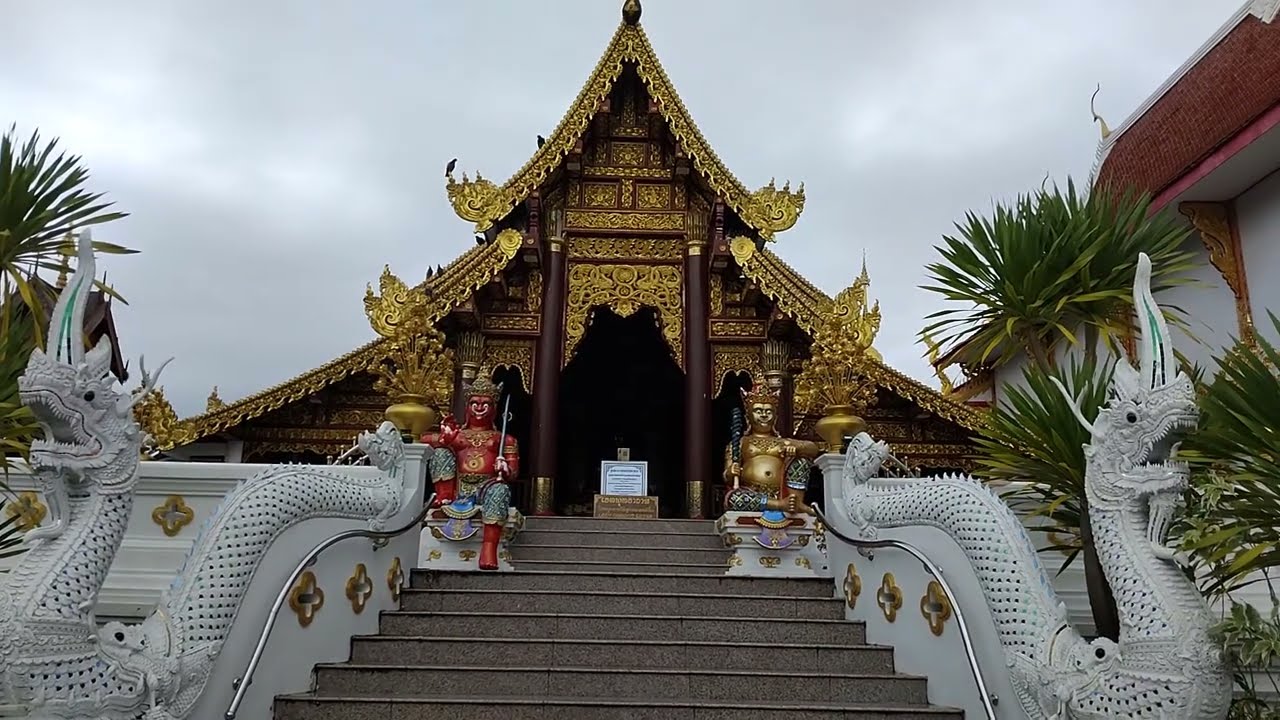
 Click to Access the Navigation Map GPS
Wat Kumpha Pradit Map
Recommend

 Muang Chiang Mai(121)Chom Thong(47)Mae Chaem(25)Chiang Dao(33)Doi Saket(68)Mae Taeng(85)Mae Rim(69)Samoeng(29)Fang(71)Mae Ai(62)Phrao(70)San Pa Tong(105)San Kamphaeng(66)San Sai(73)Hang Dong(74)Hot(32)Doi Tao(22)Omkoi(11)Saraphi(74)Wiang Haeng(15)Chai Prakan(28)Mae Wang(32)Mae On(22)Doi Lo(34)Galyani Vadhana(1)


