
lovethailand home >North Travel Attractions >Chiang Mai Travel Attractions >Mae Rim >Sa Luang > Wat Mueang Ka
TL;DR: Wat Mueang Ka is located at Moo 5, Ban Mueang Ka, Saluang Subdistrict, Mae Rim District, Chiang Mai Province, open Daily, hours Official hours not specified.
Wat Mueang Ka
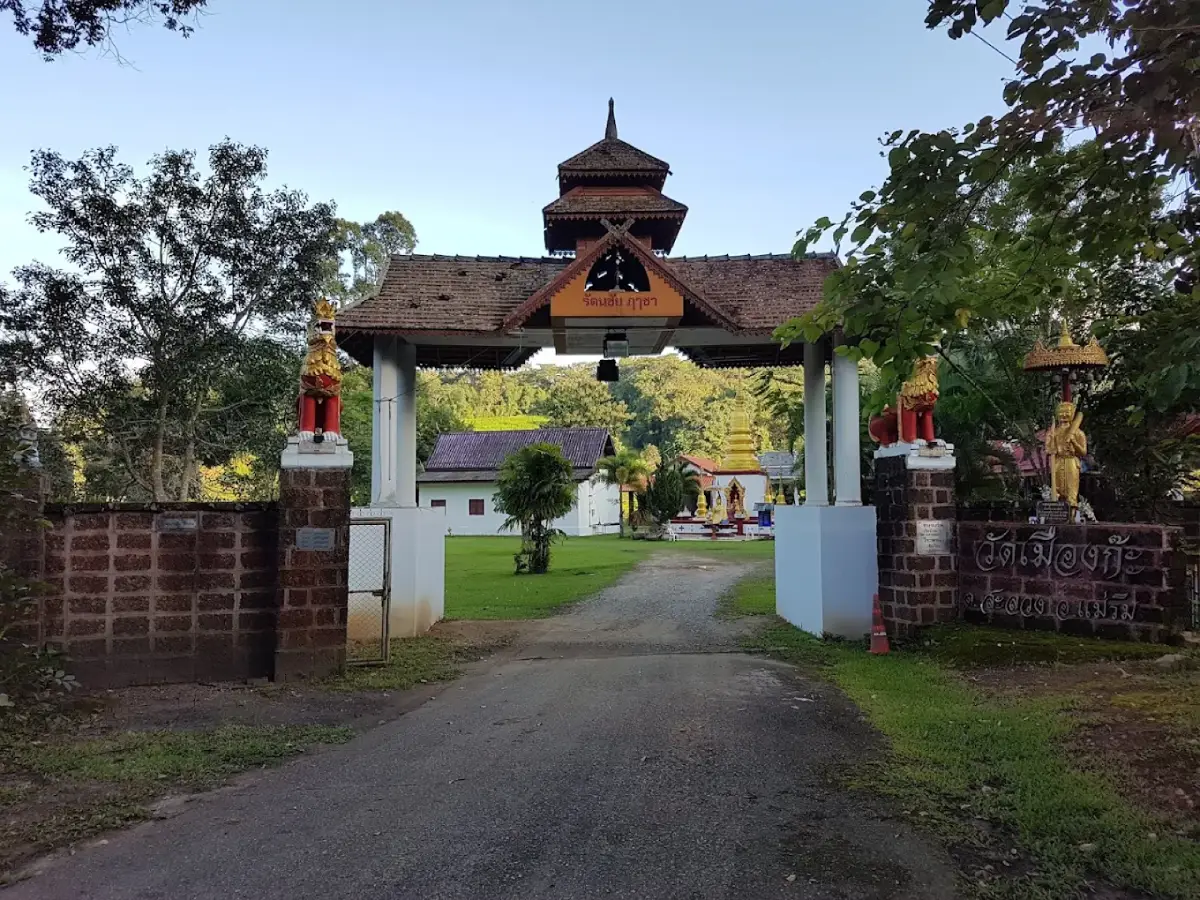
Open Days: Daily
Opening Hours: Official hours not specified
Wat Mueang Ka is a Maha Nikaya Buddhist temple located in Moo 5, Ban Mueang Ka, Saluang Subdistrict, Mae Rim District, Chiang Mai Province 50330. Officially permitted as a temple in 1849, Wat Mueang Ka is one of the long-standing community temples of Ban Mueang Ka. The temple is important not only as a place of worship and merit-making, but also as part of a cultural landscape connected with the Lua community, the legend of Khun Luang Wilangka, ancestor-spirit beliefs, and the pilgrimage route toward Wat Phra Phutthabat Si Roi.
Wat Mueang Ka is suitable for travelers who want to understand Mae Rim beyond its well-known tourist attractions. This is not a large commercial landmark, but a living village temple in a community with deep local memory. Visitors can see how Buddhism, local history, ethnic identity, and ancestor beliefs coexist in the same landscape. The temple offers a quieter and more meaningful perspective on northern Thai culture than a short visit to mainstream attractions.
Ban Mueang Ka is located in Moo 5, Saluang Subdistrict, Mae Rim District, Chiang Mai Province. The village is known as a Lua community whose identity is strongly connected with the legend of Khun Luang Wilangka. The name Mueang Ka is associated with local pronunciation and memory of this legendary figure. For local residents, the name of the village is not only a geographical label; it carries the memory of ancestry, settlement, and cultural continuity.
The history of Wat Mueang Ka is closely tied to the development of Ban Mueang Ka. The temple was officially permitted in 1849, during a period before Lanna society was fully reorganized under modern administrative structures. At that time, many communities in the hills and valleys of northern Thailand maintained local belief systems alongside Buddhism. The presence of a temple in Ban Mueang Ka reflects a settled community with enough social and religious strength to support monks, temple buildings, and Buddhist activities.
Although detailed public information about the temple’s architecture is limited, Wat Mueang Ka has clear historical value as a registered Maha Nikaya community temple dating from 1849. It forms part of the wider cultural landscape of Ban Mueang Ka, which includes the village temple, the Khun Luang Wilangka stupa, community forest, agricultural land, and ritual spaces related to local beliefs. The temple should therefore be understood as one part of a broader sacred and cultural geography.
Phra Athikan Boonsri Chittapañño is the abbot of Wat Mueang Ka. In a village temple, the abbot plays an important role in maintaining monastic life, temple buildings, merit-making events, and the relationship between monks and laypeople. The abbot also helps preserve the temple’s role as the spiritual center of the village, especially in a community with such a strong local identity.
The main significance of Wat Mueang Ka comes from its connection with Ban Mueang Ka and the legend of Khun Luang Wilangka. Local stories describe Khun Luang Wilangka as an important Lua leader associated with the legends of Queen Chamadevi and Hariphunchai. This gives the village a strong historical and symbolic identity. Wat Mueang Ka stands within this landscape of memory, making it more than a normal village temple.
Near the village is the stupa of Khun Luang Wilangka, a sacred site respected by the local community. This stupa is associated with ancestor-spirit belief and the memory of the legendary Lua leader. While Wat Mueang Ka and the stupa are separate places, they belong to the same cultural and spiritual landscape of Ban Mueang Ka. Together they show how Buddhism and ancestral beliefs continue to coexist in local Lanna life.
An important community ritual in Ban Mueang Ka is the annual rite known as Liang Khun Luang or Liang Wai Sa. It is held in the ninth month of the northern Thai lunar calendar, roughly around June. The ritual is connected with prayers for good rainfall, agricultural fertility, community protection, and gratitude toward ancestral spirits. When viewed together with Wat Mueang Ka, this ritual helps explain the layered religious life of the village.
Wat Mueang Ka functions as the Buddhist center of the community, while the Khun Luang Wilangka stupa and related ritual spaces preserve the ancestral-belief dimension of village identity. This coexistence is common in many Lanna communities, especially those with older ethnic roots. Visiting Wat Mueang Ka therefore requires sensitivity to both Buddhist practice and local sacred traditions.
The area around Ban Mueang Ka is also important from an archaeological perspective. Surveys have mentioned ancient remains, pottery fragments, Chinese ceramic fragments, and traces of old settlement in the wider area around the village and temple. These traces suggest that Ban Mueang Ka has been a meaningful settlement area for a long time. Wat Mueang Ka is part of this layered cultural setting.
When visiting Wat Mueang Ka, the first thing to appreciate is the overall atmosphere of a mountain-community temple. The temple is quiet and local, with a close connection to the surrounding village. Visitors should walk calmly, observe the viharn, courtyard, monks’ residence, and community spaces, and understand that the temple remains a functioning religious site rather than a staged attraction.
The viharn is an important worship space of Wat Mueang Ka. It is used for chanting, sermons, merit-making, and Buddhist ceremonies. Although specific architectural details are not widely documented, the viharn is central to the religious life of the temple. Visitors should dress modestly and avoid disturbing monks or local residents who come to worship.
The temple courtyard also reflects the social role of Wat Mueang Ka. In northern Thai village temples, the courtyard often serves as a gathering area for Buddhist holy days, Kathin, robe-offering events, and other local activities. Wat Mueang Ka continues this function by providing a shared space where villagers can meet, make merit, and maintain community ties.
Religious traditions associated with Wat Mueang Ka follow the rhythm of Buddhist and Lanna community life. These include Buddhist holy day merit-making, Buddhist Lent, the end of Lent, Kathin, robe-offering events, and village merit-making activities. Such events are important because they keep the temple active and strengthen the bond between monks and lay supporters.
Kathin is one of the most important annual merit-making events for a community temple. It takes place after Buddhist Lent and allows lay supporters to offer robes and donations to monks. Robe-offering events can also be organized on other occasions to support temple maintenance or development. At Wat Mueang Ka, these events help confirm the temple’s role as the religious center of Ban Mueang Ka.
The role of Wat Mueang Ka can be understood in three layers. First, it is a Buddhist place for worship, merit-making, sermons, and ceremonies. Second, it is a social space where the community gathers. Third, it is part of the cultural identity of Ban Mueang Ka, a village strongly connected with the Lua heritage and the legend of Khun Luang Wilangka.
For travelers, Wat Mueang Ka is best suited for those interested in local history, Lua culture, Lanna belief systems, and the route toward Wat Phra Phutthabat Si Roi. The visit should not be rushed. Ban Mueang Ka has several layers of meaning, including the temple, the village, the Khun Luang Wilangka stupa, community forest, and living beliefs that remain important to local residents.
Getting There from Chiang Mai city is most convenient by private car or rental car. Take Highway 107 toward Mae Rim, then continue onto the Mae Rim–Samoeng route and head toward Saluang Subdistrict and Ban Mueang Ka. The distance from Chiang Mai city to the Ban Mueang Ka area is about 35–40 km. The route gradually enters hilly terrain and local village roads.
Travelers coming from Mae Rim District can continue into Saluang and Ban Mueang Ka. The vehicle should be in good condition, with enough fuel, especially if continuing toward Wat Phra Phutthabat Si Roi or mountain routes. During the rainy season, drivers should be careful of slippery roads, fog, and changing visibility. Returning before dark is recommended for those unfamiliar with the area.
Travelers without a private vehicle should hire a taxi, songthaew, or local vehicle from Chiang Mai city or Mae Rim. The price, route, waiting time, and return trip should be agreed in advance because Ban Mueang Ka is not on a frequent public transport route. Planning ahead makes the visit safer and more convenient.
A meaningful travel route can begin with Wat Mueang Ka and Ban Mueang Ka, then continue to the Khun Luang Wilangka stupa, Wat Phra Phutthabat Si Roi, and nearby rest stops such as Him Huoy Cafe. Travelers with more time can continue toward Mon Jam or return to the main Mae Rim area. This route combines Buddhist culture, local history, mountain scenery, and village life.
The best time to visit Wat Mueang Ka is in the morning or late afternoon. These times are more comfortable and allow enough time to return before dark. Visitors who want to learn about the community and the Khun Luang Wilangka stupa should allow at least half a day, because the area is best experienced slowly and respectfully.
Visitors should dress respectfully and behave quietly inside Wat Mueang Ka. If visiting the Khun Luang Wilangka stupa or related sacred areas, do not touch ritual objects, move offerings, make jokes about local beliefs, or photograph ceremonies and local people without permission. Respecting these boundaries is essential when visiting a community whose beliefs are still living traditions.
Wat Mueang Ka is valuable because it reveals a deeper side of Mae Rim. It connects Buddhism, Lua identity, ancestor-spirit belief, archaeology, and village life in one place. For travelers who want to understand northern Thailand beyond famous temples and scenic cafés, Wat Mueang Ka offers a meaningful and culturally rich stop in Saluang Subdistrict.
| Name | Wat Mueang Ka |
| Location | Moo 5, Ban Mueang Ka, Saluang Subdistrict, Mae Rim District, Chiang Mai Province |
| Address | Moo 5, Mueang Ka, Saluang, Mae Rim, Chiang Mai 50330, Thailand |
| Highlights | Historic village temple connected with Ban Mueang Ka, the Lua community, the legend of Khun Luang Wilangka, and the route to Wat Phra Phutthabat Si Roi |
| History | Officially permitted as a Buddhist temple in 1849; a Maha Nikaya community temple of Ban Mueang Ka |
| Name Origin | The name Mueang Ka is connected with Ban Mueang Ka and the local memory of Khun Luang Wilangka, an important legendary Lua figure |
| Distinctive Features | A Lanna community temple reflecting the coexistence of Buddhism, ancestor-spirit belief, and Lua cultural identity |
| Important Structures And Areas | Viharn, temple courtyard, monks’ residence, community merit-making spaces, and the surrounding sacred landscape connected with the Khun Luang Wilangka stupa |
| Abbot / Caretaker | Phra Athikan Boonsri Chittapañño |
| Travel Information | From Chiang Mai city, take Highway 107 toward Mae Rim, then continue to the Mae Rim–Samoeng route and head toward Saluang Subdistrict and Ban Mueang Ka. Private car, rental car, or hired local transport is recommended. |
| Current Status | Active community Buddhist temple for worship, merit-making, and village Buddhist activities |
| Open Days | Daily |
| Opening Hours | Official hours not specified |
| Related Traditions / Temple Events | Kathin, robe-offering events, Buddhist holy day merit-making, Buddhist Lent, the end of Lent, and the Ban Mueang Ka Liang Khun Luang or Liang Wai Sa ancestral ritual in the ninth northern lunar month |
| Nearby Tourist Attractions | 1. Khun Luang Wilangka Stupa, Ban Mueang Ka, about 1 km 2. Him Huoy Cafe and rest stop on the Wat Phra Phutthabat Si Roi route, about 8 km, Tel. 094-696-6199 3. Wat Phra Phutthabat Si Roi, about 8 km 4. Wat Pa Huai Som Suk, about 12 km 5. Wat Nong Kai, about 16 km, Tel. 053-374-095-6, 053-374-311 6. Mon Jam, about 24 km |
| Nearby Restaurants | 1. Him Huoy Cafe, about 8 km, Tel. 094-696-6199 2. Banchong Cafe, about 14 km, Tel. 063-971-6165 3. Zab Saluang Som Tam Seafood, about 14 km, Tel. 099-371-3339 4. Baan Suan Mae Rim, about 26 km, Tel. 053-297-421, 088-266-5549 5. Sala Cafe, about 28 km, Tel. 053-860-996, 086-914-0777 6. The Ironwood, about 30 km, Tel. 085-111-7777, 081-858-3555 |
| Nearby Accommodations | 1. Tadplacamp Organic Farm Stay / Forest Falls Garden Maerim Chiangmai, about 18 km, Tel. 064-609-4618 2. Dusai Tara Resort, about 20 km, Tel. 095-462-4269 3. Mae Rim Grace, about 28 km, Tel. 066-095-7267 4. Four Seasons Resort Chiang Mai, about 29 km, Tel. 053-298-181 5. Proud Phu Fah Resort, about 31 km, Tel. 053-879-389, 053-879-286, 081-647-7437 |
Frequently Asked Questions (FAQ)
Q: Where is Wat Mueang Ka located?
A: Wat Mueang Ka is located in Moo 5, Ban Mueang Ka, Saluang Subdistrict, Mae Rim District, Chiang Mai Province 50330, Thailand.
Q: Why is Wat Mueang Ka historically important?
A: Wat Mueang Ka was officially permitted as a Buddhist temple in 1849 and has long served Ban Mueang Ka as a Maha Nikaya community temple.
Q: How is Wat Mueang Ka connected with Khun Luang Wilangka?
A: The temple is located in Ban Mueang Ka, a community whose local identity is strongly connected with the legend of Khun Luang Wilangka, an important Lua figure in local tradition.
Q: Who is the abbot of Wat Mueang Ka?
A: The abbot is Phra Athikan Boonsri Chittapañño.
Q: What kind of travelers should visit Wat Mueang Ka?
A: It is suitable for travelers interested in Lanna community temples, local history, Lua culture, ancestor beliefs, and the route to Wat Phra Phutthabat Si Roi.
Q: What nearby places can be visited with Wat Mueang Ka?
A: Nearby places include the Khun Luang Wilangka Stupa, Wat Phra Phutthabat Si Roi, Wat Pa Huai Som Suk, Wat Nong Kai, Him Huoy Cafe, and Mon Jam.
Q: How can visitors travel to Wat Mueang Ka?
A: From Chiang Mai city, take Highway 107 toward Mae Rim, continue to the Mae Rim–Samoeng route, and head toward Saluang Subdistrict and Ban Mueang Ka. A private car or rental car is recommended.
 Category: ●Places of Worship
 Group: ●Temple
Last Update : 1 WeekAgo
 Last Update : 1 WeekAgo
 Click to Access the Navigation Map GPS
 Muang Chiang Mai(121)Chom Thong(47)Mae Chaem(25)Chiang Dao(33)Doi Saket(68)Mae Taeng(85)Mae Rim(69)Samoeng(29)Fang(71)Mae Ai(59)Phrao(70)San Pa Tong(103)San Kamphaeng(66)San Sai(73)Hang Dong(73)Hot(32)Doi Tao(22)Omkoi(11)Saraphi(74)Wiang Haeng(15)Chai Prakan(28)Mae Wang(32)Mae On(22)Doi Lo(34)Galyani Vadhana(1)


