
lovethailand home >North Travel Attractions >Chiang Mai Travel Attractions >Mae Rim >Sa Luang > Wat Prakat Tham
TL;DR: Wat Prakat Tham is located at Ban Kad Hao, Moo 4, Saluang Subdistrict, Mae Rim District, Chiang Mai Province, open Daily, hours 08.00 – 17.00.

Wat Prakat Tham
Open Days: Daily
Opening Hours: 08.00 – 17.00
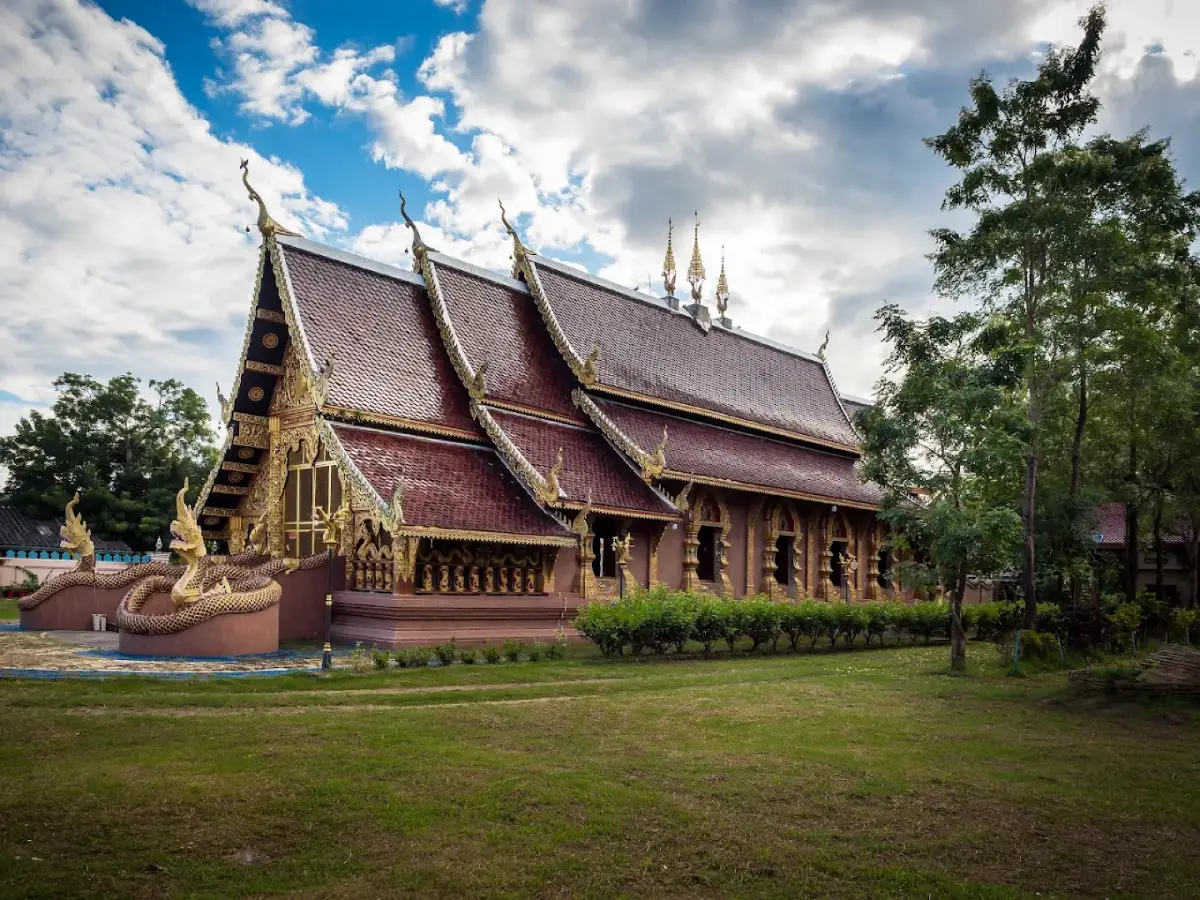
Wat Prakat Tham, also known locally as Wat Kad Hao, is a Maha Nikaya Buddhist temple located at 251 Moo 4, Ban Kad Hao, Saluang Subdistrict, Mae Rim District, Chiang Mai Province 50330. Officially permitted as a temple in 1864, Wat Prakat Tham is one of the long-standing community temples in the Saluang area. It serves as a place for worship, merit-making, Buddhist activities, and local gatherings, while also preserving the relationship between the temple, the village, agricultural life, and the waterways of Ban Kad Hao.
Wat Prakat Tham is suitable for travelers who want to understand Mae Rim beyond its well-known attractions such as Mon Jam, Queen Sirikit Botanic Garden, and the café routes around Mae Rim. This temple offers a quieter and more local perspective. It is not a large commercial sightseeing site, but a living village temple connected with Ban Kad Hao, the route toward Wat Phra Phutthabat Si Roi, and the rural communities of Saluang Subdistrict.
The history of Wat Prakat Tham dates back to 1864, when it was officially permitted as a Buddhist temple. This gives the temple a long historical background of more than 160 years. During this period, many Lanna communities still relied heavily on agriculture, local waterways, and village-based religious life. A temple such as Wat Prakat Tham was therefore not only a religious space but also a social and cultural center where villagers made merit, listened to sermons, organized ceremonies, and passed local values from one generation to the next.
The temple was originally associated with the name Wat Kad Hao because it is located in Ban Kad Hao. Later, during the time of Phra Khru Udom Wutthikhun, the ecclesiastical district chief of Mae Rim, there was an effort to give the temple a name more closely connected with Buddhist meaning. The word “kad” from Kad Hao was used as a base for the new name, and the temple became known as Wat Prakat Tham. The name can be understood as a place that proclaims or spreads the Dhamma, which fits the temple’s role as a center of Buddhist teaching and community faith.
Ban Kad Hao has a distinctive natural setting. The village includes both hilly and lowland areas, with two important waterways flowing through the area: the Hao River and the Mae Rim River. The local population has traditionally depended on agriculture as a main occupation. This environment helps explain the character of Wat Prakat Tham. The temple is part of a rural cultural landscape shaped by fields, rivers, forest edges, village paths, and Buddhist faith.
The wider boundaries of Ban Kad Hao also show the temple’s position in the local landscape. To the east are forest areas and Chiang Mai Rajabhat University’s Saluang–Khilek campus. To the south are Ban Saluang Nok and Ban Saluang Nai. To the west are forest areas and Ban Huai Som Suk. To the north are Ban San Pa Tueng and Ban Nong Kai in the Mae Taeng area. This location places Wat Prakat Tham between Mae Rim, Mae Taeng, Saluang, and the mountain route leading toward Wat Phra Phutthabat Si Roi.
Phra Nattharak Kittiphatho is the abbot of Wat Prakat Tham. In a community temple, the abbot plays an important role in caring for the monks, temple buildings, religious activities, merit-making events, and the relationship between the Sangha and lay supporters. A temple with a long history such as Wat Prakat Tham depends on both monastic leadership and the faith of local residents.
The main sacred points to pay respect to at Wat Prakat Tham include Phra Chayasitti Phunlap, also known as Luang Pho Than Chai, and Phra Sivali Run Phunsap, both located near the front area of the temple. Luang Pho Than Chai is commonly associated with wishes, success, and quick fulfillment in Thai Buddhist devotion, while Phra Sivali is widely venerated as a great arahant connected with abundance, prosperity, and good fortune. These sacred images give the temple a clear point of devotion for visitors and local worshippers.
Phra Sivali Run Phunsap is also linked to the temple’s fundraising history. The amulet series was created to raise funds for the construction of the temple’s ubosot, or ordination hall. This reflects a common form of Buddhist community support in Thailand, where devotees contribute to temple construction and renovation through merit-making projects. In this sense, Phra Sivali Run Phunsap is not only an object of devotion but also part of the temple’s development history.
The viharn area is another important part of Wat Prakat Tham. The temple once had an old viharn in this area, which was later removed to make way for a new viharn. During the construction period, the original principal Buddha image was temporarily enshrined at the monks’ residence before being brought back to serve as the principal Buddha image of the viharn. This story shows how the temple has developed over time while preserving the spiritual role of its main Buddha image and worship space.
Wat Prakat Tham represents the structure of a living Lanna community temple. The viharn is used for worship and ceremonies. The temple courtyard serves as a gathering space. The monks’ residence supports monastic life. The front worship area allows villagers and visitors to pay respect to Luang Pho Than Chai and Phra Sivali. These elements may appear simple, but they show the practical and spiritual functions of a village temple.
The atmosphere of Wat Prakat Tham is calm and local. Visitors should not expect a crowded tourist landmark. Instead, the temple offers a peaceful setting surrounded by rural Mae Rim life. It is best visited slowly and respectfully, with time to observe the temple compound, the worship areas, and the relationship between the temple and Ban Kad Hao.
The temple’s role in local education is also important. Ban Kad Hao School originally used the temple hall of Wat Prakat Tham as its school site before later moving to a new school location. This shows that the temple was not only a religious space but also a community institution that supported education and local development. For many northern Thai villages, the temple often served as the first shared public space before formal community infrastructure became fully established.
Wat Prakat Tham continues to serve community activities. Local projects such as children’s Buddhist learning and moral training have taken place at the temple. These activities reflect the temple’s role in shaping local values, teaching basic Buddhist manners, supporting meditation practice, and helping children understand the importance of service and merit-making.
Religious traditions connected with Wat Prakat Tham follow the rhythm of Buddhist and Lanna community life. These include Kathin, robe-offering events, Buddhist holy day merit-making, Buddhist Lent, the end of Lent, Dhamma outreach activities, and merit-making events organized by villagers. Such events bring residents together, support the temple, and maintain the relationship between monks and laypeople.
Kathin is especially important for a community temple because it takes place after Buddhist Lent and allows laypeople to offer robes and donations to support the temple. Robe-offering events are also held on various occasions to raise funds for temple development or religious activities. At Wat Prakat Tham, these traditions help sustain the temple as the spiritual center of Ban Kad Hao.
Wat Prakat Tham is also connected with the route toward Wat Phra Phutthabat Si Roi. Travelers heading from the Saluang area toward Wat Phra Phutthabat Si Roi pass through Ban Kad Hao and the area around Wat Kad Hao before continuing through Ban Huai Som Suk, Ban Mueang Ka, and the mountain route to Doi Phra Bat. This makes Wat Prakat Tham a meaningful cultural stop on the broader pilgrimage route of Saluang.
Getting There can be done through several routes. The first route starts from Chotana Road, or the Chiang Mai–Fang Road, then continues to the Mae Rim–Pai route and enters through the Rim Nuea Subdistrict Administrative Organization area. The second route also starts from Chotana Road and enters through Chiang Mai Rajabhat University’s Saluang–Khilek campus area. The third route comes from the Pai–Mae Hong Son Road through Ban Thung Mai Sahakon. The fourth route also comes from the Pai–Mae Hong Son Road through Ban Tha Kham. These routes show that the temple is linked with Mae Rim, Mae Taeng, Saluang, and the mountain route toward the Phra Phutthabat Si Roi area.
Travelers coming from Chiang Mai city should ideally use a private car, rental car, or hired vehicle. The temple is located inside Ban Kad Hao, which is deeper in the Saluang area than the main Mae Rim tourist corridor. Using navigation to Wat Prakat Tham, Ban Kad Hao, or the coordinates 19.0234909, 98.8736010 is recommended. Travelers using public transport should plan onward local transport from Mae Rim to Saluang and arrange the return journey in advance.
The best time to visit is in the morning or late afternoon, when the weather is more comfortable and the temple atmosphere is quieter. Visitors who plan to continue to Wat Phra Phutthabat Si Roi should allow extra travel time because the route passes through villages, fields, and mountain sections. Driving carefully is important, especially during the rainy season or on misty mountain roads.
Visitors should dress respectfully when entering Wat Prakat Tham. Shoulders and knees should be covered, shoes should be removed before entering designated sacred areas, and visitors should avoid loud behavior or close-up photography of monks and local residents without permission. A community temple is a place of living faith, so respect for local worshippers is as important as seeing the temple itself.
A practical travel route can begin at Wat Prakat Tham in Ban Kad Hao, then continue toward Ban Huai Som Suk, Sai Mok Waterfall, Ban Mueang Ka, and Wat Phra Phutthabat Si Roi. Another option is to return toward the main Mae Rim area and visit Wat Pa Dara Phirom, Daraphirom Palace Museum, Tiger Kingdom Mae Rim, restaurants in Mae Rim, or Queen Sirikit Botanic Garden. This allows travelers to combine temple culture, village scenery, and nature in one trip.
Wat Prakat Tham is meaningful because it preserves the story of Ban Kad Hao. It has a long history, a name that reflects Buddhist teaching, sacred images such as Luang Pho Than Chai and Phra Sivali, a viharn development story, a past role in local education, and an ongoing community function. For travelers who want to experience Mae Rim in a deeper and quieter way, Wat Prakat Tham is a valuable stop in Saluang Subdistrict.
| Name | Wat Prakat Tham, also known as Wat Kad Hao |
| Location | Ban Kad Hao, Moo 4, Saluang Subdistrict, Mae Rim District, Chiang Mai Province |
| Address | 251 Moo 4, Kad Hao, Saluang, Mae Rim, Chiang Mai 50330, Thailand |
| Coordinates | 19.0234909, 98.8736010 |
| Highlights | Luang Pho Than Chai, Phra Sivali Run Phunsap, viharn area, Ban Kad Hao community history, and the route toward Wat Phra Phutthabat Si Roi |
| History | Officially permitted as a temple in 1864; a Maha Nikaya community temple of Ban Kad Hao |
| Name Origin | Formerly known as Wat Kad Hao; later renamed Wat Prakat Tham during the time of Phra Khru Udom Wutthikhun to connect the temple name with Buddhist meaning |
| Distinctive Features | A Lanna village temple in an agricultural community with local waterways, forest edges, and a connection to the Saluang pilgrimage route |
| Important Structures And Areas | Viharn, principal Buddha image, monks’ residence, temple courtyard, worship area of Phra Chayasitti Phunlap or Luang Pho Than Chai, and Phra Sivali Run Phunsap |
| Abbot / Caretaker | Phra Nattharak Kittiphatho |
| Travel Information | Accessible from Chotana Road via the Mae Rim–Pai route, through the Rim Nuea area, the Chiang Mai Rajabhat University Saluang–Khilek route, or from the Pai–Mae Hong Son Road through Ban Thung Mai Sahakon or Ban Tha Kham |
| Current Status | Active community Buddhist temple for worship, merit-making, and local Buddhist activities in Ban Kad Hao |
| Open Days | Daily |
| Opening Hours | 08.00 – 17.00 |
| Main Contact Number | 053-374-367 |
| Related Traditions / Temple Events | Kathin, robe-offering events, Buddhist holy day merit-making, Buddhist Lent, the end of Lent, Dhamma outreach activities, and village merit-making events |
| Nearby Tourist Attractions | 1. Wat Saluang, about 4 km 2. Sai Mok Waterfall, Ban Huai Som Suk, about 9 km 3. Wat Mueang Ka, about 13 km 4. Wat Phra Phutthabat Si Roi, about 22 km, Tel. 053-374-355 5. Queen Sirikit Botanic Garden, about 31 km, Tel. 053-841-234 6. Mon Jam, about 35 km |
| Nearby Restaurants | 1. Petchburirama, about 15 km, Tel. 090-840-0030 2. Baan Suan Mae Rim, about 22 km, Tel. 053-297-421, 088-266-5549 3. Baan Landai Mae Rim, about 24 km, Tel. 064-469-2929 4. Sala Cafe, about 29 km, Tel. 053-860-996, 086-914-0777 5. Zombie Cafe’ Maerim Chiangmai, about 31 km, Tel. 095-325-2153 6. The Ironwood, about 31 km, Tel. 085-111-7777, 081-858-3555 |
| Nearby Accommodations | 1. Mae Rim Grace, about 23 km, Tel. 066-095-7267 2. Four Seasons Resort Chiang Mai, about 24 km, Tel. 053-298-181 3. Proud Phu Fah Resort, about 31 km, Tel. 053-879-389, 053-879-286, 081-647-7437 4. Raya Heritage, about 33 km, Tel. 053-111-670 to 73 5. Rice Villa ChiangMai, about 23 km, Tel. 095-692-1112 |
Frequently Asked Questions (FAQ)
Q: Where is Wat Prakat Tham located?
A: Wat Prakat Tham is located at 251 Moo 4, Ban Kad Hao, Saluang Subdistrict, Mae Rim District, Chiang Mai 50330, Thailand.
Q: What was the former name of Wat Prakat Tham?
A: The temple was formerly known as Wat Kad Hao because it is located in Ban Kad Hao.
Q: Why is Wat Prakat Tham historically important?
A: Wat Prakat Tham was officially permitted as a temple in 1864 and has served Ban Kad Hao as a Maha Nikaya community temple for more than 160 years.
Q: Who is the abbot of Wat Prakat Tham?
A: The abbot is Phra Nattharak Kittiphatho.
Q: What should visitors pay respect to at Wat Prakat Tham?
A: Visitors should pay respect to Phra Chayasitti Phunlap or Luang Pho Than Chai and Phra Sivali Run Phunsap, which are important sacred points at the temple.
Q: What are the opening hours of Wat Prakat Tham?
A: Wat Prakat Tham is open daily from 08.00 to 17.00.
Q: What nearby places can be visited with Wat Prakat Tham?
A: Nearby places include Wat Saluang, Sai Mok Waterfall, Wat Mueang Ka, Wat Phra Phutthabat Si Roi, Queen Sirikit Botanic Garden, and Mon Jam.
 Category: ●Places of Worship
 Group: ●Temple
Last Update : 4 DayAgo
 Last Update : 4 DayAgo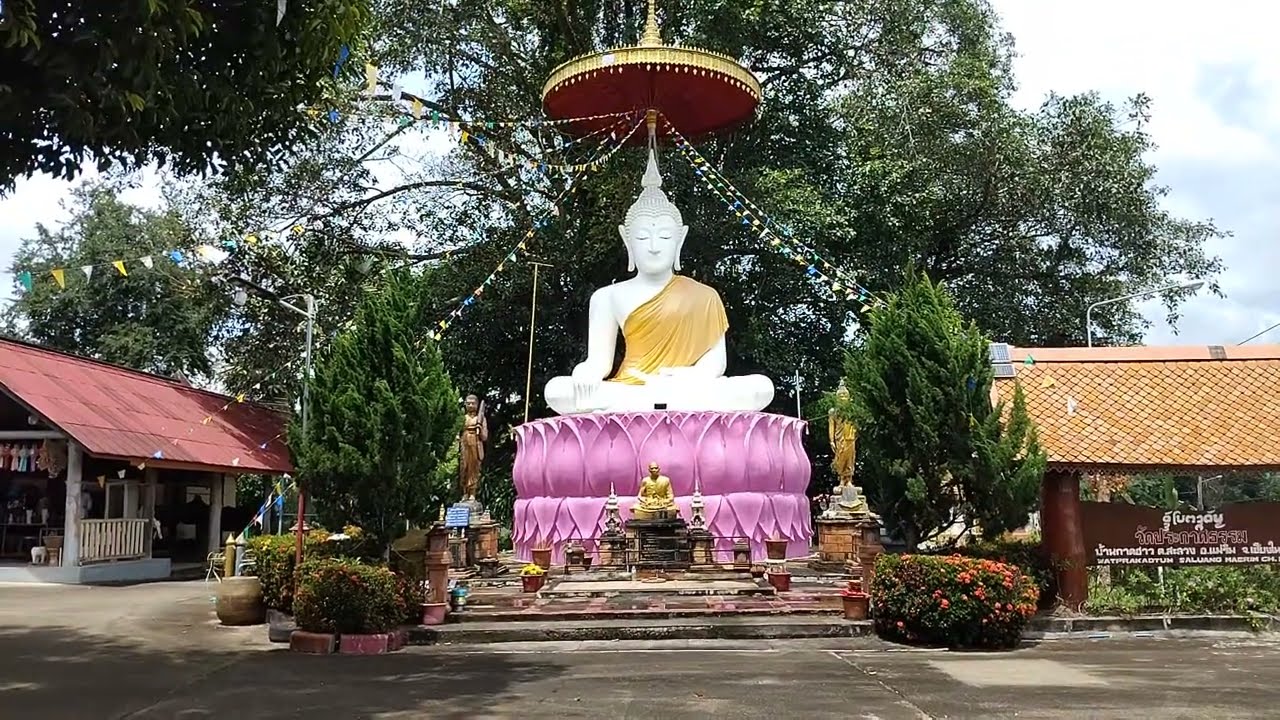
 Click to Access the Navigation Map GPS
Wat Prakat Tham Map
Recommend

 Muang Chiang Mai(121)Chom Thong(47)Mae Chaem(25)Chiang Dao(33)Doi Saket(68)Mae Taeng(85)Mae Rim(69)Samoeng(29)Fang(71)Mae Ai(59)Phrao(70)San Pa Tong(105)San Kamphaeng(66)San Sai(73)Hang Dong(74)Hot(32)Doi Tao(22)Omkoi(11)Saraphi(74)Wiang Haeng(15)Chai Prakan(28)Mae Wang(32)Mae On(22)Doi Lo(34)Galyani Vadhana(1)


