
lovethailand home >North Travel Attractions >Chiang Mai Travel Attractions >Mae Rim >Rim Nuea > Wat Chedi Sathan
TL;DR: Wat Chedi Sathan is located at Ban Mueang Pha, Moo 1, Rim Nuea Subdistrict, Mae Rim District, Chiang Mai Province, open Daily, hours 08.00 – 17.00.
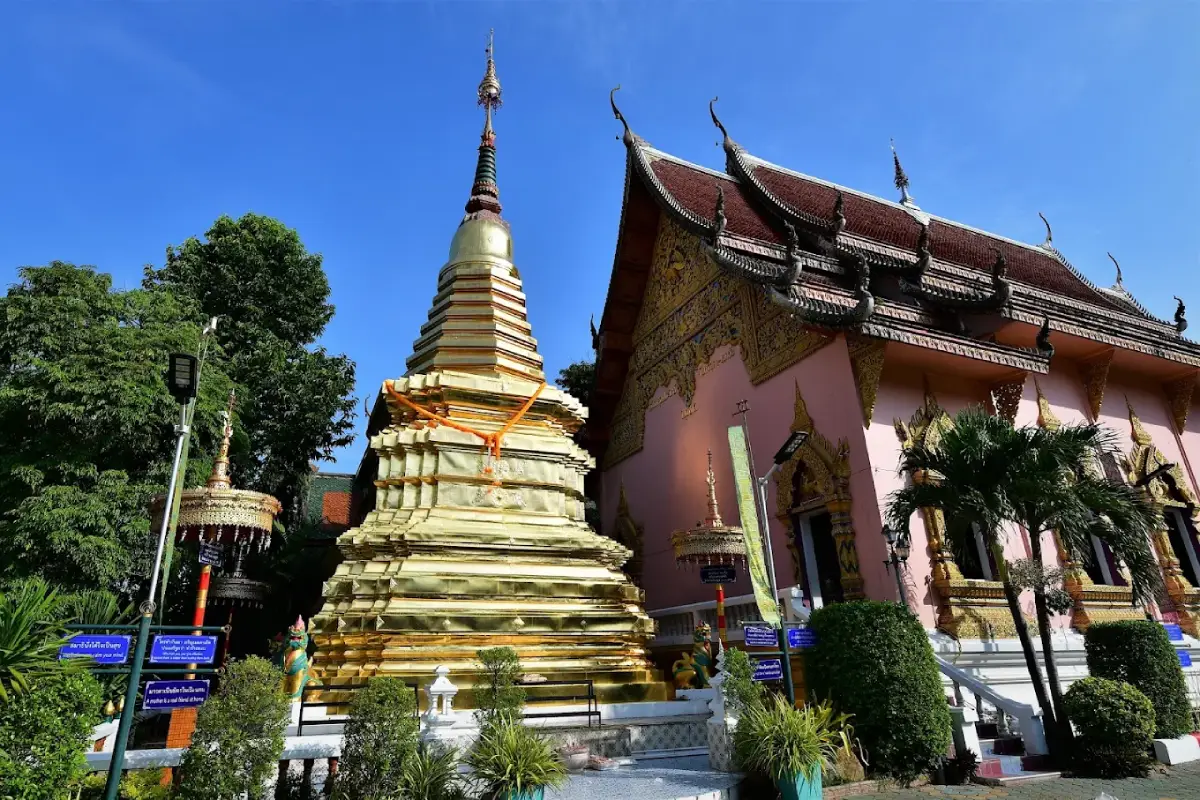
Wat Chedi Sathan
Open Days: Daily
Opening Hours: 08.00 – 17.00
Wat Chedi Sathan, also known locally as Wat Chedi Sathan Ban Mueang Pha, is a historic community temple in Rim Nuea Subdistrict, Mae Rim District, Chiang Mai Province. Located at 145 Moo 1, Ban Mueang Pha, Rim Nuea, Mae Rim, Chiang Mai 50180, the temple belongs to the Maha Nikaya order and has a history that reaches back to the late Thonburi period. Its most important identity is reflected in its name: a temple associated with a chedi, or Buddhist stupa, that has long served as a spiritual landmark for the local community.
Wat Chedi Sathan is not a large commercial tourist attraction. Its value lies in its quiet atmosphere, its long connection with Ban Mueang Pha, and its continuing role as a working Buddhist temple. Visitors who want to understand Mae Rim beyond cafés, mountain viewpoints, and popular tourist routes will find this temple meaningful because it shows the everyday religious life of a northern Thai community. The temple remains a place for merit-making, Buddhist ceremonies, local gatherings, and seasonal religious events.
The history of Wat Chedi Sathan is closely tied to Ban Mueang Pha. In the Lanna cultural landscape, temples and villages are rarely separate from one another. A village temple is normally the moral and social center of the community, a place where residents make merit, listen to sermons, gather for ceremonies, and pass cultural memory from one generation to the next. Ban Mueang Pha itself is part of Rim Nuea Subdistrict in Mae Rim, an area shaped by local settlements, irrigation channels, agricultural life, and routes leading toward the Mae Rim valley and the Mae Sa area.
The temple is recorded as having been built in 1775 and officially permitted as a temple in 1776. This places its origin in a historically important period, when northern communities were rebuilding social and religious stability after years of political transition. A temple founded during this period was more than a place of worship. It was a sign that the local community had established a spiritual center, a gathering place, and a foundation for Buddhist practice within the village.
Wat Chedi Sathan later received its royal consecrated boundary, or Wisungkhamsima, on 1 October 1926. This is a significant milestone in the life of a Buddhist temple because it confirms the formal boundary of the ordination hall area for important monastic acts. In practical terms, it allows the temple’s ubosot to serve as a proper place for ordination and other Sangha ceremonies. For a community temple, receiving Wisungkhamsima also reflects the growth and stability of both the temple and the lay community supporting it.
The temple grounds cover 10 rai, 2 ngan, and 31 square wah. This gives the temple enough space for its sacred area, monastic area, and communal activities. Important features include the old chedi associated with the temple’s name, the ordination hall, the temple courtyard, and spaces used for Buddhist ceremonies. The overall impression is that of a living village temple rather than a staged attraction. It is a place where visitors should move slowly, observe respectfully, and appreciate the cultural relationship between temple and community.
The name “Wat Chedi Sathan” can be understood as a place centered around a chedi. In Buddhist culture, a chedi is not merely an architectural structure. It is a symbol of remembrance, merit, devotion, and the presence of Buddhism in the landscape. The word “sathan” means place or site. Together, the name suggests a sacred place where the chedi carries spiritual and cultural meaning. This makes the chedi one of the key features visitors should notice when visiting the temple.
The temple is also locally associated with the name Wat Mueang Pha because of its location in Ban Mueang Pha. This kind of local naming is common in northern Thailand, where temples are often known by the name of the village they serve. The two names therefore express two layers of identity: Wat Chedi Sathan refers to the temple’s religious landmark, while Wat Mueang Pha reflects its community roots.
Phra Khru Manoon Bunyakorn Siripañño is the abbot of Wat Chedi Sathan. In a village temple, the abbot’s role extends beyond monastic administration. The abbot helps guide religious activities, maintain the temple compound, support Buddhist practice, and preserve the link between the Sangha and the local community. For a temple with a long history, this continuity of monastic leadership is essential to keeping the temple active and meaningful.
The main attraction of Wat Chedi Sathan is its calm and authentic community-temple character. Visitors can come to pay respect, make merit, observe the temple architecture, and experience a quieter side of Mae Rim. The temple is especially suitable for travelers interested in local Buddhist culture, Lanna community life, and historical temples that are not crowded with tour groups. Its beauty is not defined by grandeur, but by continuity, history, and the way it remains part of daily religious life.
The chedi is the most symbolic feature of the temple. In Lanna Buddhist culture, a chedi often functions as the spiritual axis of a temple compound. It may be used as a focus for prayer, circumambulation, and remembrance. Although detailed public records about the artistic style of the chedi at Wat Chedi Sathan are limited, the fact that the temple’s name centers on the chedi makes it an important element of the visit. Travelers should take time to observe it as a sign of the temple’s identity and the faith of the community.
The ubosot, or ordination hall, is another important part of the temple. Its significance is connected to the royal granting of Wisungkhamsima in 1926. The ubosot is the sacred space where monks perform formal monastic acts, including ordination and other ceremonies. Visitors should treat this area with particular respect, dress modestly, remove shoes where required, and avoid disturbing monks or local people during ceremonies.
The temple courtyard and surrounding spaces create the atmosphere of a northern Thai village temple. This is not a place to rush through. The best way to visit is to walk quietly, observe the layout of the compound, appreciate the chedi and ordination hall, and notice how the temple continues to serve local residents. Early morning or late afternoon is often the most pleasant time for a calm visit, as the light is softer and the temperature is more comfortable.
Wat Chedi Sathan is also connected with Buddhist merit-making traditions. One clearly recorded activity is the Kathin ceremony, held after the Buddhist Lent period. Kathin is one of the most important annual merit-making events in Thai Buddhism. It brings monks and laypeople together through the offering of robes and donations for temple maintenance. For a community temple, Kathin is not only a religious ritual but also an expression of unity, generosity, and shared responsibility.
Like many temples in northern Thailand, Wat Chedi Sathan is likely to be part of the wider rhythm of Buddhist observances such as holy days, Buddhist Lent, the end of Lent, merit-making events, and local ceremonies. These activities help keep the temple active as a social and spiritual center. Visitors who come during religious events may see a more lively side of the temple, but should be especially mindful of etiquette and avoid interrupting ceremonies.
The temple’s role in the community is one of its strongest cultural values. It serves as a spiritual anchor for Ban Mueang Pha and the surrounding area of Rim Nuea. In the Lanna way of life, the temple is where people make merit for themselves and their ancestors, where families gather on important days, and where younger generations learn religious and cultural practices. This makes Wat Chedi Sathan valuable not only as a travel destination but also as a living institution within the community.
For travelers, Wat Chedi Sathan can be included in a half-day or full-day Mae Rim itinerary. Those interested in culture and history can combine it with Wat Pa Dara Phirom and Daraphirom Palace Museum. Travelers who prefer nature and scenic routes can continue toward Mae Raem, Queen Sirikit Botanic Garden, Tiger Kingdom, Pong Yaeng, and Mon Jam. This makes the temple a useful cultural stop before exploring the wider Mae Rim area.
Getting There is easiest by private car, rental car, or local transport. From Chiang Mai city, follow the Chiang Mai–Fang Road or Highway 107 toward Mae Rim District, then continue into Rim Nuea Subdistrict and Ban Mueang Pha. The route is suitable for ordinary vehicles, but using a navigation map with the temple name or Ban Mueang Pha is recommended. Travelers without a private vehicle can take transport toward Mae Rim and continue with a local taxi or hired vehicle, but should plan the return trip in advance.
The best time to visit is in the morning or late afternoon, when the temple is quieter and the weather is more comfortable. Visitors should dress respectfully, covering shoulders and knees, and follow normal temple etiquette. Avoid loud behavior, do not photograph monks or ceremonies too closely without permission, and remove shoes before entering sacred buildings where required.
Wat Chedi Sathan is a good choice for travelers who want to see a real local temple in Mae Rim. It offers historical depth, a peaceful setting, and a strong connection with Ban Mueang Pha. The temple’s long history, its Maha Nikaya affiliation, its royal consecrated boundary, and its ongoing role in Buddhist life make it an important cultural site in Rim Nuea. For visitors who want a quieter and more meaningful stop in Mae Rim, Wat Chedi Sathan is worth including in the itinerary.
| Name | Wat Chedi Sathan, also known as Wat Chedi Sathan Ban Mueang Pha |
| Location | Ban Mueang Pha, Moo 1, Rim Nuea Subdistrict, Mae Rim District, Chiang Mai Province |
| Address | 145 Moo 1, Mueang Pha, Rim Nuea, Mae Rim, Chiang Mai 50180, Thailand |
| Highlights | Historic community temple with a chedi as its symbolic landmark and a long connection with Ban Mueang Pha |
| History | Built in 1775, officially permitted as a temple in 1776, and granted Wisungkhamsima on 1 October 1926 |
| Name Origin | The name refers to a sacred place centered around a chedi, reflecting the temple’s key religious identity |
| Distinctive Features | A quiet Lanna community temple suitable for merit-making, respectful visits, and learning about local Buddhist life |
| Temple Area | 10 rai, 2 ngan, 31 square wah |
| Affiliation | Maha Nikaya Buddhist temple |
| Important Structures And Areas | Old chedi, ordination hall, temple courtyard, and community merit-making areas |
| Abbot / Caretaker | Phra Khru Manoon Bunyakorn Siripañño |
| Travel Information | From Chiang Mai city, take the Chiang Mai–Fang Road or Highway 107 toward Mae Rim, then continue to Rim Nuea Subdistrict and Ban Mueang Pha. Private car, rental car, or local transport is recommended. |
| Current Status | Active community temple for merit-making, worship, and Buddhist ceremonies |
| Open Days | Daily |
| Opening Hours | 08.00 – 17.00 |
| Related Traditions / Temple Events | Kathin ceremony, Buddhist merit-making events, and community religious activities |
| Nearby Tourist Attractions | 1. Wat Pa Dara Phirom, about 4 km, Tel. 053-862890 2. Daraphirom Palace Museum, about 4 km, Tel. 0-5329-9175 3. Tiger Kingdom Mae Rim, about 6 km 4. Queen Sirikit Botanic Garden, about 15 km, Tel. 053-841234, 053-841033 5. Mon Jam, about 24 km |
| Nearby Restaurants | 1. Baan Suan Mae Rim, about 3 km, Tel. 053-297-421, 088-266-5549 2. Baan Landai Mae Rim, about 6 km, Tel. 064-469-2929 3. Sala Cafe, about 9 km, Tel. 053-860-996 4. Zombie Cafe’ Maerim Chiangmai, about 11 km, Tel. 095-325-2153 5. The Ironwood, about 12 km, Tel. 081-858-3555 |
| Nearby Accommodations | 1. Rice Villa ChiangMai, about 2 km, Tel. 095-692-1112 2. Mae Rim Grace, about 5 km, Tel. 06-6095-7267, 06-6095-7268 3. Four Seasons Resort Chiang Mai, about 6 km, Tel. 053-298-181 4. Raya Heritage, about 11 km, Tel. 053-111-670 to 73 5. Proud Phu Fah Resort, about 19 km, Tel. 053-879389, 053-879286, 081-6477437 |
Frequently Asked Questions (FAQ)
Q: Where is Wat Chedi Sathan located?
A: Wat Chedi Sathan is located at 145 Moo 1, Ban Mueang Pha, Rim Nuea Subdistrict, Mae Rim District, Chiang Mai 50180, Thailand.
Q: What are the opening days and hours of Wat Chedi Sathan?
A: Wat Chedi Sathan is open daily from 08.00 to 17.00.
Q: Why is Wat Chedi Sathan historically important?
A: The temple dates back to 1775, was officially permitted as a temple in 1776, and received Wisungkhamsima on 1 October 1926.
Q: Who is the abbot of Wat Chedi Sathan?
A: The abbot is Phra Khru Manoon Bunyakorn Siripañño.
Q: What type of travelers should visit Wat Chedi Sathan?
A: It is suitable for travelers interested in historic temples, local Lanna Buddhist culture, quiet merit-making, and less crowded cultural stops in Mae Rim.
Q: What nearby places can be visited with Wat Chedi Sathan?
A: Nearby places include Wat Pa Dara Phirom, Daraphirom Palace Museum, Tiger Kingdom Mae Rim, Queen Sirikit Botanic Garden, and Mon Jam.
Q: What should visitors wear when visiting Wat Chedi Sathan?
A: Visitors should dress modestly, cover shoulders and knees, remove shoes where required, and behave respectfully inside the temple grounds.
 Category: ●Places of Worship
 Group: ●Temple
Last Update : 1 WeekAgo
 Last Update : 1 WeekAgo
 Click to Access the Navigation Map GPS
 Muang Chiang Mai(121)Chom Thong(47)Mae Chaem(25)Chiang Dao(33)Doi Saket(68)Mae Taeng(85)Mae Rim(69)Samoeng(29)Fang(71)Mae Ai(59)Phrao(70)San Pa Tong(103)San Kamphaeng(66)San Sai(73)Hang Dong(73)Hot(32)Doi Tao(22)Omkoi(11)Saraphi(74)Wiang Haeng(15)Chai Prakan(28)Mae Wang(32)Mae On(22)Doi Lo(34)Galyani Vadhana(1)


