
lovethailand home >North Travel Attractions >Chiang Mai Travel Attractions >Mae Rim >Rim Tai > Wat Buppharam (Rim Tai)
TL;DR: Wat Buppharam (Rim Tai) is located at Ban Thung Hua Chang, Moo 7, Rim Tai Subdistrict, Mae Rim District, Chiang Mai Province 50180, open Daily, hours 08.00 – 17.00.

Wat Buppharam (Rim Tai)
Open Days: Daily
Opening Hours: 08.00 – 17.00
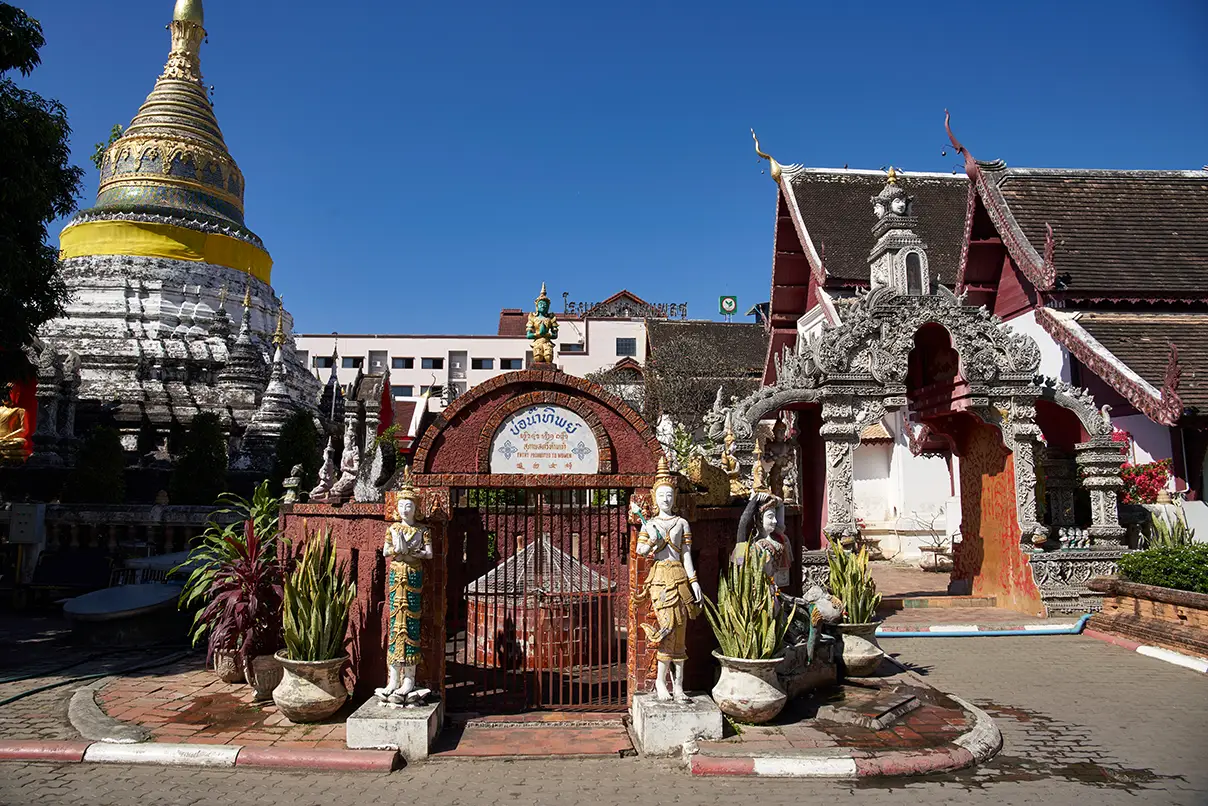
Wat Buppharam (Rim Tai) is located at No. 93, Moo 7, Ban Thung Hua Chang, Mae Rim–Samoeng Road, Rim Tai Subdistrict, Mae Rim District, Chiang Mai Province 50180. It is a community Buddhist temple under the Mahanikaya monastic order. The temple was built in 1891, officially granted temple status in the same year, and received its royal Wisungkhamasima boundary on October 1, 1926. Led by Phra Nopphon Narissaro, Wat Buppharam is an old village temple of Ban Thung Hua Chang and an important local Buddhist site in Rim Tai Subdistrict.
Wat Buppharam (Rim Tai) is suitable for travelers who want to understand Mae Rim beyond waterfalls, cafés, resorts, and mountain routes. The temple tells the story of Ban Thung Hua Chang, a Moo 7 village in Rim Tai Subdistrict located along the Mae Rim–Samoeng route. It serves as a place for merit-making, sermons, Buddhist ceremonies, annual village activities, Kathin, forest robe offerings, and local Buddhist observances.
Ban Thung Hua Chang is part of Rim Tai Subdistrict, Mae Rim District, Chiang Mai Province. Rim Tai is a central community area of Mae Rim, with old villages, temples, schools, markets, local residences, agricultural land, and roads linking Chiang Mai city with Mae Rim, Mae Sa, Mae Raem, and the western mountain routes. Wat Buppharam therefore stands within a living local community rather than as an isolated tourist attraction.
The temple’s formal name, Buppharam, carries a graceful Buddhist meaning. “Buppha” refers to flowers, while “aram” refers to a temple or peaceful religious place. Together, the name suggests a pleasant and serene temple. Local residents, however, also know the temple as Wat Thung Hua Chang, after the village where it is located. This dual naming reflects both its religious identity and its close connection with the local community.
The history of Wat Buppharam began in 1891, with Khruba Chan Ta serving as the leading figure in its construction. In a Lanna village context, building a temple was more than constructing a religious building. A temple became the heart of the village, the place where local people made merit, listened to sermons, observed Buddhist holy days, and joined ceremonies throughout the year. Wat Buppharam therefore grew from the shared faith of monks and villagers in Ban Thung Hua Chang.
Wat Buppharam was officially granted temple status in 1891 and received its royal Wisungkhamasima boundary on October 1, 1926. In Thai Buddhist tradition, a Wisungkhamasima boundary defines the sacred area used for formal monastic acts, especially ceremonies connected with the ordination hall and the Sangha. This milestone shows the temple’s development from a local community temple into a more formally established Buddhist institution.
Wat Buppharam is part of the network of temples in Rim Tai Subdistrict. Rim Tai includes several village communities such as Ban Nam Ngam, Ban Duang Dee, Ban Khon Tan, Ban Ton Kaew, Ban Tha Wang, Ban Huai Cho, Ban Thung Hua Chang, and Ban Sai Mun. Each village has its own community identity, and local temples help preserve faith, memory, and cultural continuity. Wat Buppharam serves this role for Ban Thung Hua Chang.
The local name Wat Thung Hua Chang is important because it reflects how villagers identify the temple in everyday speech. Community temples are often remembered not only by their formal names but also by the village names attached to them. This makes Wat Buppharam both a registered Buddhist temple and a familiar spiritual place in the memory of Ban Thung Hua Chang residents.
Phra Nopphon Narissaro serves as the abbot of Wat Buppharam. In a community temple, the abbot’s role includes maintaining the temple, leading Buddhist activities, coordinating religious events, and preserving the temple as a spiritual center for the village. The close relationship between monks and villagers is one of the defining characteristics of a local Lanna temple.
The temple grounds include worship areas, a temple courtyard, and spaces used for Buddhist community activities. Public information does not provide a complete architectural inventory of each structure, such as the ordination hall, viharn, chedi, principal Buddha image, bell tower, or sermon hall. For this reason, Wat Buppharam is best appreciated as an old community temple with a confirmed founding year, formal temple status, royal Wisungkhamasima boundary, abbot, and continuing village role.
Visitors should appreciate the calm atmosphere of a working community temple. The temple is suitable for paying respect to the Buddha, making merit, offering Sangha donations, and observing how a local Buddhist temple remains connected with everyday village life. It is not a large commercial tourist attraction. Its value lies in its history, its relationship with Ban Thung Hua Chang, and its role in Rim Tai community Buddhism.
Visitors should dress respectfully, speak softly, avoid disturbing monks or local worshippers, and refrain from entering monastic areas without permission. On Buddhist holy days or during temple events, visitors should follow local guidance. A visit to a community temple is best approached with calmness, respect, and interest in local life.
Related activities at Wat Buppharam include Kathin, forest robe offerings, Buddhist holy days, annual merit-making activities, and community ceremonies. Kathin is especially important after the end of Buddhist Lent, when villagers and supporters gather to offer robes and support the monastic community. These events help strengthen local cooperation and keep Lanna Buddhist traditions alive.
Wat Buppharam plays an important role in Ban Thung Hua Chang. It is a place for merit-making, sermons, Buddhist ceremonies, community gatherings, and annual village events. In a semi-urban and semi-rural community such as Rim Tai, temples also preserve older village memory and help younger generations understand the roots of their local area.
Rim Tai Subdistrict has several notable temples, including Wat Duang Dee, Wat Sai Mun, Wat Pa Daraphirom, Wat Mae Rim, Wat Rattanaram, Wat Latthiwan, and Wat Arun Niwas. Wat Buppharam fits well into a cultural route focused on community temples of Rim Tai and Mae Rim. This gives travelers a broader view of Mae Rim beyond major tourist attractions.
The atmosphere of Wat Buppharam is appropriate for cultural travelers, temple visitors, and people who want a quieter stop during a Mae Rim journey. Its value is not based on large-scale tourism facilities. It is based on more than a century of community history, the role of Khruba Chan Ta in its construction, and the temple’s continuing connection with Ban Thung Hua Chang.
Getting There is convenient from Chiang Mai city by taking Chotana Road or Highway 107 north toward Mae Rim District, then entering Mae Rim–Samoeng Road and Ban Thung Hua Chang in Rim Tai Subdistrict. Private car, rental car, or local transport is recommended. Travelers using public transportation toward Mae Rim can continue by local vehicle into the temple area.
A useful cultural route can begin at Wat Buppharam, then continue to Wat Sai Mun, Wat Duang Dee, Wat Pa Daraphirom, Darabhiromya Royal Mansion Museum, Wat Sri Boon Rueang, Wat Tha Khrai, and Wat Don Chai. The trip can also extend to Mae Rim Orchid and Butterfly Farm, Mae Sa Waterfall, or Queen Sirikit Botanic Garden. This route combines community temples, village history, Lanna culture, food, nature, and nearby accommodation options in one Mae Rim itinerary.
Wat Buppharam is suitable for a half-day trip from Chiang Mai city or Mae Rim town. Visitors can make merit, learn about Ban Thung Hua Chang, observe the relationship between temple and village, and continue to nearby attractions and restaurants. The temple adds cultural depth to a Mae Rim trip by showing how a local temple preserves community identity and Buddhist practice.
In summary, Wat Buppharam (Rim Tai) is a Mahanikaya community temple in Ban Thung Hua Chang, Rim Tai Subdistrict, Mae Rim District, Chiang Mai Province. It was built in 1891 under the leadership of Khruba Chan Ta, officially granted temple status in 1891, and received its royal Wisungkhamasima boundary on October 1, 1926. Led by Phra Nopphon Narissaro, the temple is suitable for merit-making, quiet temple visits, learning about Ban Thung Hua Chang, and connecting a local temple visit with a broader Mae Rim cultural route.
| Name | Wat Buppharam (Rim Tai) |
| Location | Ban Thung Hua Chang, Moo 7, Rim Tai Subdistrict, Mae Rim District, Chiang Mai Province 50180 |
| Address | No. 93, Moo 7, Ban Thung Hua Chang, Mae Rim–Samoeng Road, Rim Tai Subdistrict, Mae Rim District, Chiang Mai Province 50180, Thailand |
| Local Name | Wat Thung Hua Chang |
| Temple Type | Community Buddhist temple under the Mahanikaya monastic order |
| Open Days | Daily |
| Opening Hours | 08.00 – 17.00 |
| History | Built in 1891 under the leadership of Khruba Chan Ta, officially granted temple status in 1891, and received its royal Wisungkhamasima boundary on October 1, 1926 |
| Name Origin | “Buppharam” suggests a serene flower-like temple, while the local name Wat Thung Hua Chang is linked with Ban Thung Hua Chang, Moo 7 of Rim Tai Subdistrict |
| Founder / Leading Figure | Khruba Chan Ta |
| Main Areas / Zones | Worship area, temple courtyard, and community Buddhist activity spaces of Ban Thung Hua Chang |
| Sacred Objects / Worship Points | Buddha images and worship areas within the temple |
| Highlights | Old community temple of Ban Thung Hua Chang, locally known as Wat Thung Hua Chang, located along the Mae Rim–Samoeng route |
| Community Role | A spiritual center for Ban Thung Hua Chang, used for merit-making, sermons, Kathin, forest robe offerings, Buddhist holy days, and community activities |
| Related Traditions | Kathin, forest robe offerings, Buddhist holy days, and annual community merit-making activities |
| Abbot | Phra Nopphon Narissaro |
| Main Contact Number | 053-297-989 |
| Travel Information | Travel from Chiang Mai city along Chotana Road or Highway 107 toward Mae Rim District, then enter Mae Rim–Samoeng Road and Ban Thung Hua Chang in Rim Tai Subdistrict. Private car, rental car, or local transport is recommended. |
| Current Status | Listed as a religious place in Rim Tai Subdistrict, Mae Rim District, Chiang Mai Province, and functions as the community temple of Ban Thung Hua Chang |
| Nearby Tourist Attractions | 1. Wat Sai Mun, about 2 km 2. Wat Duang Dee, about 3 km 3. Wat Pa Daraphirom, about 4 km 4. Darabhiromya Royal Mansion Museum, about 4 km 5. Mae Rim Orchid And Butterfly Farm, about 6 km |
| Nearby Restaurants | 1. Baan Landai Fine Thai Cuisine Mae Rim, about 4 km, Tel. 064-469-2929 2. Per La Mer Cafe, about 8 km, Tel. 064-269-9795 3. Akha Ama Living Factory, about 9 km, Tel. 088-267-8014 4. Huen Lung Suea Mae Rim, about 9 km 5. Pongyang Angdoi Restaurant, about 16 km, Tel. 085-618-8885 |
| Nearby Accommodations | 1. The Grand Morocc Hotel, about 4 km, Tel. 053-299-835 2. Mae Rim Whale Park Resort, about 4 km, Tel. 053-299-409 3. Mae Rim Lagoon Hotel, about 5 km, Tel. 053-297-288 4. Four Seasons Resort Chiang Mai, about 7 km, Tel. 053-298-181 5. Pongyang Angdoi Resort, about 16 km, Tel. 053-879-151 |
Frequently Asked Questions (FAQ)
Q: Where Is Wat Buppharam (Rim Tai) Located?
A: Wat Buppharam (Rim Tai) is located at No. 93, Moo 7, Ban Thung Hua Chang, Mae Rim–Samoeng Road, Rim Tai Subdistrict, Mae Rim District, Chiang Mai Province 50180, Thailand.
Q: What Are The Open Days And Opening Hours Of Wat Buppharam (Rim Tai)?
A: The temple is open daily from 08.00 to 17.00.
Q: What Is The Local Name Of Wat Buppharam (Rim Tai)?
A: Local residents also call Wat Buppharam (Rim Tai) Wat Thung Hua Chang, after Ban Thung Hua Chang where the temple is located.
Q: When Was Wat Buppharam (Rim Tai) Built?
A: Wat Buppharam (Rim Tai) was built in 1891 under the leadership of Khruba Chan Ta.
Q: When Did Wat Buppharam (Rim Tai) Receive Its Royal Wisungkhamasima Boundary?
A: Wat Buppharam (Rim Tai) received its royal Wisungkhamasima boundary on October 1, 1926.
Q: Who Is The Abbot Of Wat Buppharam (Rim Tai)?
A: The abbot of Wat Buppharam (Rim Tai) is Phra Nopphon Narissaro.
Q: What Is The Main Highlight Of Wat Buppharam (Rim Tai)?
A: The main highlight is its role as an old community temple of Ban Thung Hua Chang, with a history dating back to 1891 and a location along the Mae Rim–Samoeng route.
Q: What Nearby Attractions Can Be Visited With Wat Buppharam (Rim Tai)?
A: Nearby attractions include Wat Sai Mun, Wat Duang Dee, Wat Pa Daraphirom, Darabhiromya Royal Mansion Museum, and Mae Rim Orchid and Butterfly Farm.
 Category: ●Places of Worship
 Group: ●Temple
Last Update : 5 DayAgo
 Last Update : 5 DayAgo
 Click to Access the Navigation Map GPS
Wat Buppharam (Rim Tai) Map
Recommend

 Muang Chiang Mai(121)Chom Thong(47)Mae Chaem(25)Chiang Dao(33)Doi Saket(68)Mae Taeng(85)Mae Rim(69)Samoeng(29)Fang(71)Mae Ai(59)Phrao(70)San Pa Tong(103)San Kamphaeng(66)San Sai(73)Hang Dong(74)Hot(32)Doi Tao(22)Omkoi(11)Saraphi(74)Wiang Haeng(15)Chai Prakan(28)Mae Wang(32)Mae On(22)Doi Lo(34)Galyani Vadhana(1)


