
lovethailand home >North Travel Attractions >Chiang Mai Travel Attractions >Mae Rim >Pong Yaeng > Wat Pang Lung
TL;DR: Wat Pang Lung is located at Moo 8, Ban Pang Lung, Pong Yaeng Subdistrict, Mae Rim District, Chiang Mai Province, open Daily, hours 08.00 – 17.00.

Wat Pang Lung
Open Days: Daily
Opening Hours: 08.00 – 17.00
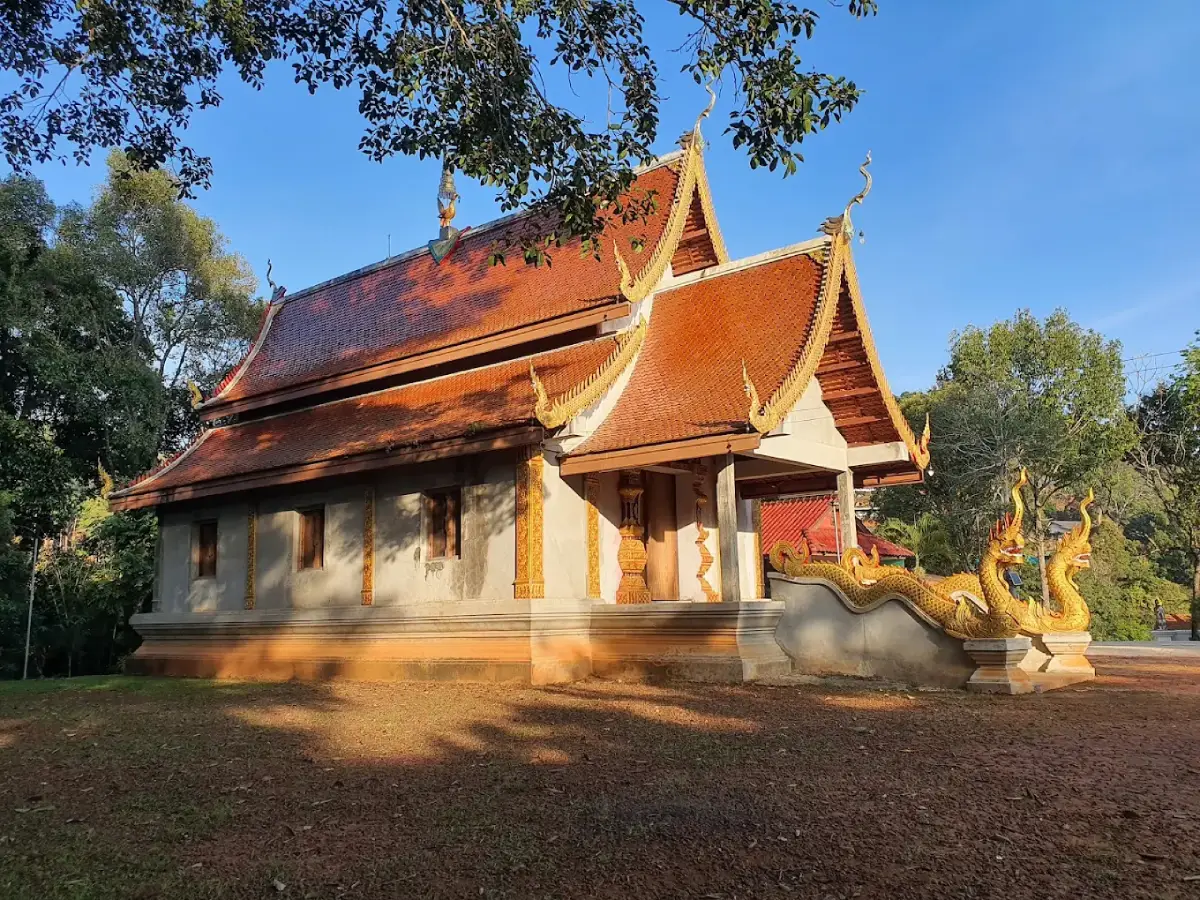
Wat Pang Lung is located in Moo 8, Ban Pang Lung, Pong Yaeng Subdistrict, Mae Rim District, Chiang Mai Province 50180. It is a non-royal Buddhist temple under the Maha Nikaya order. The temple was officially permitted to be established in 1937 and is currently led by Phra Noi Pabhato as abbot. Wat Pang Lung is a community temple of Ban Pang Lung, a highland village in Pong Yaeng that is closely connected with mountain landscapes, agriculture, local Buddhist life, and the Mae Rim–Samoeng travel route.
Wat Pang Lung serves as the spiritual center of Ban Pang Lung. It is a place for merit-making, dhamma listening, Buddhist ceremonies, and village gatherings. The temple is not a large commercial tourist attraction, but its value lies in its role as a living local temple that reflects the religious life of the community. For travelers who want to understand Mae Rim beyond viewpoints, cafés, and highland resorts, Wat Pang Lung offers a quieter and more grounded cultural perspective.
The wider context of Pong Yaeng helps explain the importance of Wat Pang Lung. Pong Yaeng is an old subdistrict of Mae Rim with traces of ancient temple sites, brick remains, and local historical memory in several villages, including Ban Pang Lung. These traces show that Pong Yaeng is not only a modern nature and leisure destination, but also an area with long-standing settlement history and Buddhist cultural roots.
Ban Pang Lung is a highland village in Pong Yaeng Subdistrict. The area is associated with mountain roads, cool weather, forested slopes, farming communities, and travel routes toward Mon Jam and the Mae Rim highlands. Wat Pang Lung therefore stands within a mountain village setting rather than an urban temple environment. Its atmosphere is calm, local, and closely tied to the rhythm of village life.
The formal establishment of Wat Pang Lung in 1937 gave Ban Pang Lung an official Buddhist center. For highland villages, a local temple is especially important because travel to other villages or lowland temples was difficult in the past. A village temple allows residents to observe Buddhist holy days, make merit, listen to teachings, and gather for ceremonies close to home.
As a non-royal Maha Nikaya temple, Wat Pang Lung reflects the faith and support of local people. Community temples in northern Thailand often depend on villagers, families, and lay supporters who help maintain the temple, support monks, and organize annual merit-making events. Wat Pang Lung therefore functions not only as a religious site but also as a place where village relationships are renewed through shared activities.
Pong Yaeng Subdistrict is mainly mountainous, with some foothill plains and agricultural areas. Parts of the subdistrict are connected with forest areas and highland agriculture. The area is suitable for cool-climate crops such as lychee, bell pepper, chayote, roses, chrysanthemums, strawberries, onions, kale, tomatoes, and lettuce. This setting shapes the life of Ban Pang Lung and helps explain why the temple’s identity is linked with highland agriculture and natural surroundings.
Ban Pang Lung is often mentioned together with Ban Buak Toei, forming the local community name Ban Pang Lung–Buak Toei. The village is part of the Mae Rim highland tourism zone, where local farming, mountain scenery, restaurants, resorts, and Buddhist community life exist side by side. Wat Pang Lung stands within this changing landscape, where older village identity and modern tourism meet.
Wat Pang Lung continues to support the Buddhist calendar of the community. Important activities include Buddhist holy days, Visakha Bucha, Buddhist Lent, the end of Buddhist Lent, Kathin, Pha Pa, almsgiving, and village merit-making events. These activities allow residents, families, and former villagers to return to the temple, support the monastic community, and strengthen the bond between temple and village.
Publicly available information about individual buildings inside Wat Pang Lung is limited. However, as an active community temple, it includes religious activity spaces, a temple courtyard, merit-making areas, and spaces used for Buddhist community events. The temple should therefore be appreciated as a living village temple rather than judged by the scale of its architecture.
The main appeal of Wat Pang Lung is its peaceful and simple character. Visitors can stop to pay respect, make merit, and observe the atmosphere of a highland community temple. It is suitable for travelers who prefer quiet cultural routes and want to add a spiritual dimension to a trip that may otherwise focus on Mon Jam, Pong Yaeng attractions, restaurants, and mountain resorts.
Historically, the area around Ban Pang Lung is part of the older cultural landscape of Pong Yaeng. Local records mention ancient remains in the subdistrict, including the Ban Pang Lung area. This gives the village and temple a deeper context. Wat Pang Lung is therefore part of a broader historical landscape that connects settlement, Buddhism, village life, and the highland environment of Mae Rim.
The area around Ban Pang Lung is also connected with agricultural and environmental development in the highlands. Nearby areas in Pong Yaeng include mountain slopes, valleys, streams, and communities around the Kasetwichaya Project zone. This context shows how the temple exists within a landscape shaped by forests, water resources, agriculture, and mountain livelihoods.
Wat Pang Lung is suitable for travelers interested in community temples, old villages in Mae Rim, Lanna highland culture, and the Pong Yaeng–Mon Jam route. Adding the temple to a travel itinerary helps visitors see the religious and community dimension of the area, not only the scenic and recreational side.
Visitors should come with respect. Dress modestly, speak quietly, avoid disturbing monks or villagers, and observe local conduct during ceremonies. If a merit-making event is taking place, follow the guidance of local residents or temple staff. Wat Pang Lung remains a sacred space for the Ban Pang Lung community.
Wat Pang Lung can be connected with other cultural and natural attractions in Pong Yaeng. Travelers interested in temples can combine it with Wat Pong Khrai, Wat Theparam, Wat Pong Yaeng Chaloem Phrakiat, and Wat Pa Pong Yaeng Phatthanaram. Travelers interested in nature and leisure can continue to Pongyang Jungle Coaster and Zipline, Pongyang Angdoi, Mon Jam, Nong Hoi Royal Project Development Center, Queen Sirikit Botanic Garden, and Mae Sa Waterfall.
Getting There is easiest by private car, rental car, or hired local transport. From Chiang Mai city, take Chotana Road toward Mae Rim, then continue along the Mae Rim–Samoeng route through Pong Yaeng Subdistrict to Ban Pang Lung, Moo 8. The highland route includes curves and changes in elevation, so drivers should use appropriate speed and check road conditions, especially during rainy or foggy periods.
Public transport is possible by taking a local route toward Mae Rim and continuing with local transport or a hired vehicle into Pong Yaeng and Ban Pang Lung. For travelers planning to visit several places in one day, a private car or hired driver is recommended because attractions, restaurants, and accommodations are spread along the mountain road.
The best time to visit is in the morning or late afternoon, when the weather is cooler and the temple atmosphere is quiet. The cool season is suitable for combining the temple visit with viewpoints and overnight stays in Pong Yaeng or Mon Jam. The rainy season brings lush scenery but requires extra caution on mountain roads.
Overall, Wat Pang Lung is a meaningful community temple in Pong Yaeng Subdistrict, Mae Rim District, Chiang Mai. Established in 1937 as a non-royal Maha Nikaya temple, it remains the spiritual center of Ban Pang Lung. Its value comes from its role in local Buddhist life, its setting in a historic highland community, and its location on the Mae Rim–Pong Yaeng–Mon Jam travel route. It is recommended for travelers who want to experience Mae Rim in a quieter, more cultural, and more community-based way.
| Name | Wat Pang Lung |
| Location | Moo 8, Ban Pang Lung, Pong Yaeng Subdistrict, Mae Rim District, Chiang Mai Province |
| Address | Moo 8, Ban Pang Lung, Pong Yaeng Subdistrict, Mae Rim District, Chiang Mai 50180, Thailand |
| Related Community Name | Ban Pang Lung–Buak Toei, Moo 8, Pong Yaeng Subdistrict |
| Temple Type | Non-Royal Buddhist Temple Under The Maha Nikaya Order |
| Year Established | Officially permitted as a temple in 1937 |
| Abbot / Caretaker | Phra Noi Pabhato |
| Highlights | A peaceful community temple of Ban Pang Lung on the Mae Rim–Samoeng route, set within a highland farming community and the old cultural landscape of Pong Yaeng |
| Main Areas / Zones | Religious activity areas, temple courtyard, merit-making areas, and community Buddhist activity spaces |
| Historical Context | Ban Pang Lung is part of Pong Yaeng Subdistrict, an old Mae Rim highland area with traces of ancient temple sites, brick remains, and local cultural memory |
| Community Role | Spiritual center of Ban Pang Lung, used for merit-making, dhamma listening, Kathin, Pha Pa, Buddhist holy days, and village Buddhist activities |
| Tradition / Buddhist Events | Buddhist holy days, Visakha Bucha, Buddhist Lent, the end of Buddhist Lent, Kathin, Pha Pa, almsgiving, and village merit-making activities |
| Open Days | Daily |
| Opening Hours | 08.00 – 17.00 |
| Current Status | Open as a community temple in Ban Pang Lung, Pong Yaeng Subdistrict, Mae Rim District, Chiang Mai Province |
| Travel Information | From Chiang Mai city, take Chotana Road toward Mae Rim, then continue along the Mae Rim–Samoeng route through Pong Yaeng Subdistrict to Ban Pang Lung, Moo 8. Private car, rental car, or hired local transport is recommended. |
| Nearby Tourist Attractions | 1. Wat Pong Khrai, about 4 km 2. Wat Theparam, about 5 km 3. Wat Pong Yaeng Chaloem Phrakiat, about 6 km 4. Pongyang Jungle Coaster And Zipline, about 7 km 5. Pongyang Angdoi, about 8 km 6. Mon Jam, about 10 km 7. Nong Hoi Royal Project Development Center, about 11 km 8. Queen Sirikit Botanic Garden, about 15 km 9. Mae Sa Waterfall, about 18 km |
| Nearby Restaurants | 1. Pongyang Angdoi, about 8 km, Tel. 085-618-8885 2. Tune In Garden, about 8 km, Tel. 053-879-251, 087-185-2951 3. Baan Mon Muan, about 9 km, Tel. 083-318-6444, 083-318-6555 4. Mon Jam Restaurant, about 10 km, Tel. 081-806-3993, 053-810-765 5. Local Restaurants In Ban Pang Lung–Buak Toei, about 1 km |
| Nearby Accommodations | 1. North Star Valley, about 6 km, Tel. 080-565-1111 2. Swankiri Resort, about 7 km, Tel. 088-557-7626 3. Pongyang Angdoi Resort, about 8 km, Tel. 053-879-151-2 4. Baan Mon Muan, about 9 km, Tel. 083-318-6444 5. Mon Doi Pong Khrai, about 9 km 6. Panviman Chiang Mai Spa Resort, about 10 km |
Frequently Asked Questions (FAQ)
Q: Where is Wat Pang Lung located?
A: Wat Pang Lung is located in Moo 8, Ban Pang Lung, Pong Yaeng Subdistrict, Mae Rim District, Chiang Mai 50180, Thailand.
Q: What type of temple is Wat Pang Lung?
A: Wat Pang Lung is a non-royal Buddhist temple under the Maha Nikaya order.
Q: When was Wat Pang Lung established?
A: Wat Pang Lung was officially permitted to be established as a temple in 1937.
Q: Who is the abbot of Wat Pang Lung?
A: The abbot of Wat Pang Lung is Phra Noi Pabhato.
Q: Why is Wat Pang Lung important?
A: Wat Pang Lung is the spiritual center of Ban Pang Lung and supports local Buddhist activities such as merit-making, dhamma listening, Kathin, Pha Pa, and Buddhist holy day observances.
Q: What type of traveler is Wat Pang Lung suitable for?
A: It is suitable for travelers interested in highland community temples, Pong Yaeng local history, quiet merit-making, and the Mae Rim–Pong Yaeng–Mon Jam travel route.
Q: How do travelers get to Wat Pang Lung?
A: From Chiang Mai city, take Chotana Road toward Mae Rim, then continue along the Mae Rim–Samoeng route through Pong Yaeng Subdistrict to Ban Pang Lung, Moo 8. A private car or rental car is the most convenient option.
Q: What nearby places can be visited with Wat Pang Lung?
A: Nearby places include Wat Pong Khrai, Wat Theparam, Wat Pong Yaeng Chaloem Phrakiat, Pongyang Jungle Coaster and Zipline, Pongyang Angdoi, Mon Jam, Nong Hoi Royal Project Development Center, Queen Sirikit Botanic Garden, and Mae Sa Waterfall.
 Category: ●Places of Worship
 Group: ●Temple
Last Update : 7 DayAgo
 Last Update : 7 DayAgo
 Click to Access the Navigation Map GPS
 Muang Chiang Mai(121)Chom Thong(47)Mae Chaem(25)Chiang Dao(33)Doi Saket(68)Mae Taeng(85)Mae Rim(69)Samoeng(29)Fang(71)Mae Ai(59)Phrao(70)San Pa Tong(103)San Kamphaeng(66)San Sai(73)Hang Dong(73)Hot(32)Doi Tao(22)Omkoi(11)Saraphi(74)Wiang Haeng(15)Chai Prakan(28)Mae Wang(32)Mae On(22)Doi Lo(34)Galyani Vadhana(1)


