
lovethailand home >North Travel Attractions >Chiang Mai Travel Attractions >Mae Rim >Pong Yaeng > Wat Pong Khrai
TL;DR: Wat Pong Khrai is located at Moo 5, Ban Pong Khrai, Pong Yaeng Subdistrict, Mae Rim District, Chiang Mai Province, open Daily, hours 08.00 – 17.00.
Wat Pong Khrai
Open Days: Daily
Opening Hours: 08.00 – 17.00
Wat Pong Khrai is located in Moo 5, Ban Pong Khrai, Pong Yaeng Subdistrict, Mae Rim District, Chiang Mai Province 50180. It is a non-royal Buddhist temple under the Maha Nikaya order. The temple was officially permitted to be established in 1938 and is currently led by Phra Khru Chirathammasarat Chirathito. Wat Pong Khrai is an important community temple of Ban Pong Khrai, a highland village known for forest conservation, watershed protection, local farming, and community-based tourism.
The name Ban Pong Khrai reflects the local landscape. “Pong” refers to moist clayey or marshy ground, while “Khrai” refers to the khrai trees that once grew densely in the area. The village name therefore preserves the memory of soil, water, forest, and local plant life. Wat Pong Khrai, standing within this village, is directly connected with the natural environment and identity of the community.
Ban Pong Khrai is located in Moo 5 of Pong Yaeng Subdistrict. The village sits in a mountainous and partly highland landscape, with Huai Pong Khrai running through the area. Local residents use mountain-fed water from the upper watershed for drinking and daily use. This makes the village deeply connected with water sources, forest resources, and highland agriculture. Wat Pong Khrai belongs to this ecological and cultural setting, where Buddhist life and nature conservation remain closely linked.
Local history says Ban Pong Khrai was once a high mountain forest. About 200 years ago, Pho Ui Kong Panthiya and around four households from Ban Pong Yaeng Nai moved into the area to open farmland, grow rice, and cultivate miang tea. The village later separated from Ban Pong Yaeng Nai and became Moo 5 in 1881. This background shows that Wat Pong Khrai stands in a community with long memories of settlement, forest clearing, farming, and adaptation to mountain conditions.
The formal establishment of Wat Pong Khrai in 1938 gave the village an official Buddhist center. For a highland community, a village temple was essential. It allowed residents to make merit, listen to dhamma teachings, observe Buddhist holy days, and gather for community ceremonies without traveling far to lowland temples. The temple therefore became both a spiritual and social anchor for Ban Pong Khrai.
Wat Pong Khrai continues to serve as the center of Buddhist life in the village. Local people use the temple for religious ceremonies, merit-making, community meetings, and Buddhist calendar events. It is a place where elders, families, young people, monks, and supporters meet through shared rituals and community activities. The temple’s role is therefore broader than worship; it helps maintain relationships among villagers.
Ban Pong Khrai has a rich annual cycle of cultural and religious activities. These include new-rice merit-making in January, Poy Luang in March, the northern Thai New Year in April, Visakha Bucha in May, guardian-spirit and watershed-spirit ceremonies in June, Buddhist Lent in July, the end of Buddhist Lent in October, and Yi Peng in November. Wat Pong Khrai exists within this annual rhythm of Buddhist practice, local belief, and community life.
The village’s guardian-spirit and watershed-spirit ceremonies reflect local respect for the land, forest, and water. In Lanna communities, local beliefs often coexist with Buddhism. At Ban Pong Khrai, the temple, the forest, the watershed, and local customs all support one another. This gives Wat Pong Khrai a cultural depth that goes beyond its status as a small village temple.
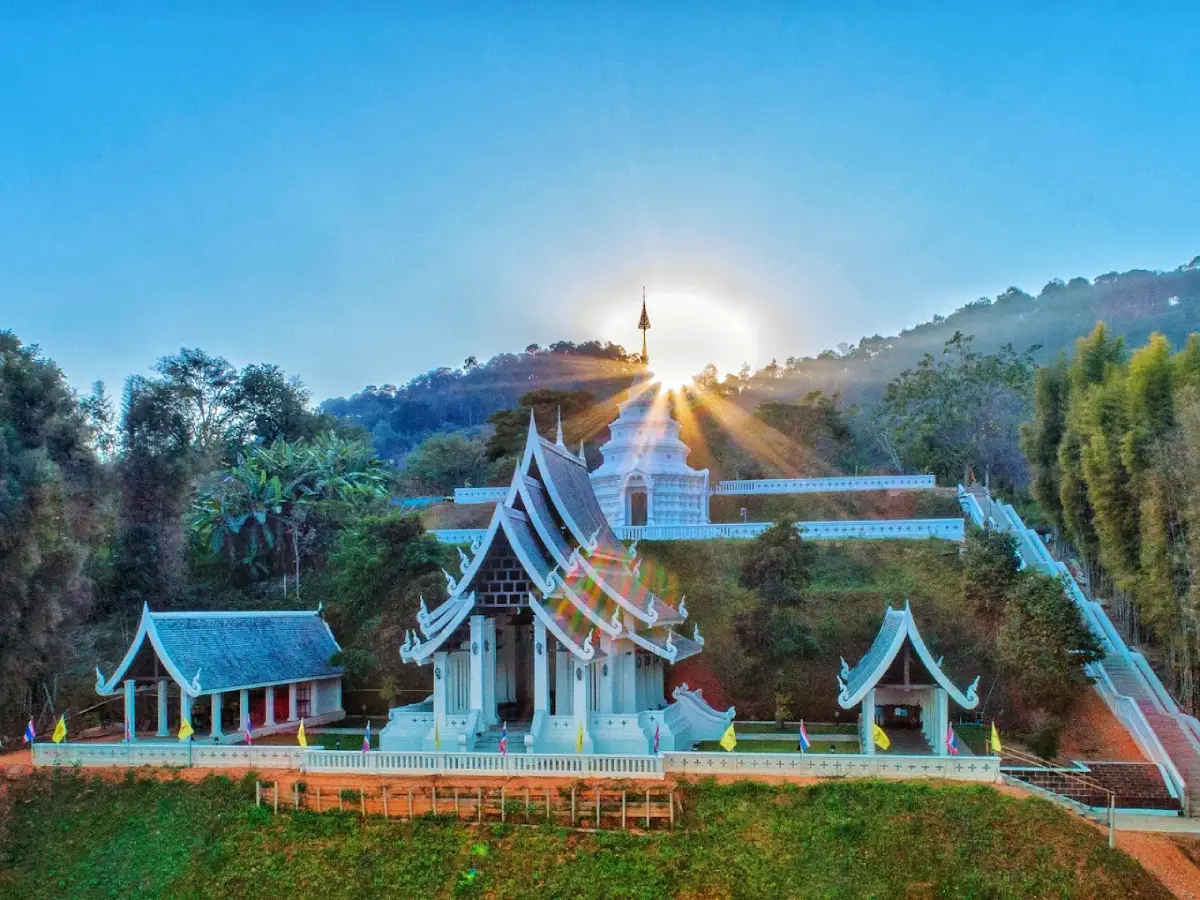
One of the important features associated with Wat Pong Khrai is the area known as “Phu Tham,” created from Buddhist faith, community life, and the beauty of the surrounding environment. Its main structures include Chedi Si Chonlakon, the ordination hall, and the scripture hall. These buildings are described as having local-style architecture with simple forms, modest materials, open spaces, brightness, and a calm atmosphere. This makes the temple distinctive as a place where Buddhist architecture, highland community life, and natural scenery are brought together.
Chedi Si Chonlakon is an important landmark of Ban Pong Khrai. It stands at a high point of the village and offers a view over the surrounding area. Paying respect at the chedi allows visitors to see the relationship between the temple, the village, the forest, and the agricultural landscape. It is both a sacred feature and a viewpoint that expresses the identity of the community.
The ordination hall is an important space for Buddhist ceremonies, while the scripture hall represents the preservation of Buddhist teachings and religious knowledge. Together with the chedi, these structures give Wat Pong Khrai the essential elements of a Buddhist temple: worship, monastic rites, and the keeping of dhamma. Their simple local design helps the temple remain in harmony with the mountain village setting.
Wat Pong Khrai should not be understood separately from Ban Pong Khrai. The village is known for its commitment to forest conservation. Its community forest protects natural resources, headwaters, food sources, medicinal plants, and local biodiversity. Villagers work together to conserve these resources, and community-based tourism is used as a way to support local development while preserving the environment.
Ban Pong Khrai is also known for its fa mui orchid conservation. The community forest serves as a propagation area for local conservation work, supported by Queen Sirikit Botanic Garden. This gives the village a strong conservation identity. A visit to Wat Pong Khrai can therefore be connected with learning about forest care, local ecology, and community participation in protecting highland biodiversity.
The local economy of Ban Pong Khrai is closely linked with highland agriculture. Villagers grow cool-climate vegetables, flowers, chayote, bell peppers, tomatoes, cucumbers, chrysanthemums, and strawberries. The community also earns income from community-based tourism, including nature study, walking routes, vegetable-garden visits, local food, cultural activities, and local guides. Wat Pong Khrai is a meaningful first stop for understanding the village before exploring its natural and agricultural attractions.
Important things to see at Wat Pong Khrai include Chedi Si Chonlakon, the ordination hall, the scripture hall, Phu Tham, the temple courtyard, and the highland village atmosphere. The value of the temple lies not in large-scale monumentality but in its calm character, its simple architecture, and its close connection with a conservation-minded community.
Wat Pong Khrai is suitable for travelers interested in highland community temples, Lanna village life, forest conservation, watershed protection, and the Mae Rim–Pong Yaeng–Mon Jam travel route. Visitors who enjoy slow travel will appreciate how the temple connects Buddhist faith with local history, farming, forests, and community relationships.
The temple continues to participate in the Buddhist life of the community. Important activities include Buddhist holy days, Visakha Bucha, Buddhist Lent, the end of Buddhist Lent, Kathin, Pha Pa, almsgiving, and seasonal village merit-making. These events bring villagers together and help maintain the bond between temple and community.
Getting There is easiest by private car, rental car, or hired local transport. From Chiang Mai city, take Chotana Road toward Mae Rim, then continue onto the Mae Rim–Samoeng route through Pong Yaeng Subdistrict toward Ban Pong Khrai, Moo 5. The final section includes mountain roads and curves, so drive carefully, use appropriate speed, and avoid traveling at night during heavy rain or fog.
Public transport is possible by taking a local route toward Mae Rim and continuing with local transport or a hired vehicle into Pong Yaeng and Ban Pong Khrai. For travelers planning to visit several places in one day, a private car or hired driver is recommended, especially if the route includes Wat Pong Khrai, Pongyang Jungle Coaster and Zipline, Mon Jam, Nong Hoi Royal Project Development Center, Queen Sirikit Botanic Garden, and Mae Sa Waterfall.
Wat Pong Khrai can be included in several routes. A community-focused route can include Ban Pong Khrai, the community forest, village viewpoints, Chedi Si Chonlakon, and local farms. A wider Mae Rim route can continue to Pongyang Jungle Coaster and Zipline, Pongyang Angdoi, Mon Jam, Nong Hoi Royal Project Development Center, Queen Sirikit Botanic Garden, and Mae Sa Waterfall.
The best time to visit is in the morning or late afternoon, when the weather is cooler and the temple atmosphere is quiet. The cool season is ideal for combining a temple visit with viewpoints and nearby accommodation. The rainy season offers lush scenery but requires careful driving on mountain roads. Visitors should dress modestly, speak quietly, respect the temple, and be considerate of local residents.
Overall, Wat Pong Khrai is a meaningful community temple in Pong Yaeng Subdistrict, Mae Rim District, Chiang Mai. Established in 1938 as a non-royal Maha Nikaya temple, it remains the spiritual center of Ban Pong Khrai. Its importance comes from Phu Tham, Chedi Si Chonlakon, the ordination hall, the scripture hall, and its setting within a village known for forest conservation, watershed care, agriculture, and community-based tourism. It is recommended for travelers who want to experience Mae Rim in a quieter and more culturally grounded way.
| Name | Wat Pong Khrai |
| Location | Moo 5, Ban Pong Khrai, Pong Yaeng Subdistrict, Mae Rim District, Chiang Mai Province |
| Address | Moo 5, Ban Pong Khrai, Pong Yaeng Subdistrict, Mae Rim District, Chiang Mai 50180, Thailand |
| Community Coordinates | Latitude 18.93875335025151, Longitude 98.80405585448149 |
| Temple Type | Non-Royal Buddhist Temple Under The Maha Nikaya Order |
| Year Established | Officially permitted as a temple in 1938 |
| Abbot / Caretaker | Phra Khru Chirathammasarat Chirathito |
| Highlights | Ban Pong Khrai community temple, Phu Tham, Chedi Si Chonlakon, ordination hall, scripture hall, highland temple atmosphere, and forest-conservation village setting |
| Important Structures / Areas | Chedi Si Chonlakon, ordination hall, scripture hall, Phu Tham, temple courtyard, and Buddhist community activity areas |
| Community Role | Spiritual center of Ban Pong Khrai, used for merit-making, dhamma listening, village gatherings, forest and watershed awareness, and community-based tourism identity |
| Tradition / Buddhist Events | Buddhist holy days, Visakha Bucha, Buddhist Lent, the end of Buddhist Lent, Kathin, Pha Pa, almsgiving, northern Thai New Year, Yi Peng, and village merit-making activities |
| Open Days | Daily |
| Opening Hours | 08.00 – 17.00 |
| Current Status | Open as a community temple in Ban Pong Khrai, Pong Yaeng Subdistrict, Mae Rim District, Chiang Mai Province |
| Travel Information | From Chiang Mai city, take Chotana Road toward Mae Rim, then continue along the Mae Rim–Samoeng route through Pong Yaeng Subdistrict to Ban Pong Khrai, Moo 5. Private car, rental car, or hired local transport is recommended. |
| Nearby Tourist Attractions | 1. Chedi Si Chonlakon, about 1 km 2. Ban Pong Khrai Community Tourism Route, about 1 km 3. Ban Pong Khrai Community Forest, about 2 km 4. Pongyang Jungle Coaster And Zipline, about 8 km 5. Pongyang Angdoi, about 9 km 6. Mon Jam, about 10 km 7. Nong Hoi Royal Project Development Center, about 11 km 8. Queen Sirikit Botanic Garden, about 16 km 9. Mae Sa Waterfall, about 19 km |
| Nearby Restaurants | 1. Pongyang Angdoi, about 9 km, Tel. 085-618-8885 2. Tune In Garden, about 9 km, Tel. 053-879-251, 087-185-2951 3. Baan Mon Muan, about 10 km, Tel. 083-318-6444, 083-318-6555 4. Mon Jam Restaurant, about 10 km, Tel. 081-806-3993, 053-810-765 5. Local Restaurants In Ban Pong Khrai Community, about 1 km |
| Nearby Accommodations | 1. Mon Doi Pong Khrai, about 1 km 2. North Star Valley, about 7 km, Tel. 080-565-1111 3. Swankiri Resort, about 8 km, Tel. 088-557-7626 4. Pongyang Angdoi Resort, about 9 km, Tel. 053-879-151-2 5. Baan Mon Muan, about 10 km, Tel. 083-318-6444 6. Panviman Chiang Mai Spa Resort, about 11 km |
Frequently Asked Questions (FAQ)
Q: Where is Wat Pong Khrai located?
A: Wat Pong Khrai is located in Moo 5, Ban Pong Khrai, Pong Yaeng Subdistrict, Mae Rim District, Chiang Mai 50180, Thailand.
Q: What type of temple is Wat Pong Khrai?
A: Wat Pong Khrai is a non-royal Buddhist temple under the Maha Nikaya order.
Q: When was Wat Pong Khrai established?
A: Wat Pong Khrai was officially permitted to be established as a temple in 1938.
Q: Who is the abbot of Wat Pong Khrai?
A: The abbot of Wat Pong Khrai is Phra Khru Chirathammasarat Chirathito.
Q: What should visitors see at Wat Pong Khrai?
A: Important features include Chedi Si Chonlakon, the ordination hall, the scripture hall, Phu Tham, the temple courtyard, and the peaceful highland community-temple atmosphere.
Q: How is Wat Pong Khrai connected with Ban Pong Khrai?
A: Wat Pong Khrai is the spiritual center of Ban Pong Khrai and is closely connected with local merit-making, community gatherings, forest conservation, watershed awareness, and community-based tourism.
Q: How do travelers get to Wat Pong Khrai?
A: From Chiang Mai city, take Chotana Road toward Mae Rim, then continue along the Mae Rim–Samoeng route through Pong Yaeng Subdistrict to Ban Pong Khrai, Moo 5. A private car or rental car is the most convenient option.
Q: What nearby places can be visited with Wat Pong Khrai?
A: Nearby places include Ban Pong Khrai Community Forest, Chedi Si Chonlakon, Pongyang Jungle Coaster and Zipline, Pongyang Angdoi, Mon Jam, Nong Hoi Royal Project Development Center, Queen Sirikit Botanic Garden, and Mae Sa Waterfall.
 Category: ●Places of Worship
 Group: ●Temple
Last Update : 2 DayAgo
 Last Update : 2 DayAgo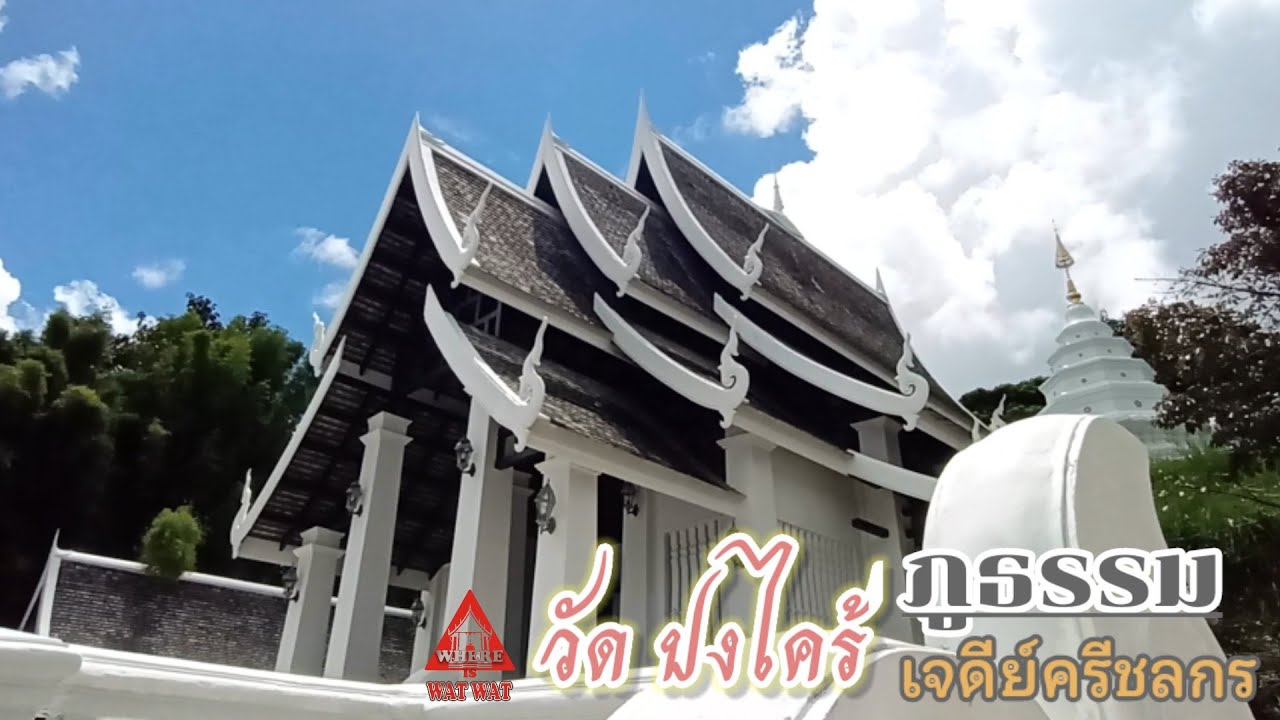
 Click to Access the Navigation Map GPS
Wat Pong Khrai Map
Recommend

 Muang Chiang Mai(121)Chom Thong(47)Mae Chaem(25)Chiang Dao(33)Doi Saket(68)Mae Taeng(85)Mae Rim(69)Samoeng(29)Fang(71)Mae Ai(62)Phrao(70)San Pa Tong(105)San Kamphaeng(66)San Sai(73)Hang Dong(74)Hot(32)Doi Tao(22)Omkoi(11)Saraphi(74)Wiang Haeng(15)Chai Prakan(28)Mae Wang(32)Mae On(22)Doi Lo(34)Galyani Vadhana(1)


