
lovethailand home >North Travel Attractions >Chiang Mai Travel Attractions >Mae Rim >Don Kaeo > Wat Sopanaram
TL;DR: Wat Sopanaram is located at Moo 3, Ban Sala, Don Kaew Subdistrict, Mae Rim District, Chiang Mai Province, open Daily, hours 08.00 – 17.00.

Wat Sopanaram
Open Days: Daily
Opening Hours: 08.00 – 17.00
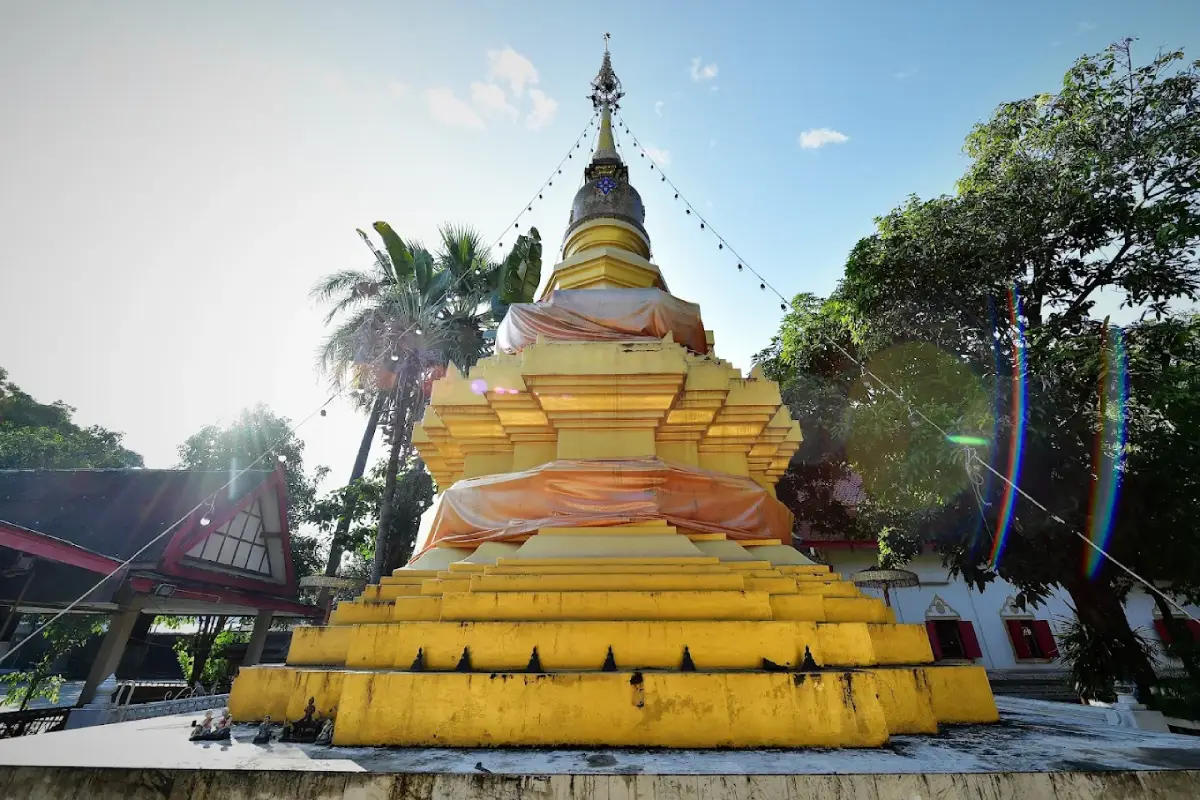
Wat Sopanaram is located in Moo 3, Ban Sala, Don Kaew Subdistrict, Mae Rim District, Chiang Mai Province 50180. It is a non-royal Buddhist temple under the Maha Nikaya order and one of the long-established community temples of Don Kaew. The temple was formerly known as Wat Pa Tueng because the surrounding area was once covered with dense tueng trees, also known as teng or rang trees. After the Second World War, many of these trees were cut for railway sleepers and railway firewood, leaving only the memory of the old forest in the temple’s early name.
The beginning of Wat Sopanaram dates back to around 1895, when a wandering monk named Nanta, locally remembered as Khruba Nanta, came to stay north of the present temple area. The site later became associated with a military animal unit, but at that time it was a forested area where the monk set up his temporary shelter. Local villagers developed great faith in him and invited him to stay for the Buddhist rains retreat. They then built a temporary monastic shelter for him, marking the beginning of the temple’s religious life.
Before Wat Sopanaram became established, villagers in the Ban Sala area had to travel to distant temples for merit-making and Buddhist ceremonies. Travel was difficult, especially during the rainy season. The temporary monastic shelter therefore answered a real community need. It gave villagers a nearby place to make merit, listen to dhamma, and participate in Buddhist activities without having to travel far from the village.
The first monastic site often suffered from flooding caused by mountain runoff during the rainy season. The villagers therefore moved the religious site to the current temple area around 1897. This relocation shows how the community adapted to the natural environment while preserving its faith. Wat Sopanaram was not created as a finished temple in a single moment; it developed gradually from a forest monastic shelter into a stable community temple supported by villagers over generations.
As faith grew, local men requested ordination and began to stay at the temple. The monastic community and lay supporters continued to maintain the temple. This pattern is typical of many Lanna community temples, which often began with a respected monk, local devotion, and a practical need for a village religious center. Wat Sopanaram therefore reflects the organic growth of Buddhism in rural northern communities.
The temple began around 1895 and was permitted to be established as a temple around 1936. It later received its royal grant of consecrated boundary on 20 March 1972. In Thai Buddhism, a consecrated boundary is important because it defines the area for formal monastic acts. This marked an important stage in the temple’s development and confirmed its full religious status as a recognized community temple.
The original name Wat Pa Tueng came from the landscape of the old forest. The present name, Wat Sopanaram, was adopted in 1945 when the Department of Religious Affairs encouraged temples to use more appropriate names. The abbot at that time, Phra Athikan Damrong Khanthiyo, requested the new name. The name also honors a lay supporter named Pho Noi Sopha, who donated a wooden house to the temple so it could be used to build monks’ quarters. Phra Khru Udom Wutthikhun, the district ecclesiastical head of Mae Rim at the time, gave the temple the name Wat Sopanaram in memory of Pho Noi Sopha.
The name Wat Sopanaram carries an auspicious meaning. “Sopana” suggests beauty, goodness, and refinement, while “aram” means monastery or temple. The name therefore evokes a beautiful and virtuous monastic place. It also preserves the memory of Pho Noi Sopha’s generosity, making the temple’s name both meaningful and community-based.
Wat Sopanaram played an important role in local education. In 1936, the temple and villagers established a public school so children in the area could study Thai literacy. At first, the school used a temple hall as its classroom, with monks and novices helping as temporary teachers. As more children attended, the temple allowed part of its land to be used for a new school site. This later became Ban Sala School. This history shows that Wat Sopanaram served as both a religious center and an educational foundation for the community.
This educational role reflects the wider function of Lanna temples in the past. Before public education became widely accessible, temples often served as local learning centers. Children learned reading, writing, Buddhist ethics, and social conduct through monks and community elders. Wat Sopanaram therefore contributed to both spiritual and educational development in Ban Sala.
Important areas of Wat Sopanaram include the viharn, ordination hall, monks’ residences, halls, museum hall, and community religious activity spaces. The temple museum hall helps visitors understand the temple’s history, including the old Pa Tueng forest, Khruba Nanta, Pho Noi Sopha, the name change, and the temple’s relationship with Ban Sala. This makes the temple suitable for visitors who want to understand local history, not only pay respect and leave quickly.
Wat Sopanaram is also closely connected with Phra Khru Sophon Bunnyaphon, also known as Khruba Thong Suwanno, a former abbot of the temple and former ecclesiastical district head of Mae Rim. Khruba Thong was widely respected as a northern Thai preacher, especially for his distinctive style of preaching the Vessantara Jataka. His legacy makes the temple important in the history of Lanna dhamma preaching and local Buddhist culture.
The temple preserves a statue and the remains of Khruba Thong for devotees to pay respect. This shows that Wat Sopanaram is not only important for its buildings or founding history, but also as a place of memory for monks who shaped the spiritual life of the community. Paying respect to Khruba Thong is one of the meaningful activities for visitors who want to understand the temple’s living faith.
Wat Sopanaram has also continued the tradition of dhamma preaching through later generations. Phra Khru Woratham Wirat, also known as Khruba Khammun Worathammo, a former abbot of the temple, continued the preaching tradition associated with Khruba Thong and supported Buddhist education in Chiang Mai. The temple is currently led by Phra Khru Samu Anuphap Kunangkaro and remains active in the Buddhist life of Don Kaew.
Wat Sopanaram continues to serve the community through Buddhist holy days, Buddhist Lent, the end of Buddhist Lent, Kathin, Pha Pa, candle offerings, bathing-cloth offerings, and local merit-making events. These activities bring together monks, villagers, families, and supporters. The temple remains a spiritual center for Ban Sala and a place where local Buddhist customs are renewed each year.
The main appeal of Wat Sopanaram is not grand architecture alone. Its value lies in the story of the Pa Tueng forest, Khruba Nanta’s forest retreat, the relocation from a flood-prone site, the renaming in honor of Pho Noi Sopha, the temple’s educational role, and its connection with respected northern Thai preachers. Visitors should take time to read the history, observe the temple grounds, and understand the relationship between the temple and the Ban Sala community.
Important things to see at Wat Sopanaram include the temple museum hall, viharn, ordination hall, monks’ residences, central hall, statue and remains of Khruba Thong, and the community religious activity areas. The temple is suitable for merit-making, local history learning, and quiet cultural visits. Visitors interested in community temples and Lanna religious life will find that Wat Sopanaram preserves many layers of local memory.
The atmosphere of the temple is calm and suitable for a short cultural stop in Don Kaew. Visitors should dress modestly, speak quietly, avoid disturbing monks or worshippers, and be careful when viewing old objects or museum-related areas. Wat Sopanaram remains an active community temple, so a respectful attitude is essential.
Getting There is easiest by private car, rental car, or hired local transport. From Chiang Mai city, take Chotana Road toward Mae Rim and enter Don Kaew Subdistrict. The temple is located in Moo 3, Ban Sala. Search for “Wat Sopanaram Don Kaew” or the Thai name “วัดโสภณาราม ดอนแก้ว” in a navigation app to avoid confusion with temples of the same name in other provinces.
Public transport is possible by taking a local route toward Mae Rim and continuing by local vehicle or hired transport into Ban Sala. For visitors planning to see several places in one day, a private car or hired driver is recommended. This makes it easier to link Wat Sopanaram with Wat Phra Non, Wat Piyaram, Wat Don Kaew, Wat Dara Phimuk, Princess Sirindhorn AstroPark, and Chiang Mai 700th Anniversary Stadium.
Wat Sopanaram can be included in several connected routes. A Don Kaew temple route can include Wat Phra Non, Wat Piyaram, Wat Don Kaew, and Wat Dara Phimuk. A wider Mae Rim route can continue to Wat Pa Dara Phirom Phra Aram Luang, Dara Pirom Palace Museum, Mae Sa Waterfall, and Queen Sirikit Botanic Garden. This allows travelers to combine old temples, community history, Lanna culture, science, and nature in one day.
The best time to visit is in the morning or late afternoon, when the weather is more comfortable and the temple is quieter. During Buddhist Lent, Kathin season, or Buddhist holy days, visitors should allow extra time and respect the ceremonial atmosphere. Wat Sopanaram is best appreciated as a living community temple with a long local history.
Overall, Wat Sopanaram is an important old community temple of Don Kaew Subdistrict. Its value comes from the old Pa Tueng forest, Khruba Nanta’s retreat, the relocation from a flood-prone area, the official establishment of the temple, the royal grant of consecrated boundary, the renaming in honor of Pho Noi Sopha, the temple’s role in local education, and the memory of Khruba Thong, a respected Mae Rim preacher. It is recommended for travelers who want a quiet, meaningful temple visit close to Chiang Mai city and Mae Rim.
| Name | Wat Sopanaram |
| Former Name | Wat Pa Tueng |
| Location | Moo 3, Ban Sala, Don Kaew Subdistrict, Mae Rim District, Chiang Mai Province |
| Address | 153 Moo 3, Chotana Road, Don Kaew Subdistrict, Mae Rim District, Chiang Mai 50180, Thailand |
| Temple Type | Non-Royal Buddhist Temple Under The Maha Nikaya Order |
| Early Formation | Began as a monastic shelter around 1895 after Khruba Nanta stayed in the area |
| Official Establishment | Permitted to be established as a temple around 1936 |
| Consecrated Boundary | Granted on 20 March 1972 |
| Name Origin | Renamed from Wat Pa Tueng to Wat Sopanaram in 1945 in memory of Pho Noi Sopha, who donated a wooden house for the temple to build monks’ quarters |
| Abbot / Caretaker | Phra Khru Samu Anuphap Kunangkaro |
| Highlights | History of Wat Pa Tueng, Khruba Nanta, Wat Sopanaram Museum Hall, statue and remains of Khruba Thong, local education role, and Lanna-style dhamma preaching tradition |
| Important Areas / Structures | Viharn, ordination hall, monks’ residences, temple halls, museum hall, central hall, and community Buddhist activity areas |
| Related Figures | Khruba Nanta, Phra Athikan Damrong Khanthiyo, Pho Noi Sopha, Phra Khru Udom Wutthikhun, Phra Khru Sophon Bunnyaphon or Khruba Thong Suwanno, and Phra Khru Woratham Wirat or Khruba Khammun Worathammo |
| Community Role | Spiritual center of Ban Sala, place for merit-making and dhamma listening, and the early foundation of the public school that later developed into Ban Sala School |
| Tradition / Buddhist Events | Buddhist holy days, Buddhist Lent, the end of Buddhist Lent, Kathin, Pha Pa, candle offerings, bathing-cloth offerings, and local merit-making events |
| Open Days | Daily |
| Opening Hours | 08.00 – 17.00 |
| Current Status | Open as a community temple in Don Kaew Subdistrict, Mae Rim District, Chiang Mai Province |
| Travel Information | From Chiang Mai city, take Chotana Road toward Mae Rim and enter Don Kaew Subdistrict, Moo 3, Ban Sala. Private car, rental car, or hired local transport is recommended. |
| Nearby Tourist Attractions | 1. Wat Phra Non (Khon Muang), about 2 km 2. Wat Piyaram, about 3 km 3. Wat Don Kaew, about 3 km 4. Wat Dara Phimuk, about 4 km 5. Princess Sirindhorn AstroPark, about 4 km 6. Chiang Mai 700th Anniversary Stadium, about 4 km 7. Wat Pa Dara Phirom Phra Aram Luang, about 12 km 8. Dara Pirom Palace Museum, about 12 km 9. Mae Sa Waterfall, about 18 km 10. Queen Sirikit Botanic Garden, about 23 km |
| Nearby Restaurants | 1. Khao Soi Phra Non Don Kaew, about 2 km, Tel. 091-879-7539 2. Mae Kha Indy Cooked-To-Order, about 3 km, Tel. 062-331-9163 3. Mala Don Kaew Grill, about 3 km, Tel. 086-329-9462, 088-252-6062 4. Tod Suk Fried Meatballs, Ban Don Kaew Branch, about 3 km, Tel. 091-808-0588 5. Giant Grilled Fish Wrap Don Kaew, about 3 km, Tel. 080-539-5952 6. Pla Phao Na Mike Don Kaew, about 4 km, Tel. 063-696-6406 7. Pork Knuckle Rice Nay Aor Don Kaew Mae Rim, about 5 km, Tel. 094-629-8895 |
| Nearby Accommodations | 1. My Home 103, Wat Phra Non Khon Muang Lane, about 2 km, Tel. 081-595-5650 2. M Place Mae Rim, about 4 km, Tel. 083-152-0805 3. Inghome & Guesthouse, about 5 km, Tel. 088-599-0465 4. The Imperial Chiang Mai Resort & Sport Club, about 5 km, Tel. 053-121-650 5. Golden Cupids Hotel, about 9 km, Tel. 053-844-503 |
Frequently Asked Questions (FAQ)
Q: Where is Wat Sopanaram located?
A: Wat Sopanaram is located in Moo 3, Ban Sala, Don Kaew Subdistrict, Mae Rim District, Chiang Mai 50180, Thailand.
Q: What was the former name of Wat Sopanaram?
A: Wat Sopanaram was formerly known as Wat Pa Tueng because the area around the temple was once densely covered with tueng trees.
Q: When did Wat Sopanaram begin?
A: Wat Sopanaram began as a monastic shelter around 1895 after Khruba Nanta stayed in the area. It was permitted to be established as a temple around 1936.
Q: Why was Wat Pa Tueng renamed Wat Sopanaram?
A: The temple was renamed in 1945 in memory of Pho Noi Sopha, a lay supporter who donated a wooden house for the temple to build monks’ quarters.
Q: Who is the abbot of Wat Sopanaram?
A: The abbot of Wat Sopanaram is Phra Khru Samu Anuphap Kunangkaro.
Q: What should visitors see at Wat Sopanaram?
A: Important features include the Wat Sopanaram Museum Hall, viharn, ordination hall, temple halls, statue and remains of Khruba Thong, and the community Buddhist activity areas.
Q: What role does Wat Sopanaram play in the community?
A: Wat Sopanaram is a spiritual center of Ban Sala, a place for merit-making and dhamma listening, and the early foundation of the public school that later became Ban Sala School.
Q: What nearby places can be visited with Wat Sopanaram?
A: Nearby places include Wat Phra Non, Wat Piyaram, Wat Don Kaew, Wat Dara Phimuk, Princess Sirindhorn AstroPark, Chiang Mai 700th Anniversary Stadium, Wat Pa Dara Phirom, Mae Sa Waterfall, and Queen Sirikit Botanic Garden.
 Category: ●Places of Worship
 Group: ●Temple
Last Update : 1 DayAgo
 Last Update : 1 DayAgo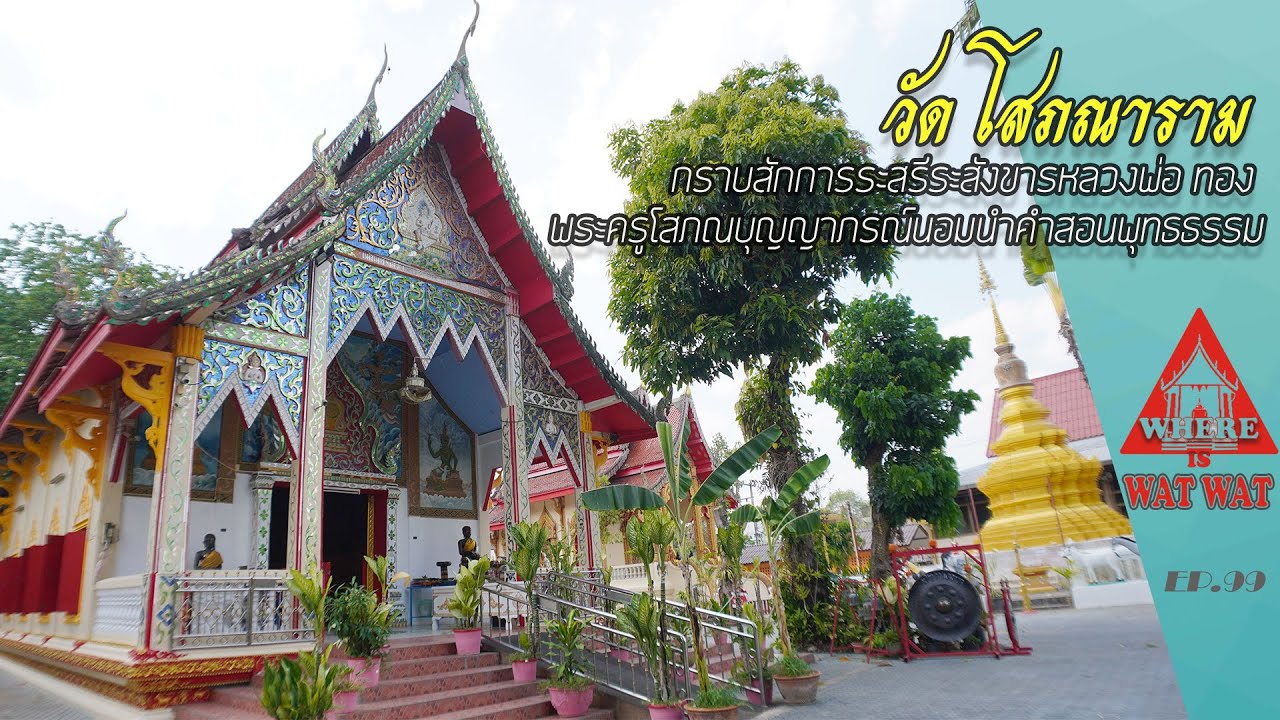
 Click to Access the Navigation Map GPS
Wat Sopanaram Map
Recommend

 Muang Chiang Mai(121)Chom Thong(47)Mae Chaem(25)Chiang Dao(33)Doi Saket(68)Mae Taeng(85)Mae Rim(69)Samoeng(29)Fang(71)Mae Ai(62)Phrao(70)San Pa Tong(105)San Kamphaeng(66)San Sai(73)Hang Dong(74)Hot(32)Doi Tao(22)Omkoi(11)Saraphi(74)Wiang Haeng(15)Chai Prakan(28)Mae Wang(32)Mae On(22)Doi Lo(34)Galyani Vadhana(1)


