
lovethailand home >North Travel Attractions >Chiang Mai Travel Attractions >Mae Rim >Don Kaeo > Wat Dara Phimuk
TL;DR: Wat Dara Phimuk is located at Ban Bo Pu, Moo 1, Don Kaew Subdistrict, Mae Rim District, Chiang Mai Province, open Daily, hours 06.00 – 17.00.
Wat Dara Phimuk
Open Days: Daily
Opening Hours: 06.00 – 17.00
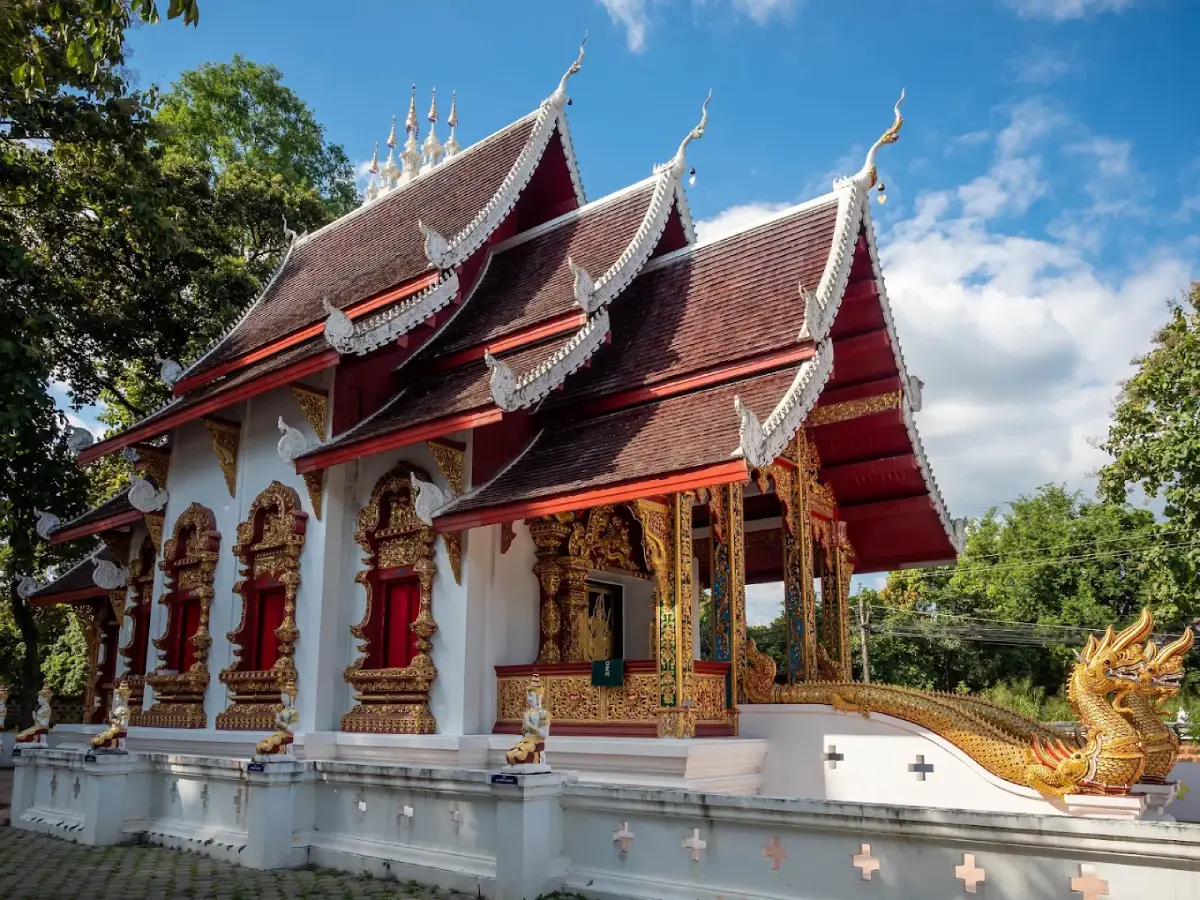
Wat Dara Phimuk, also known locally as Wat Bo Pu, is located at 100 Moo 1, Ban Bo Pu, Don Kaew Subdistrict, Mae Rim District, Chiang Mai Province 50180. It is a private Buddhist temple under the Maha Nikaya order and one of the historically meaningful temples connected with Princess Dara Rasmi, royal consort of King Chulalongkorn. The temple was founded around Chulasakarat 1247, corresponding to 1885, by Phra Chao Inthawichayanon, the seventh ruler of Chiang Mai, for his daughter Princess Dara Rasmi.
Wat Dara Phimuk is important because it was created from an act of gratitude. Princess Dara Rasmi wished to honor her wet nurse, Nang Tem, also remembered as Mae Nang Kanlayarak. Local stories connect Nang Tem with Ban Bo Pu in present-day Don Kaew Subdistrict. The temple therefore represents more than royal patronage. It is a Buddhist place built around gratitude, memory, and the relationship between northern Thai royalty and a local community.
The name Wat Dara Phimuk is closely linked with Princess Dara Rasmi. “Dara” connects with her royal name, while “Phimuk” carries the sense of turning toward or being directed toward something. The name therefore feels like a memorial space connected with the dignity and memory of Princess Dara Rasmi. The temple’s identity is shaped by her story, the patronage of Phra Chao Inthawichayanon, and the community of Ban Bo Pu.
The temple is also called Wat Bo Pu because it stands in Ban Bo Pu. The name comes from a natural mineral-water well located northeast of the temple. The well is about 4 meters wide, and the water naturally springs up from the ground. In the northern Thai language, the word “pu” is used for water that springs up in this way. The well gave its name to the village, and the village name became another name for the temple. This makes Wat Dara Phimuk closely connected with the local landscape and the community’s water source.
Ban Bo Pu and Don Kaew Subdistrict form an important suburban area north of Chiang Mai city. Don Kaew lies between the city and Mae Rim, with old communities, new neighborhoods, public institutions, learning centers, and transport routes. Wat Dara Phimuk therefore stands at a point where local history and modern community life meet. It preserves the memory of northern Thai royalty while continuing to serve as a living community temple.
The important religious structures and permanent features within Wat Dara Phimuk include the viharn, chedi, an antique sermon throne more than 100 years old, sermon hall, monks’ residences, the replica residence of Princess Dara Rasmi, and the Piya Dara ordination hall. These features make the temple significant both as a Buddhist place of worship and as a historical site. Visitors can see how religious practice, local memory, and royal history are preserved within the same temple compound.
The viharn is one of the central religious spaces of the temple. In Lanna temples, the viharn is often the heart of worship and merit-making. It is used for paying respect to Buddha images, listening to dhamma teachings, and participating in community ceremonies. At Wat Dara Phimuk, the viharn is also connected with the temple’s broader history and the continuing Buddhist life of Ban Bo Pu.
The chedi is another important sacred feature of Wat Dara Phimuk. One of the temple’s annual traditions is the water-pouring ceremony for the chedi during the Songkran festival. In Lanna culture, pouring water over a chedi during the traditional New Year is an act of purification, reverence, and merit-making. This tradition makes the temple an important annual gathering place for local residents and devotees.
The antique sermon throne, more than 100 years old, reflects the long tradition of dhamma teaching at the temple. A sermon throne is the elevated seat from which monks teach the dhamma. In northern Thai temples, sermon thrones often show local craftsmanship and community devotion. The presence of this antique sermon throne shows that Wat Dara Phimuk has been a place of Buddhist learning and preaching for generations.
The replica residence of Princess Dara Rasmi is one of the temple’s most distinctive features. It was created to enshrine her image and allow people to pay respect to her memory. The image was ceremonially installed in the residence on 6 March 2010, and a casting ceremony for her statue was held on 14 May 2010. This makes Wat Dara Phimuk an important site for those who want to understand Princess Dara Rasmi’s legacy in relation to local communities.
Princess Dara Rasmi is a major figure in the history of Lanna and Rattanakosin Thailand. She is remembered for her role in preserving and promoting Lanna arts, traditions, music, dance, and cultural identity. At Wat Dara Phimuk, her story is presented in a personal and community-based way. The temple shows not only her royal status but also her gratitude toward the woman who cared for her.
A major event in the temple’s history occurred in 1959, when a large fire destroyed the wooden monks’ residence and many valuable sacred objects. Items lost in the fire included gold flowers, silver objects, rings, and Buddha images made of gold, silver, nak, and bronze that Princess Dara Rasmi had offered to the temple. The event was a major loss for the temple and the community.
Important objects that survived the fire included a bronze Buddha image and a long drum. The survival of these objects made them especially meaningful for the community. They represent continuity of faith after loss and connect the present temple with the older history of Princess Dara Rasmi’s offerings and the temple’s original religious heritage.
The temple’s important annual traditions include the water-pouring ceremony for the chedi, merit-making dedicated to Princess Dara Rasmi, former abbots, and temple benefactors during Songkran, and the annual Bo Pu well merit-making ceremony. These traditions link Buddhist practice with local memory, gratitude, the traditional New Year, and the natural spring that gave the village its name.
The Bo Pu well merit-making ceremony is especially meaningful because it connects the temple with the natural mineral-water well of the village. The well is not only a physical water source; it is part of the community’s identity. Merit-making for the well reflects gratitude toward the land, water, and natural resources that support local life. This makes Wat Dara Phimuk a temple where Buddhist tradition and community ecology meet.
Wat Dara Phimuk is currently led by Phra Khru Suwan Chaiyathat. In the 2025 Kathin information, the temple is listed with 5 resident monks, and its Kathin ceremony is scheduled for 25 October 2025 at 13.00. Kathin is a major Buddhist merit-making tradition after the end of Buddhist Lent, when laypeople offer robes and donations to support the temple and the monastic community. For Wat Dara Phimuk, Kathin is another occasion when devotees and local residents gather to support the temple.
The temple plays several roles in the community. Religiously, it is a place for worship, ceremonies, dhamma listening, and annual traditions. Historically, it preserves the memory of Princess Dara Rasmi, Phra Chao Inthawichayanon, and Mae Nang Kanlayarak. Socially, it remains a gathering place for Ban Bo Pu and Don Kaew residents. It also helps pass local stories and cultural memory from one generation to the next.
Important things to see at Wat Dara Phimuk include the viharn, chedi, antique sermon throne, replica residence of Princess Dara Rasmi, the image of Princess Dara Rasmi, the bronze Buddha image that survived the 1959 fire, the old long drum, and the calm setting of the Ban Bo Pu community temple. The temple is best visited slowly because its value lies in memory, gratitude, and faith rather than grand scale.
Wat Dara Phimuk is suitable for travelers interested in Lanna history, Princess Dara Rasmi, community temples in Mae Rim, and quiet cultural travel near Chiang Mai city. It is not a crowded tourist temple. Its appeal comes from its historical depth, its link with gratitude, its local traditions, and its close relationship with the Bo Pu community.
Getting There is easiest by private car, rental car, or hired local transport. From Chiang Mai city, take Chotana Road toward Mae Rim and enter Don Kaew Subdistrict. The temple is located in Ban Bo Pu, Moo 1. Search for “Wat Dara Phimuk Don Kaew” or “Wat Bo Pu Mae Rim” in a navigation app to avoid confusion with similarly named places.
Public transport is possible via local routes toward Mae Rim, followed by a local vehicle or hired transport into Ban Bo Pu. For travelers planning to visit several places in one day, a private car or hired driver is recommended. This allows an easy route linking Wat Dara Phimuk with Wat Don Kaew, Princess Sirindhorn AstroPark, Chiang Mai 700th Anniversary Stadium, and Wat Pa Dara Phirom.
Wat Dara Phimuk can be included in several travel routes. A short Don Kaew route can include Wat Don Kaew, Chiang Mai 700th Anniversary Stadium, and Princess Sirindhorn AstroPark. A Princess Dara Rasmi history route can continue to Wat Pa Dara Phirom Phra Aram Luang and the Dara Pirom Palace Museum. A wider Mae Rim route can include Mae Sa Waterfall and Queen Sirikit Botanic Garden.
The best time to visit is in the morning or late afternoon, when the weather is more comfortable and the temple atmosphere is quieter. During Songkran, visitors may experience the temple’s major traditions, including the chedi water-pouring ceremony, memorial merit-making, and Bo Pu well ceremony. Visitors should dress modestly, speak quietly, and respect monks, worshippers, and local ceremonies.
Overall, Wat Dara Phimuk is a historically rich and meaningful community temple in Don Kaew Subdistrict. Its importance comes from its founding by Phra Chao Inthawichayanon, its connection with Princess Dara Rasmi and Mae Nang Kanlayarak, the Bo Pu natural spring, its religious structures, its antique sermon throne, the 1959 fire, its annual Songkran traditions, and the replica residence of Princess Dara Rasmi. It is recommended for travelers who want to understand Mae Rim through history, gratitude, local faith, and Lanna community culture.
| Name | Wat Dara Phimuk |
| Alternative Name | Wat Bo Pu |
| Location | Ban Bo Pu, Moo 1, Don Kaew Subdistrict, Mae Rim District, Chiang Mai Province |
| Address | 100 Moo 1, Don Kaew Subdistrict, Mae Rim District, Chiang Mai 50180, Thailand |
| Temple Type | Private Buddhist temple under the Maha Nikaya order |
| Year Established | Founded around 1885 and registered as a temple in the same year |
| Consecrated Boundary | Granted on 13 July 2016 |
| Founder | Phra Chao Inthawichayanon, the seventh ruler of Chiang Mai, built the temple for Princess Dara Rasmi |
| Abbot / Caretaker | Phra Khru Suwan Chaiyathat |
| Resident Monks | 5 monks in the 2025 Kathin information |
| Highlights | A temple built from Princess Dara Rasmi’s gratitude toward her wet nurse, with a replica residence of Princess Dara Rasmi, an antique sermon throne, and the annual chedi water-pouring tradition |
| Important Structures | Viharn, chedi, antique sermon throne over 100 years old, sermon hall, monks’ residences, replica residence of Princess Dara Rasmi, and Piya Dara ordination hall |
| Sacred Objects | Bronze Buddha image, image of Princess Dara Rasmi, and the temple chedi |
| Tradition / Buddhist Events | Chedi water-pouring ceremony, memorial merit-making for Princess Dara Rasmi, former abbots and temple benefactors, Bo Pu well merit-making ceremony, and Kathin ceremony |
| Open Days | Daily |
| Opening Hours | 06.00 – 17.00 |
| Facilities | Parking, wheelchair-accessible entry, and public restroom |
| Current Status | Open as a community and historical temple in Don Kaew Subdistrict, Mae Rim District, Chiang Mai Province |
| Travel Information | From Chiang Mai city, take Chotana Road toward Mae Rim and enter Don Kaew Subdistrict, Ban Bo Pu. Private car, rental car, or hired local transport is recommended. |
| Nearby Tourist Attractions | 1. Wat Don Kaew, about 2 km 2. Chiang Mai 700th Anniversary Stadium, about 3 km 3. Princess Sirindhorn AstroPark, about 4 km 4. Wat Phra Non Khon Tan, about 4 km 5. Dara Pirom Palace Museum, about 11 km 6. Wat Pa Dara Phirom Phra Aram Luang, about 12 km 7. Mae Sa Waterfall, about 18 km 8. Queen Sirikit Botanic Garden, about 23 km |
| Nearby Restaurants | 1. Mae Kha Indy Cooked-To-Order, about 2 km, Tel. 062-331-9163 2. Mala Don Kaew Grill, about 3 km, Tel. 086-329-9462, 088-252-6062 3. Tod Suk Fried Meatballs, Ban Don Kaew Branch, about 2 km, Tel. 091-808-0588 4. Giant Grilled Fish Wrap Don Kaew, about 3 km, Tel. 080-539-5952 5. Mookata Don Kaew, about 3 km, Tel. 081-749-5938 6. Pork Knuckle Rice Nay Aor Don Kaew Mae Rim, about 4 km, Tel. 094-629-8895 |
| Nearby Accommodations | 1. M Place Mae Rim, about 3 km, Tel. 083-152-0805 2. Inghome & Guesthouse, about 4 km, Tel. 088-599-0465 3. The Imperial Chiang Mai Resort & Sport Club, about 5 km, Tel. 053-121-650 4. Baan 88 Chiang Mai, about 5 km 5. Golden Cupids Hotel, about 8 km, Tel. 053-844-503 |
Frequently Asked Questions (FAQ)
Q: Where is Wat Dara Phimuk located?
A: Wat Dara Phimuk is located at 100 Moo 1, Ban Bo Pu, Don Kaew Subdistrict, Mae Rim District, Chiang Mai 50180, Thailand.
Q: What is another name for Wat Dara Phimuk?
A: Wat Dara Phimuk is also known as Wat Bo Pu, after Ban Bo Pu and the natural spring that gave the village its name.
Q: When was Wat Dara Phimuk founded?
A: Wat Dara Phimuk was founded around Chulasakarat 1247, corresponding to 1885, by Phra Chao Inthawichayanon, the seventh ruler of Chiang Mai.
Q: How is Wat Dara Phimuk connected with Princess Dara Rasmi?
A: Wat Dara Phimuk was created from Princess Dara Rasmi’s wish to honor her wet nurse, Nang Tem or Mae Nang Kanlayarak.
Q: What should visitors see at Wat Dara Phimuk?
A: Important features include the viharn, chedi, antique sermon throne over 100 years old, replica residence of Princess Dara Rasmi, bronze Buddha image, and the temple chedi.
Q: What important traditions are held at Wat Dara Phimuk?
A: Important traditions include the chedi water-pouring ceremony, memorial merit-making for Princess Dara Rasmi and temple benefactors, the Bo Pu well merit-making ceremony, and Kathin ceremony.
Q: Who is the abbot of Wat Dara Phimuk?
A: The abbot of Wat Dara Phimuk is Phra Khru Suwan Chaiyathat.
Q: What nearby places can be visited with Wat Dara Phimuk?
A: Nearby places include Wat Don Kaew, Princess Sirindhorn AstroPark, Chiang Mai 700th Anniversary Stadium, Dara Pirom Palace Museum, Wat Pa Dara Phirom, Mae Sa Waterfall, and Queen Sirikit Botanic Garden.
 Category: ●Places of Worship
 Group: ●Temple
Last Update : 3 WeekAgo
 Last Update : 3 WeekAgo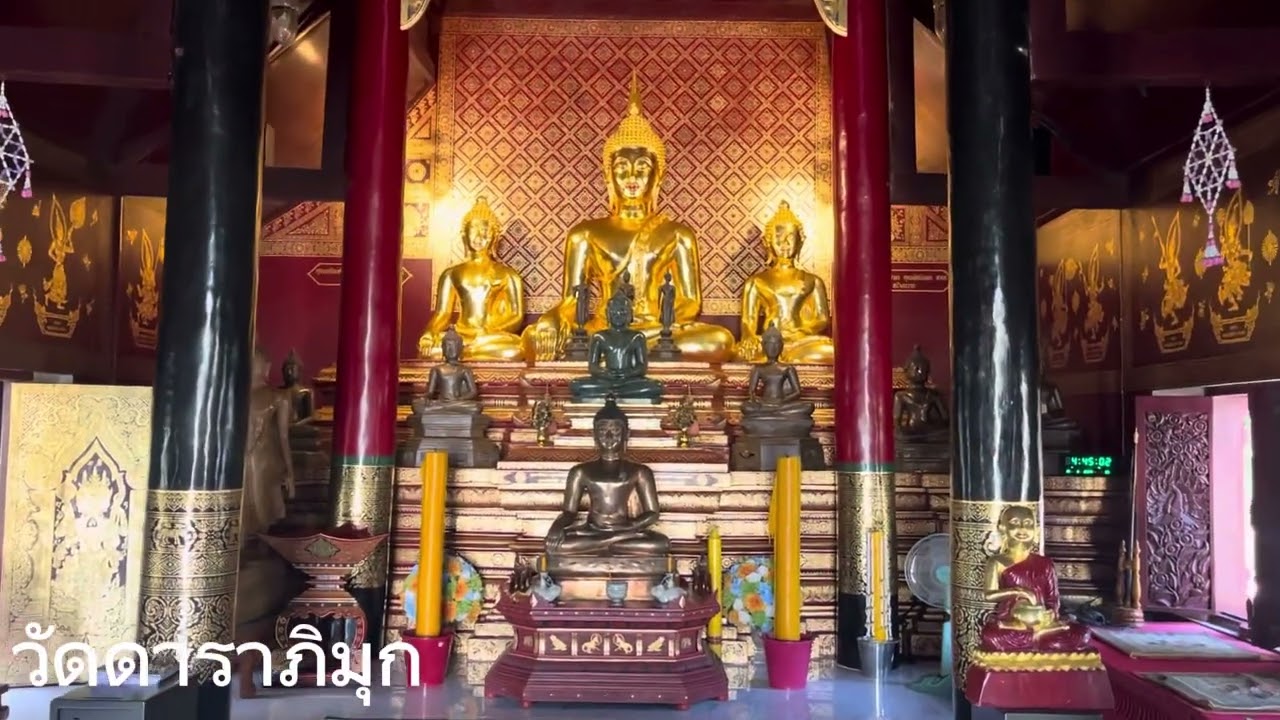
 Click to Access the Navigation Map GPS
Wat Dara Phimuk Map
Recommend

 Muang Chiang Mai(121)Chom Thong(47)Mae Chaem(25)Chiang Dao(33)Doi Saket(68)Mae Taeng(85)Mae Rim(69)Samoeng(29)Fang(71)Mae Ai(59)Phrao(70)San Pa Tong(103)San Kamphaeng(66)San Sai(73)Hang Dong(73)Hot(32)Doi Tao(22)Omkoi(11)Saraphi(74)Wiang Haeng(15)Chai Prakan(28)Mae Wang(32)Mae On(22)Doi Lo(33)Galyani Vadhana(1)


