
lovethailand home >North Travel Attractions >Chiang Mai Travel Attractions >Mae Rim >Don Kaeo > Wat Don Kaew
TL;DR: Wat Don Kaew is located at Ban Don Kaew, Moo 2, Don Kaew Subdistrict, Mae Rim District, Chiang Mai Province, open Daily, hours 08.00 – 17.00.
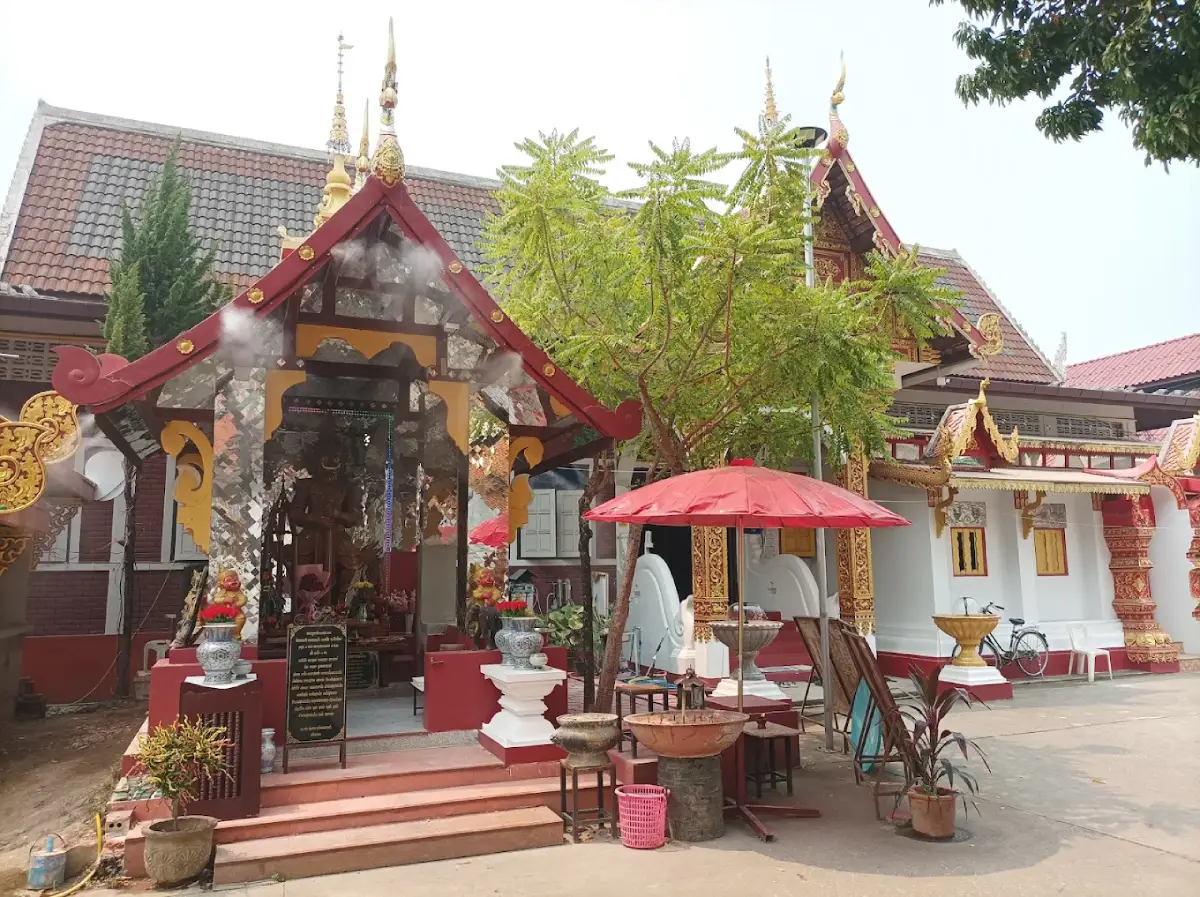
Wat Don Kaew
Open Days: Daily
Opening Hours: 08.00 – 17.00
Wat Don Kaew is located at 85 Moo 2, Ban Don Kaew, Don Kaew Subdistrict, Mae Rim District, Chiang Mai Province 50180. It is a private Buddhist temple under the Maha Nikaya order and one of the long-established community temples in the northern part of Chiang Mai. The temple was officially established in 1837 and received its royal grant of consecrated boundary on 10 March 1972. With a temple area of 5 rai, 2 ngan, and 20 square wah, Wat Don Kaew remains an active religious, educational, and cultural center for the Don Kaew community.
Wat Don Kaew is important because it represents the close relationship between a northern Thai community and its temple. Don Kaew Subdistrict is located between Chiang Mai city and Mae Rim, making it a transitional area between urban Chiang Mai and the northern districts of the province. The temple serves as a spiritual anchor for local residents, a place for merit-making, Buddhist ceremonies, meditation practice, community learning, and cultural activities.
The history of Wat Don Kaew began in 1837. The temple was established under the leadership of Han Suea Phaeo, also known as Phraya Han Suea Phaeo, together with local devotees. The founding of the temple was not only the creation of a religious site; it also gave the community a place for worship, learning, shared rituals, and social unity. Over time, Wat Don Kaew became one of the main religious centers of Ban Don Kaew.
The age of the temple gives it strong historical value. Since its formal establishment in 1837, Wat Don Kaew has witnessed the transformation of Don Kaew from a local village community into an important suburban area near Chiang Mai city. Today the surrounding area includes local neighborhoods, government facilities, major roads, Chiang Mai 700th Anniversary Stadium, hospitals, learning centers, restaurants, and accommodations. The temple continues to serve the community while preserving a link with the area’s older Buddhist roots.
The royal grant of consecrated boundary in 1972 was a major milestone in the temple’s development. In Thai Buddhism, a consecrated boundary is essential for formal monastic acts. The consecrated boundary of Wat Don Kaew measures 40 meters wide and 80 meters long. This confirms the temple’s formal role as a fully functioning Buddhist temple with an ordination hall and a recognized area for important monastic ceremonies.
Wat Don Kaew has several important religious buildings and functional areas. The temple includes an ordination hall, sermon hall, monks’ residences, viharn, multi-purpose hall, two merit-making halls, bell tower, and kitchen. Its sacred objects include a square-based bell-shaped chedi. These elements allow the temple to support ordinations, Buddhist ceremonies, merit-making events, community gatherings, funerary rites, religious education, and youth activities.
One of the distinctive sacred objects at Wat Don Kaew is an old jackfruit-wood image of Thao Wessuwan, believed to be more than 100 years old. Thao Wessuwan is widely revered in Thai Buddhist belief as a guardian figure. Devotees often pay respect for protection, stability, and auspiciousness. This old wooden image gives Wat Don Kaew a strong local identity and makes it a meaningful point of worship for visitors.
Wat Don Kaew is currently led by Phra Khru Suphat Rattanakorn, also known as Phra Achan Charoensak Siriphattho. He plays an important role in the Buddhist administration of Don Kaew Subdistrict and in the temple’s religious and community activities. His work supports meditation practice, Buddhist education, youth development, and the connection between the temple and local residents.
The temple is especially notable for its educational role. Wat Don Kaew has been active in Buddhist learning for children and youth, combining Buddhist teachings with local knowledge and Lanna cultural practices. Young people in the community learn moral principles alongside traditional skills such as bamboo weaving, ceremonial objects, Lanna pattern printing, sabad chai drum, and puja drum traditions. These activities make the temple a living learning center rather than only a place for ceremonies.
Wat Don Kaew also serves as a place for meditation and dhamma practice. The temple supports activities for villagers, young people, laymen, and laywomen, including meditation training on Buddhist holy days. This role is typical of strong Lanna community temples, where the temple functions as a place for spiritual training and character development as well as formal worship.
The temple has also supported children and youth through educational opportunities. It has been associated with scholarship support for students who perform well but lack financial resources. Through these activities, Wat Don Kaew connects monks, families, schools, local government, and the community. Its work demonstrates how a village temple can also function as a social and educational institution.
The name Don Kaew reflects the local identity of the area. “Don” refers to slightly raised land, while “Kaew” carries a sense of value and auspiciousness. Many northern Thai temples are closely connected with the names of their villages, local landscapes, or community memories. Wat Don Kaew therefore belongs directly to the identity of Ban Don Kaew and the wider Don Kaew Subdistrict.
Visitors should take time to appreciate the temple as an active community space. Important features include the ordination hall, viharn, sermon hall, monks’ residences, merit-making halls, chedi, and the old jackfruit-wood Thao Wessuwan image. The temple is suitable for respectful merit-making, quiet visits, cultural learning, and observing how Buddhism remains integrated into community life near Chiang Mai city.
Wat Don Kaew is suitable for travelers interested in old community temples, local Buddhist education, Lanna culture, and peaceful places near Chiang Mai city. It is not a commercial tourist attraction. Its value lies in its long history, complete temple facilities, sacred objects, meditation activities, youth education, and continuing role as a spiritual center for local residents.
Traditional events at Wat Don Kaew follow the Buddhist calendar, including Buddhist holy days, Buddhist Lent, the end of Buddhist Lent, Kathin, Pha Pa, annual merit-making events, and community religious activities. These events bring together monks, local residents, former residents, families, and donors. For many people connected with Don Kaew, the temple remains a place of memory, merit, and community identity.
Wat Don Kaew can be included in several short travel routes. Visitors who want a route close to Chiang Mai city can combine the temple with Chiang Mai 700th Anniversary Stadium, Princess Sirindhorn AstroPark, Wat Phra Non Khon Tan, and local restaurants in Don Kaew. Travelers who want to continue toward Mae Rim can visit Wat Pa Dara Phirom Phra Aram Luang, Mae Sa Waterfall, or Queen Sirikit Botanic Garden. This makes Wat Don Kaew a convenient cultural stop between Chiang Mai city and Mae Rim.
Getting There is easiest by private car, rental car, or hired local transport. From Chiang Mai city, take Chotana Road toward Mae Rim and enter Don Kaew Subdistrict. The temple is located in Ban Don Kaew, Moo 2, near the local community and main road connections. Search for “Wat Don Kaew Mae Rim” or the Thai name “วัดดอนแก้ว ตำบลดอนแก้ว” in navigation apps to avoid confusion with other temples of the same name in Saraphi District or other provinces.
Public transport is possible via local routes toward Mae Rim, followed by a local vehicle or hired transport into Ban Don Kaew. For travelers planning to visit several places in one day, a private car or hired driver is recommended. This allows an easy route linking Wat Don Kaew with Princess Sirindhorn AstroPark, Chiang Mai 700th Anniversary Stadium, local restaurants, and Mae Rim attractions.
The best time to visit is in the morning or late afternoon, when the weather is more comfortable and the temple atmosphere is quieter. Visitors should dress modestly, speak quietly, remove shoes before entering religious buildings, and avoid disturbing monks or local worshippers. During Buddhist holy days or merit-making events, allow extra time and follow the conduct of local residents.
Overall, Wat Don Kaew is a historically important and active community temple in Mae Rim District. Its significance comes from its establishment in 1837, royal grant of consecrated boundary in 1972, complete religious buildings, old Thao Wessuwan image, meditation activities, Buddhist education for youth, and its continuing role as a spiritual and cultural center of Don Kaew Subdistrict. It is recommended for travelers who want to understand Chiang Mai through local temples, living faith, and community-based Lanna culture.
| Name | Wat Don Kaew |
| Location | Ban Don Kaew, Moo 2, Don Kaew Subdistrict, Mae Rim District, Chiang Mai Province |
| Address | 85 Moo 2, Ban Don Kaew, Don Kaew Subdistrict, Mae Rim District, Chiang Mai 50180, Thailand |
| Plus Code | VXHC+WRJ, Don Kaew Subdistrict, Mae Rim District, Chiang Mai |
| Temple Type | Private Buddhist temple under the Maha Nikaya order |
| Year Established | Officially established in 1837 |
| Consecrated Boundary | Granted on 10 March 1972, measuring 40 meters wide and 80 meters long |
| Temple Area | 5 rai, 2 ngan, 20 square wah |
| Founder | Han Suea Phaeo, also known as Phraya Han Suea Phaeo, together with local devotees |
| Abbot / Caretaker | Phra Khru Suphat Rattanakorn, also known as Phra Achan Charoensak Siriphattho |
| Highlights | A historic community temple of Don Kaew, an old jackfruit-wood Thao Wessuwan image, complete temple buildings, and strong Buddhist education activities for youth |
| Important Structures | Ordination hall, sermon hall, monks’ residences, viharn, multi-purpose hall, two merit-making halls, bell tower, and kitchen |
| Sacred Objects | Square-based bell-shaped chedi and old jackfruit-wood Thao Wessuwan image |
| Community Role | Spiritual center of Don Kaew community, meditation space, Buddhist learning center, and Lanna cultural learning space for children and youth |
| Tradition / Buddhist Events | Kathin, Pha Pa, Buddhist holy days, major Buddhist festivals, community merit-making events, and meditation activities |
| Open Days | Daily |
| Opening Hours | 08.00 – 17.00 |
| Facilities | Parking and wheelchair-accessible entry |
| Current Status | Open as a community temple and meditation practice center in Don Kaew Subdistrict, Mae Rim District, Chiang Mai Province |
| Travel Information | From Chiang Mai city, take Chotana Road toward Mae Rim and enter Don Kaew Subdistrict. Private car, rental car, or hired local transport is recommended. |
| Nearby Tourist Attractions | 1. Chiang Mai 700th Anniversary Stadium, about 2 km 2. Princess Sirindhorn AstroPark, about 4 km 3. Wat Phra Non Khon Tan, about 4 km 4. Lanna Traditional House Museum, Chiang Mai University, about 8 km 5. Wat Pa Dara Phirom Phra Aram Luang, about 13 km 6. Chiang Mai Zoo, about 10 km 7. Mae Sa Waterfall, about 17 km 8. Queen Sirikit Botanic Garden, about 22 km |
| Nearby Restaurants | 1. Mae Kha Indy Cooked-To-Order, about 1 km, Tel. 062-331-9163 2. Mala Don Kaew Grill, about 2 km, Tel. 086-329-9462, 088-252-6062 3. Tod Suk Fried Meatballs, Ban Don Kaew Branch, about 1 km, Tel. 091-808-0588 4. Giant Grilled Fish Wrap Don Kaew, about 2 km, Tel. 080-539-5952 5. Mookata Don Kaew, about 2 km, Tel. 081-749-5938 6. Pork Knuckle Rice Nay Aor Don Kaew Mae Rim, about 3 km, Tel. 094-629-8895 |
| Nearby Accommodations | 1. M Place Mae Rim, about 2 km, Tel. 083-152-0805 2. Inghome & Guesthouse, about 4 km, Tel. 088-599-0465 3. The Imperial Chiang Mai Resort & Sport Club, about 4 km, Tel. 053-121-650 4. Baan 88 Chiang Mai, about 5 km 5. Golden Cupids Hotel, about 8 km, Tel. 053-844-503 |
Frequently Asked Questions (FAQ)
Q: Where is Wat Don Kaew located?
A: Wat Don Kaew is located at 85 Moo 2, Ban Don Kaew, Don Kaew Subdistrict, Mae Rim District, Chiang Mai 50180, Thailand.
Q: What type of temple is Wat Don Kaew?
A: Wat Don Kaew is a private Buddhist temple under the Maha Nikaya order.
Q: When was Wat Don Kaew established?
A: Wat Don Kaew was officially established in 1837 and received its royal grant of consecrated boundary on 10 March 1972.
Q: Who is the abbot of Wat Don Kaew?
A: The abbot of Wat Don Kaew is Phra Khru Suphat Rattanakorn, also known as Phra Achan Charoensak Siriphattho.
Q: What should visitors see at Wat Don Kaew?
A: Important features include the ordination hall, viharn, sermon hall, monks’ residences, square-based bell-shaped chedi, and the old jackfruit-wood Thao Wessuwan image.
Q: What role does Wat Don Kaew play in the community?
A: Wat Don Kaew serves as a spiritual center, meditation space, Buddhist learning center, and Lanna cultural learning space for children and youth in Don Kaew Subdistrict.
Q: How do travelers get to Wat Don Kaew?
A: From Chiang Mai city, take Chotana Road toward Mae Rim and enter Don Kaew Subdistrict. A private car, rental car, or hired local transport is the most convenient option.
Q: What nearby places can be visited with Wat Don Kaew?
A: Nearby places include Chiang Mai 700th Anniversary Stadium, Princess Sirindhorn AstroPark, Wat Phra Non Khon Tan, Wat Pa Dara Phirom, Mae Sa Waterfall, and Queen Sirikit Botanic Garden.
 Category: ●Places of Worship
 Group: ●Temple
Last Update : 3 DayAgo
 Last Update : 3 DayAgo
 Click to Access the Navigation Map GPS
 Muang Chiang Mai(121)Chom Thong(47)Mae Chaem(25)Chiang Dao(33)Doi Saket(68)Mae Taeng(85)Mae Rim(69)Samoeng(29)Fang(71)Mae Ai(62)Phrao(70)San Pa Tong(105)San Kamphaeng(66)San Sai(73)Hang Dong(74)Hot(32)Doi Tao(22)Omkoi(11)Saraphi(74)Wiang Haeng(15)Chai Prakan(28)Mae Wang(32)Mae On(22)Doi Lo(34)Galyani Vadhana(1)


